




We may earn revenue from the products available on this page and participate in affiliate programs. Learn More ›
Updated Sep 18, 2023 2:35 PM
Mastering any goose call, whether it’s for big honkers, lesser Canadas, specklebellies, or snows, takes talent coupled with years of practice. Many of us grew up blowing flutes, which became popular in the 1950s. Then, in the late 1980s, the short-reed goose call made its debut. Since then, it’s become the go-to choice for goose hunters, namely because it’s easier to blow than a flute and quite versatile.
The broke-in guts system of short-reed goose calls is what makes them so approachable to hunters of all calling abilities. A standard reed that has not been broken in is stiff, which makes it harder for callers to produce the sounds they want from a call. You have to spend countless hours (it can take years) to break in a new gut system. That process has been expedited by the development of molds, allowing worn-in reeds to be mass produced, which means more callmakers building calls.
And that is where it gets tricky. Because of this advancement in reed technology, there are a dizzying number of short-reed calls on the market. How to decide which one is best for you is no easy task. To help, I combined my knowledge of calls with the expertise of some of the best hunters and stage callers in the country. Here are the best goose calls, including specklebelly, snow, and Canada, that made the cut.
The Best Goose Calls: Reviews and Recommendations
Best Versatility for Big Honkers: Tim Grounds G-Force
Key Features
- Short-reed
- Triple-Crown worn-in guts
- Long, open exhaust
Pros
- Made for all skill levels
- Fast, with incredible low end
Cons
Two-time world goose calling champion Kile Jones called the G-Force “the strongest call in hunting right now.” When you listen to the sound file from company owner and champion caller Hunter Grounds, you will understand why. Of course, Hunter is one of the best individuals to ever pick up a short-reed, but anyone can blow the G-Force. That’s a deviation from the stigma Tim Grounds calls once had. Originally, the calls were built for experienced callers only, but over the years, TG has made its calls more accessible to the average hunter.
The Triple-Crown worn-in guts were developed by another calling legend Kelley Powers. Top end volume and the power you can generate with the TC system is unmatched. I’ve seen Hunter Grounds call competitively and there are very few that can touch his speed and force with which he moves air through the call. That would cause many gut systems to fail, likely cracking the reed, but the TC can handle any amount of air flow you can muster.
Key Features
- Bored out barrel
- Green “Phantom” guts
- Funnel channel mouthpiece
Pros
- Short reed
- Bored barrel
- Built-in pressure chamber to trap air
Cons
- Average callers will need to move more air through the call
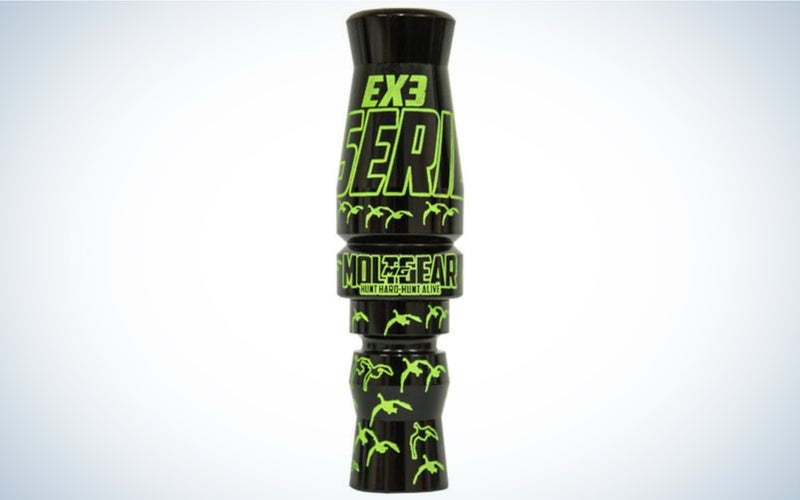
Drop a pin on a map anywhere in the country to the crew at Molt Gear and they will kill big geese. That’s not bragging; owner Scott Threinen, Mike Benjamin, and Craig Rosenau are simply some of the most knowledgeable honker hunters in the country. And that know-how shows up in the design of Molt Gear’s calls, like the EX3, which has the best low-end capability of any call on the list. You can make deep murmurs or moans, and authentic sounding clucks with this short-reed. Big air callers will have no issues blowing this call. The bore is wide, and a compression chamber slows the air to give you better control. But you can’t stop pushing air through the EX3, which will be a challenge for some novice callers. You can get this call running fast too, so when geese are on approach it’s easy to mimic the excitement of birds on the water warning visitors that there are boss honkers below.
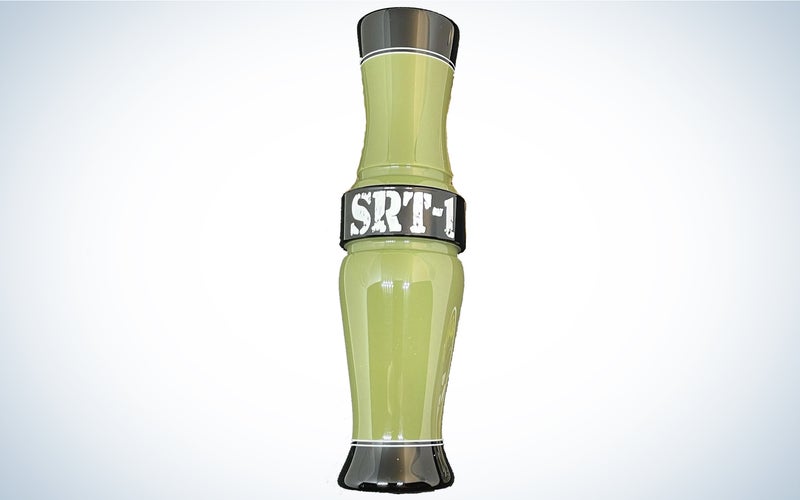
Best Intermediate Honker: Heron SRT-1
Key Features
Pros
- Gut system caters to mid-level caller
- Even without back pressure, it’s goosey
Cons
If you struggle putting enough air through a short-reed, the Heron SRT-1 is one of the best goose calls to cure that problem. I like calls that immediately improve my goose cadence, and the SRT-1 did. There is some forgiveness with this call in case you run short on air. It won’t cover up a mistake, but the SRT-1 won’t exacerbate it either. You don’t have to put much back pressure on this call to draw a big goose sound from it. And even if you leave your hands off the bore, the short-reed still sounds like a honker. You do have to message owner Rusty Heron on social media to order one of the calls, so don’t go looking for one at your local retailer.
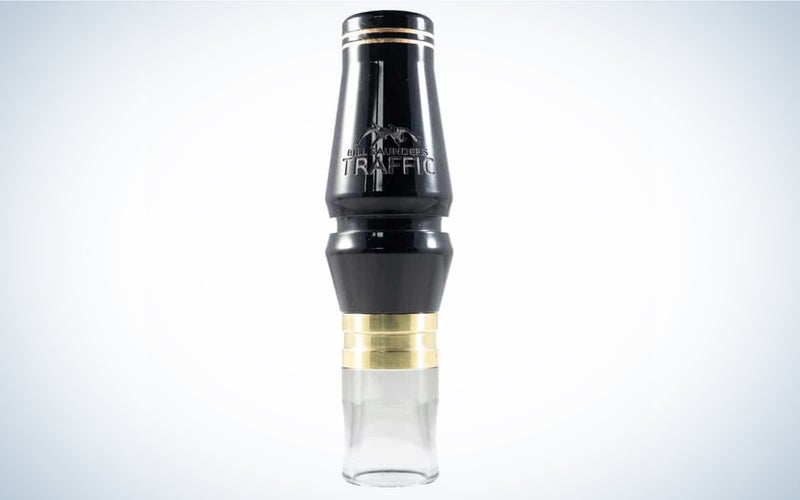
Best Traffic: Bill Saunders Traffic
Bill Saunders Calls and Gear
SEE IT
Key Features
- Short reed
- Available in wood or acrylic
Pros
- Responsive
- Top end volume
Cons
- Can’t slow roll air pressure
If you hunt eastern Washington (where Bill Saunders is based) you have to be ready to compete for birds and there are few calls better equipped to do that than the Traffic, thanks to its speed and volume. Most guides in the Pacific Northwest will have this call on their lanyard, but you don’t have to be an advanced caller to get it running. The key to operating the Traffic is pushing big air from the jump. You can’t slow roll this call. Start hammering on it once it touches your lips and don’t let up. The Traffic can crack through big winds when you break it over, so it’s ideal for drawing attention to your spread. If you can’t get on the X, this is the go-to call.
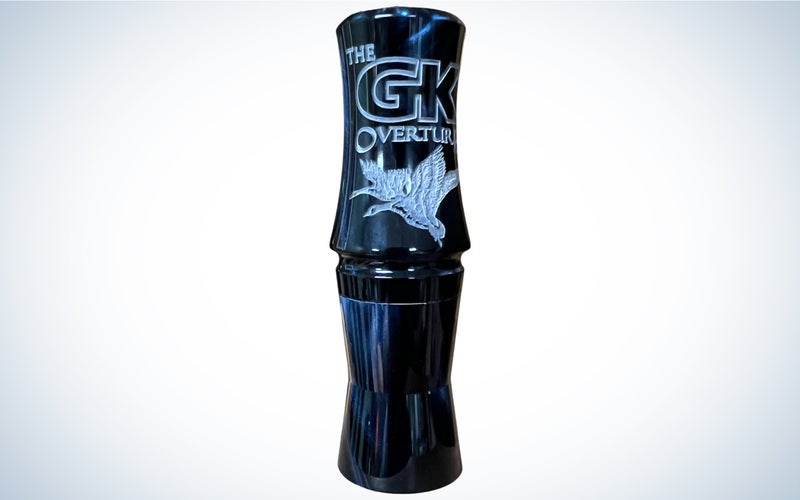
Best Lesser: GK Overture
Key Features
- Short reed
- Broke-in guts
- Shaved reed
Pros
- For a little call it has volume
- Easy to manage back pressure
Cons
- Takes more air than you might be used to
GK made the Overture more user friendly by making the mouthpiece wider than any lesser call I have blown. Calling little geese is often challenging because these calls are typically smaller, making it harder to run air through the bore. That’s not the case with the Overture, which offers this call in a true lesser or total control gut system. The former gives you more of a “shriek” cluck that lessers make. With the latter, you have a bit more low-end control of the call. It can be hard to get the right back pressure on the Overture due to its small size, but even if your hand chamber isn’t on point, you can still draw incredible sounds from this short reed.
Key Features
- Open mouthpiece, flared bore
- Hand-tuned
Pros
- Simple to use
- Deep goose moan and murmurs
Cons
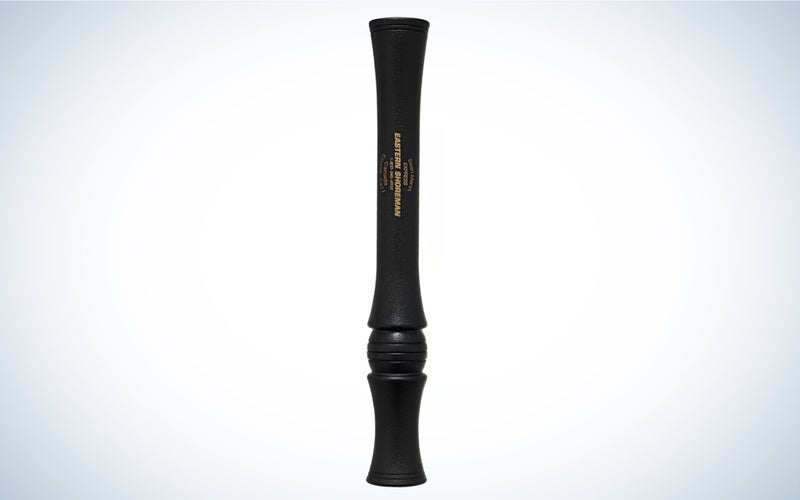
The Eastern Shoreman is actually not a flute-style call, but it is built in the shape of one. Most flutes are not capable of making the array of goose sounds this call can. The trick is knowing how much air to use and how much back pressure to apply—both can be tricky for inexperienced users. You can’t force a lot of air through the Shoreman unless you close off the bore with your hands. You don’t completely shut the air off, but it requires more back pressure than you would apply to a short-reed. Once you find the right hand placement, it’s a responsive call that has plenty of deep goose sound. And even if you never completely master this call, it will still kill geese with simple honks and clucks. In fact, it’s an excellent late-season choice when big Canada geese become less vocal.
Read Next: Best Layout Blinds
Best Specklebelly: Birdhouse Calls Speck
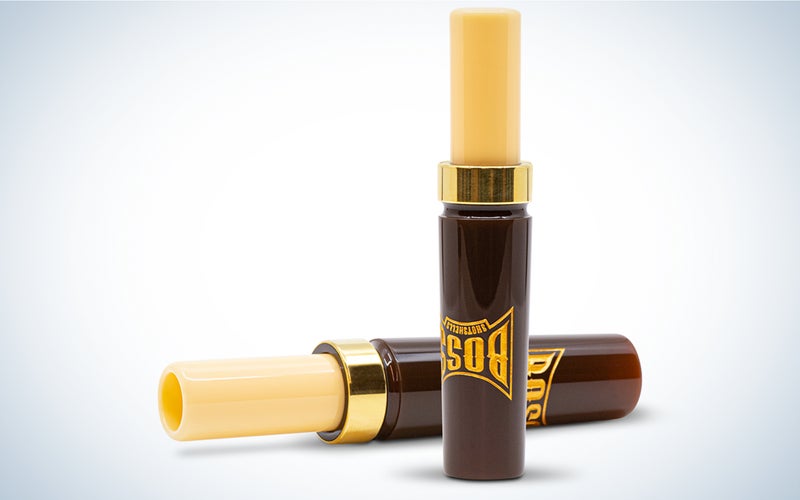
Key Features
- Slim, functional design
- High volume and pitch
Pros
- Breaks with minimal back pressure
- Great low-end clucks
Cons
- Only small batches produced
Specklebelly calls are a fairly recent invention. When I was guiding on the Texas coastal prairie in the late 1990’s, we used polycarb Rich-N-Tone snow calls with back pressure to achieve the right yodels. They would call birds but were hardly in the same class as today’s dedicated speck calling creations. Ken White and his father were in the same boat, only in California’s San Joaquin Valley. They had to come up with a call that specks responded to—which may surprise you—and then Ken started building calls for hunters. The only drawback is Birdhouse availability; it’s a boutique call made in small numbers. Worth the wait though; the call truly is special. Easy to blow with perfect pitch, it’s a speck call in a class all its own.
“Coyote calls,” White said. “We took OLT coyote calls and modified them until we got the sound we needed. They are designed to sound like rabbits, so that high pitch was already there. We played around with combinations until the right back pressure produced that ripping yodel and bottom end cluck.” —John Gordon
Best Snow: Sutter Basin Meridian
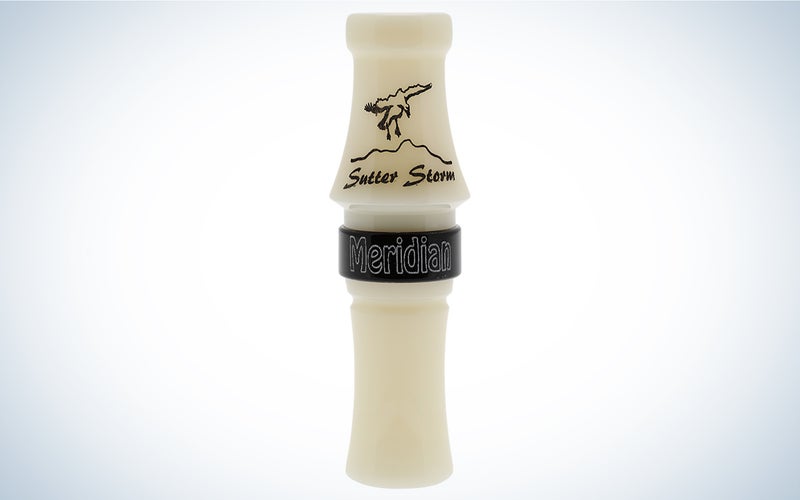
Key Features
- Acrylic
- Ample mouthpiece opening for smooth control
- Adjustable guts for pitch control
Pros
- Control without large air volume
- Sharp and clear sound
- Ultra-realistic
Cons
- Only color choice is white
- Availability
Owner Gene Carter has hunted ducks and geese in California’s Sacramento Valley for decades, fine tuning his methods and creating some of the most realistic duck and goose calls I’ve heard and used. Snow calls need one thing in them above anything else: flexibility. If you can’t go high, drop low, and back high again in a split second you need to find another call. Being able to hit the super high pitch Ross sound is also critical as those little geese are around in bigger numbers than ever. They are easy to fool if you have the best snow goose decoys and you can sound like them. Another cool feature of Sutter Basin’s Meridian is the easy to adjust guts. Carter built in grooves on the sound board backside; the lower the board in the insert, the higher the pitch. —John Gordon
How I Picked the Best Goose Calls of 2023
Call selection is subjective, so I tried to choose versatile short-reeds (and one flute) that make sense for the calling abilities of a majority of hunters. I used my experience as a hunter, the time I have spent around accomplished goose callers (meat and stage), and also spoke with many callamakers and world champions to pick these calls. Then I blew each call for a few days to get a feel for their speed, responsiveness, low-end, high-end, and the amount of air and back pressure needed to operate the call.
FAQs
Q: How do I learn to blow a short-reed goose call?
There are an assortment of Youtube videos that show you how to blow a short-reed goose call, but the best teaching tool is “Bad Grammar,” a video series developed by Molt Gear’s Scott Threinen. I learned to call watching the DVD version, but now the series is online and can be accessed from your phone.
Q: What’s your best piece of advice for new callers?
Most veteran callers will tell you that you need to get the cluck down before you move onto anything else. I have a slightly different perspective. Learning to constantly move air through a short-reed call is more important. Performing the cluck actually teaches you to cut off the air flow, because it’s a sharp bark in which you push a burst of air through the barrel and then stop. In goose calling, having air from your diaphragm ready to go is the key to running a short reed properly. That’s why I use long moans in my practice sessions. It builds my lung capacity and lets me find the pitch of the call and how much air I am going to need.
Q: Do I need more than one goose call?
If you have the opportunity to kill multiple species on the same hunt, then the answer is yes. I see Canadas and specks on many of my fall hunts, so there is a place for both on my lanyard. But one honker call or one specklebelly call can kill geese. You don’t need five short-reeds around your neck to get a goose in shotgun range.
Final Thoughts on the Best Goose Calls of 2023
Patience and practice are the two keys to becoming a better goose caller. If you are just learning, give yourself an entire off-season of blowing some of the best goose calls. Don’t be disappointed if it doesn’t click right away. It took me the better part of a year to understand how to move air through a call. Then I watched “Bad Grammar,” and it finally clicked. You have to do something similar. Find a way to learn that works for you. You’re going to have success and setbacks, but spending the time blowing your call is the key ingredient.
Read the full article here