





We may earn revenue from the products available on this page and participate in affiliate programs. Learn more ›
The most common definition of “caliber,” as it pertains to guns, is about as straightforward as you could want it to be: Caliber simply mean the diameter of the hole in a rifle or pistol barrel. Yet people, including experienced hunters and shooters, get it wrong all the time. Let’s say you tell your buddy that you bought a new rifle, and he says, “Oh nice. What caliber?” If you answer “30-06,” you are technically getting the definition of caliber wrong—even if your new rifle shoots 30-06 ammo.
Cartridge names, although related, are not the same as calibers, and I’ve written a whole separate article on the difference between the two that you can read here. But clearing up that common confusion doesn’t solve everything. Although the definition of caliber is still simply the diameter of the hole in a barrel, there’s another problem: Any barrel with rifling grooves has two different diameters. To make matters worse, the way we talk about those two measurements often makes no sense at all. Still, let’s at least try to break caliber definition down.
Caliber Definition: Two Bore Diameters
When a gun barrel is made, a hole is bored through the center of a steel rod, and the size of the hole, expressed in inches or millimeters, is the gun’s caliber. In the case of smoothbore muskets and shotguns, it’s as simple as that (except that shotguns aren’t designated by caliber, apart from the 410, because why should anything be simple? More on this below).
When rifling grooves are cut into a bore, however, you wind up with two diameters, one measured from groove to groove and another from land to land (“lands” being the original bore diameter between the grooves). The image below (in which the grooves are shown wider than normal for clarity’s sake) illustrates both measurements.
As most shooters know, grooves are cut into rifled barrels to impart spin on the bullet, which drastically improves accuracy. But for this to work, the diameter of the bullet must be equal to the groove-to-groove diameter. If it were equal to the land-to-land diameter, it wouldn’t engage the rifling, wouldn’t spin, and the whole enterprise would be pointless.
Technically, the land-to-land measurement correlates with the rifle’s caliber, while the groove-to-groove diameter correlates with the diameter—or caliber—of the bullet it fires. But, of course, this gets muddy.
Caliber Definition: Bores and Bullets
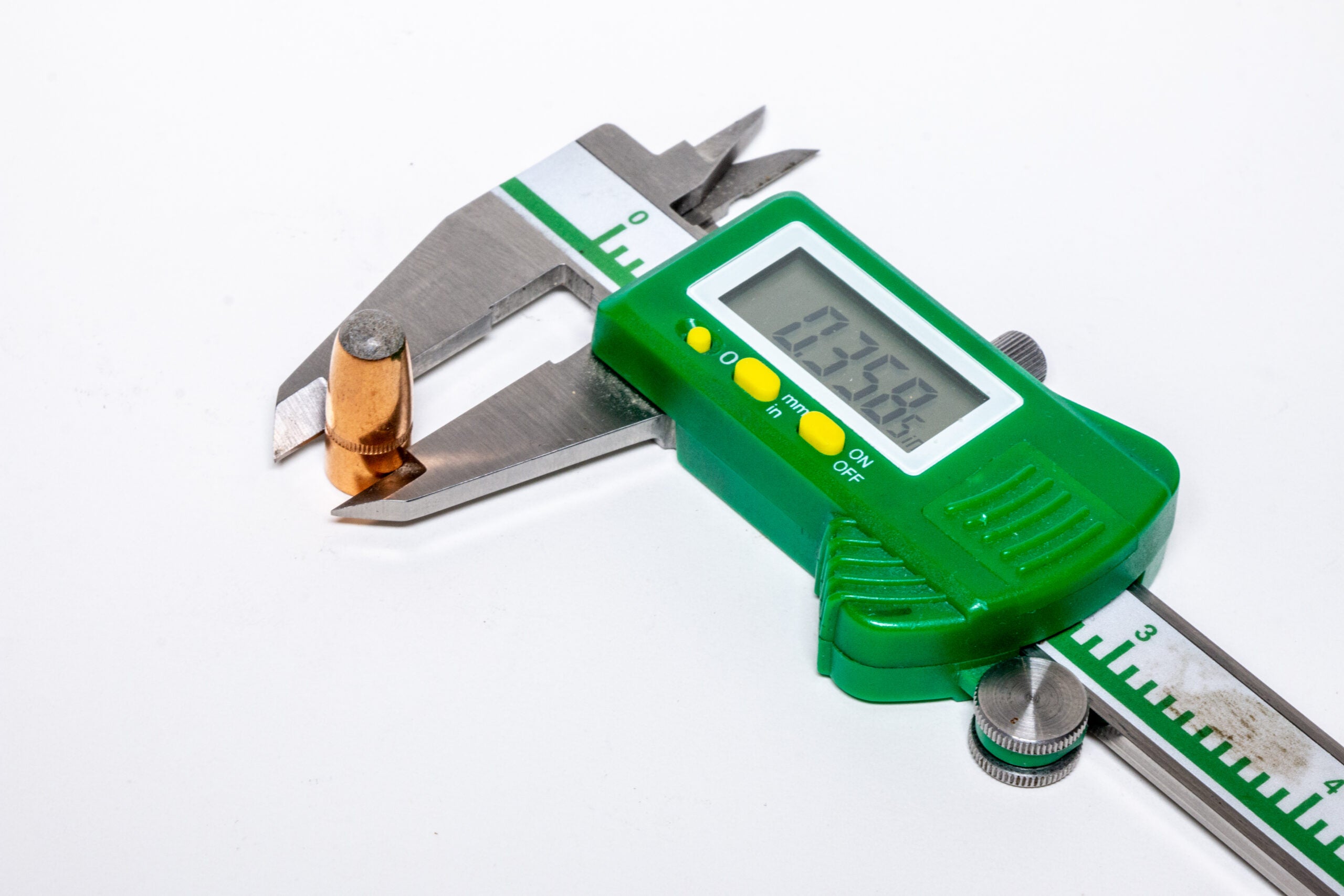
At this point, you might be thinking, Well, wouldn’t it be easier if “caliber” referred to both the groove-to-groove bore diameter of a rifled barrel and the diameter of the bullet it fires, seeing that they’re the same? And the answer would be: yes, it would. But we don’t.
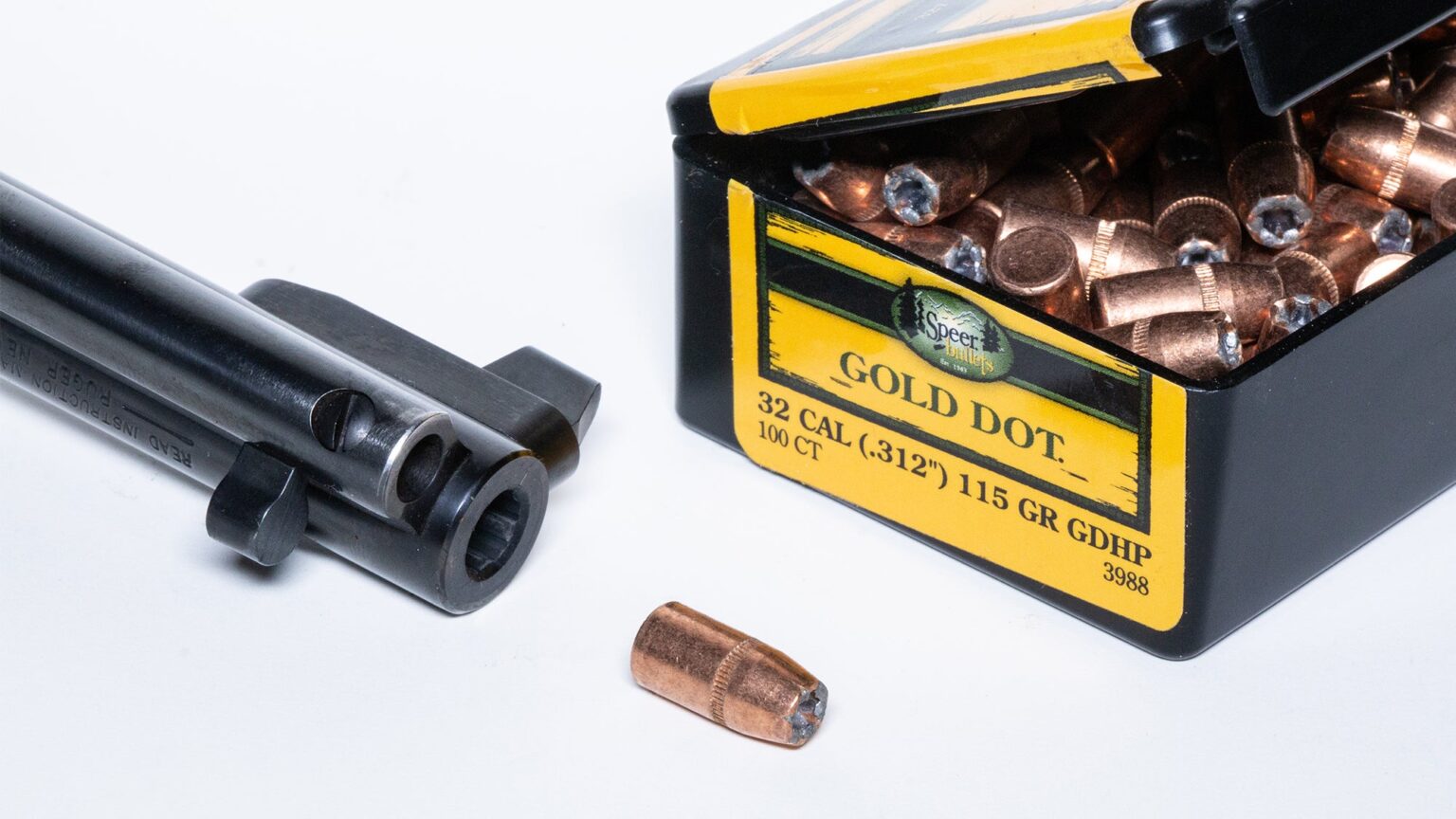
A rifle chambered for the 30-06 is a perfect example. The initial hole in the barrel is drilled to a diameter/caliber of 0.30-inch. However, once the rifling is cut, the groove-to-groove diameter is 0.308-inch. So, technically speaking, you’ve got a 0.30-caliber rifle that fires 0.308-caliber bullets. But people are much more likely to describe the caliber of the gun as “30-06” instead of “.30,” and most people would say that a 30-06 cartridge is loaded with a “.30-caliber bullet.” Same goes for the 30-30, 308, 300 Win Mag, and 300 Blackout; they are all loaded with 0.308-caliber bullets and yet they are all described as “.30-calibers.” Go figure.
And it gets worse. The 308 Winchester got its name because it fires 0.308-caliber bullets. But the 308 is alternately known as the 7.62×51 NATO, and the 7.62 references the 0.30-caliber bore, not the 0.308 bullet diameter. If that doesn’t make you scratch your head, consider that the .44 Mag’s bullet diameter is .429. Who knows where the .44 comes from?
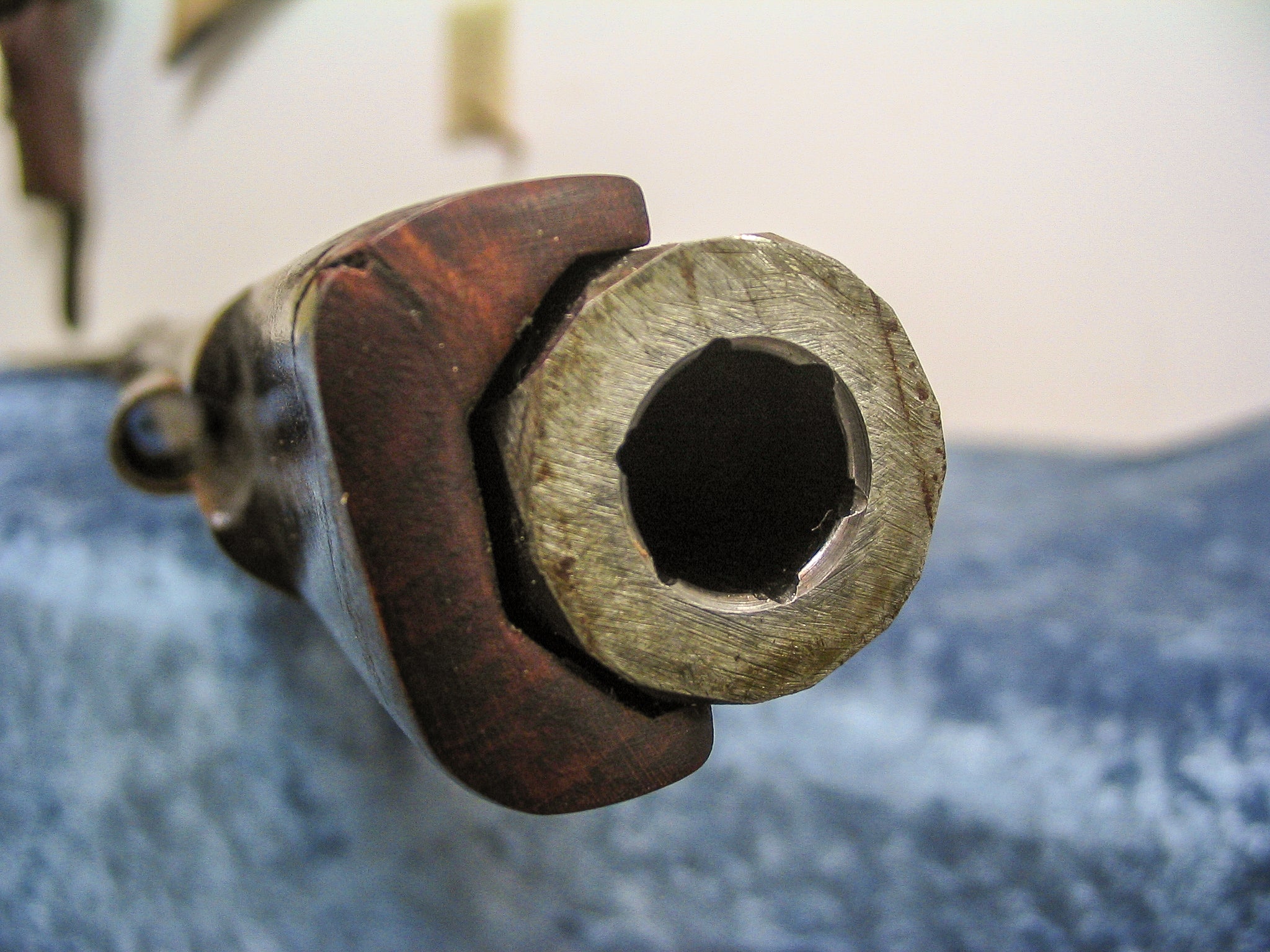
Some of this confusion goes back to the muzzleloader’s heyday, when there were no cartridges to distinguish one gun from another. If a rifle had a 0.50-caliber barrel, it was a 50 caliber. Today, because rifles with the same caliber barrels shoot different cartridges that all use the same caliber bullet—like the .30 calibers mentioned above—we’ve had to get creative with cartridge names. (For more on how caliber has influenced cartridge names, read this.)
Shotgun Gauges and Caliber
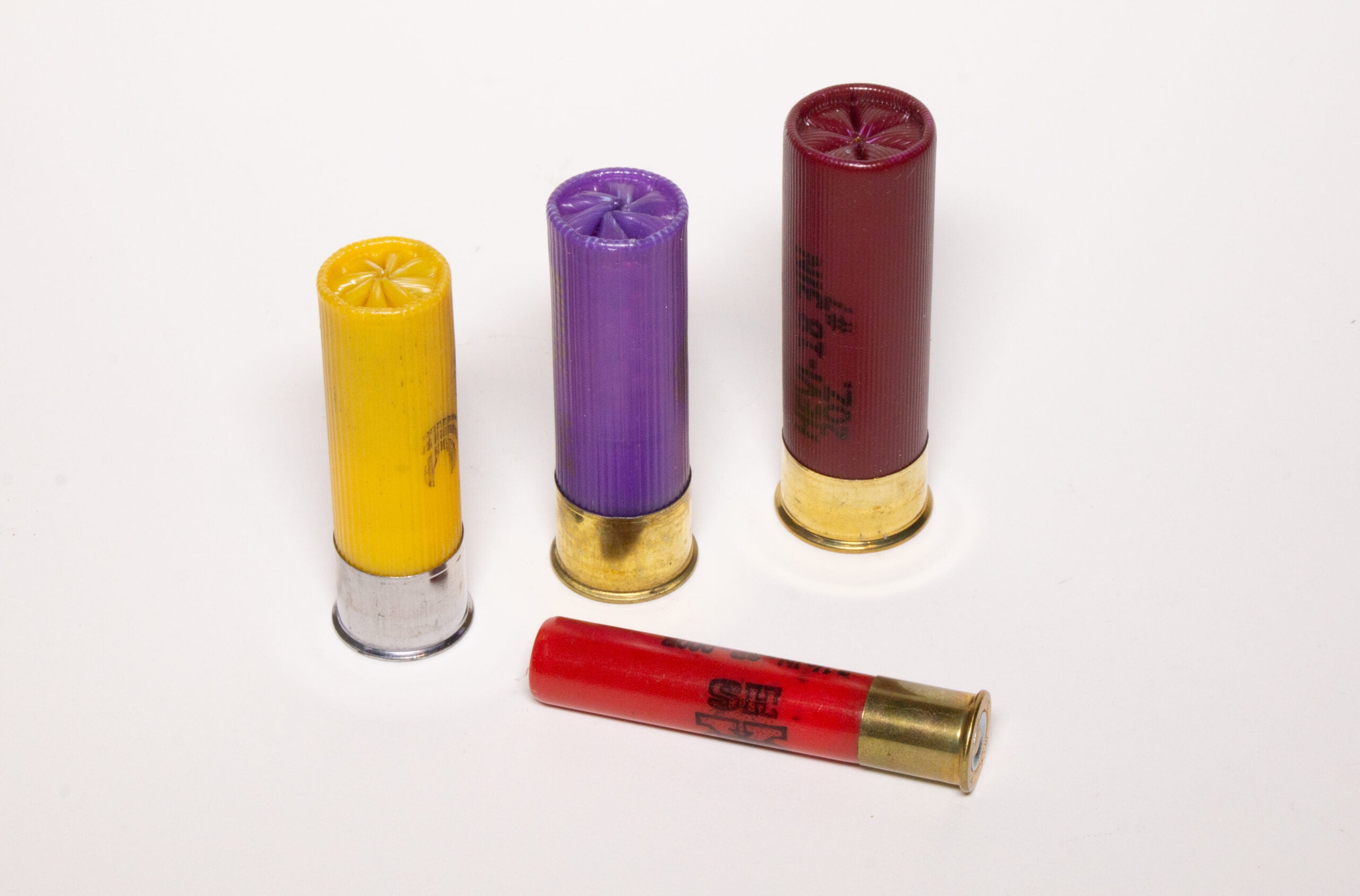
Shotguns have a barrel and a bore diameter, but shotguns – most shotguns – are not referenced by caliber, they’re identified by gauge. The gauge designation is determined by the number of perfectly round pure lead balls – equal to the diameter/caliber of the bore – required to weigh one pound. For example, a 20-guage shotgun has a bore diameter/caliber of about 0.617. This means that 20 pure lead balls of 0.617-caliber should weigh one pound, or 1/20th of a pound each.
But shotgun bore diameters and names are as confusing as rifle bore and bullet diameters and cartridge names. For example, a 410 shotgun is not referenced by gauge, but by caliber. Its bore has a diameter/caliber of 0.410. Referenced as gauge, a 410 shotgun would be a 68 gauge because it would take 68, 103-grain, 0.410-caliber round lead balls to weigh a pound.
To further complicate everything, if you measure the hole at the muzzle in a shotgun barrel, it will vary due to choke. A 20 gauge shotgun outfitted with a full choke could measure as small as 0.595 inch at the muzzle.
Barrels, Case Necks, Caliber Sizes
There is another definition of “caliber” that is specific to artillery pieces. Here, the word is used to reference the length of the barrel from the muzzle to the breach. For example, a 16-inch/caliber gun of 50 calibers would have a barrel that was (16 caliber times 50) 800 inches long.
Caliber also influences the shape and design of cartridge cases. Many ballisticians believe that for optimum performance the neck of a cartridge case should be equal to or longer than bullet caliber. The 6.5 Creedmoor is well-designed and often delivers extreme precision. The neck length of the 6.5 Creedmoor case is 0.285-inch, and the diameter of the bullet is 0.264-inch. So, the 6.5 Creedmoor case neck is 1.079 calibers long. On the other hand, the 300 Savage cartridge, though a fine hunting cartridge, is not known for extreme precision. Its neck length is only 0.220-inch, almost a 10th of an inch shorter than the caliber of the bullet.
Finally, it worth noting that calibers are also classified by size. Small-arms cartridges that fire bullets of 0.32-caliber or less are considered small bores. Those that fire bullets between 0.32- and 0.39-caliber are medium bores. And any cartridge firing a bullet of 0.40-caliber or larger is thought of as a big bore.
Caliber Definition: The Bottom Line
None of this changes the definition of caliber. When it comes to guns, “caliber” technically refers to the initial bore diameter of the barrel (before rifling grooves are cut). When it comes to bullets, “caliber” technically refers to its actual diameter, which is equal to the groove-to-groove diameter of the barrel.
That said, over time, the word has evolved and is now used to in common parlance represent a host of things relating to firearms. It can designate the cartridge a gun fires, the diameter of a bullet, the length of a gun barrel, measurements as they relate to cartridge case dimensions, and even one shotgun. In every case, however, the word relates back to its foundational meaning, which is the diameter of the hole that was drilled inside a gun barrel.
Read the full article here