






A 48,000-year-old lion skeleton found in a cave in modern-day Germany has provided researchers with new evidence of early predator hunting by hominids, according to new evidence outlined in a study published by Scientific Reports Thursday. The same study reports potential evidence of hominids turning cave lion skins into pelts based on new analysis of different, much older remains. These findings represent the earliest known proof that Neanderthals were effective hunters of large carnivores rather than just scavengers trying to avoid them.
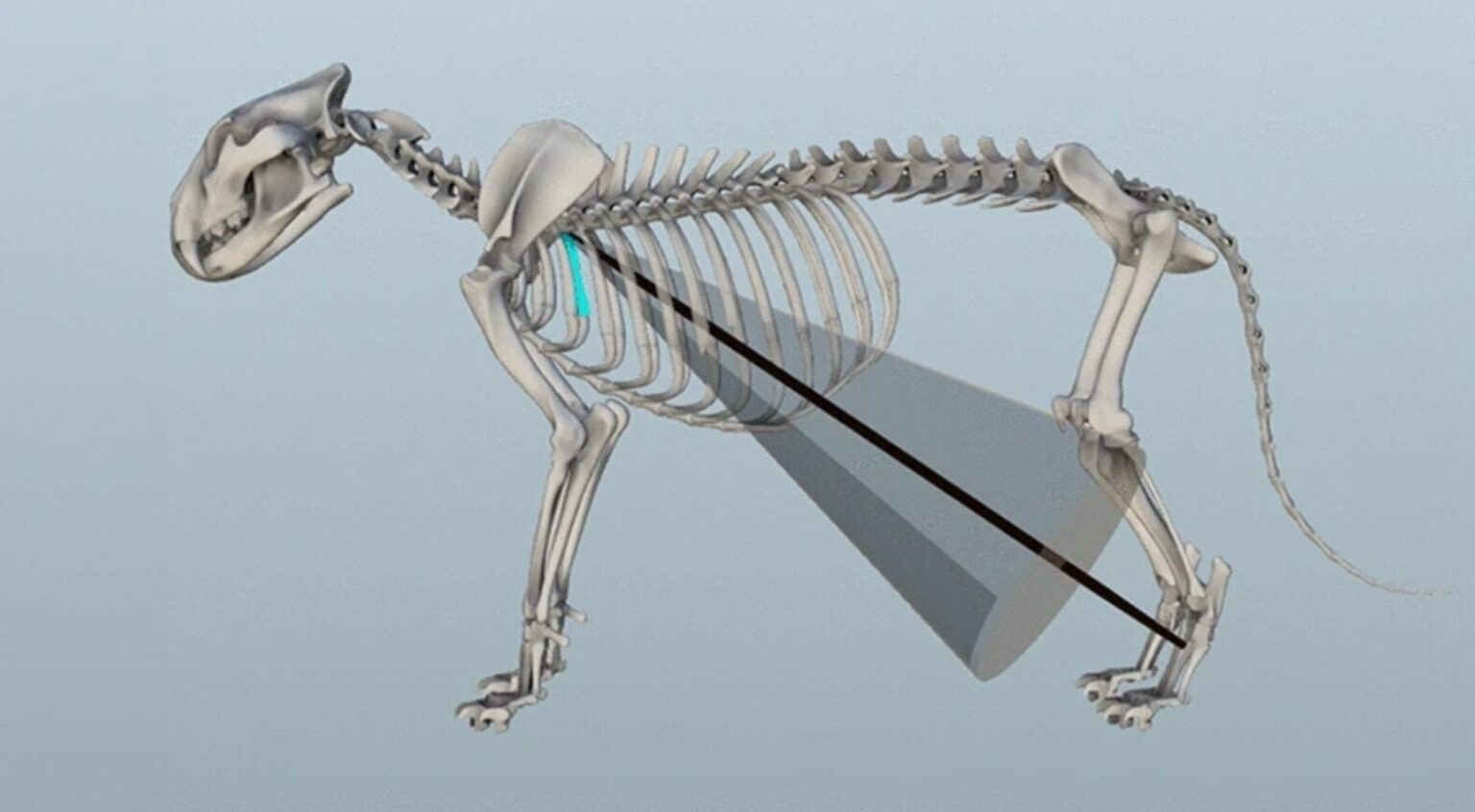
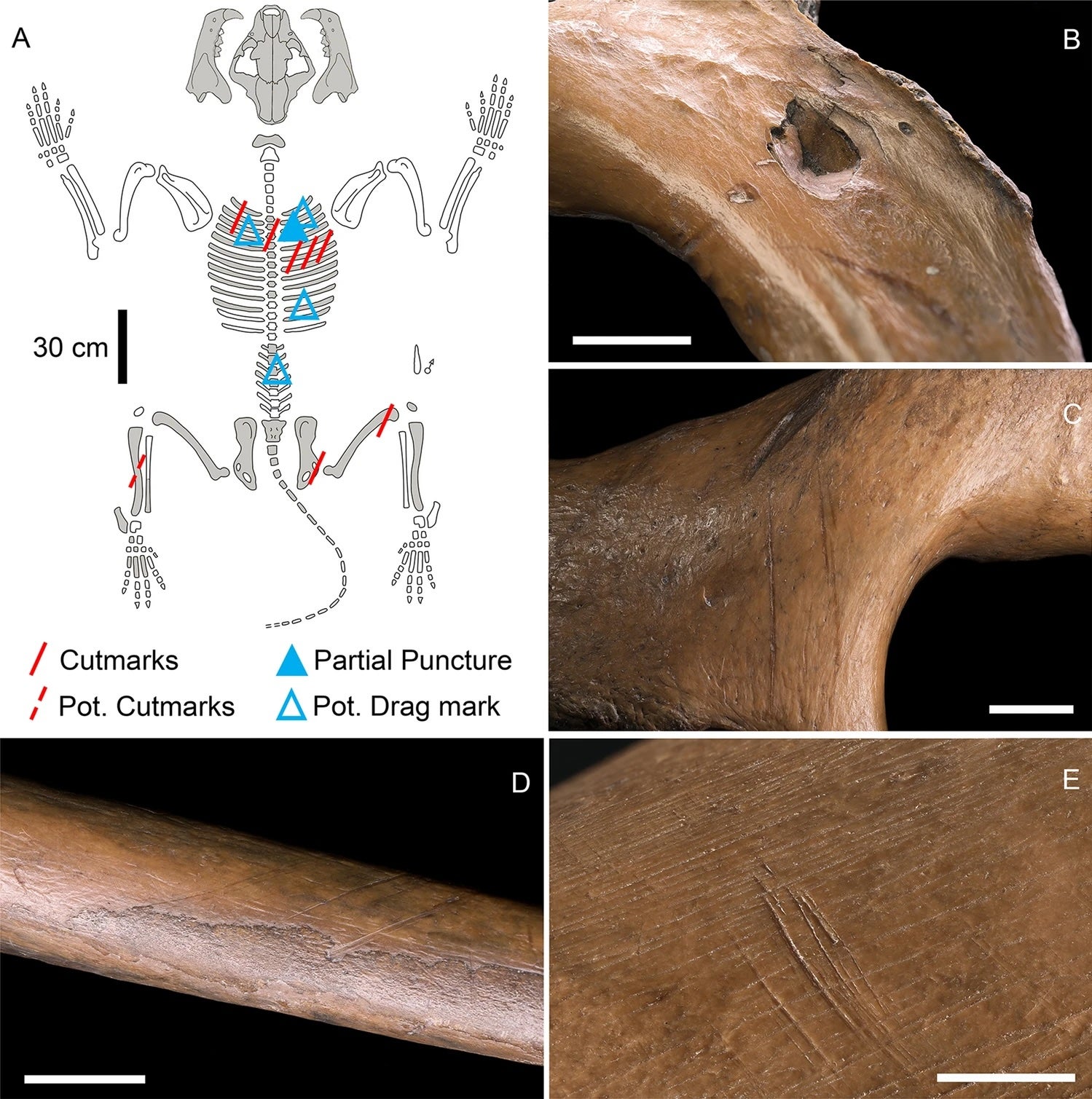
A skeleton of a cave lion with a significant puncture wound in its rib was discovered in 1985 near Siegsdorf in southeastern Germany, at the foot of the Bavarian Alps. The puncture wound and surrounding cracks are located on the interior side of the rib, indicating that a spear likely struck it from the inside after passing through the lion’s vitals. Other “lesions,” probably the result of butchering, mark other bones.
“The hunting lesions include a partial puncture and possible drag marks,” the study reads. “The partial puncture was observed on the [rear] side … of rib III … It is oval-shaped in outline, exhibits circumferential and radial cracking on the impact … side, and lacks an exit wound.”
Researchers determined the wound must have occurred while the lion was alive, and that it was probably fatal (there were no signs of healing). There’s a possibility the hunters thrust the spear into the lion while it was lying down. This technique would have mirrored other spear-hunting techniques used around this time on hibernating cave bears, where hunters would sneak up behind a sleeping or hibernating animal and drive the spear into the animal’s chest.
“Alternatively, the lethal thrust could have occurred after the lion was disadvantaged in some way, potentially by being injured from previous impacts, a strategy also observed amongst contemporary spear hunter,” reads the study.
The researchers reconstructed the ballistics based on the impact angle of the puncture wound, and determined the lion was probably lying down when it received the fatal blow. The mark is wider and deeper than tooth marks tend to be on carnivore-killed carcasses, indicating that it wasn’t the work of a competing predator.
“Pits and perforations formed as a result of the pressure of carnivores’ teeth on the bone surface often leave bite marks impressions on both sides of the damaged skeletal element,” the study says. “However, there no impression on the rib of the Siegsdorf lion matching the partial puncture. Thus, it is unlikely that a carnivore was the causal agent of the partial puncture.”
Other research has shown that Neanderthals fell victim to the teeth of lions and that the two species competed for cave space and prey. Neanderthals likely scavenged meat from big cat kills, and vice versa. But this latest discovery adds a new layer of complexity to the intertwined relationship.
“Direct evidence of large predator kills is exceptionally scarce in the archaeological record,” the study reads. “Hunting lesions provide some of the clearest evidence that an animal was actively killed by humans, rather than being accessed shortly after a natural death or acquired through confrontational scavenging. The new evidence from Siegsdorf presented here is the earliest instance of cave lion hunting with wooden spears.”
Turning Lion Hides into Pelts
The same study shares information from different cave lion remains found in 2019 in Einhornhöhle, also known as the Unicorn Cave, near Herzberg am Harz, Germany. These 190,000-year-old remains are much scarcer and smaller pieces that likely came from a cave lion paw. But a mysterious lack of other remains in the area indicated that the phalanges were carried there from a different location.
Most instances of small remains that have been removed from full carcasses have evidence of being worn as decorations or jewelry, the study explains. But these ones didn’t.
“The absence of polish, wear, perforations, or any distinctive features associated with pendants or clothing components in the lion claws from Einhornhöhle sets them apart from examples found in the archaeological and ethnographic record, suggesting their unlikely use as such,” the study says. “In contrast, we propose that the lion phalanges found in the interior of Einhornhöhle offer the earliest evidence of the utilization of a cave lion pelt.”
Researchers estimate that the cave lion carcass was skinned outside of the cave and only the paws, likely still attached to the skin, were brought inside before eventually being abandoned—for 200,000 years, at least. Cutmarks on the toes indicate the hominids were slicing tendons to separate the claw from the paw, “representing intentional processing of the fur and an advanced anatomical knowledge of the claw.”
“While scavenging remains a plausible hypothesis,” reads the study, “we argue that the pelt being collected from a fresh kill is more likely.”
All About Cave Lions
If you’ve never heard of a cave lion before, you probably aren’t alone. Remains from these ancient big cats have popped up all over the Eurasian landmass, and even as far east as Alaska and as far south as Los Angeles.
Read Next: Archaeologists Discover Ancient Arrows and Hunting Blinds as Glaciers Melt in Norway
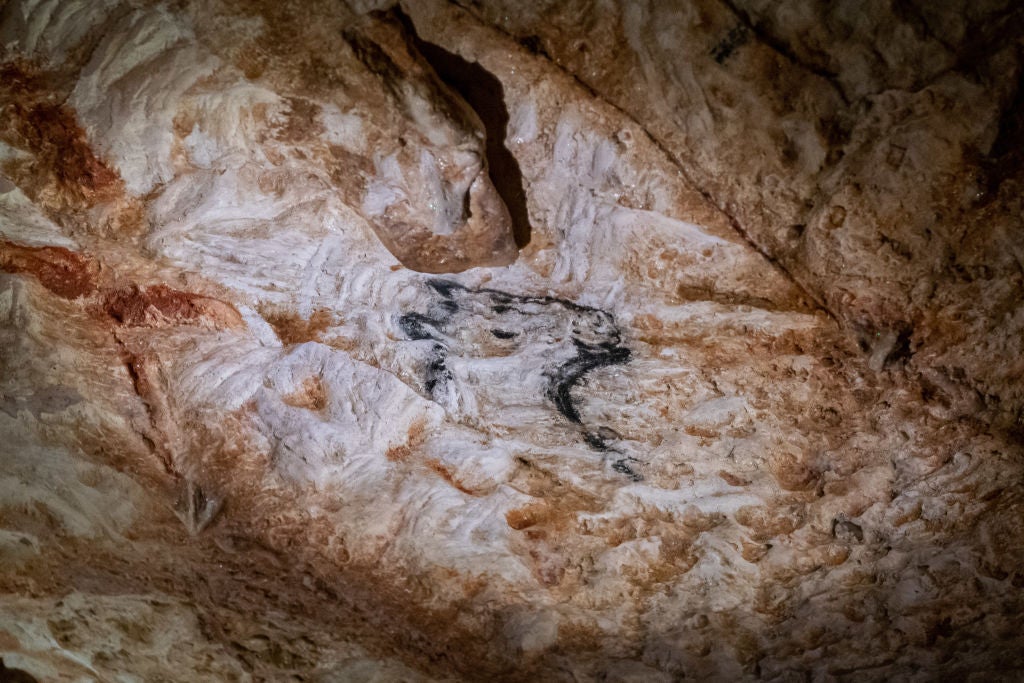
Cave paintings in modern-day France display realistic imagery of the species, remains of which are bigger than sabertooth tigers. They are considered a distinct species from modern-day lions and likely died out in an extinction event at the end of the late Pleistocene, some 12,000 years ago.
Read the full article here