



This time of year can bring many opportunities. Bass tend to feed more aggressively now, and their locations are fairly predictable. Pretty much find the bait and you’ll find bass.
On manmade reservoirs, that could mean the backs of creeks and pockets, where schools of shad migrate to; or over shallow points and bars where herring tend to collect. On natural lakes, the feed might occur along grass edges or over shallow shell bars, or wherever you find moving water — flowing in or flowing out.
Essentially, you’re looking for places that attract baitfish in large numbers, while providing bass an easy opportunity to intercept them. Once those areas are pinpointed, it’s simply a matter of choosing the right lure for the situation … and crankbaits can be an excellent choice.
Start by choosing those that match the basic size and coloration of the forage the bass are targeting, then experiment from there. And to maximize the performance of the lures you choose, be sure to pair them with the right balance of tackle.
Clear water killers
If the lake or river you’re on is exceptionally clear and the bass are feeding by sight, then crankbait selection can be somewhat limited. Normally those that swim with a tight wiggle produce the best. That includes diving and lipless models.
Sight feeders can be very choosy at times, so I start with crankbaits finished in silver, gold and various baitfish-matching patterns — opaque and translucent.
Any number of lipless brands can work. Just keep size and coloration in mind when considering the amount of sound they emit. Noisy, high-pitch rattles can work well if the fish are feeding aggressively, or if you’re trying to attract them from a distance, but don’t discount those with more subdued sound levels or those that are silent. Oftentimes, they will out produce the noisier models, especially in clearer water.
Crankbaits with diving bills are another matter. More often, it’s less about sound and more about the lure’s swimming action.
In clear water situations, I normally prefer flat-sided crankbaits or those with slim profiles — such as a Rapala Shad Rap, Shimano Macbeth Flat and certain custom-made models. The key is their tight shimmy or wiggle during the retrieve. Their swimming action is more subtle, and bass feeding by sight usually prefer that.
As water temperatures drop or when it gets windy, rounded models can also work. Just keep the aforementioned colors in mind when fishing in clear water.
Down and dirty
When water is stained, full-bodied crankbaits tend to shine. And Shimano’s Macbeth series offers a full range of wide-wobbling models — both in size and depth application.
These lures are super buoyant and displace a tremendous amount of water. And with that type of aggressive action, I know I can plow them through the water column and just about any type of cover related to it. In fact, it’s their buoyancy and how they deflect off cover that makes them so effective.
If the bass are chasing bait in standing cypress, sparse lily pads or along rocky banks, I know my chances of connecting increase dramatically with a full-bodied crankbait — especially when it bangs into those objects. And when bass strike, they usually get the lure deep.
Case in point: During the Lake Murray Elite event this past spring, I found bass in off-colored water, pushing schools of 4- to 6-inch threadfin shad against a riprap bank. Because I had been using a variety of clear-water lures before arriving there, I tried those first. But it wasn’t until I switched to a large-profile Macbeth 75F that I finally connected. And in minutes, I put a solid stringer of bass in the boat … all of which engulfed the lure.
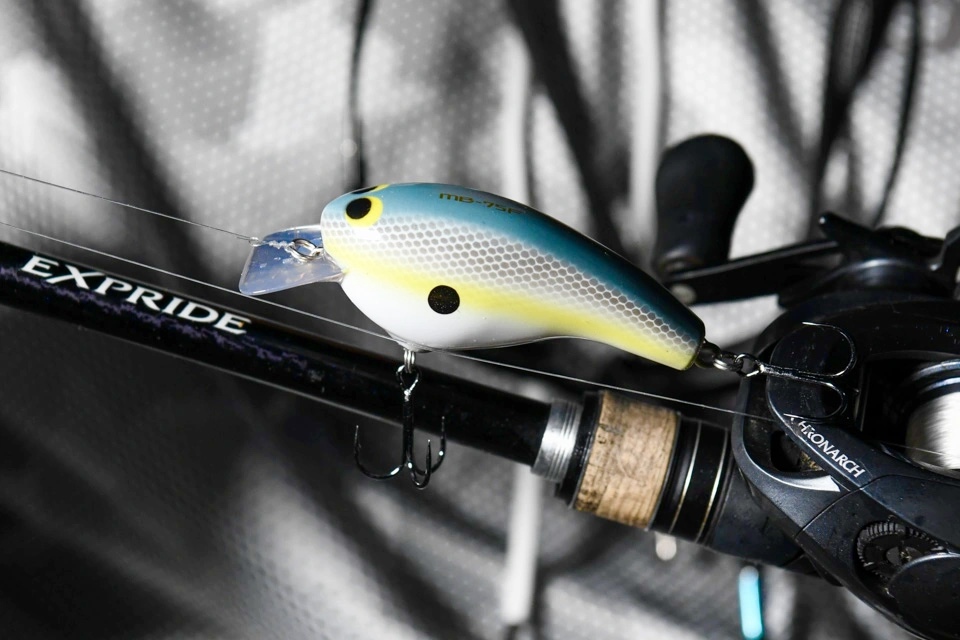
The difference was the stain in the water and matching my crankbait to the size and coloration of the baitfish the bass were chasing.
Crankbait complement
Once you’ve found the right lure for the situation, then it’s a matter of pairing it to the correct rod, reel and line size — all of which must be in balance.
In most cases, we’re talking baitcasting equipment. That’s not to say that spinning gear won’t work. It does, especially for ultra-light divers. But for most applications, casting gear is the preferred option.
My setups for cranking are fairly basic. The rods I like run in lengths between 6 feet, 10 inches and 7 f33t, 2 inches, in medium to medium-heavy actions. Which of these will depend on the type, size and weight of the lure I’m throwing and if casting distance and accuracy are critical … also the type of cover I’m confronted with.
For lighter presentations, I like the Shimano Expride EX1610MA (6-foot, 10-inch with medium action) paired with a Metanium MGL III baitcasting reel in a 7:1 ratio. This combination helps to facilitate smooth, accurate casting, even in a brisk, head-on wind. The Metanium’s small profile fits comfortably in my palm for hours of repetitious casting, yet it has the core strength to move big fish in heavy current or away from subsurface obstacles.
When I’m dealing with larger profile lures and dingier water, I’ll step up to an Expride EX 170MGA, which translates to a medium glass composite with moderate action. I pair it with either a Chronarch MGL or Curado DC 200 and vary the ratio depending on the retrieve speed required.
My line choices range from 10- to 18-pound test fluoro — based on the clarity of the water, type of cover the fish are relating to, or the size and weight of the crankbait I’m throwing. Generally speaking, the bigger the bait, the heavier the line.
My preferred choice of fluorocarbon is the new Mastiff FC by Shimano.
Fall cranking summary
There are times when bass react more favorably to fast moving lures, others when they won’t. Try to choose your crankbaits accordingly.
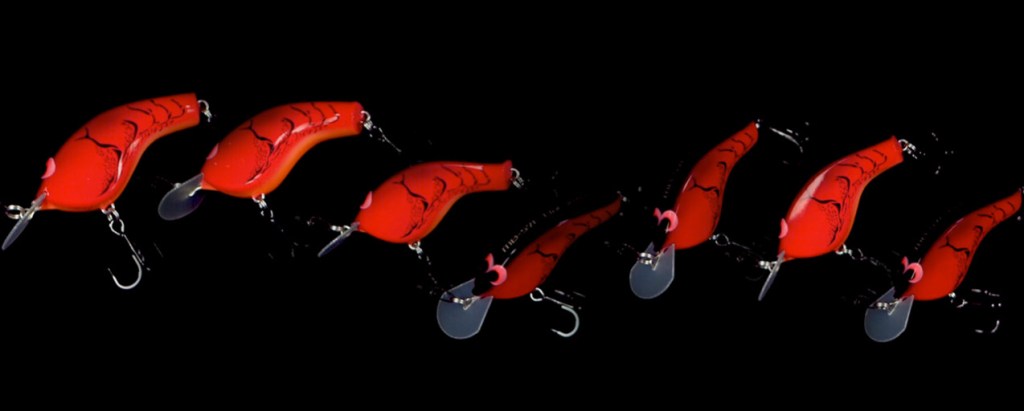
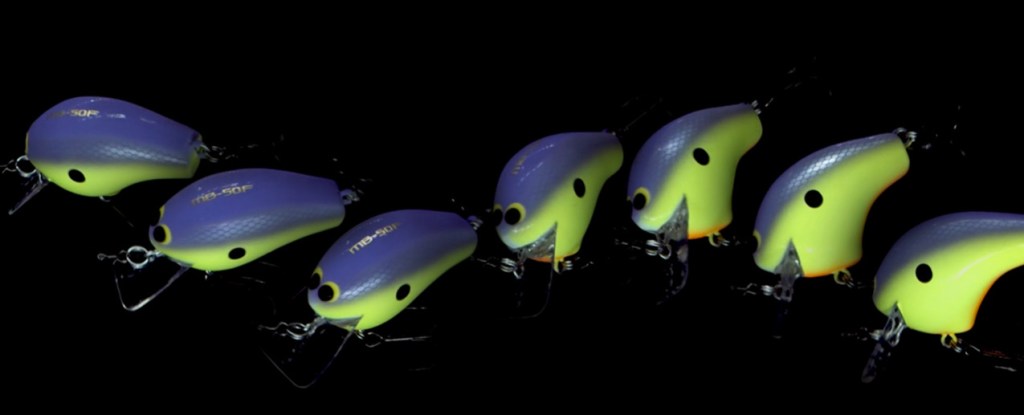
When high-speed cranking is the ticket, consider whether the lure is designed to run true in a tight, deliberate swimming motion, or more randomly with a “hunting” action (see time-lapse photos above). Either can be good, depending on the situation. So be sure to experiment … not only with lure action, but also size, profile and color.
Also, don’t forget to make contact with the cover the fish are relating to. Your strike percentage will increase dramatically if your crankbait is banging into and deflecting off any underwater objects.
As fall transitions into winter and the feed begins to taper off, the cranking concepts I’ve shared can still apply. A percentage of the bass on any body of water will remain shallow, even in the winter months … at least below the Mason-Dixon Line.
Follow Bernie Schultz on Instagram, Facebook and through his website.
Read the full article here