



By using this site, you agree to the Privacy Policy and Terms of Use.
Accept
Afield DailyAfield Daily
  • Home
  • Hunting
  • Fishing
  • Cooking
  • Camping
  • Gear
  • Videos
Search
More Topics
  • Outdoor
  • Conservation
  • Survival
 
  • Guns
  • Gear Review
  • ATVs
Quick Links
  • Community
  • Customize Interests
  • Bookmarks
  • Privacy
  • Terms
  • Press Release
  • Advertise
  • Contact
© 2023 Afield Daily. All Rights Reserved.
Reading: Early Alaskans Built Hunt Camps on Woolly Mammoth Migration Routes
Sign In
Notification Show More
Latest News
It’s OK to Keep Trophy Crappie
Fishing
GALLERY: Team Knighten Industries sweeps the board at Builders FirstSource Qualifier Match 3
Fishing
The Best Tactical Flashlights of 2024
Gear
FantasyFishing.com Insider: Everything you need to know about Kentucky Lake
Fishing
Man Fined After Illegally Stashing 1,000 Pounds of Shed Antlers
Conservation
Aa
Afield DailyAfield Daily
Aa
  • Camping
  • Hunting
  • Fishing
  • Cooking
  • Gear
  • Survival
  • Conservation
  • Videos
Search
  • Home
  • Videos
  • Sections
    • Hunting
    • Fishing
    • Cooking
    • Camping
    • Gear
    • Survival
    • Conservation
  • Quick Links
    • Community
    • Customize Interests
    • Bookmarks
Have an existing account? Sign In
Follow US
  • HUNTING
  • FISHING
  • COOKING
  • SURVIVAL
  • VIDEOSHOT
© 2023 Afield Daily. All Rights Reserved.
Hunting

Early Alaskans Built Hunt Camps on Woolly Mammoth Migration Routes

Afield Daily
Last updated: 2024/01/19 at 2:18 AM
Afield Daily

Researchers traced the migration route of a female woolly mammoth back from her resting place at a seasonal hunting camp
Posted on January 18, 2024

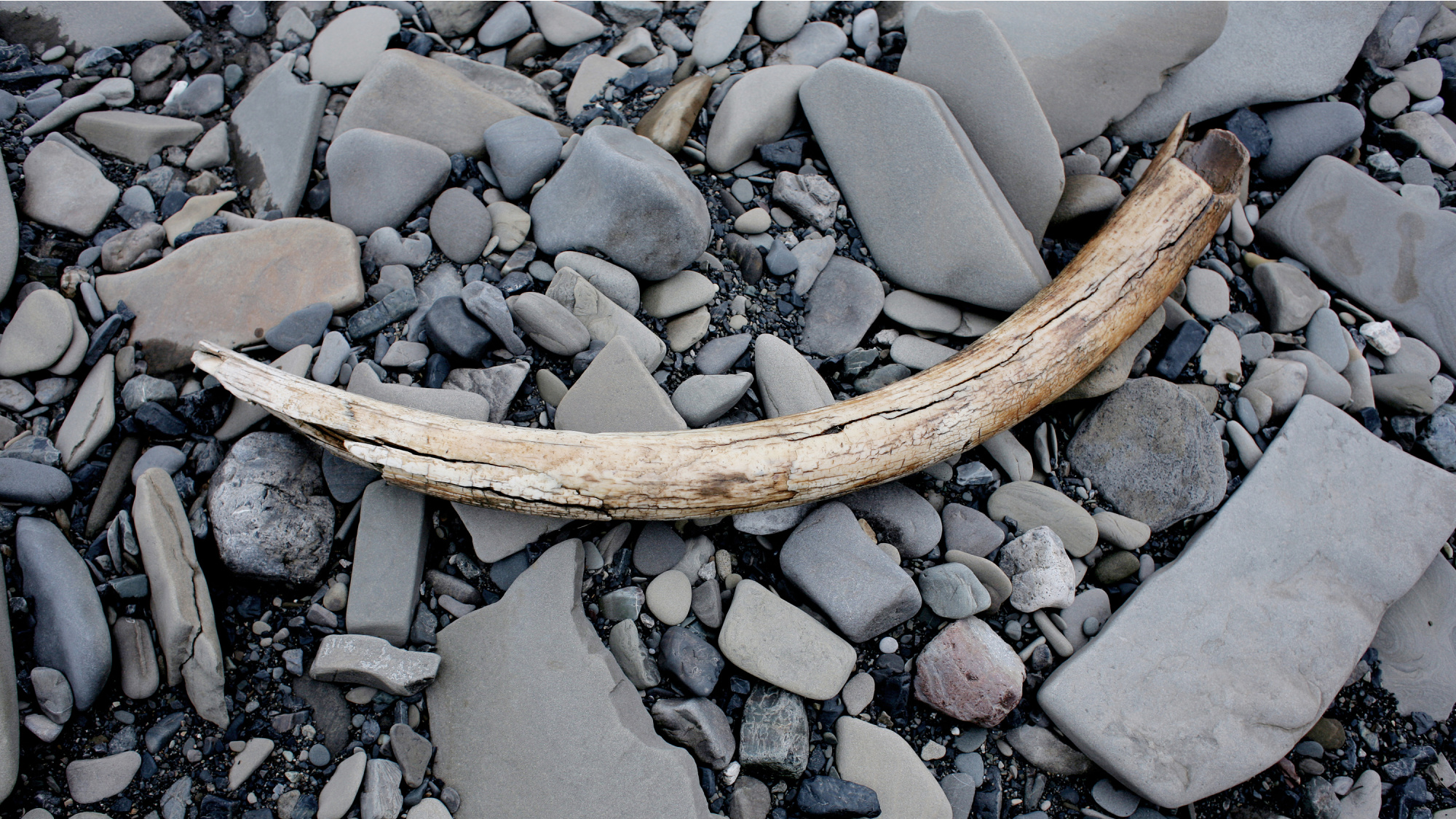
A remnant of a woolly mammoth tusk rests on the ground in Alaska.

Remnants of woolly mammoth tusks found across Alaska tell researchers a lot about how these giant game animals moved across the landscape. Photograph by Andrew Lichtenstein / Getty Images

A female woolly mammoth tusk unearthed in an area known to host ancient hunting camps has given scientists insight into how the biggest of all big game animals interacted with the humans subsisting off them, according to a new study published Wednesday in Science Advances. Many of the study’s conclusions are based on DNA from the tusk of one mammoth in particular.

Humans and woolly mammoths interacted in modern mainland Alaska some 14,000 years ago, according to the study’s authors. Hunters and mammoths overlapped by about 1,000 years at the end of the last Ice Age, after which point mammoths went extinct. Humans had likely started moving east to cross the Bering Land Bridge even as the enormous mammals moved west into Alaska from northwestern Canada. Remnants from subsistence use of woolly mammoth carcasses have been discovered around the Swan Point Archaeological Site along the Tanana River, southeast of Fairbanks. The Swan Point site is also where researchers discovered the tusk that helped them retrace mammoth migratory routes.

The female whose tusk was discovered was related to a herd of other woolly mammoths who died in the same area, proving that the Swan Point site was high-density woolly mammoth habitat. Two distinct herds populated the region, a conclusion scientists made based on past research of hundreds of other mammoth carcass fragments. Isotope analysis of the tusk revealed that the female likely underwent a large relocation in the middle of her 20-year lifespan, at which point she moved from modern-day Canada into modern-day Alaska. Researchers were able to estimate the route she took based on the isotopes, or chemical makeup, of the tusk, which grew every day she was alive.
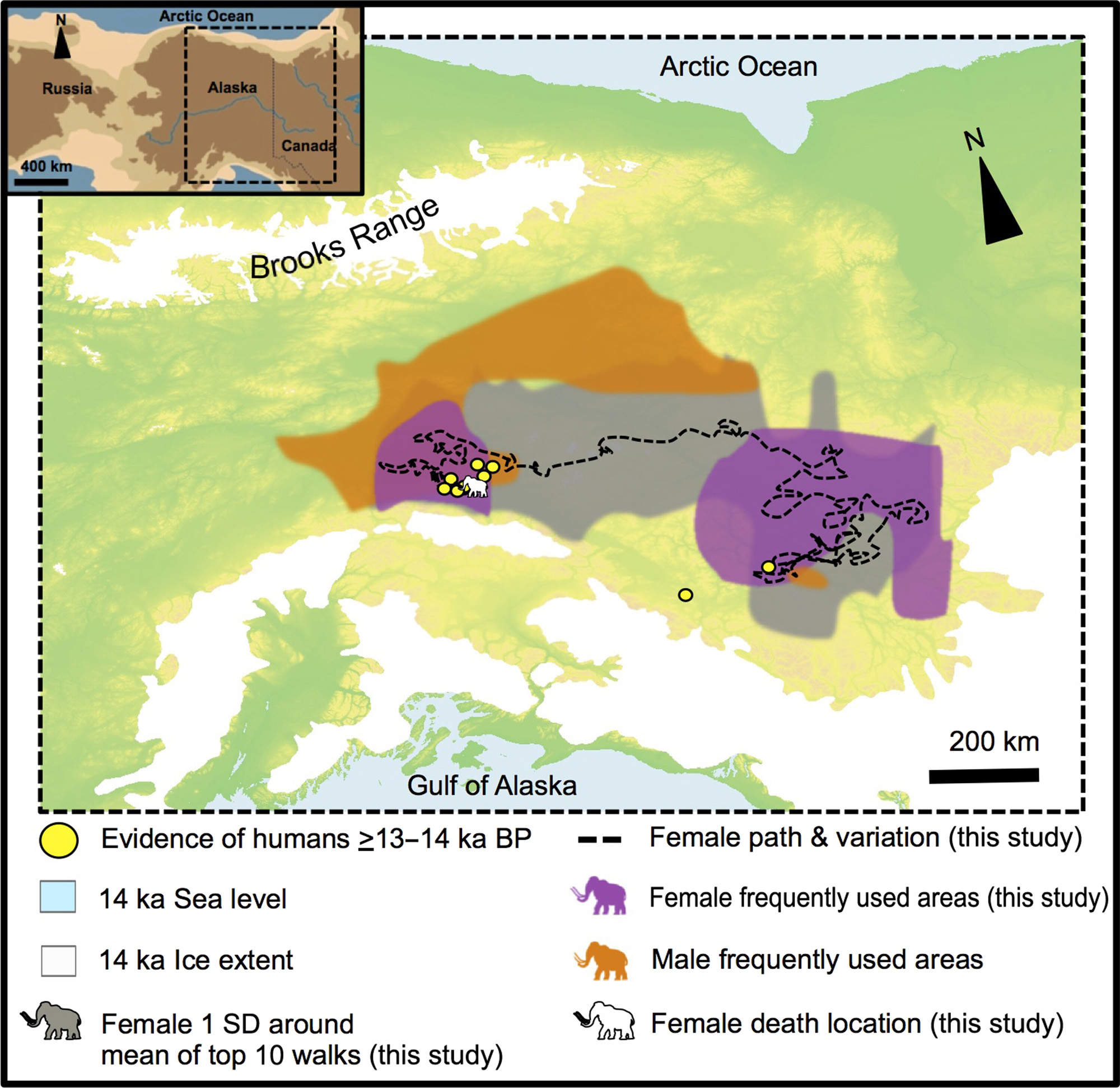
A map showing the migratory route of a woolly mammoth in prehistoric Alaska.

“She wandered around the densest region of archaeological sites in Alaska,” lead author and University of Alaska Fairbanks Ph.D. student Audrey Rowe told Phys.org. “It looks like these early people were establishing hunting camps in areas that were frequented by mammoths.”

She reached the end of her life after spending three years in interior Alaska. Another author on the study, Matthew Wooller, points out that the mammoth likely died at the hands of hunters.

“She was a young adult in the prime of life. Her isotopes showed she was not malnourished and that she died in the same season as the seasonal hunting camp at Swan Point where her tusk was found,” he told the outlet.

The people living in the area were likely ancestors to the Tanana Athabascan people, a semi-nomadic hunting, trapping, and fishing tribe of inland Alaska Natives. 

Read the full article here

[ruby_static_newsletter]
Leave a comment

Leave a Reply Cancel reply

Your email address will not be published. Required fields are marked *

You Might also Like

Hunting

How to Grow Food Plots Without Herbicides

14 Min Read
Hunting

Squirrel Hunting Dogs—And Why You Should Get One

7 Min Read
Hunting

Rio Grande Wild Turkey: How to Hunt Tan-Tipped Gobblers

8 Min Read
Hunting

Louisiana Establishes Its First Black Bear Hunting Season Since 1987

4 Min Read
Hunting

Most Hunters Will Never Get a Chance to Chase a Bighorn Ram, but What About Ewes?

13 Min Read
Hunting

5 Tips for Hunting Turkeys in Wide Open Country

7 Min Read
Hunting

Youth Turkey Hunters in Missouri Break 7-Year Harvest Record

3 Min Read
Hunting

Mossberg Silver Reserve Eventide Turkey Shogun Review

8 Min Read
//

Afield Daily is your one-stop news website for the latest articles and tips about hunting, fishing and camping, follow us now to get the content you want.

Quick Link

  • PRIVACY POLICY
  • TERMS OF USE
  • PRESS RELEASE
  • ADVERTISE
  • CONTACT

Hot Topics

  • HUNTING
  • FISHING
  • COOKING
  • SURVIVAL
  • VIDEOSHOT

Sign Up for Our Newsletter

Subscribe to our newsletter to get our newest articles instantly!

[mc4wp_form]

Afield DailyAfield Daily
Follow US

© 2023 Afield Daily. All Rights Reserved.

Join Us!

Subscribe to our newsletter and never miss our latest articles, podcasts etc..

[mc4wp_form]
Zero spam, Unsubscribe at any time.

Removed from reading list

Undo
Welcome Back!

Sign in to your account

Lost your password?