



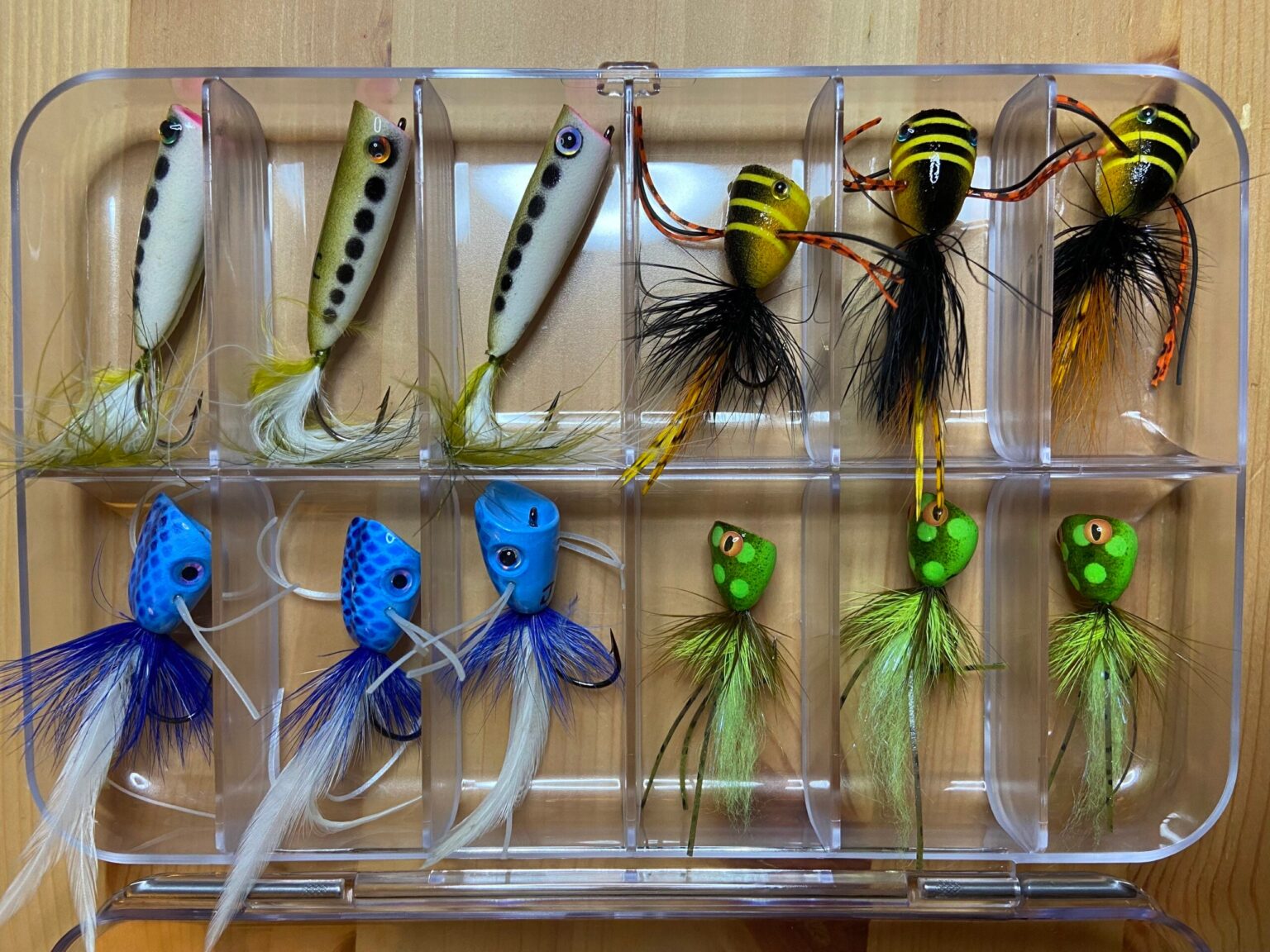

Any angler who claims he or she doesn’t love a good surface take is a liar. It doesn’t matter if it’s a trout rising to sip a caddis fly or a striper boiling on a Spook in the back of a wave, topwater takes are positively thrilling. While there are countless lure options for conventional fishermen that what to see the surface erupt, fly anglers have a bit less variety. There are, however, subtle nuances within the popper fly category. All popper patterns—despite what some anglers may assume—are not created equally. They may share some looks and basic functionality, but really drilling down on the perfect style for the fish you crave and water you’re hitting will make you more successful and draw more of your favorite fish up for a feed. Here’s a breakdown of the three most common popper styles on the market.
Scooped-Mouth Poppers
Popper flies with concave, scooped mouths are the most common style of popper pattern you’ll find in fly shops. Key examples are the Boogle Bug and Surface Seducer. The design is a classic that’s been around for nearly a century, and there’s a scooped mouth popper in every size to accommodate everything from bluegill missions to riling up salty targets like mahi-mahi and striped bass on the fly. When you strip a scooped-mouth popper, the cupped face does several things. It collects more water on the intake, thereby throwing more water outwards to create a stronger commotion when it advances forward. The mouth will also trap air, ramping up the popping sound it produces. Finally, it will also generate more bubbles underwater when stripped hard enough to make it dive an inch or two. It’s a versatile design that lets you change its behavior based on the target and task at hand.
Many people assume a popper fly is meant to pop and spit all the time. The reality is that a subtle presentation often scores more fish, especially when it comes to bass and panfish. Quite often, the initial splat of a popper hitting the surface is enough to draw attention and trigger an eat, which is why you’ll see a lot of anglers lay out a popper and then do absolutely nothing for a few seconds. In freshwater, this style of popper frequently represents large bugs more than anything else, therefore softer taps of the line to make a popper barely twitch or gurgle does a better job of representing a cicada or beetle that fell into the drink than loud, steady chugging.
Flat-Face Poppers
Key Examples:
A flat-faced popper has no scooped mouth. Popular examples are the Bob’s Banger and NYAP. Sometimes the faces can slope away at an angle, and sometimes they’re left completely vertical, however, they perform the same way. Whereas a concave mouth will gather water and air to create subtle commotion, a flat face is design to throw as much water as possible as far forward as possible when you strip. For this reason, flat-faced poppers are more commonly found in the arsenals of anglers chasing bigger, more aggressive predators in salt- and freshwater.
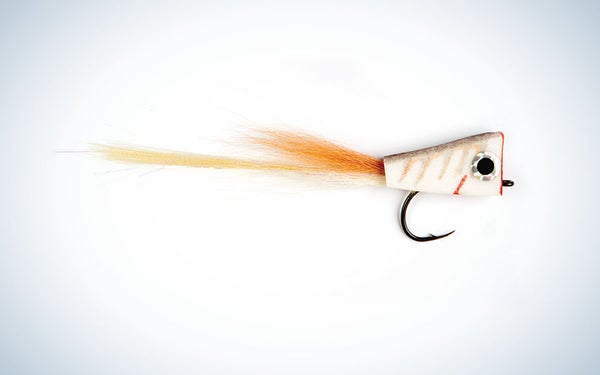
While dainty presentations score with smaller scooped-mouth poppers, flat-faced poppers are for making a ruckus. They usually represent baitfish and are meant to be stripped quickly, mimicking escaping forage which often triggers predators to go in for the kill. As the heads of flat-faced poppers are a bit more bulky than scooped-mouth poppers, they tend to be extra buoyant, which you can use to create even more noise by fishing them on an intermediate sinking fly line. While that may seem counterintuitive, a slow-sinking line creates a U-shaped belly between the end of the line and the buoyant popper. The line itself won’t have enough weight to drag the fly under, but when you strip, the fly will get pulled downward, causing it to throw water before diving a few inches and popping back up. It’s a lethal trick for anything from blackfin tuna to northern pike.
Slender Body
Slender-body poppers are popular in both salt- and freshwater. Key examples include the Pop N’ Stripe and Mylar Popper. Though their mouths can be flat or scooped, this category of fly is classified by longer, thinner profile, tapering bodies, which are tied on a long shank hook. While these patterns certainly gurgle and spit like any other popper, their trim design creates less water resistance, which allows them to be worked more quickly and “slide” or skim across the surface more easily.
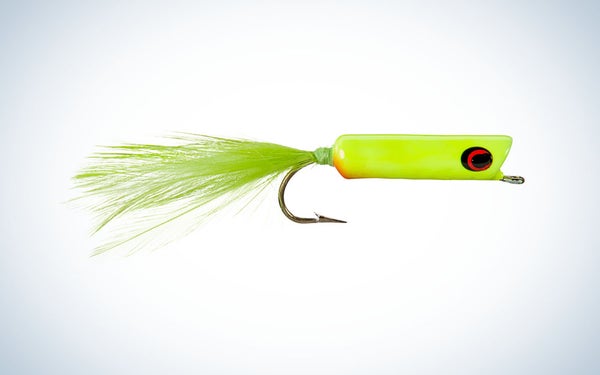
Slender-body poppers most commonly imitate baitfish, and they’re a great choice for matching smaller freshwater forage species like shad fry, darters, and juvenile chubs. Because they cut through the water so well, short, firm wrist strips can give these patterns a bit of a side-to-side walking action on the surface. One way to make this enticing motion even more pronounced is to one on with a loop knot so it has more freedom of movement. The Pop N’ Stripe has long been one of my favorite patterns for smallmouth bass in the late summer when young-of-the-year shad are thick in my local rivers, as it’s skating action perfectly mirrors one of these frantic, frightened baitfish trying to get back with its school.
Read the full article here