
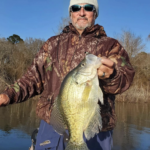

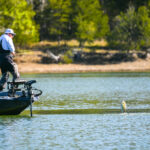
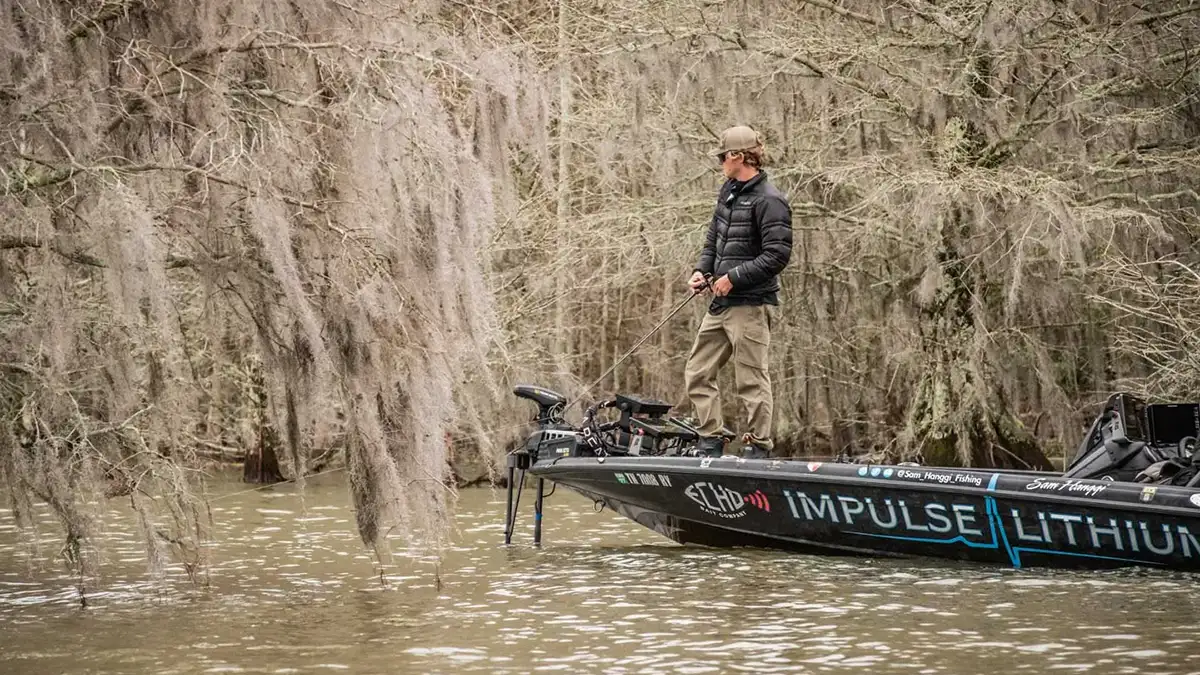

Spring is in full swing, and that means bass are spawning all over the country. I recently returned from Santee Cooper Lakes in South Carolina where I got to experience this first hand. I was competing in the recent Bassmaster Open where the large majority of the field caught them spawning. While anglers caught them in various ways, one of the main common denominators for this tournament was fishing cypress trees.
Cypress trees are the predominant type of cover on this fishery, covering the majority of Lake Moultrie and Lake Marion. Almost everywhere you look on this fishery there’s cypress trees as far as the eye can see. This makes breaking down this type of cover fairly intimidating. I had never fished cypress before this event, and a quickly learned there’s a lot more to this type of fishing than meets the eye. I learned a lot during my time on this fishery, as well as watching other anglers successfully target this type of cover. There are several nuances that I picked up on over my week at Santee Cooper, and I wanted to take this opportunity to share my findings.
PAYING ATTENTION TO DEPTH
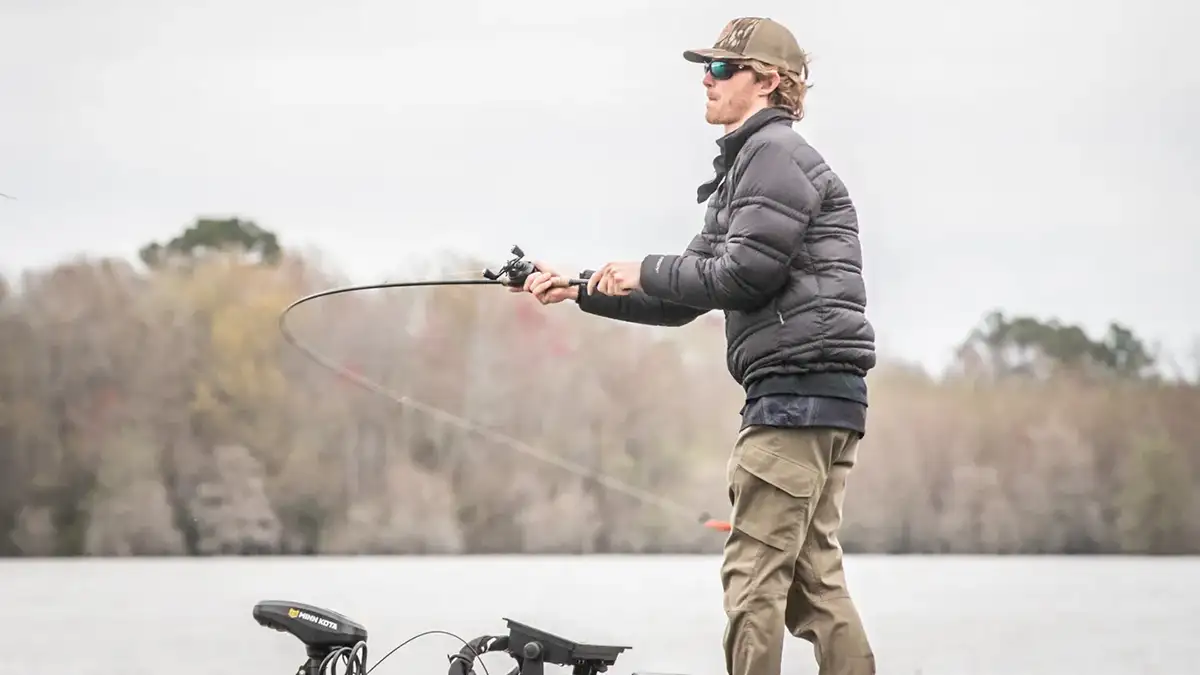
Bass use cypress trees for a number of reasons throughout the spawn. These trees serve as both a spawning location as well as a staging area for bass traveling to and from their preferred spawning grounds. Anglers targeted fish that were both spawning on trees as well as roaming in search of bait or ideal spacing locations. While targeting this type of cover may sound simple, it’s not always easy. There’s thousands of cypress tress on these types of fisheries, which makes patterning them quite difficult. One of the easiest ways to quickly locate productive trees is by paying attention to depth.
There are trees with anywhere from 6-foot to 6 inches of water on them, and this serves as a great way to quickly put a pattern together. From my experience, it seemed that bass were using shallower trees to spawn, while they’d use the deeper ones as staging areas. You’d often find small groups of fish staging on individual trees, while the shallow ones typically only held one or two fish each. Anglers found success at both depth ranges, and it seemed that once you found one good tree there’d often be others close by. One of the biggest tools that helped anglers quickly find productive areas was their electronics.
USING YOUR ELECTRONICS
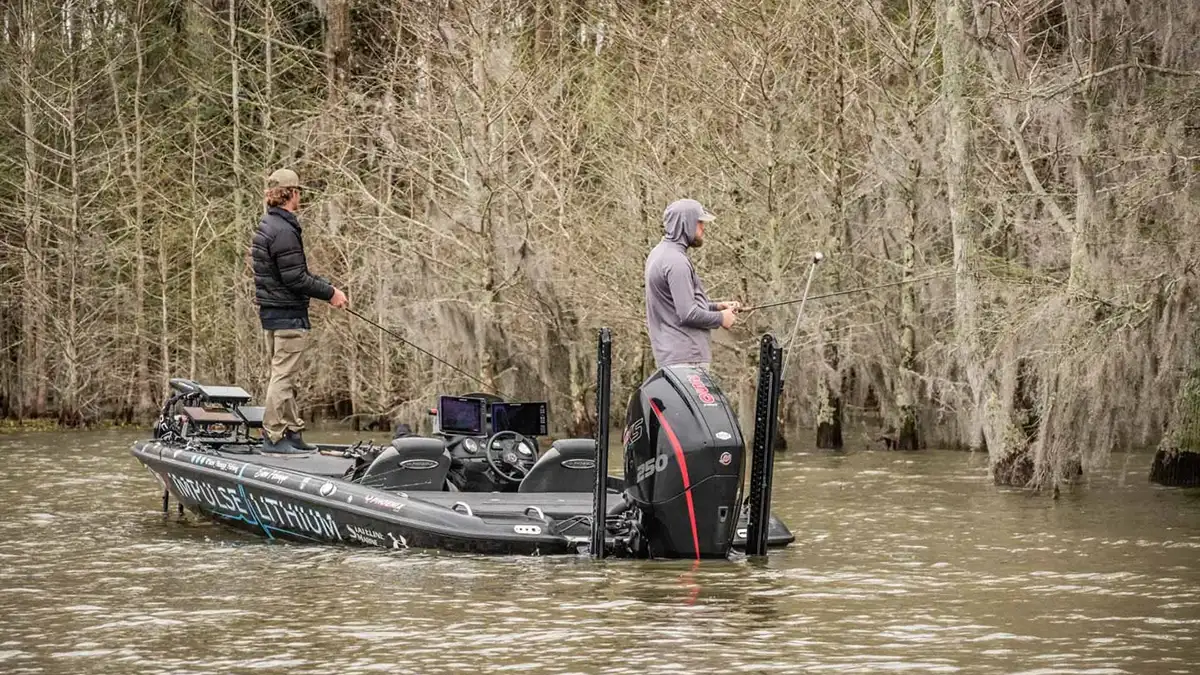
Anglers such as Scott Martin dominated in this event using forward facing sonar to catch the majority of their fish. While the majority of anglers kept their live sonar on forward mode, Scott changed his to perspective allowing him to catch fish off bed that you wouldn’t otherwise be able to see. This allows you to clearly see beds in deeper water as well as quickly identify if a bass was present. Scott was pitching a texas rigged Googan Baits Bandito Bug at these deeper beds, landing him in 3rd place for the week. This allowed Scott to really separate himself from other competitors who were only targeting beds they could see with their eyes.
Another way anglers found success in this event was targeting deeper cypress trees using the forward view on their live sonar transducers. This allowed anglers to quickly pick out trees that had bass swimming around them, saving them from wasting time on dead water. This is far less necessary when fishing isolated cover, however it can be very helpful when targeting expansive fields of cypress trees. While slowly dissecting each tree in a field of cypress can be productive, there’s no way to insure you’re casting at fish. Many anglers found success by cruising through these field of cypress on their trolling motor, only casting when they saw a fish on forward facing. Throwing baits such as a wacky rig and jerkbait were both major players for this style of fishing. While electronics can play a roll when fishing cypress trees, blind casting at isolated cover is another way to quickly find success.
TARGETING ISOLATED CYPRESS TREES
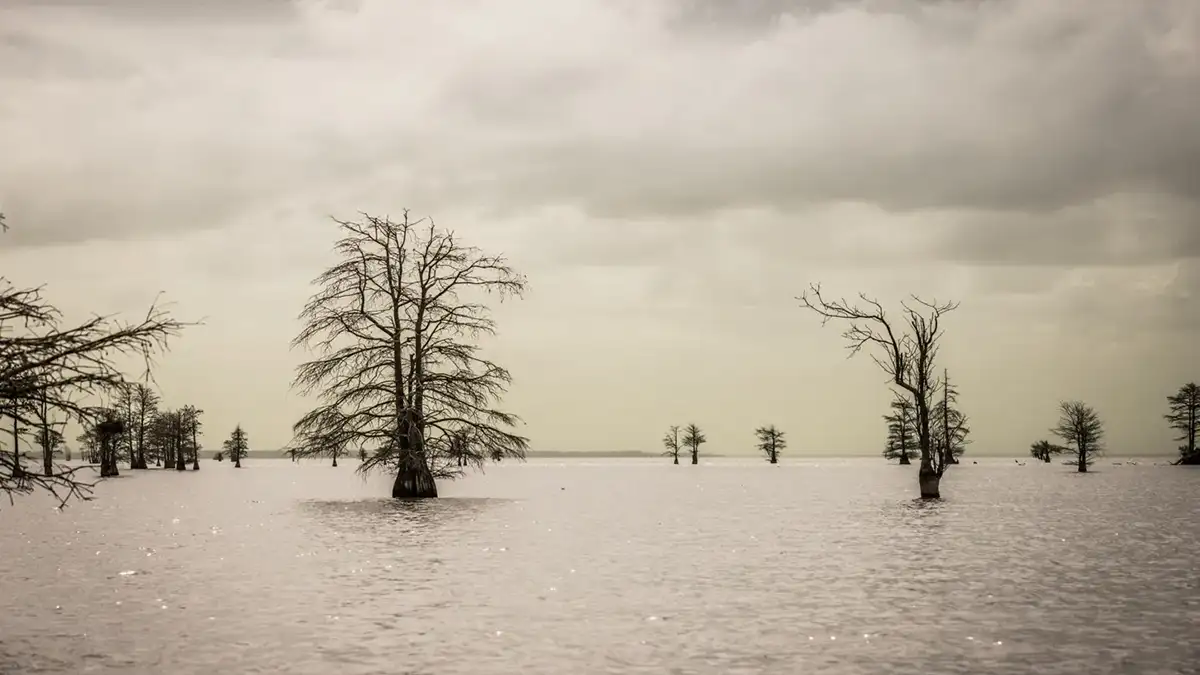
In my eyes, cypress tress fish a lot like brush piles. When there’s lots of brush in an area, there’s a lesser likelihood of fish being in one specific area. If there’s only one or two brush piles however, there’s a far greater chance these locations hold fish. This is the same when fishing cypress trees. I tend to focus on more isolated trees which seem to be some of the most high percentage locations to get bit. Both shallow and deep tress can be productive in this scenario, and they often hold more than one bass. Making long slow casts with a wacky rig or other bottom baits are a great way to get these fish to react.
PAYING ATTENTION TO VEGETATION
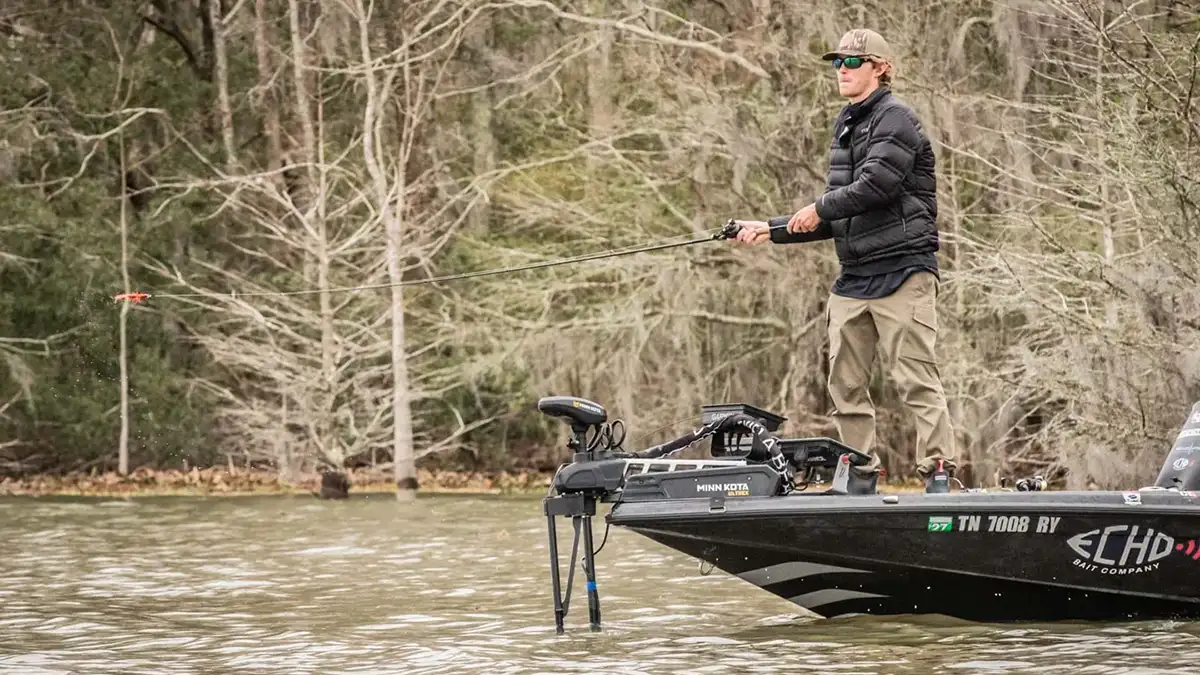
Another factor that plays into cypress tree fishing is submerged vegetation. Many of the trees on Santee Cooper have submerged grass that grows all around the tree. This grass comes up to anywhere from a few feet to a few inches beneath the surface, and it tends to limit your bait selection. Trees with vegetation tend to be located in protected areas such as coves or behind islands, and they often hold a decent population of fish.
While this grass can be productive, it makes using your electronics quite difficult. Bass tend to tuck away in the grass making them hard to see on forward facing sonar. I found it best to throw a variety of moving baits in these areas, often making multiple casts around the same tree. Changing your casting angel is a great way to get fish to react who are holding tight to cover. Focusing on specific groups of trees is a productive way to approach this type of cover. I typically start off by covering lots of water with a moving bait, then slowing down once I got a bite.
BAIT SELECTION
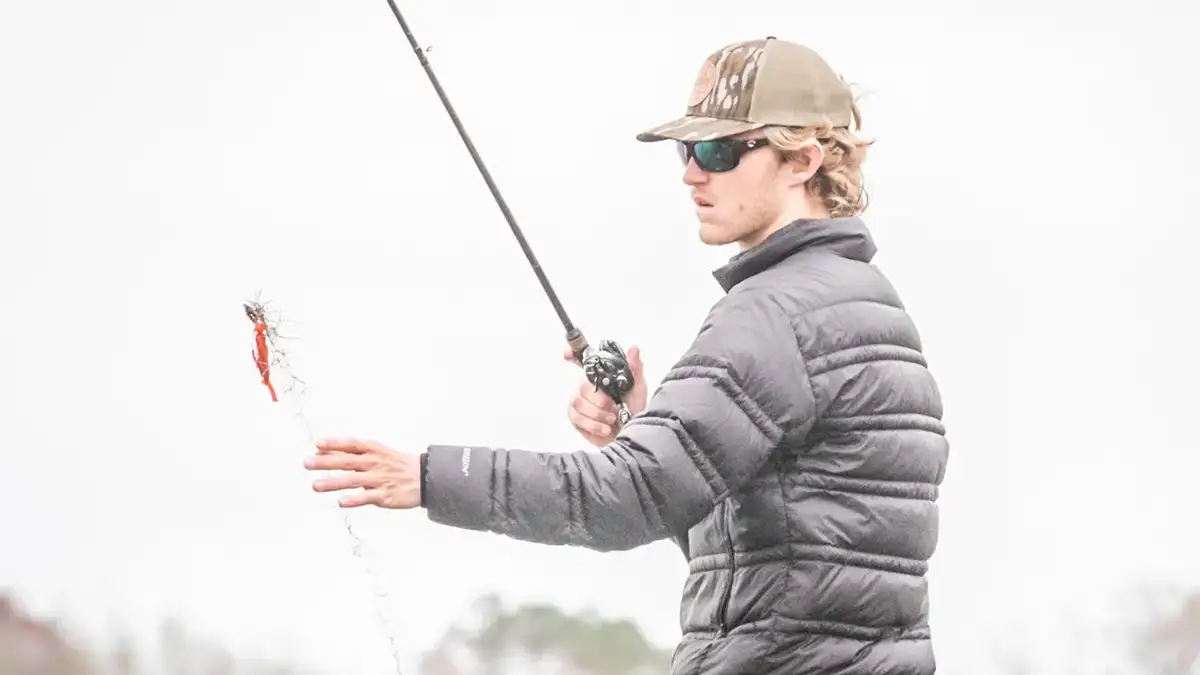
Bait selection is another variable to consider when targeting cypress trees. Like previously stated, I generally stick with moving baits when targeting cypress trees with vegetation. Some of my favorites include a vibrating jig and lipless crankbait. The lipless is great for making long casts around sparse vegetation. The Yo-Zuri Rattln Vibe is a great option for this style of fishing and landed me several solid keepers throughout the week. Whenever the grass thickens up however, I like to switch over to a vibrating jig. This is great for fishing around heavy cover and cypress tree clumps. My vibrating jig setup consisted of a 1/2-ounce Z-Man Evergreen Jackhammer paired with the Elaztech Razor Shadz. This was my main player in this event, as I locked it in my hand the majority of the tournament.
For bottom baits however I switch between two simple options. These consist of a wacky rig stick bait and a texas rigged creature bait. I generally throw these around both isolated and groups of trees with hard bottom. I prefer the wacky rig when casting at specific fish on forward facing sonar, and the texas rig when bed fishing or covering water. For a wacky rig I prefer the Berkley MaxScent 5-inch General pair with a Gamakatsu G-Finesse Stinger Weedless Wacky Hook. For a Texas rig I was Flipping a 1/4-ounce weight with a green pumpkin Googan Baits Bandido Bug. Both of these baits are perfect for targeting fish around the spawn, and are great high percentage options for getting bit when the fish are pressured.
Fishing cypress trees seemed very intimidating when I first arrived at Santee Cooper, however I quickly learned its both a fun and productive way to fish. Paying attention to depth, vegetation and your electronics makes putting together a pattern far simpler when fishing this expansive type of cover. If you’re thinking about making a trip to Santee Cooper or other predominant cypress tree fishies, be sure to pay attention to these subtle nuances.
As an Amazon Associate, we may earn income when you click on an Amazon link. Thanks for helping us do what we love.

Read the full article here