



Field considerations
Please note these guidelines are from our experiences- we have only trapped beavers in Virginia, and we trap them in the later part of the season (late January-February). The weather is generally cold, but can vary. Temps run from below freezing up to the mid 60s. We’re sure that in colder or warmer climates, some of these considerations could be moot, or be even more imperative.
Unlike most wild game that is consumed, beavers are generally trapped. If done correctly, the dying part is quick, not unlike proper shot placement on game. Where it deviates from hunting is the timing of the retrieval. When we kill a deer, we usually have it field dressed in short order. Removing the internal organs of an animal dumps a lot of thermal mass and allows the meat to cool much faster. The issue with trapping is that the time of death is unknown. The beaver might have died an hour before you checked the trap, or it might have been caught the evening before. This unknown variable could potentially impact the quality of the meat.
We’ve had just one iffy experience with beaver meat. The first beaver salami we ever made didn’t turn out nearly as great as we had hoped. There was just a slight tangy-funk to it that we couldn’t place. It didn’t taste bad, but it wasn’t as good as we had expected it would be. We went over the process and recipe a few times, and came up with a theory: there was some slight souring in the meat we used, most likely from the meat closest to the organs. The trapping season was long over by that time, so we had to wait until this season to have a chance to test our leading theory.
Our thought was that because beavers are so well insulated, and have proportionally large digestive systems, their internal heat has a hard time escaping, elevating the potential for spoilage, especially the meat closest to the organs. Even though all our beavers are caught in cold winter waters, their fur and fat insulates them longer than most other critters.
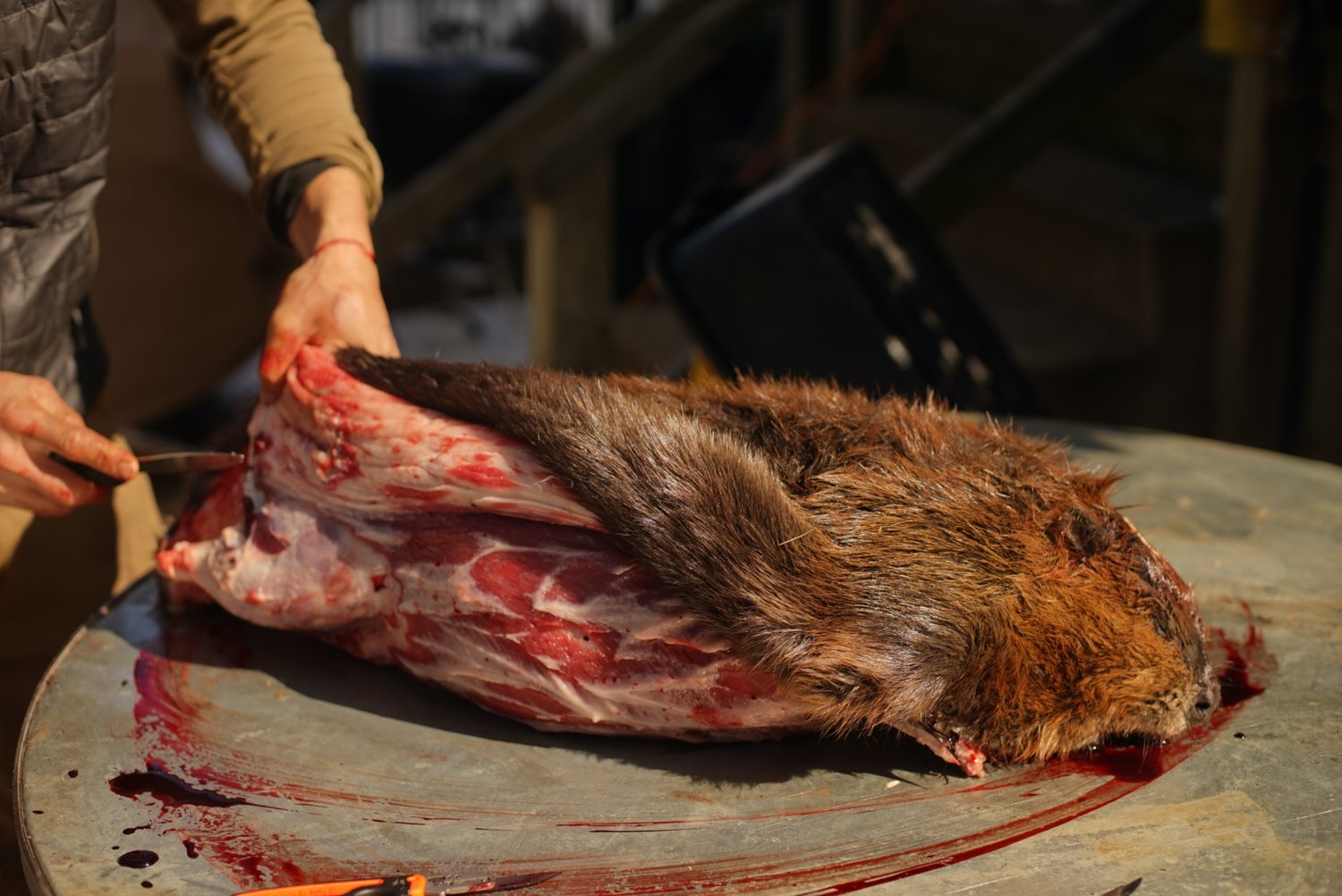
This season, after getting our first beaver home and skinning it, I opened up the abdominal cavity, cut back the flank meat and took a look and a deep smell. There was a slight sour note to the inside of the flank meat- very faint, but it was there. I also noticed that the tenderloins were not nearly as dark red as the rest of the meat was and were slightly off-colored- just a touch of gray to it. It wasn’t glaringly obvious, but the meat around the abdomen was showing the first signs of spoilage. The rest of the meat- the front and hind quarters, tail, and backstrap had no discoloration and no off smells. Knowing this, we no longer use the flank meat or the tenderloins, especially not in curing projects like salamis.
Having answered our question, we have modified the way we process beavers and we have since had zero issues with beaver meat. These are our guidelines to help minimize meat loss from spoilage, and bridge the gap between fur handling and meat handling.
-
Check traps daily. This is generally a requirement in most states, but there are deviations. In Virginia, fully submerged body gripping traps can be left unchecked for up to 72 hours. We check our traps (even the fully submerged ones) daily, because we want to minimize the amount of time between killing the animal and processing it.
-
Check early. The earlier the better. You don’t want to check traps too early, while beavers are still active, but we don’t wait until late in the day, especially if it is getting warm. Again, this is to minimize the amount of time the animal is dead and unprocessed.
-
Trap in cold weather. We’ve been asked to trap problem beavers in the warmer months, and we have always declined. Around here, the shallow waters get bathtub warm, and we have no interest in killing animals and letting them soak in warm water for hours before we can get them processed.
-
Work clean. I make it a point to wear gloves and wash my hands between skinning, quartering and removing glands. Clean your knives and hands well after handling the castor glands. I also give the table a wipe down often. I don’t find the smell of castor repugnant, but it is strong, and not a smell you want to spread all over the meat. Avoid putting excess pressure on the abdomen of the beaver while you are working on it, especially after the skin is removed. You may force some of the gland liquids out onto the meat or your work area. Also, trapped beavers are bloody. Unlike shot game, there are no punctures for the blood to leave the body of a trap-killed animal.
-
Treat it like any game animal. I know practices vary from place to place, and person to person, but game meat is generally handled similarly: get the meat cool and work clean. Beaver should be no different. Also, for the love of all that is good, don’t soak any meat, ever, directly in ice water.
Read the full article here