


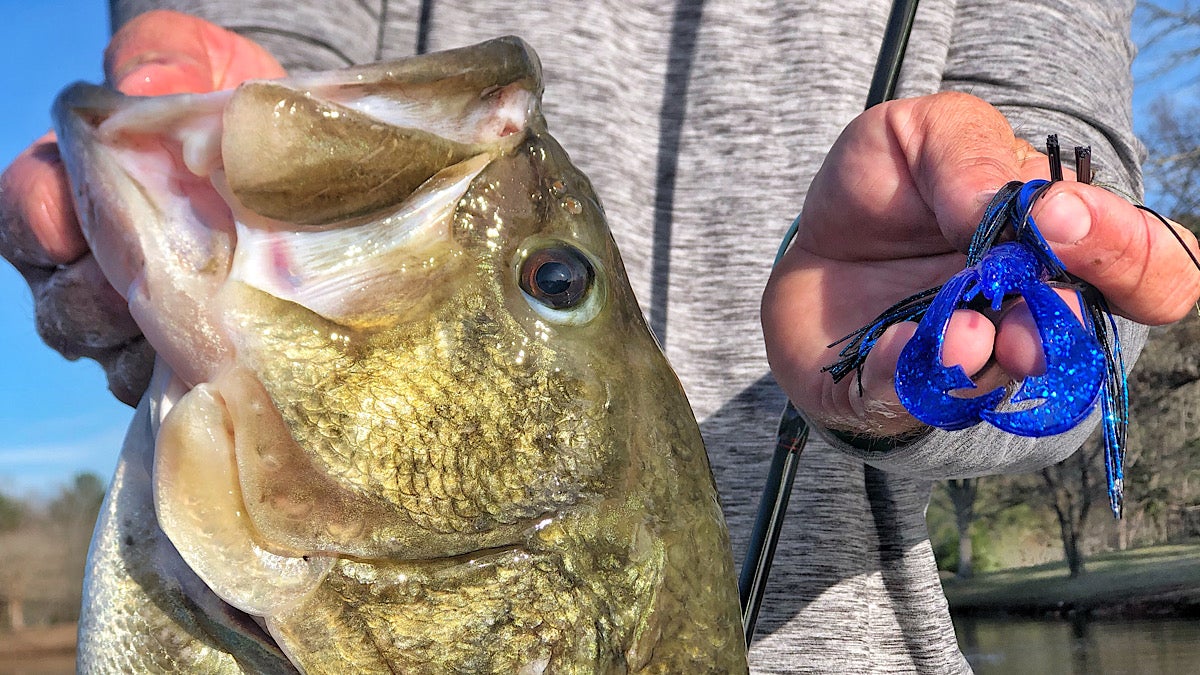

Standing in the middle of your local tackle shop, there’s a good chance you can do a 360 and touch 20 different bass fishing jigs, all designed for specific applications. There are the old-faithful designs that have been around for decades, like flipping jigs and football jigs. Then there are jigs that are so off the beaten path that they’re on the cusp of even being considered jigs at all, like bladed jigs and scrounger jigs. And a whole lot in between.
For this article, we’re going to take a look at a half dozen or so of the more popular jigs for bass fishing. These will all be jigs in the most traditional sense of the word: that is, baits consisting of a hook, a molded jig head, a weed guard, and some type of rubber or silicone skirting. The six types below comprise the vast majority of bass fighing jigs you’ll see on tackle shop shelves, and they all offer something a little different for the angler.
One of the more easily identifiable jigs out there, the football jig has an oblong head that looks like—you guessed it—a football. These jigs are designed to be dragged slowly along a fairly clean bottom in deeper water. They’re primarily meant to mimic crawfish, and so the best color selections are darker with a few strands of bright colors in the skirt, like orange. Since these baits are meant to be fished in more than 10 feet of water, the more popular sizes are in the 1/2- to 3/4-ounce range.
How to Fish a Football Jig for Bass
Football jigs work best when fish are out deep, which is the case primarily in the summer and winter. Cast a football jig out, let it sink the bottom, and then use slow drags to pull it in. If this doesn’t trigger a bite, fish can occasionally be caught by “stroking a jig”, which simply means snatching the bait up off the bottom a few feet and then letting it fall back down repeatedly.
2. Swim Jig
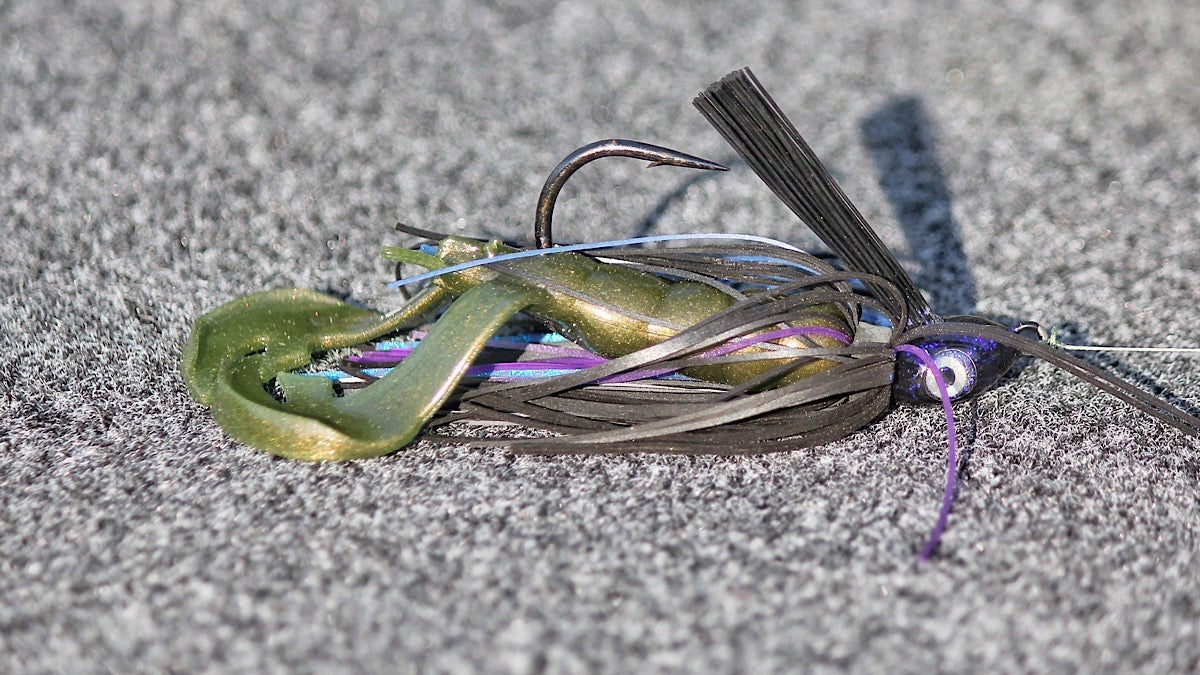
Another easy bait to identify at first glance, a swim jig is has a pointed nose so that it can be swum through and over thick cover, like water willow, hydrilla, and other types of aquatic vegetation. These baits also work well around wood and docks. You can fish heavy swim jigs in deeper water, but in shallow water, the 3/8-ounce size typically works best. And with the right color selection paired with the perfect soft plastic trailer, swim jigs can be used to imitate a wide variety of baitfish, from bluegills to perch to shad and more.
How to Fish a Swim Jig for Bass
Swim jigs work throughout the year, with spring being the standout. When bass are in the immediate pre- and post-spawn phases, they’ll collect in and around shallow cover. Cast a swim jig out and reel it in close to the surface through or this cover, while quickly twitching your rod tip. This is the most common way to fish a swim jig, but swimming the bait around cover that’s a little deeper works at times too.
3. Flipping and Pitching Jigs
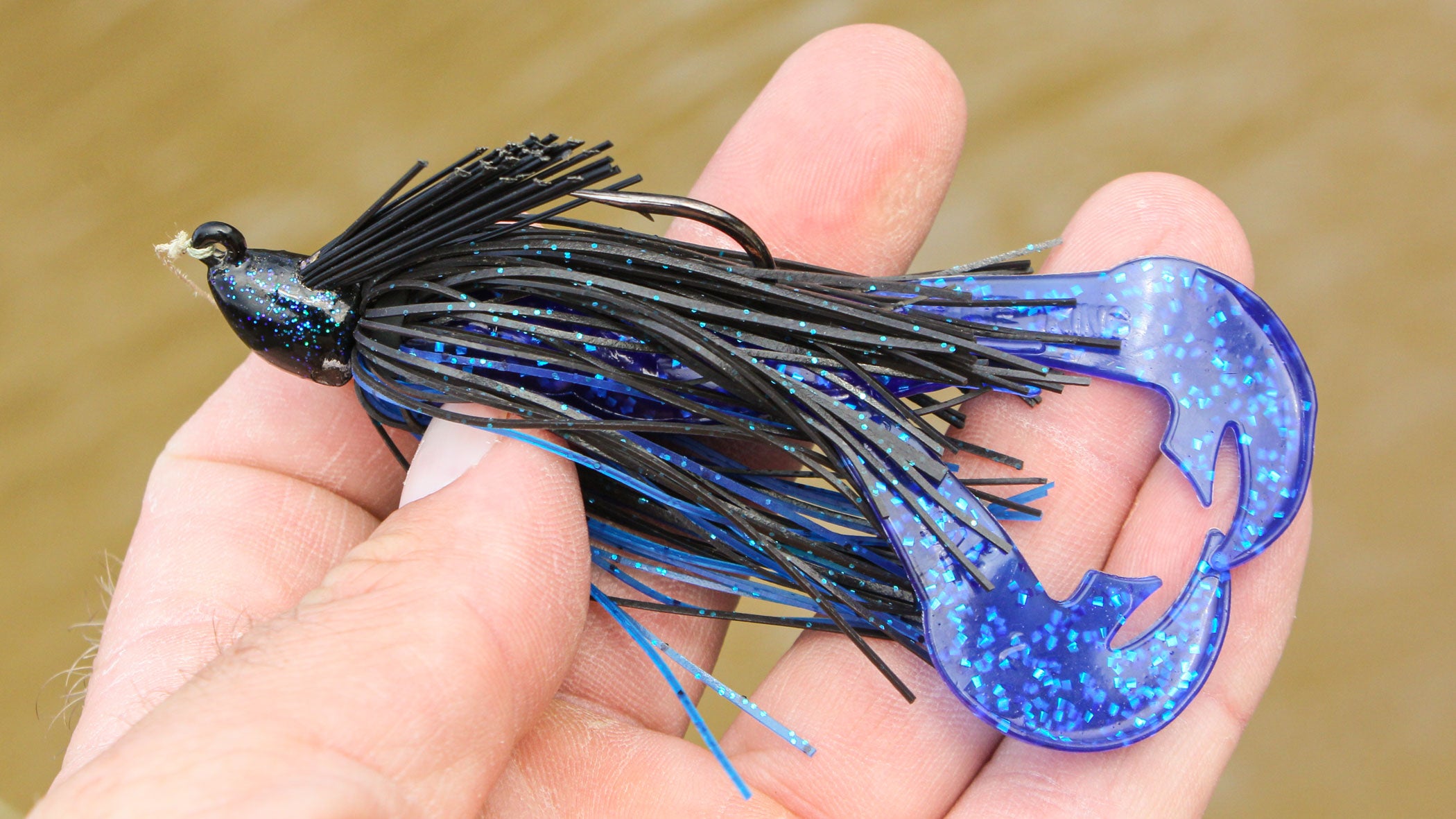
These two jig styles could easily be broken into separate categories, but there are enough similarities to lump them together here. Flipping and pitching jigs are designed to fish shallow cover like brush, vegetation, and docks. While football jigs are meant to be drug along the bottom and swim jigs are more for swimming over top, flipping and pitching jigs are most effective in between, on the fall.
How to Fish a Flipping-and-Pitching Jig for Bass
These jigs are most effective in the spring and summer, as bass cling to isolated cover, like dock posts and stumps, and stage in stretches of submerged vegetation. Simply toss one of these baits near cover where you suppose a bass might be, and let the bait fall. If you don’t get bit on the initial descent, jig it up and down a few times as you bring it towards the boat, and then move on to the next bit of cover.
4. Finesse Jig
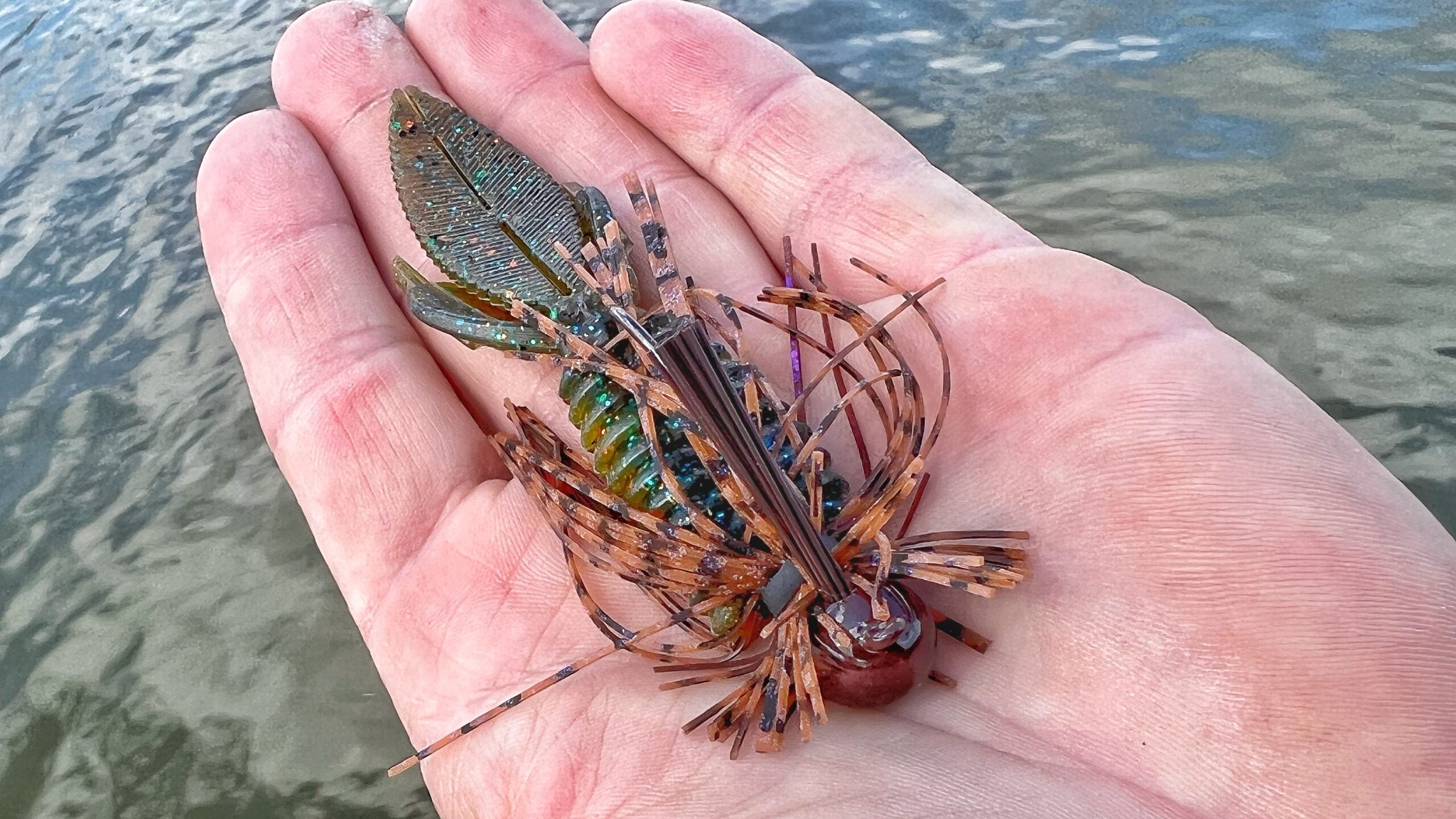
Finesse jigs, otherwise known as ball-head jigs, typically come with a round head design. These baits often sport a spider-cut skirt, which means that the outside half of the jig skirt has been trimmed back to only a 1/2-inch or so. This does two things, it masks the head of the jig, making it look more like the tail of a crawfish. And it cuts the bulk of the skirt in half, creating a much smaller profile. A finesse jig is a great choice when the bass are out deep but not willing to bite a bigger football offering.
How to Fish a Finesse Jig for Bass
Finesse jigs work best when the water is cold. Throughout the winter and into the pre-spawn, these jigs can be drug along hard bottom for bass that are targeting crawfish and other bottom-dwelling bait. A simple slow drag works best, as you’re typically targeting lethargic bass in cold water with these jigs.
5. Skipping Jig

Skipping jigs make up probably the most niche of the types we’re covering here, but their specific design stands out enough from the rest that they warrant a stand-alone section. Skipping docks, pontoons, bushes, and other overhead cover is a great way to catch bass. And though most jigs can be skipped to some degree, skipping jigs are specifically designed for it. They have broad, flat heads, which create a lot of surface area to help the baits skip across the water.
How to Fish a Skipping Jig for Bass
Skipping jigs shine in the immediate pre- and post- spawn when bass are staging under docks, bushes, pontoon boats, and other overhead cover. In order to skip this bait across the surface, it’s best to use a side-arm roll cast, so that you can release the bait close to the surface. Think of skipping a rock across the surface of a pond, and then try to use your rod to do the same with your jig. The bass typically bite a skipping jig as soon as they see it, as they’ve positioned themselves near this cover to feed.
6. Casting Jig

The last on our list is the casting jig. These are meant to be cast and dragged through cover, whether you’re fishing rocks or wood. The head design of most of these jigs has more of a scoop to it, with an upturned line-tie eye. This helps the bait be a little more snag-resistant compared to football jigs and finesse jigs, making a casting jig the perfect bait to be dragged across a clean bottom, through cover, or over cover, and then back across clean bottom.
How to Fish a Casting Jig for Bass
Casting jigs work really well during the post-spawn, when bass start to pull offshore and collect in mid-range brush. Cast these jigs out past the cover and then drag them into the brush, keeping your rod tip high. As you start to feel the cover, slow your jig down and let it sit in the brush for a few seconds on fairly tight line. This will help you detect the bite and keep the bait from falling deep into the cover where you’ll run a higher risk of hanging up. Of course, that won’t be a worry if a big bass clobbers it.
Read the full article here