



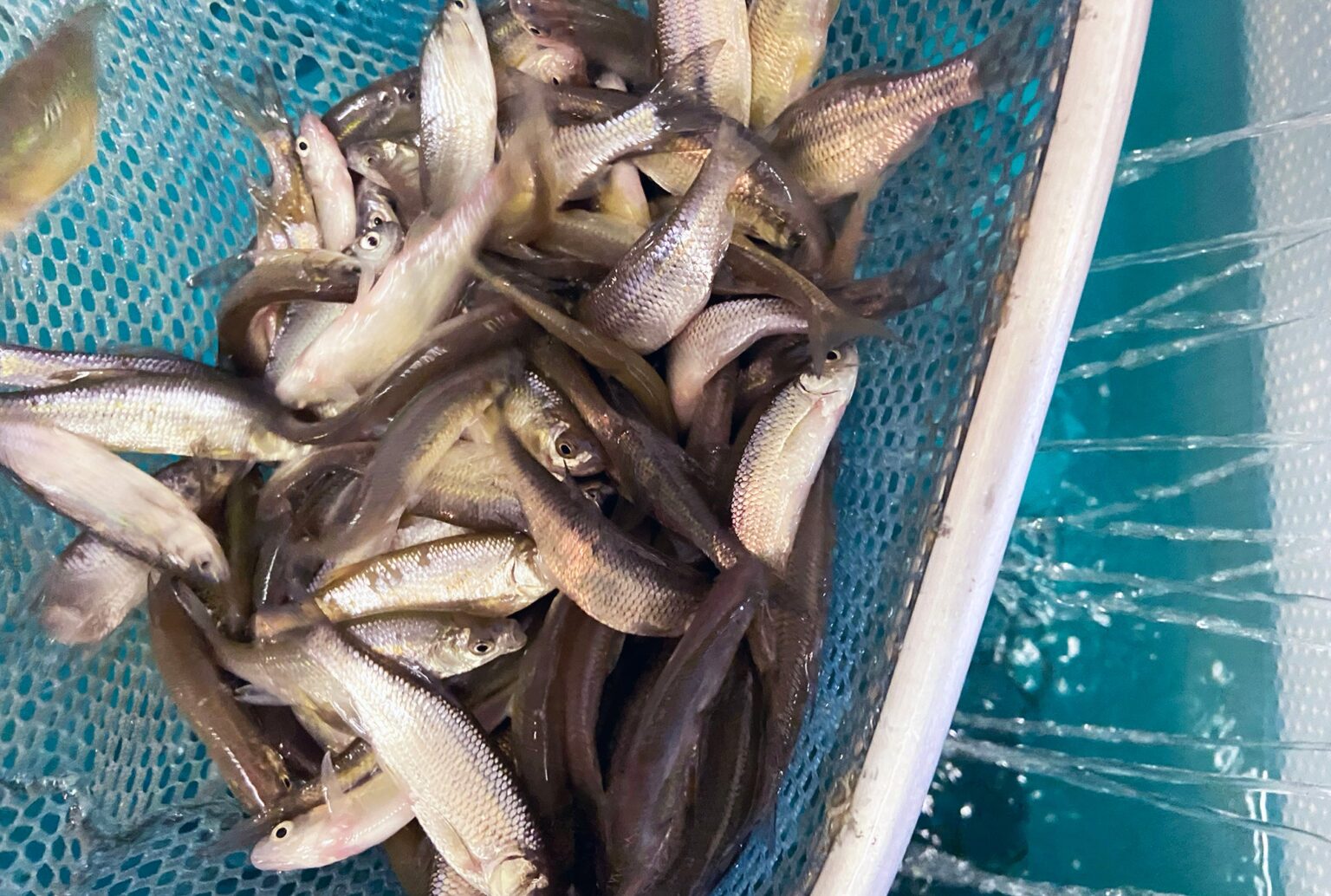

If you own a bait shop and don’t sell live shiners, can you really call yourself a bait shop? When all else fails it’s hard to beat a live shiner under a bobber—no matter where you fish. Some people view this method of fishing as too simple, easy, or lazy, but I call those people fools. I love working lures and stripping flies as much as anyone, but sometimes I’m just in the mood to giggle at bobbers getting ripped under as a live shiner meets its end. But not all anglers know how to hook a shiner.
First, you have to choose the right size shiner for the task at hand. Then you have to set your bobber at the proper depth, and make sure your hook is strong enough to land your target but light enough that the bait can swim freely. Even more important, however, is where you stick that hook in the bait. Believe it or not, hook placement matters a lot, and the perfect hook placement can vary by species or scenario. Here are the three most common methods of hooking a shiner, all of which have pros and cons.
Hook a Shiner Through the Lips and Eyes
The two most common ways to pin a live shiner on a hook is upward from the bottom jaw through both lips, or shallow through the eye sockets without piercing the eyeballs. Both methods achieve similar results. For starters, it’s widely held that these hook positions keep shiners lively longer as they’re carrying the hook in their head, so their tails and bodies remain unencumbered for swimming. In essence, eye and lip hooking present a shiner most naturally, and if your bait approached by a gamefish, it will have the strength to dart away as it would if it wasn’t tethered to a fishing line. Lips and eye sockets also feature more bone and tougher skin that the rest of the body, helping ensure that the bait doesn’t wriggle off the hook or fly off when casting. But while that may seem like too many checks in the pros column for the method, consider some of the cons.
If you’re dealing with fish like largemouth bass that tend to vacuum a shiner into their mouths, face hooking works well. Smaller fish like perch, however, have a nasty habit of grabbing the bait by the tail, and even though your bobber might dip, you won’t connect when you set the hook because it isn’t in the fish’s mouth. Likewise, species such as pike and chain pickerel often attack a shiner from the side—a move known as T-boning. If you don’t give the fish enough time to turn and swallow the bait, it might not get the hook.
Hook a Shiner Across the Back
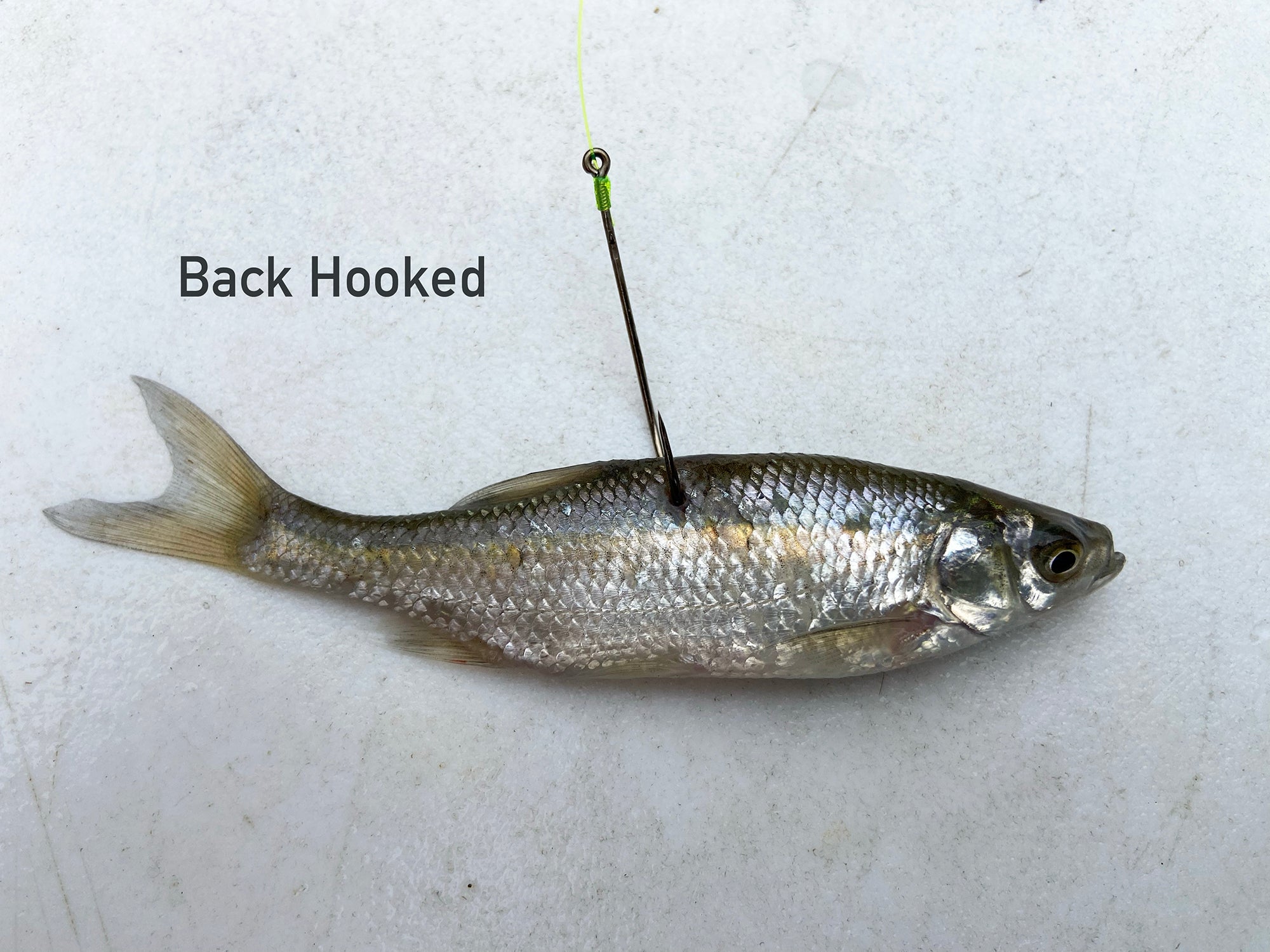
My favorite way to hook a live shiner is through the bait’s back, just forward of the dorsal fin. The key is to make sure the hook point enters and exits shallow. Don’t stick the point in too far down the body as you risk puncturing the spine, which would paralyze the bait and make it useless. Over the years I’ve noticed that I have fewer shiners stolen when rigged this way. It ups the chances that the hook will stick a smaller fish.
I started leaning on this hook style because I often target toothy chain pickerel, which, as I noted, tend to T-bone a shiner. I’m not a fan of using a steel leader when pickerel fishing, because I find it makes the bait look less natural and turns off other players like bass and perch. By hooking a shiner through the back and using a long-shank hook and 15-pound fluorocarbon, I rarely get cut off by pickerel. Assuming you’re quick with a hook set, the long shank of the hook tends to protrude from the mouth and the leader never ends up in the teeth.
One downside to back hooking, however, is that as the bait struggles, the hole in its back tends to widen and the shiner can slip free. You must also cast gently as a hard whip of the rod can tear the hook right out.
Hook a Shiner in the Rear Belly
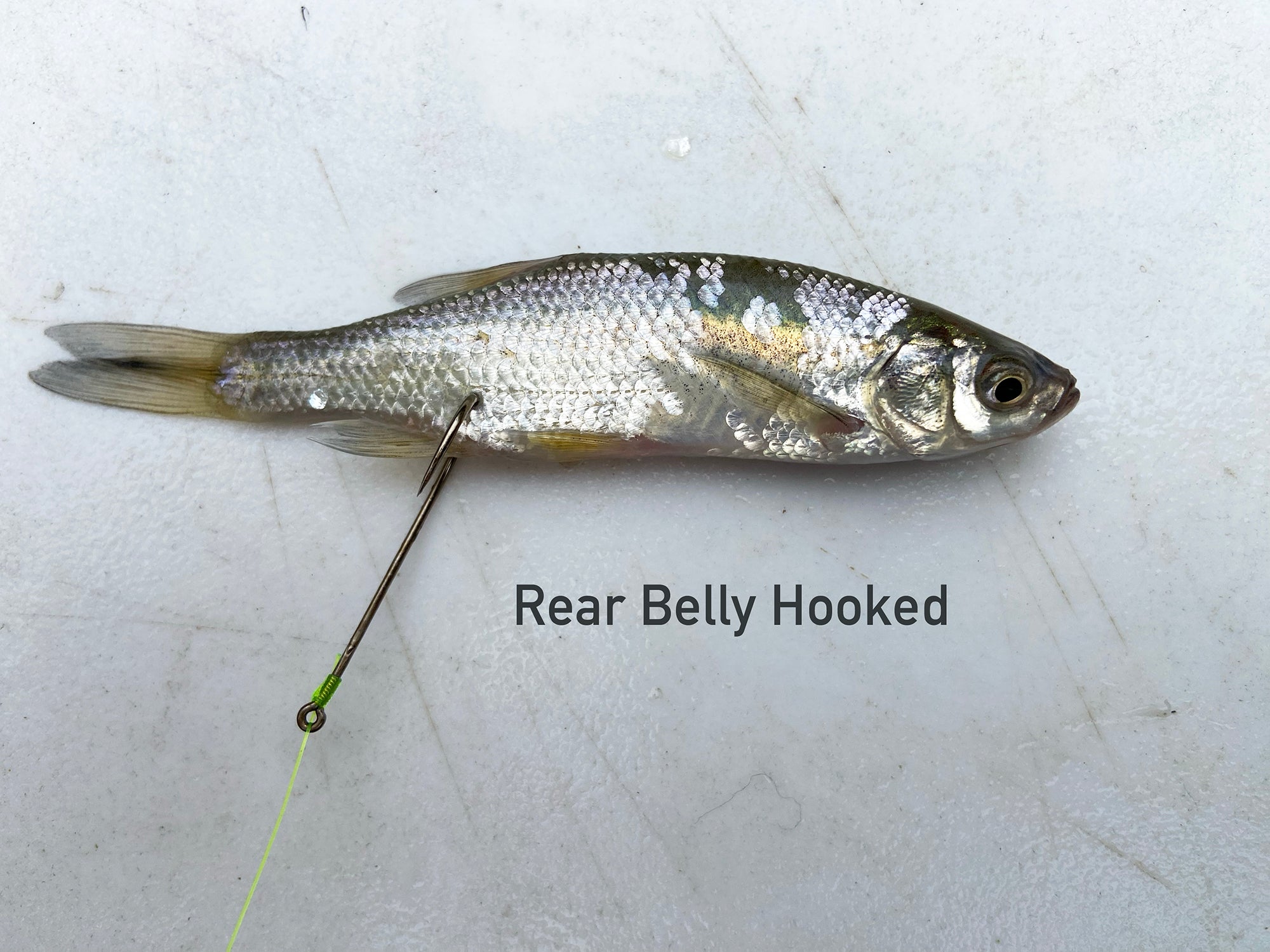
Although it’s probably the least common method of shiner hooking, pinning the bait just forward of the anal fin at the rear of the belly has a time and place. This hook position throws off the shiner’s balance and adds weight to the tail, forcing it to be pulled downward. While they’ll drain the gas in their tanks faster towing the hook and line behind them, this placement tends to make them swim very erratically as soon as they hit the water as they fight to right themselves.
READ NEXT: 15 Bait Rigs That Will Catch Any Fish Anywhere
This action mimics a frantic, injured baitfish and can draw attention very quickly. Many times, I’ve seen how a quick change to this hook position results in a near-instant strike from a bass or pickerel in the same spot where a nose hooked shiner had been soaking. I chalk it up to the fact that sometimes nose-hooked shiners instinctually freeze when a predator is staring them down, and if they don’t move, they won’t be attacked. A final perk of this method is that, unlike hooking a shiner through the back, the spine is tougher near the belly, so it’s more difficult for the bait to pull free of the hook or to be cast off when you’re sending it out.
Read the full article here