





We may earn revenue from the products available on this page and participate in affiliate programs. Learn More ›
In the last few years, many folks across the U.S. have considered buying or have bought their first gun. And most of these new gun owners are buying handguns. But with so many cartridges and guns to choose from, it can be daunting to make a well-informed decision. For those folks searching for a handgun for personal protection, and specifically concealed carry, the classic debate of .380 vs. 9mm is sure to come up.
In this story, I’ll shed some light on how the two cartridges compare. This won’t be a comprehensive dive into ballistics, but it will help those of you still weighing your options and seeking to make an educated decision before buying a self-defense handgun. Keep in mind that firearms and ammunition supplies are still limited depending on where you live, so you may not be able to purchase the exact gun or load you want, right when you want it. Still, there are a variety of options to choose from. Before we get into the weeds on the .380 vs 9mm, let’s talk about the benefits of buying a handgun for concealed carry in either 9mm Luger or .380 ACP.
Why Choose a Small Handgun?
One of the obvious advantages of carrying a smaller-caliber handgun is it will better integrate into your daily life (you can comfortably carry a pistol with the right holster or in your purse). In my opinion, semi-automatic pistols are best, because they have higher capacity magazines (which you can’t get with a revolver), decreased felt recoil and muzzle flip, and overall increased shootability.
Today’s semi-automatic pistols are very reliable, and contemporary bullet designs make compact and micro-compact pistols extremely effective. In just the past several years, gun manufacturers have introduced numerous sub-compact and micro-compact pistols that are convenient to carry, easy to shoot accurately, and that have great ammunition capacity. —Tyler Freel
.380 vs. 9mm: Things to Consider When Choosing
The most common concealed-carry pistol cartridges are the 9mm and .380 ACP. While sharing virtually the same bullet diameter as the famed 9mm round, the .380 is certainly not equal to the 9mm in overall performance. The 9mm is a heavier cartridge. It offers a large case, more powder, and heavier bullets—meaning it will generally penetrate deeper and expand better than the .380 ACP.
Penetration
Penetration is a factor to consider when selecting a cartridge as it ensures vital organs can be reached by the fired projectile—and a threat can be effectively stopped. If a round lacks penetration, the desired effect (stopping the threat) might not be achieved, especially if the attacker is wearing heavy or thick clothing. By technical law enforcement standards, you generally want a minimum of 12 inches and a maximum of 18 inches in calibrated ordnance gelatin (those big blocks of yellow gel firearms testers shoot into) penetration.
Expansion
Expansion and/or tissue disruption is another important factor in defensive bullet performance. There are no hard-and-fast recommendations for expansion but, generally speaking, shooters should be seeking a round that will expand a minimum 1.5 times its original diameter. That means .60-inch for 9mm and .380 ACP. Traditionally, this has meant a hollow point projectile should top your list, however, the fluted solid projectiles from Lehigh Defense, Black Hills Ammo, Norma, and Inceptor ammunition accomplish tissue disruption in a different way, and don’t sacrifice penetration. Rapid expansion acts as an arresting force and, in lighter loads, can make penetration inadequate.
Fit and Functionality
Cartridge performance isn’t the only thing to think about when choosing between .380 and 9mm. You should also consider how well a given pistol fits you, and how easy it is to carry, manipulate, and shoot accurately. —Tyler Freel
.380 vs. 9mm, Head-to-Head
Now, let’s look at the details of the 9mm vs. .380 decision, plus some good ammo options for each.
9mm Luger
- Bullet Diameter: .355 in
- Case Length: .754 in
- Overall Length: 1.169 in
- Case Capacity: 13.30 gr H2O
- Pros: Widely available in variety of ammo types, and sub-compact pistol platforms, powerful, proven performance
- Cons: Recoil can be too stout for some shooters
The 9mm is the king of the hill when it comes to handgun loads. Supply is generally very good, meaning you can find it for sale in volume, just about anywhere. Ammunition manufacturers have dedicated significant research and development to the round, and it is the best it has ever been. The U.S. military, FBI, other government agencies, state, county, local law enforcement, and countless civilian shooters rely on the round for good reason. It’s reliable, low recoiling, and extremely accurate, not to mention affordable and attainable. It can also be had in a variety of grain weights, bullet designs and material compositions to include lead, copper, and even a polymer matrix. Personally, I see no reason to look anywhere other than 9mm for self-defense purposes. Here are three rounds I would recommend.
READ NEXT: Best Micro 9mm Handguns
Federal HST 124-grain JHP
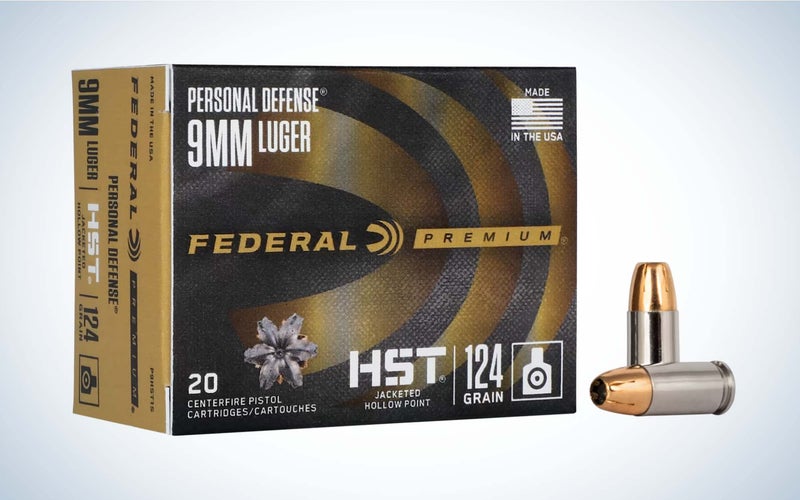
Federal’s HST line is the duty load of choice by law enforcement officers throughout the world. It has a specifically designed hollow point that won’t plug while passing through a variety of barriers, and the bullet jacket and core stay together to provide nearly 100 percent weight retention, even when shot through most intermediate barriers. HST is incredibly accurate and produces the desired level of penetration for personal defense situations without over penetrating. The bullet nose profile, nickel-plated case and high performance primer provide the ultimate in function and reliability in semi-automatic pistols and is always my first choice in 9mm defensive loads.
Speer 135-grain Gold Dot G2 Carry Gun JHP
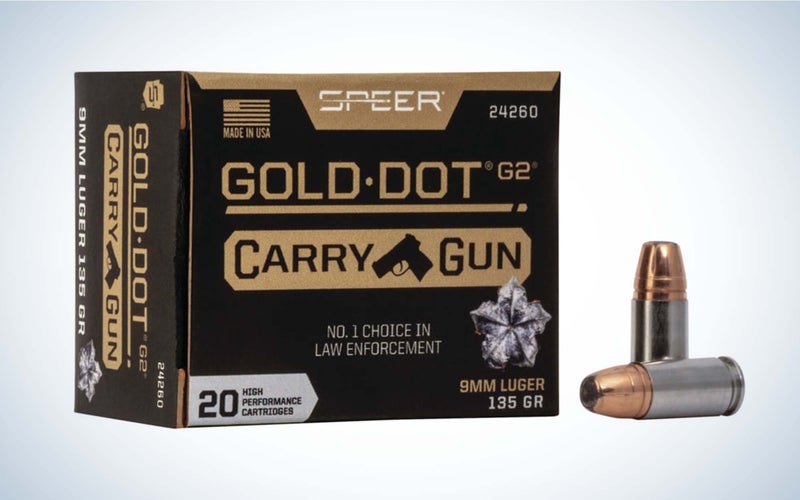
Speer’s Gold Dot family of ammunition has been one of the leading choices of law enforcement professionals for several decades thanks to its exceptional terminal performance and reliability. Recently, Speer has added a new version of its famed Gold Dot ammunition called Carry Gun. Carry Gun features a new version of the G2 bullet that is optimized for compact and subcompact pistols. Gold Dot Carry Gun ammo offers the same industry-leading performance and exceptional barrier performance shooters expect from Gold Dot G2 ammunition out of trending concealed carry firearms that are smaller, lighter, and feature shorter barrels.
READ NEXT: Best 9mm Ammo
Hornady 135-grain Critical Duty JHP
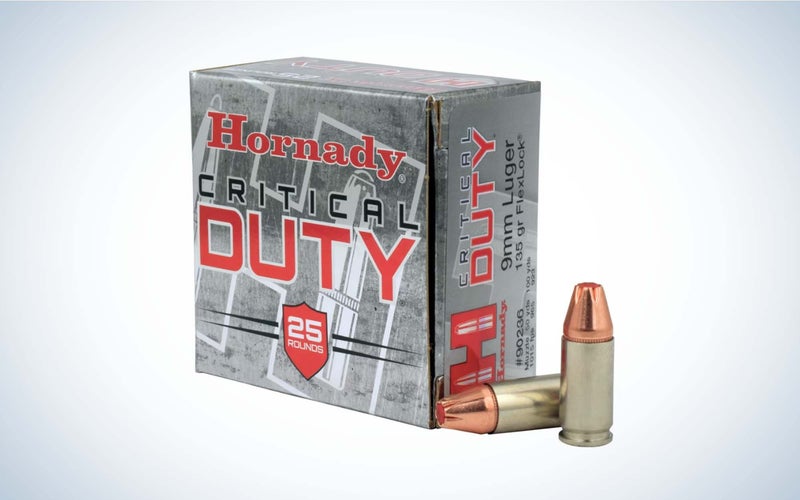
Hornady’s Critical Duty round is loaded with the unique FlexLock bullet, delivering “barrier blind” performance when shot through common urban barriers. The FlexLock bullet incorporates two advanced features to deliver superior barrier penetration and consistent performance in FBI tactical handgun ammunition tests (FBI protocol). The patented Hornady Flex Tip design eliminates clogging and aids in bullet expansion. A large mechanical jacket-to-core InterLock band works to keep the bullet and core from separating for maximum weight retention, excellent expansion, consistent penetration and terminal performance through all FBI test barriers. This round is the current issue load for FBI agents.
.380 ACP
- Bullet Diameter: .355 in
- Case Length: .680
- Overall Length: .984 in
- Case Capacity:11.8 grains h20
- Pros: Generally lighter recoiling, available in variety of sub-compact guns, ammo options are getting better
- Cons: Inferior terminal performance compared to 9mm.
The .380 ACP does nothing that the 9mm can’t do better, and for far less money. The exception is that felt recoil will be less in some platforms, but with a slight reduction in recoil comes a significant reduction in terminal performance, magazine capacity, and in many cases, reliability.
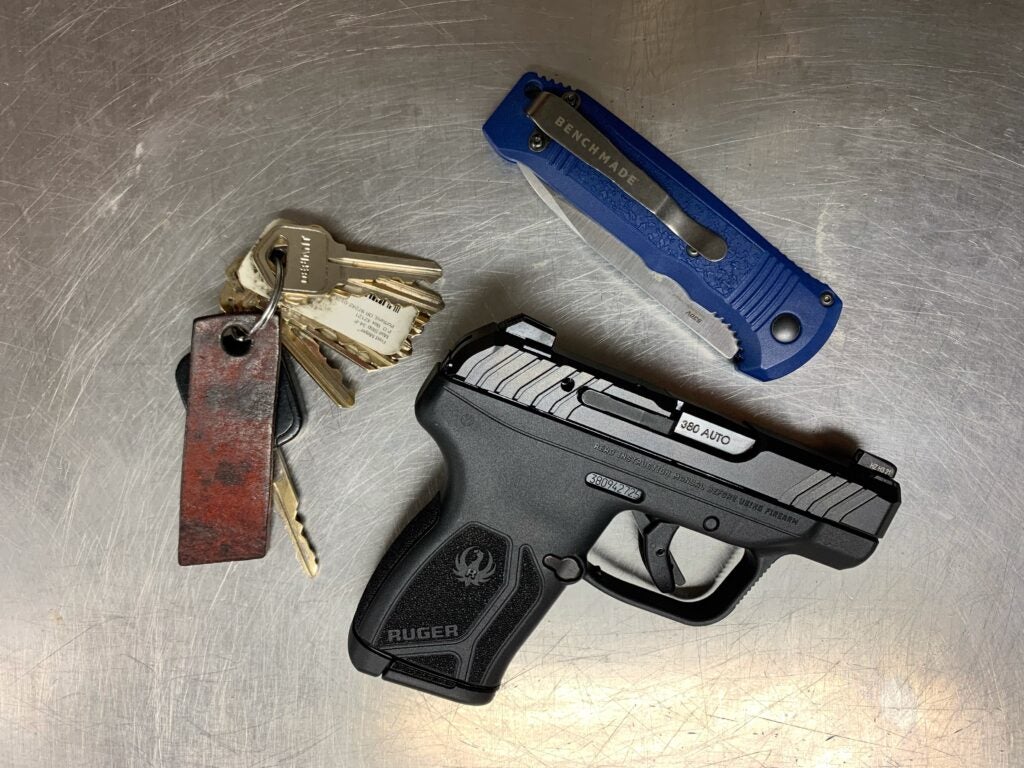
Some folks will find the .380 ACP preferable because pistols like the Ruger LCP Max have great capacity and are incredibly convenient to carry and easy to shoot. If you prefer to carry a .380, I highly recommend you choose one of the following fluted, non-expanding rounds. I’ve personally witnessed and taken part in spiral fluted .380 testing and development, and recommend them. These rounds penetrate 10 to 15 inches when shot into ballistic gelatin, whether bare or through four layers of denim or a thick leather jacket.
Black Hills 60-grain HoneyBadger
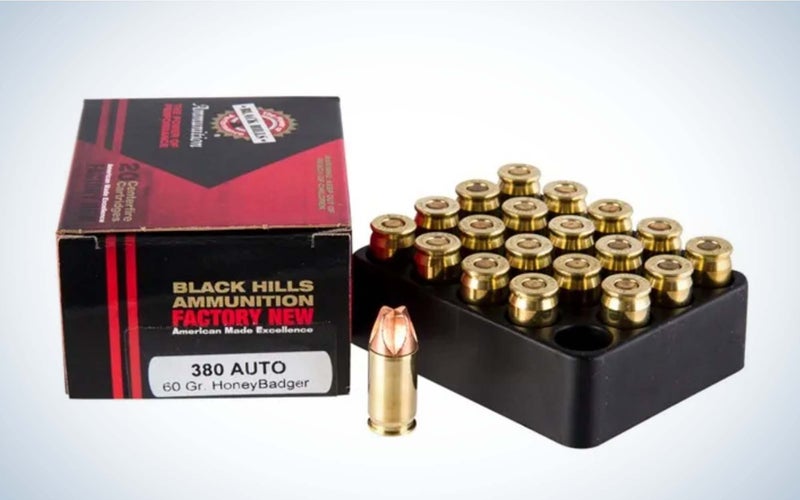
Developed in conjunction with Lehigh Defense, this spiral fluted ammunition does not rely on a hollow point design that can get plugged up with clothing and fail to expand. The HoneyBadger relies on higher than average velocity and fluid disbursement from its spiral fluted design. The cutting edges on the projectile’s forward surface redirect the tissue it impacts and spirals deep into the target like a corkscrew. Weight retention is near 100 percent and the projectile does not rely on a hollow point design to be effective. The round is constructed of solid copper.
Inceptor ARX
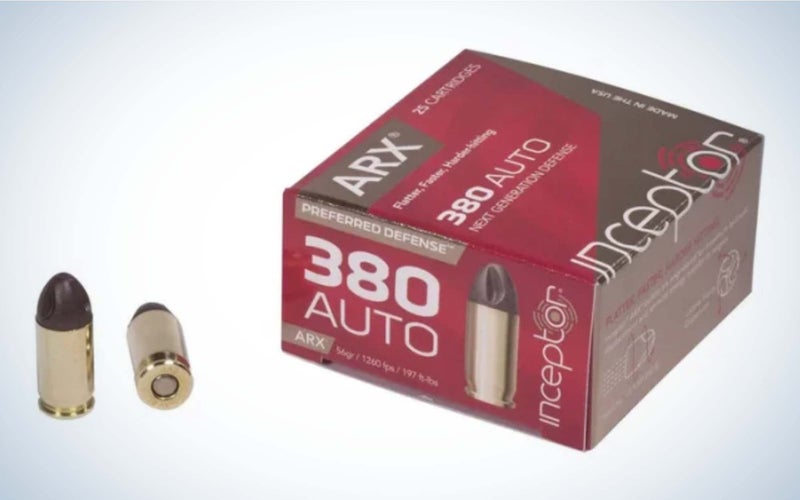
Inceptor ammunition, formerly PolyCase Ammunition, blazed the way for spiral fluted ammunition. ARX, short for Advanced Rotational eXtreme, features a non-expanding bullet that transfers both the directional and rotational force of the projectile to the target, producing exceptional penetration, while also reducing the risk of over-penetration. The ARX load is constructed of a polymer copper blend. Yes, you read that right, the round is partially made of plastic, which acts like a frangible round that quickly fragments after impacting a hard surface.
FAQs: Answers to Your .380 vs. 9mm Questions
Does .380 have less recoil than 9mm?
All things being equal, yes, the .380 will produce less felt recoil than a 9mm. However different guns recoil differently. Generally, the lighter the gun and the heavier the load, the more recoil you’ll feel.
What hits harder, 9mm or .380?
This isn’t exactly the right question to be asking about a cartridge. Forget “knockdown power.” You want your bullet to penetrate deeply and expand widely and consistently. In those two performance metrics, the 9mm has the advantage over the .380.
What caliber is best for everyday carry?
Choosing a cartridge for everyday concealed carry is very much a personal choice. Variables like body type, style of dress, and firearm experience all come into play. With that said, there are a ton of great micro 9mm pistols out there and there’s a wide selection of 9mm ammo for personal protection. That makes the 9mm Luger tough to beat.
Final Thoughts
Ultimately, training with your chosen firearm is the most important component in a concealed carry pistol. Accurate hits to the vital area in any reasonable caliber will stop a threat. Shot placement and number of shots fired are both key, but you can certainly hedge your bets by choosing the most effective caliber available to you, which is the 9mm.
Read the full article here