






Channel catfish and blue catfish are two of the most abundant catfish species in the country. While blue cats vs channel cats do have some similarities in terms of looks, they can’t go toe-to-toe in stature. Though channel cats can get pretty hefty, blue cats can reach true goliath status, requiring different baits and tackle to beat. Channel cats, on the other hand, require far less effort and skill to capture, making them great for pros and beginners alike. So, let’s breakdown the characteristics of blue cats vs channel cats so you can decide if you’re feeling a chilled-out channel cat lawn chair session or want to get on the hunt for a beast of a blue.
Blue Cat vs Channel Cat: How to Tell the Difference
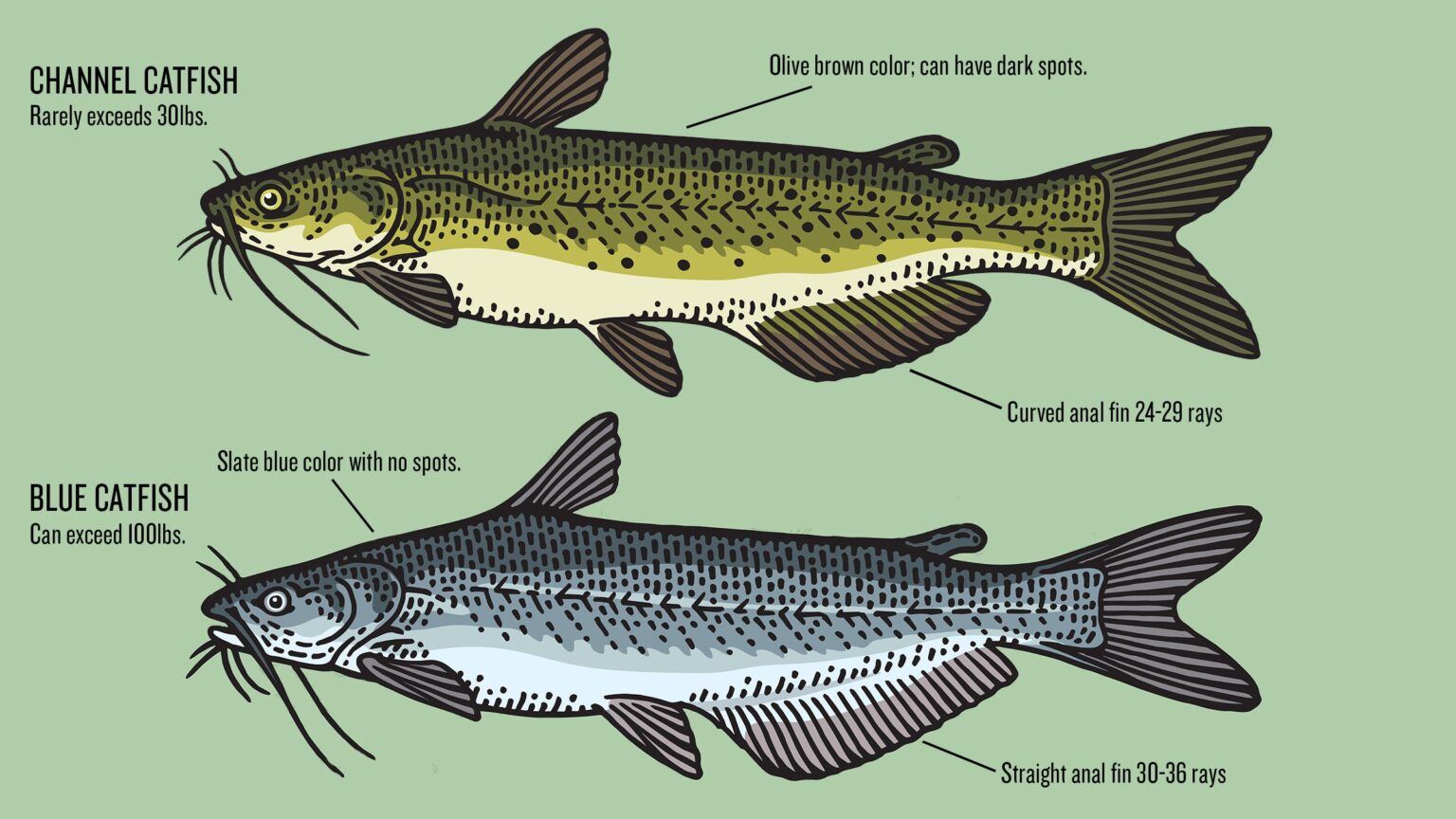
Channel catfish are often confused with juvenile blue cats when caught in bodies of water where they coexist, but the most definitive way to tell the difference between blue cats vs channel cats (if you really need to be certain) is to count the fin rays on the anal fin. Channel cats have between 24 and 29 rays, while blue cats have 30 to 36. Even without counting, young channel cats tend to have small black spots while young blues are solid silver/gray with no spotting regardless of age. While channel cats can have a similar gray base color, their skin varies by location and water quality and can appear olive-brown to yellow to nearly black.
Blue Cat vs Channel Cat: Table of Contents
- Channel Catfish
- Blue Catfish
- Frequently Asked Questions
Channel Catfish
Channel Catfish Overview
World Record Channel Catfish: 58 pounds
Channel cats can be found from New Hampshire to Northern Florida and in every state east of the Continental Divide. They can also be found as far north as Southern Canada and as far south as East-Central Mexico. Their availability alone makes them popular targets, but they have much more to offer than easy access.
How to Catch a Channel Catfish
Learning how to catch catfish isn’t very difficult, which is why channel cats are such great targets for anglers of any skill level. Soak a piece of shrimp, shad, hot dog, garden worm, chicken liver, or a ball of dough bait in any lake or river within their range, and—barring during the coldest months of the year—there’s a strong possibility a channel cat will find it. Although channel cats can grow upwards of 20 pounds, fish that size are not overly common and tend to exist with more frequency in niche bodies of water. One- to 10-pound channels, however, are extremely common, and they can be bested on whatever rod and reel you likely already have in the garage. They require no specialized gear. While larger ones will put up a heck of a fight, the best catfish rod is probably one you already have. Fighting a channel cat is nothing a medium-action rod and reel loaded with 8- or 10-pound test line can’t handle.
Like blue cats, channels are just as comfortable in a swift, rocky river as they are rooting through the muddy bottom of a lake or reservoir. In river systems, they often congregate in eddies or areas with an abundance of large boulders, as they can post up behind them out of the current. In still water, they gravitate to deeper coves and bays with plenty of vegetation, as they are predatory and will also hunt down smaller fish living in the weeds.
Blue Catfish
Blue Catfish Overview
World Record Blue Catfish: 143 pounds
Blue catfish are native to the Mississippi River drainage, as well as the Rio Grande River drainage. However, given that they’re such a popular sportfish, they’ve been implanted in several other areas of the country. Most notably the coastal river of Virginia and the Carolinas, as well as countless reservoirs throughout the U.S. In some cases, however, these stocking programs have proven to be more of a curse than a blessing.
Particularly in the Mid-Atlantic, blue cats have proliferated far beyond the rivers in which they were originally introduced. In some waters, this has practically decimated native populations of white catfish and channel catfish, as the blues are bigger and more aggressive, pushing the smaller cats out of prime hunting, nesting, and wintering spots. Likewise, blue cats in the Chesapeake Bay Watershed are taking a toll on the blue crab population, making things tough for commercial crabbers. Still, despite their downsides in some regions, blue cats are a serious challenge on the end of a line.
How to Catch a Blue Catfish
Juvenile blues weighing less than ten pounds feed and behave very much like channel cats. They’ll eat almost anything so long as it’s stinky and they can fit it in their mouths. Also, like channel cats, catching smaller blues doesn’t require any special gear beyond a medium action rod and some 10-pound-test line. It’s when you level up to trophy blues that you need to be better prepared.
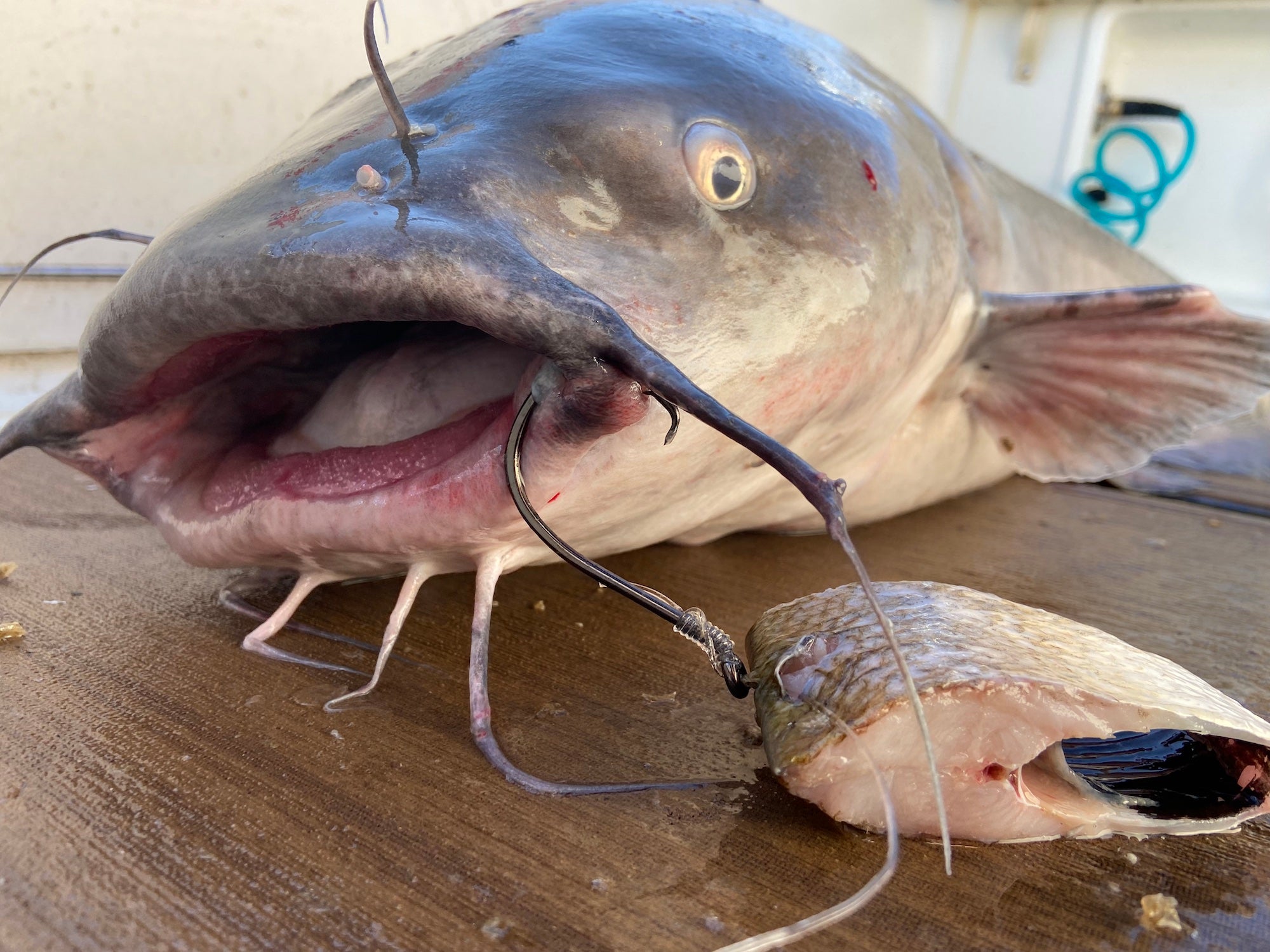
Blue cats routinely break the 30-pound mark and finding one weighing 50 pounds or more isn’t that difficult if you put in your time. Larger fish tend to favor bigger, fresher chunk baits, such as shad, skipjack herring, bluegill, or carp. Blues weighing 20 pounds or more have cavernous mouths, so don’t be afraid to use an entire shad head or whole dead bluegill on a big size 8/0 circle hook. You’ll also want a stout rod, be it a long stick for bank fishing or a shorter one for the boat. Trophy blue cat hunters spool up with 50- to 65-pound braided line and lean on reels that hold plenty of line for the big runs these fish can make. To combat the super-abrasive mouths of blues, pros often add a length of 80-pound leader to their rigs.
Blue Cat vs Channel Cat: Frequently Asked Questions
What size channel cat is best to eat?
Fish under 10 pounds are more tender than larger, older fish. Older fish have also accumulated more toxins as they’ve aged.
What is the top bait for blue catfish?
Most blue catfish like chunk bait with a strong smell. Larger blue catfish tend to like fresher, larger pieces of bait, like whole shad heads. Other popular chunk bait includes skipjack herring and bluegill.
What is the biggest channel cat?
Channel cats don’t usually grow more than 20 pounds. The world record channel cat weighed 58 pounds.
Read the full article here