



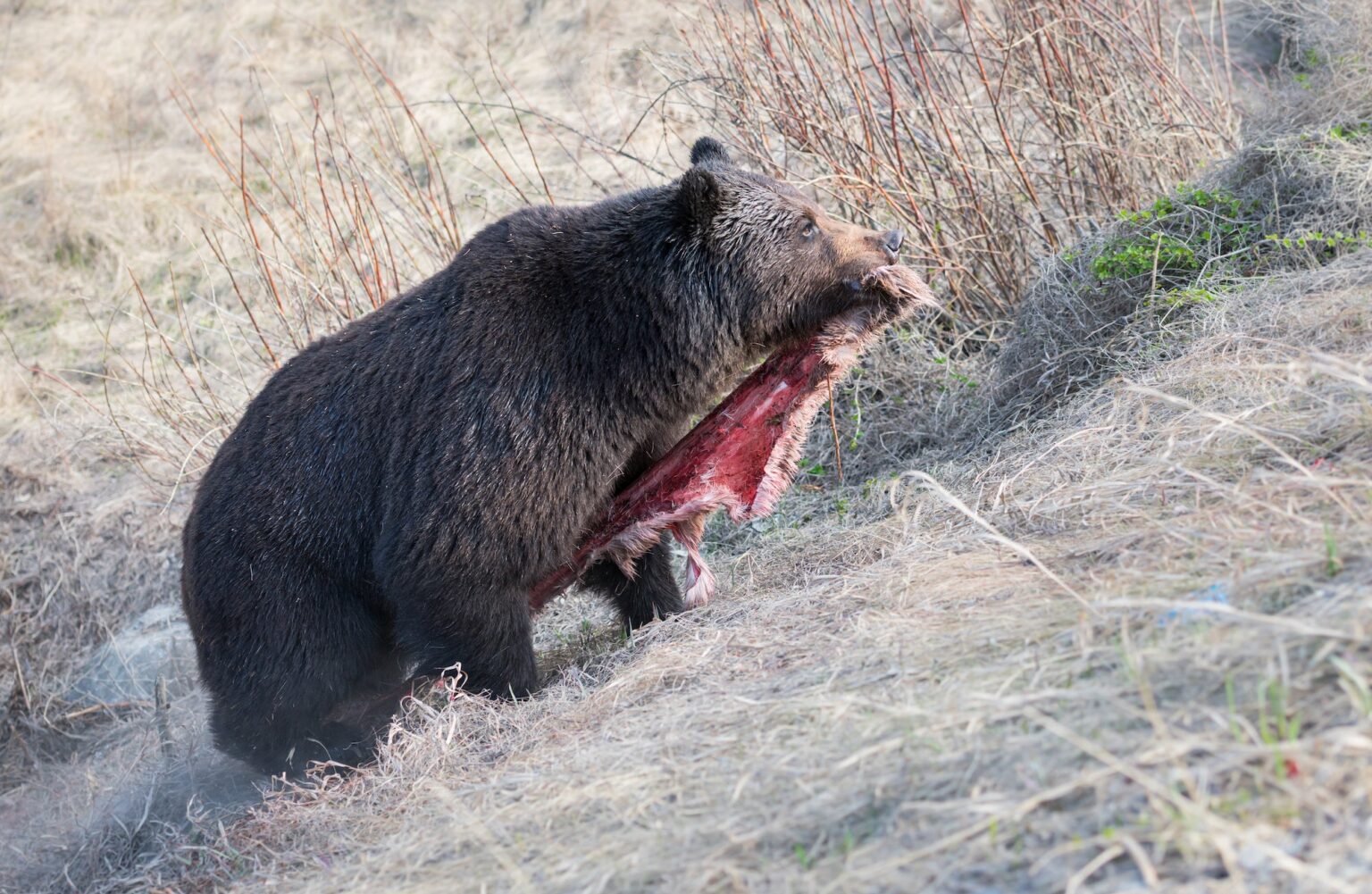

Alaska wildlife officials are experimenting with predator management to help the Mulchatna caribou herd, which crashed in recent years and remains closed to hunting due to low population levels. In an effort to boost the dwindling herd, the Alaska Department of Fish and Game increased its predator control efforts this spring by targeting brown bears, black bears, and wolves on caribou calving grounds. Over 17 days in May and early June, ADFG officials removed 94 brown bears, five black bears, and five wolves from the area.
The Alaska Board of Game deemed this predator control necessary in March. The Mulchatna herd, which has hovered around 12,000 animals since 2017, has tremendous cultural and subsistence value for indigenous communities and hunters in southwestern Alaska. By removing so many predators from a portion of the herd’s calving grounds, the state hopes to increase the survival rate among calves and reverse the herd’s decline.
“Recognizing that there are 48 communities within the traditional range of this once expansive herd, the public requested that the department and board work to rebuild the herd and restore this source of food,” ADFG officials wrote in a press release. “Reducing the number of bears and wolves was a logical step in adaptive management to determine if summer calf survival can be improved.”
Wildlife managers in Alaska recognize there are a host of other factors affecting the Mulchatna caribou herd, including diseases like brucellosis and a lack of available forage. The state views predator populations, however, as one of the few factors it can control.
Accordingly, ADFG has been removing wolves from the herd’s range using aerial methods since 2012. Since these removals have not had a noticeable effect on the overall population, and because bears also prey on caribou calves, the agency expanded its efforts this year to include brown bears and black bears for the first time. Officials did not specify how they targeted the bears and wolves, and did not immediately respond to a request for comment.
Those efforts were limited to state land within an area that wildlife biologists have defined as the “calving grounds of the western subgroup.” Their strategy involved flying around the area and looking for caribou that were fleeing predators, along with predators that were actively chasing or eating caribou. All wolves and bears that were located during this search were killed, ADFG explains. A total of 104 predators were removed, and their hides and skulls were salvaged when possible. Meat from the black bears and some of the brown bears was also donated to local villages.
The agency stressed that it does not believe these culls will have a noticeable effect on the robust predator populations that exist in the southwestern part of the state.
“The removals of the wolves and bears in the western spring calving control area are occurring in a relatively small area that is surrounded by healthy, intact habitat,” officials said. “Based on prior research, full recovery to pre-treatment levels is expected within a few years once the reduction activities have been completed.”
And because ADFG limited its predator control efforts to the western calving grounds, the agency will be able to see how calf survival rates there compare with survival rates on the herd’s eastern calving grounds. The agency will continue to monitor these areas through the summer.
“This information will be evaluated to determine if further bear and wolf reductions during spring calving is warranted.”
The Continued Decline of the Mulchatna Caribou Herd
After peaking at approximately 200,000 caribou in 1997, the Mulchatna herd crashed around the turn of the 21st century. Their numbers continued to plummet over the next 20 years, and the herd had shrunk to around 12,000 animals by 2017—an overall decline of roughly 96 percent.
Read Next: The Proposed Closures of Caribou Hunting on Some Federal Lands Isn’t Based on Population Declines—It’s About Human Conflicts
The population has remained around that level ever since, with the latest estimate showing around 12,100 individuals in 2022. This is far short of the state’s management objective of 30,000 to 80,0000 caribou, which it views as necessary to sustain a huntable population.
As a result, wildlife managers implemented regulation changes in 2020, when the herd estimates were closer to 13,500 caribou. The state reduced the bag limit to one bull and shortened the winter hunting season by a full two months. These changes had a negligible effect, however, and by 2021, the overall population had dropped below 13,000. This led ADFG to shut down hunting for Mulchatna caribou in 2021. The agency followed suit in 2022, and the hunt will likely remain closed for the foreseeable future, or until the herd shows signs of recovery.
Read the full article here