




We may earn revenue from the products available on this page and participate in affiliate programs. Learn More ›
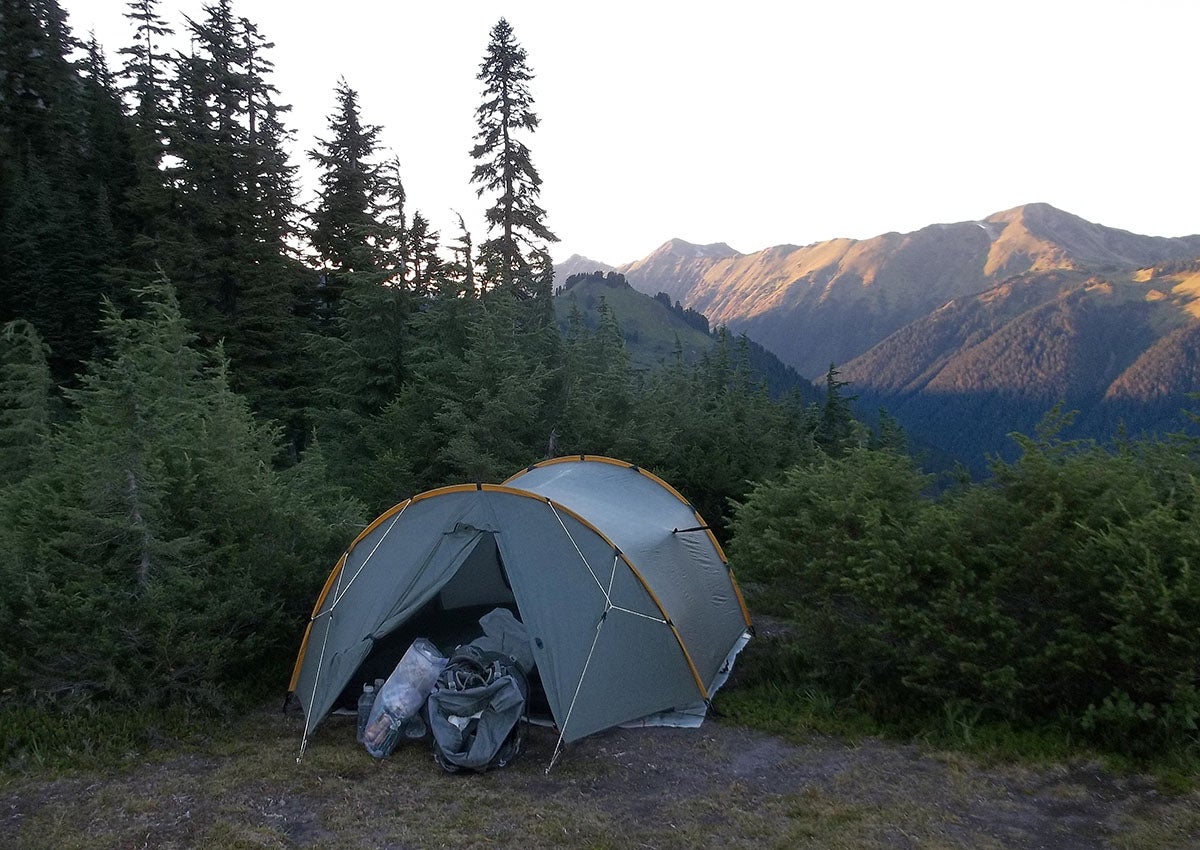
A tent footprint is a ground sheet designed to lie underneath your tent. But what is a tent footprint for? It adds another layer of protection for your tent from the abrasive ground and moisture. A footprint can also make packing up your tent easier because you won’t have to fold it up with dirt or debris clinging to the material. If you really need one depends on your campsite, how durable your tent floor is, and how waterproof your tent floor is. I’ll break down some different models and methods to keep your tent in good shape. And explore what conditions and tents warrant that extra protection.
Some tents come with a footprint, and it’s just a question if you should bring it or not. If weight isn’t a concern, I say why not? Taking care of your tent will only save you hassle and money in the long-run. Others you can buy separately, but sometimes you have to look elsewhere for a ground sheet. Some manufacturers offer specific footprints for your tent, like MSR. Buying one from the manufacturer is easiest because it is already cut to the size of your tent.
However, these can cost and weigh more than some alternative solutions. Backpackers use Tyvek home wrap or Polycryo window insulation shrink film as tent footprints for a cheap and lightweight option. So much so that ultralight brands like Gossamer Gear, Zpacks, and Six Moons sell their own versions. Simply cut them to size and save money and ounces. You can also use these in bivy or tarp structures as a tent floor replacement.
Why Should I Use a Tent Footprint?

Location
The location of your campsite is the number one determining factor for bringing a tent footprint. If you’re camping on soft ground in a dry climate, a tent footprint will keep your tent cleaner and in pristine shape. However if there are rocks, burs, sticks, or other tear-inducing terrain, a tent footprint can provide necessary protection. A ripped tent floor is an unfortunate area to patch and can easily be exacerbated if you can’t manage a field repair. If you’re cowboy camping (sleeping under the stars without a tent) or using a floorless structure, a tent footprint can also provide lightweight protection for your inflatable sleeping pad.
Other than rough ground conditions, a campsite that retains water can warrant a ground sheet. Surfaces that don’t easily absorb water or are already saturated are particularly apt at collecting moisture. Well-loved, developed campsites can be sunken in, trapping water where you plan to sleep. The bottom of a slope can also create a puddle effect that seeps through your tent floor. A tent footprint can add an extra layer of waterproof material to protect your tent, gear, and sleep system from water.
Durability
Denier, or the thickness of a material, can help you determine the durability of your tent floor. Ultralight and backpacking tents tend to have lower deniers than four-season or car camping tents to reduce weight. For instance, the best overall ultralight tent, Gossamer Gear’s The ONE uses a 10D nylon ripstop for the floor. While the top 4-season tent, MSR’s Access Mountaineering tent uses 30D nylon ripstop. The camping tent with the best storage, Mountain Hardwear’s Bridger 4 has a 68D polyester ripstop floor. The ultralight tent has the thinnest floor while the 4-season and car camping tents are thicker, more durable, and heavier.
If your tent floor feels fragile, you should take extra care when clearing a place to sleep to avoid punctures. Rips will not only compromise your structure, but also render it completely useless in the event of rain or flooding. After spending hundreds of dollars on a new tent, a tent footprint can greatly increase the longevity of your new outdoor home, especially if you plan to use it frequently. If you’ve finally invested in an ultralight tent, this can go doubly so. The finer material and higher price tag warrants a little gear-babying. Keeping your tent free from holes, scratches, and tears is also the best way to keep dry.
Water Resistance
Tent floors are treated with silicone, polyurethane, DWR, or other coatings to keep out moisture. The waterproof rating is the millimeters of pressure at which water is able to press through fabric. If a tent floor’s water resistance is rated to 1,000mm, then it would take 1,000 mm of water pressure for droplets to pass through the material. For example, Gossamer Gear’s The ONE uses SIL/PU fabric that’s waterproof to at least 1,800mm. The MSR Access features 3,000mm Xtreme Shield polyurethane and DWR. Mountain Hardwear’s Bridger 4 has 1,500mm rated PU. While these ratings give us some indication of how waterproof the tent floor is, less pressure being less waterproof, there can be too much of a good thing.
Manufacturers could put as many waterproof coatings on as they want, but if it starts to stiffen the fabric, it will be more prone to breakage and the coating will be a moot point. The waterproof coating is only so good as there are no holes in the fabric itself. So the denier, or thickness, of your tent floor coupled with the water resistance rating is a more accurate picture of how waterproof your tent floor is. Other factors contribute to how waterproof your tent floor is, too, such as how tall it is, like a bathtub floor. Seam sealing, design quality, durability, and how carefully the coating is applied are also important components toward water resistance.
READ NEXT: Best Camping Tents
For example, staff writer Laura Lancaster woke up on a waterbed like tent floor one morning in her Tarptent Cloudburst 3. This tent has a 30D floor with a 3,000 mm rating and trapped all of the water underneath her tent with no moisture seeping in. If your tent floor is comparable, you would only need a tent footprint for moisture if there were holes or the coating was old and wearing away. See the FAQs on how to solve this problem.

Keep in mind that if you plan to use a footprint to reduce moisture, the size is very important. If your tent footprint sticks out from under your fly, it will catch rain. All of that water will then pool around your tent floor. Fit your groundsheet relatively tight to the shape of your tent to prevent collecting rainwater while still forming a barrier against the damp ground.
FAQs
Q: How is a tent footprint different from a tarp?
A tarp can serve as a tent footprint. It will still act as a waterproof and durable barrier to protect your tent floor. Just be sure it is the right size to avoid funneling more water towards your tent in the event of a storm. Cutting a tarp to size results in a fraying mess, but you can buy one appropriately sized for your structure or fold it to the correct size. I wouldn’t recommend a traditional tarp for backpacking as they’re relatively heavy.
Q: How do you waterproof a tent footprint?
While tent footprints are made of waterproof materials and/or pre-treated by the manufacturer, waterproof coatings can wear out. To refresh your tent floor, you can apply your own coating, like Nikwax.
Q: Can you use an emergency blanket as a tent footprint?
You can use an emergency blanket as a tent footprint, but it might not last very long. While it would add some protection from the ground and is waterproof, space blankets aren’t the most durable material. However you could reap some warmth benefits from using this insulative material.
Final Thoughts
Do you need a tent footprint? That’s a personal decision that depends on where you like to camp, the materials and design of your tent, and how frequently you use your tent. I’d recommend a tent footprint to anyone camping on rough ground and to anyone looking to prolong the life of their gear. A tent footprint also makes sense for cowboy camping. Typically, a ground sheet won’t make or break your trip. If you can’t get your hands on a tent footprint before your first camping trip, carefully clear your campsite, bring a reliable tent, and you should be just fine.
Read the full article here