





We may earn revenue from the products available on this page and participate in affiliate programs. Learn more ›
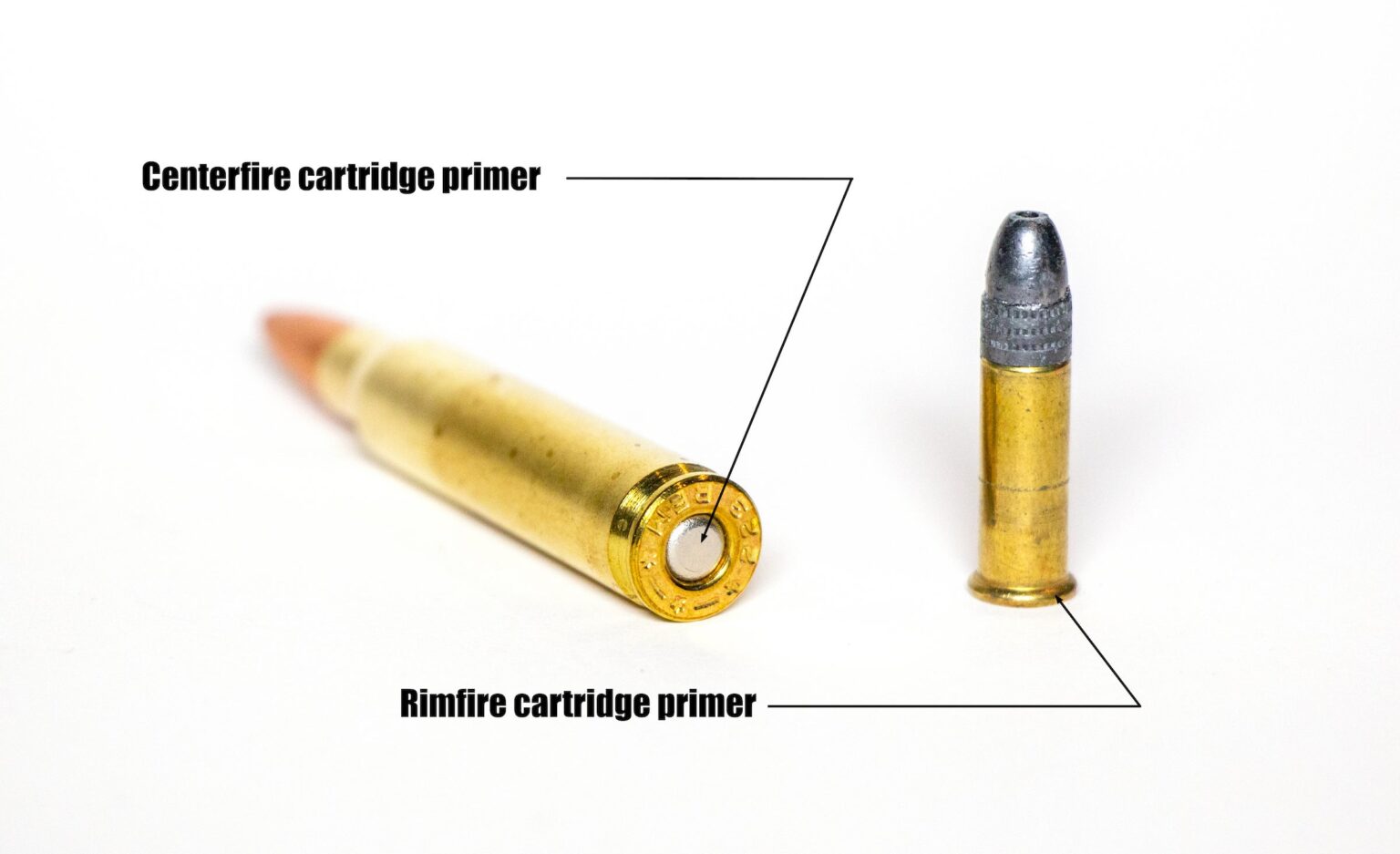
All modern metallic cartridges consist of a brass case that contains gunpowder capped off with a bullet. Rimfire and centerfire cartridges are both metallic cartridges; the difference is in how they are primed. A centerfire cartridge has a primer that’s inserted into a hole in the base of the brass cartridge. With rimfire ammunition, the chemical priming compound is distributed within the hollow of the rim of the cartridge case. The easiest way to think about Rimfire vs Centerfire ammunition is: Centerfire ammunition is fired when a firing pin impacts the primer while rimfire ammunition is fired when the firing pin compresses the rim of the cartridge.
Rimfire vs. Centerfire: Table of Contents
- What is a Centerfire Primer?
- Where is The Primer on Rimfire Ammunition?
- Rimfire vs Centerfire: Power & Pressure
What is a Centerfire Primer?
The primer for centerfire ammunition is a small metal cup sized to press fit into the primer pocket of the brass cartridge case. The primer contains shock-sensitive chemicals and a small anvil. When the firing pin impacts the primer cup, it crushes the cup against the anvil, and hot gases and incandescent particles are pushed through the flash hole that separates the primer pocket from the powder charge. This ignites the powder charge and fires the cartridge.
There are four different-sized centerfire primers used in modern metallic cartridges. There are large and small pistol primers and large and small rifle primers. (Large and small reference the diameter of the primer so it can be matched to the primer pocket of the cartridge case.) There are also “magnum” primers, which are the same size as standard primers, but they create a more volatile or hotter ignition. Most often, magnum primers are used to ignite larger volumes or specific types of gunpowder.
There are also “benchrest” primers, which are manufactured to tighter tolerances to provide more consistent ignition of the gunpowder. Benchrest primers are supposed to produce more uniform pressures and velocities, which in turn can lead to better accuracy.
Regardless of the primer, centerfire ammunition is very reliable, but on rare occasions, a primer can become contaminated or be manufactured to be faulty. However, this is rare. At other times you can have a failure to fire with a centerfire cartridge because of a worn or weak firing pin, and some primer cups are thicker and harder than others.
Where is The Primer on Rimfire Ammunition?
As the name suggests, rimfire ammunition contains a priming compound in the rim of the cartridge. When the rim is impacted, the primer explodes and ignites the gunpowder in the cartridge. Rimfire ammunition has been around since the middle of the 1800s and even though there have been huge advancements in the way rimfire ammunition is manufactured, sometimes there are still failures to fire. I once conducted a test of four different brands of rimfire 22 LR ammo and out of 1000 rounds, there were 3 failures to fire. A reliability rate of about 99.7% is about standard for rimfire ammunition. The best way to avoid rimfire misfires is to not handle your ammunition roughly and to purchase quality ammunition.

This inconsistent reliably has to do with how rimfire ammunition is made. During the manufacturing process, priming compound is placed into the case and then it is forced into the hollow of the rim of the case by centrifugal force. This is a process that occurs somewhat blindly and sometimes can create an empty space in the hollow rim where no priming compound was distributed. When the firing pin of a rimfire firearm impacts a section of the rim with an empty space, the cartridge will not fire.
Rimfire vs Centerfire: Power & Pressure
Because the cartridge case of rimfire ammunition needs to be thinner so that it can be formed with the hollow rim, rimfire cartridges are held to lower operating pressures. As a comparison, 22 LR and 22 Magnum ammo are designed to operate at about 24,000 psi, 17 HMR ammo should have a maximum average pressure (MAP) of 26,000 psi, and the 17 Winchester Super Magnum has a MAP of 33,000 psi.
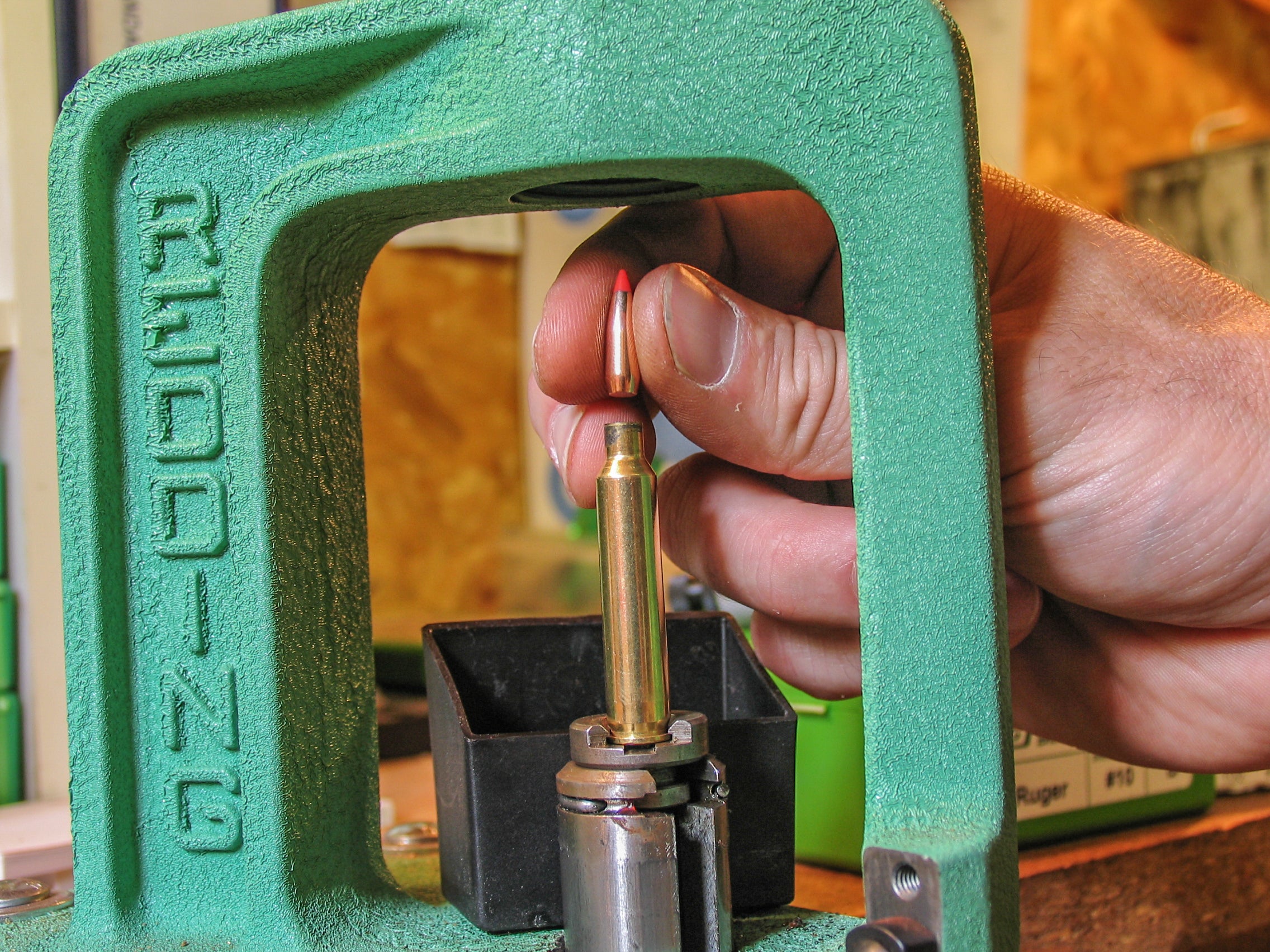
The 9mm Luger and 357 Mangum are centerfire pistol cartridges, and they have a MAP of 35,000 psi. The 44 Magnum has a MAP of 36,000 psi, and surprisingly the smaller caliber 327 Federal Magnum generates a much higher pressure of 45,000 psi. Rifle cartridges generate even more pressure. The 223 Remington has a MAP of 55,000 psi, the 30-06 Springfield has a MAP of 60,000 psi, and the 7mm PRC has a MAP of 65,000 psi, which is about the upper limit for centerfire cartridges.
Read Next: The 5 Best Rimfire Loads for Varmints
These differences in rimfire and centerfire ammunition are why when you need more power or the absolute highest degree of reliability, you go with a centerfire cartridge. Two other very important distinctions between rimfire and centerfire ammunition is that rimfire ammunition is less expensive and most fired centerfire ammunition cases can be reloaded.
Read the full article here