




We may earn revenue from the products available on this page and participate in affiliate programs. Learn more ›
If you’re standing at the counter at the gun shop looking at all the handguns for sale, it can be a bit overwhelming because it seems like there are hundreds of different types of handguns to choose from. That’s partly true because many manufacturers make many different models of handguns, but there are really only two types of handguns. Your choice is limited to either a revolver or a pistol. But within these two handgun categories, there are some stark and subtle differences, and it’s important to know what they are.
Types of Handguns: Table of Contents
- History of The Different Types of Handguns
- Revolver
- Semi-automatic Handgun
- Break-Action Handguns
- Bolt-Action Handguns
- Details Matter When Choosing What Type of Handgun is Best for You
- Single Action vs. Double Action
- Striker-fired vs. Hammer Fired
- Arm Braces for Pistols and SBRs
- Types of Handguns: Frequently Asked Questions
History of The Different Types of Handguns
If you count muzzleloaders, handguns have been around for more than 700 years. In the 13th century, the Chinese had the hand cannon, and in the 16th century, there were matchlocks and wheellock handguns. The flintlock pistol arrived in the 17th century, but it wasn’t until the 19th century that a reliable repeating handgun was introduced. In 1836, Sam Colt famously made “all men equal” with his cap-lock revolver, and by 1900 we also had the metallic cartridge, the Colt Peacemaker, and the semi-automatic pistol had arrived. Since then, firearms manufacturers have refined revolvers and pistols into reliable handguns suitable for recreational and sport shooting, hunting, and self-defense.
Revolver
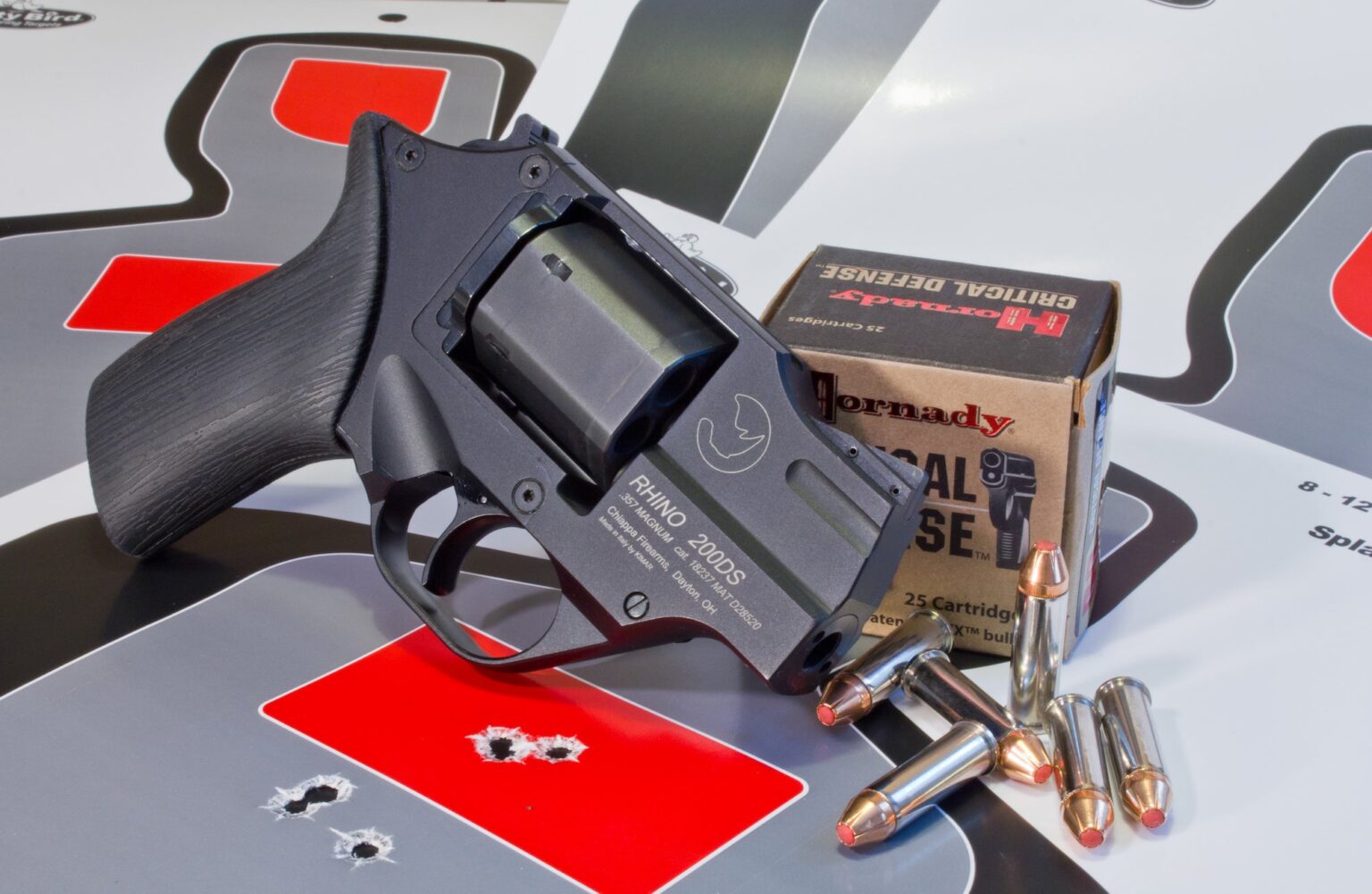
A revolver has a frame that supports a grip and barrel, and it contains a firing mechanism and a cylinder that’s rotated when the hammer is cocked. Inside this cylinder are chambers that hold the cartridges to be fired. Originally, most revolver cylinders had six chambers, hence the term “six shooter,” but today some hold as many as 10 cartridges. Regardless of the number of chambers, as the revolver’s hammer is cocked the cylinder rotates a chamber in line with the barrel and it locks in place. Then when the trigger is pulled, the hammer falls, the cartridge fires, and the bullet passes from the chamber—through a minute gap—and into the barrel. Some claim revolvers are much slower to shoot than semi-automatic handguns, but the difference is minimal. What revolvers really are, is slower to load because the empty cases must be manually ejected from the cylinder before more live rounds can be inserted. Ruger’s Blackhawk and their GP 100—though a bit different—are both revolvers. One is a single action and the other is a double action, and I’ll explain the difference shortly.
Semi-Automatic Handgun
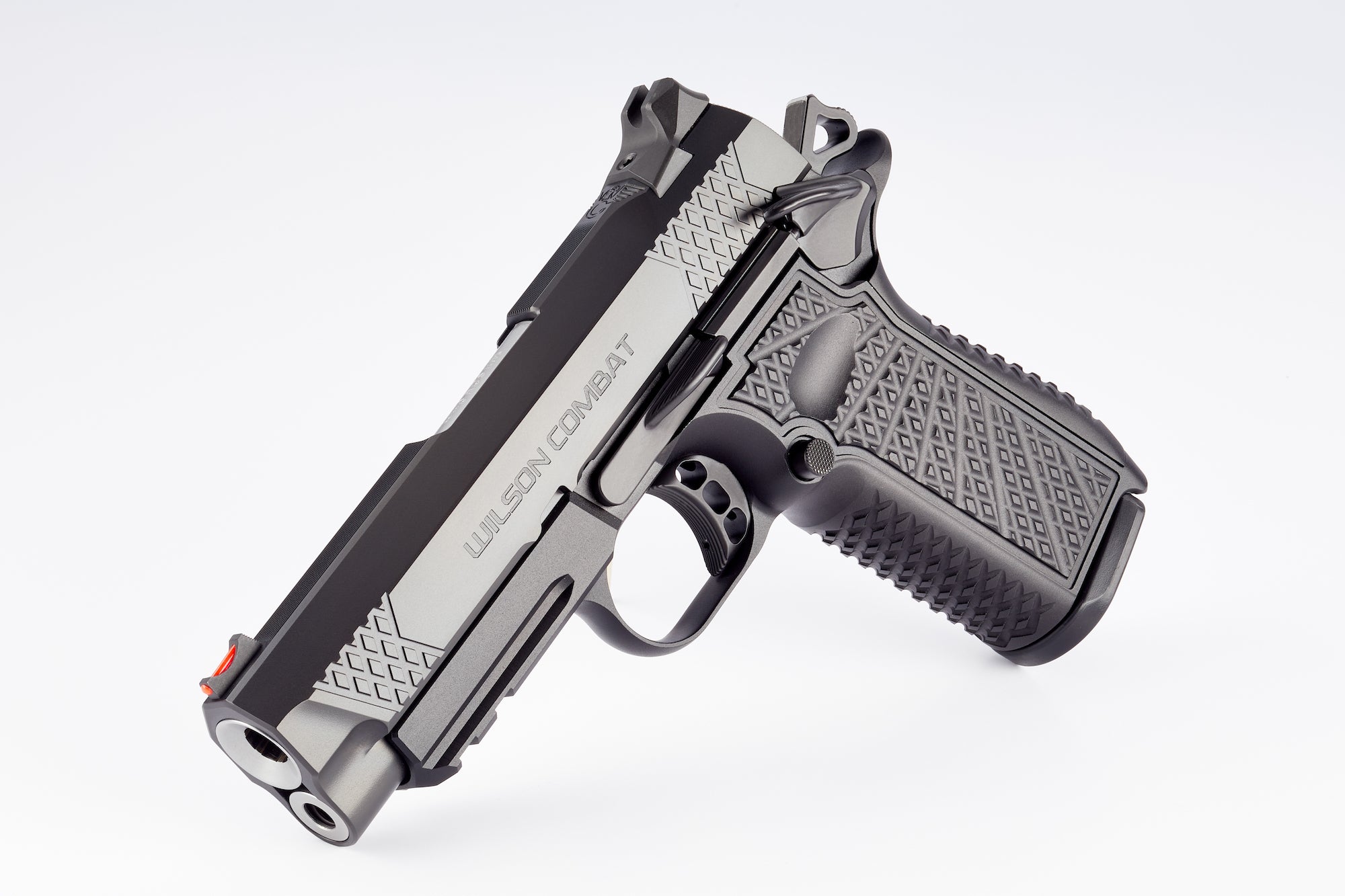
The first semi-automatic pistol was introduced in 1891, but it was about another decade before these types of handguns became readily available. A semi-automatic handgun is a pistol because the chamber is integral to the barrel. A semi-automatic pistol requires no effort from the shooter to cycle the action and chamber a new round after one has been fired. Through either direct blowback, delayed blowback, or a locked breach design, a semi-automatic pistol uses the pressure generated when a cartridge is fired to force the slide of the pistol to the rear. A captured and hidden recoil spring then forces the slide forward and into battery, and as the slide is moving forward it strips a fresh round from the magazine, that’s most often contained within the pistol’s grip, and pushes it into the pistol’s barrel. Most rimfire pistols are of the blowback design and most centerfire pistols are of the locked breach design. But as you’ll soon see, there are some other important distinctions when it comes to semi-automatic pistols.
Break-Action Handguns
The Thompson Center Contender is one of the most famous break-action types of handguns. Break-action handguns are typically single shots but there are exceptions because instead of one barrel there could be two barrels like are commonly found on derringers. The Contender handgun usually has a long barrel and is often chambered for rifle cartridges—making it a great handgun for deer hunting. It was mostly used for hunting or competitive silhouette shooting. A derringer is a short-barreled handgun that can be carried in a pocket and is intended for nothing but self-defense. The derringers from Bond Arms are popular break-action pistols but believe it or not, some of them can chamber and fire shotgun shells. While it might seem ridiculous to classify a single or two-shot handgun in the same category as a Glock with a 17-round capacity, break-action handguns are pistols too because just as with the Glock and other semi-automatic handguns, the handgun’s chamber is integral to the barrel.
Bolt-Action Handguns
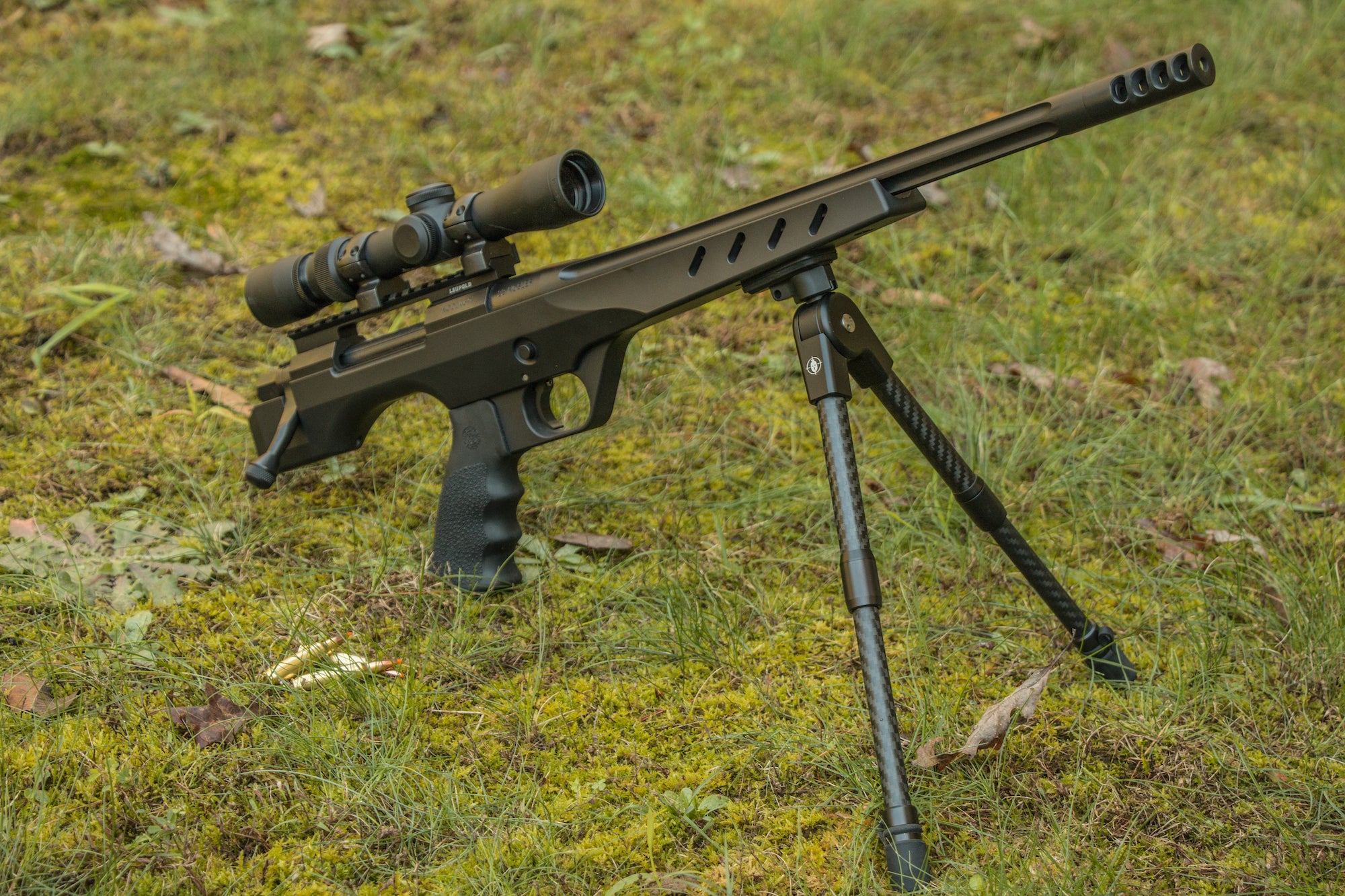
Some types of handguns are built around a bolt-action and are either single shots or feed from a magazine. These handguns are pistols as well because, like with semi-automatics and break-action handguns, their chamber is integral to the barrel. Like the break-action Thompson Center Contender, bolt-action handguns are almost exclusively used for hunting or for competition shooting at long range. Bolt-action handguns are also almost always chambered for rifle cartridges and in most cases, they’re outfitted with a handgun scope with an eye relief of about 10 to 20 inches so that they can be used at arm’s length. These pistols are typically very heavy and almost impossible to shoot accurately unless some form of support like a bipod or tripod is used.
Details Matter When Choosing What Type of Handgun is Best for You
It’s the little things that make the difference with each type of handgun. And these are the things that must be considered after you decide whether you want a semi-automatic, a revolver, or a break or bolt-action handgun. These little things are also what really set the handguns in each of these categories apart.
Single Action vs. Double Action
All revolvers and many semi-automatic pistols are either single or double-action. With a single-action revolver, you must manually cock the hammer, which also rotates the cylinder to line a chamber up with the barrel, before the handgun can be fired. When you pull the trigger on a double action revolver, that action cocks the hammer and rotates the cylinder, hence the name “double action.” With a double-action revolver, you do not need to manually cock the hammer. However, if a double-action revolver has an exposed hammer, you can still manually cock and fire it in the single-action mode.
The single and double action distinction is similar with a semi-automatic pistol. When a semi-automatic pistol is loaded, the hammer is left in the cocked position. If it’s a single action, you have the option of lowering the hammer manually or applying a manual safety. If you lower it manually, you must manually cock it before the pistol can be fired. If you apply the safety, the hammer is left cocked, and disengaging the safety will allow you to fire the pistol. If it’s a double-action pistol it will have a de-cocking lever to lower the hammer, but you will not need to manually cock the hammer before firing because the action of pulling the trigger does that for you.
However, after the first shot from a double-action pistol is fired, all subsequent shots are in the single-action mode, unless it’s a double-action-only pistol. With the double-action-only pistol, the hammer follows the slide forward after each shot, and when the trigger is pulled it cocks the hammer and releases it for the next shot. Regardless of whether you’re talking about revolvers or pistols, single-action triggers are much lighter and crisper than double-action triggers.
Striker-fired vs. Hammer Fired Types of Handguns
Some semi-automatic pistols are striker-fired, and a striker-fired pistol does not have a hammer, they have a striker/firing pin. The striker firing mechanism originated with the hammerless shotgun a long time ago, but it’s now the most common firing mechanism for semi-automatic pistols, particularly with pistols intended for self-defense and law enforcement use. With a striker-fired handgun, the striker is spring-loaded, and it’s released when the trigger is pressed. Striker-fired types of handguns are less complicated and easier to maintain, and their trigger action is generally heavier than a single-action trigger but much less than a double-action trigger.
But there are downsides to a striker-fired pistol. Many do not have a manual safety, and this makes some shooters nervous. The primary safety on most striker-fired pistols is a lever that’s integral to the trigger. This keeps the pistol from firing unless the trigger is pressed. Also, the trigger action on some striker-fired pistols can feel mushy like a squirt gun trigger, and some shooters struggle with this. If precision shooting is the absolute most important thing to you, a single-action pistol or a double-action pistol fired in the single-action mode will have the best trigger.
Arm Braces for Pistols and SBRs
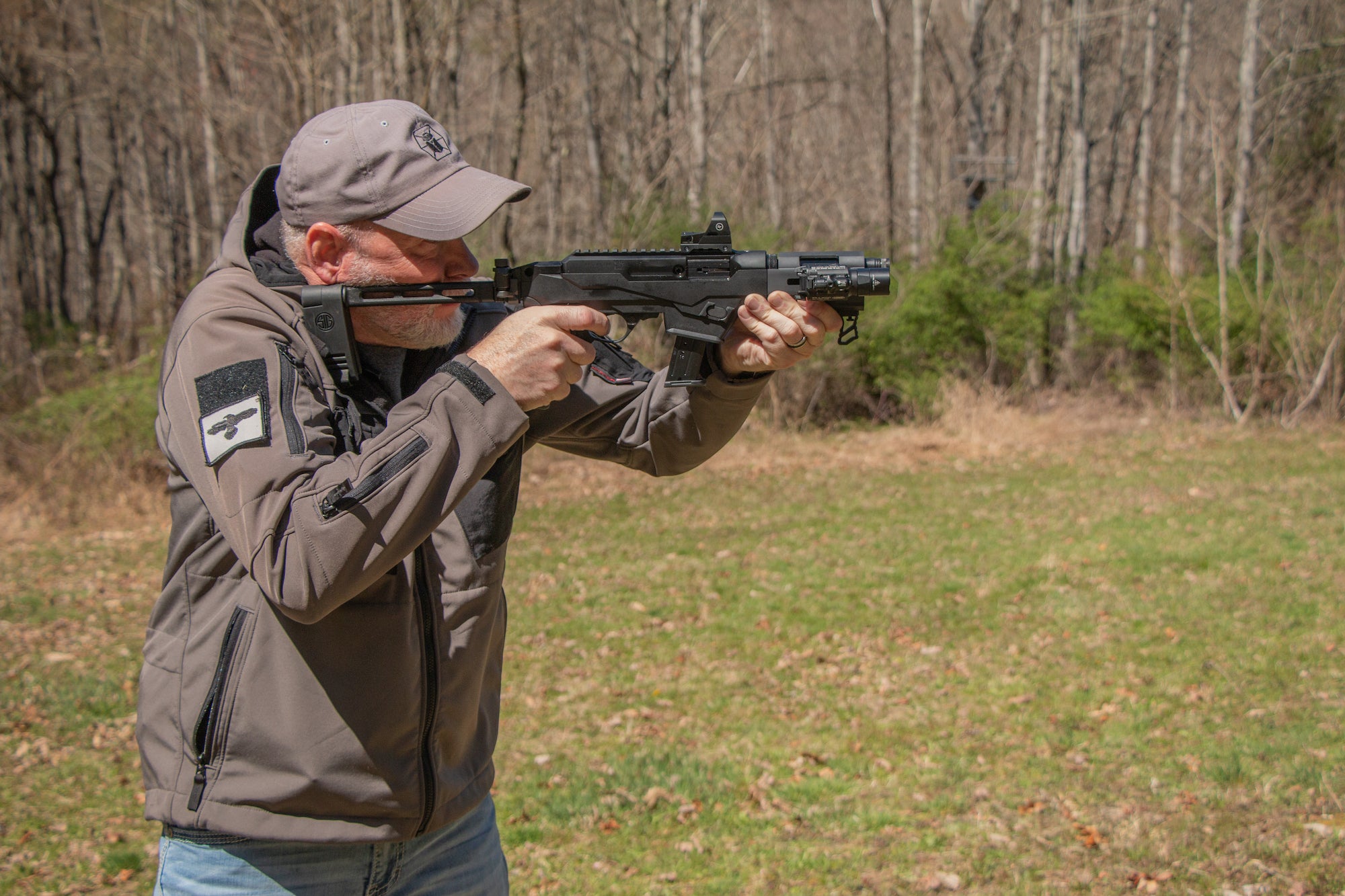
An arm brace for a handgun is intended to allow you to shoot a heavy handgun using only one hand. It’s a fixture added to the handgun frame, and it generally has a strap that can go around the forearm of the arm you shoot with. They became popular to make heavy AR15-style pistols easier to shoot with one hand. Adding a buttstock-like extension to a handgun is nothing new. Some Civil-War-era cap & ball revolvers used them. And like those, these modern brace extensions can effectively be used as a butt stock. The Bureau of Alcohol Tobacco and Firearms (ATF) considers any firearm with a buttstock and a barrel shorter than 16 inches a short-barreled rifle.
Read Next: The Best Handguns for Outdoorsmen
Why does that matter? Because short-barreled rifles (SBRs) were regulated in 1934 with the National Firearms Act, which is the same law that regulated suppressors. The ATF requires an SBR to be registered and it also requires a $200 tax to be paid before you can possess it. Failure to comply is a felony. As of this writing, a recent ATF ruling stipulating that arm braces on handguns turn them into SBRs is being challenged in court, and the grace period for registering your braced handgun has passed. How all this will ultimately sort out is anyone’s guess and it’s expected to go all the way to the supreme court.
Like I said, it’s always the little things that matter. Some will matter regarding what you want to use your handgun for, and some will matter because like with an arm brace on a pistol, that little thing could get you in a lot of trouble.
Types of Handguns: Frequently Asked Questions
What is the difference between handguns and pistols?
The difference lies in if the chamber is integral to the barrel or not. All pistols are handguns, but not all handguns are pistols. Handguns with revolving cylinders are classified as handguns, while single shots, semiautomatics, and bolt-actions are classified as pistols. For a more detailed breakdown, check out our story on pistols vs. handguns.
Do revolvers use 9mm?
Revolvers are chambered in a variety of cartridges. Some can shoot 9mm Luger, and some, like the Korth Carry Special can be converted from 357 Magnum to 9mm Luger with the change of a cylinder.
How many bullets are in a pistol?
This changes depending on the pistol. Pistols that fire only one shot—break-action single shots—can only hold one round in the chamber. Semi-automatic pistols that utilize a detachable or fixed magazine can hold multiple shots in reserve. How many rounds a pistol can hold really depends on the size of the magazine and its design and the size of the cartridge. Some hold as few as six rounds while others can hold more than 20.
Read the full article here