


We may earn revenue from the products available on this page and participate in affiliate programs. Learn More ›
Many of the best duck hunters I know cut their teeth on public land, particularly walk-ins. These are some of the toughest places to kill waterfowl consistently because access is easy if you’re willing to to put in the effort. But it can be downright exhausting. It’s typically a long walk down a muddy levee, and if it’s cold enough, and the water is frozen, there’s more hard work in front of you. But that’s what makes this kind of hunting so rewarding—you have to sweat for ducks, and when you get’em there’s no better feeling.
At almost 40 years old, I still love walk-in hunting. I don’t do as many death marches anymore, but it’s fun to get out there on days when I know my brother and I have a shot at killing a few birds. That’s the key to enjoying walk-in hunting: Don’t go unless you think it will be good. It will burn you out quick, logging all those miles with too much gear in-tow, and returning with empty game straps.
This is the stuff I have accumulated over years of chasing ducks—mostly shovelers and ringnecks—in some of the most mediocre duck habitat around. But bottom line is that it works…and I wouldn’t walk-in hunt without it.
Upgrade Your Truck Tires
You might be wondering why in the hell you need a good set of truck tires for walk-in hunting. Fair question. Well, in my experience, walk-ins are the most neglected of public habitats by state agencies. You typically have to drive through some pretty sloppy/sketchy terrain to get to the parking lot, which is often a mud pit. Many times I have arrived on cold mornings when the ground is frozen and returned to a sloppy mess in the afternoon once the sun comes out. Stock tires will not get you unstuck. This year, I’ve been running Toyo’s Open Country A/T III tires. They’ve gotten me out of plenty of hairy situations when I might have otherwise needed a tow. If you drop the tire pressure down to around 20 to 25 pounds, I’m convinced they could get your truck out of quicksand. Dropping tire pressure is key if you’re stuck, and it can easily be done. Just don’t go so low that your tires are flat. And don’t feel like you have to buy Toyo. They have been great for me, but Tire Rack has plenty of options to select from, and the prices honestly aren’t that much higher than the on-road tire that came with your truck. So spend a few extra dollars and save yourself the aggravation. There’s nothing worse than getting skunked and then stuck in the marsh with no cell service.
Another Set of Wheels
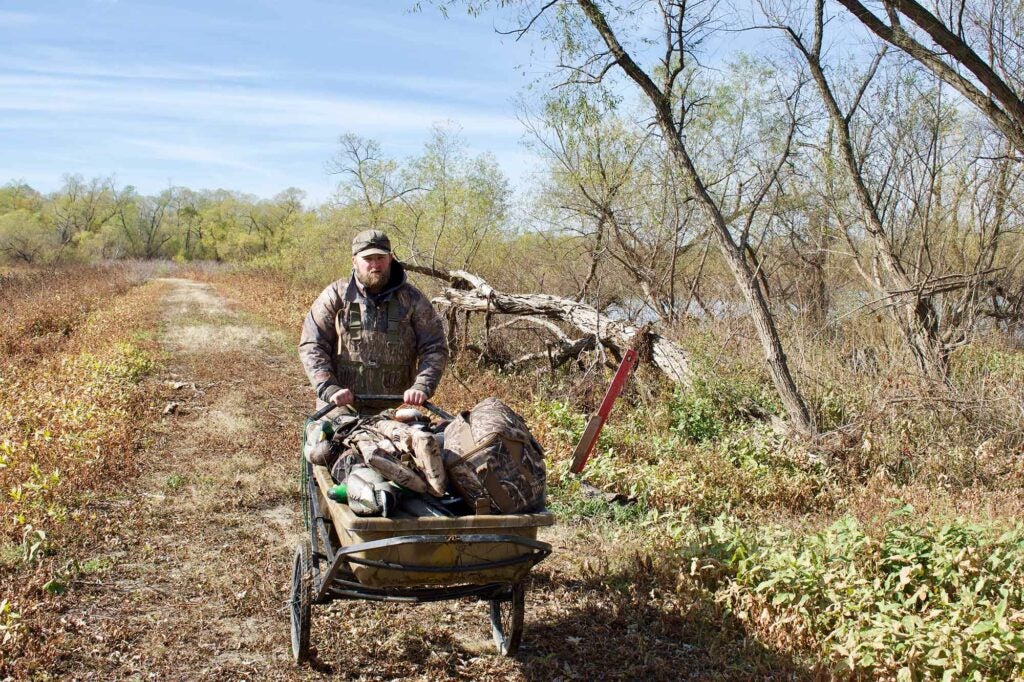
No legit walk-in hunter carries all the gear in on his back. You need a cart. It will make your walks in and out infinitely easier. A few years ago, I bought a Rogers Toughman Decoy Dolly (it’s rated for 600 pounds, so my brother can haul me and the decoys out), and it’s definitely the reason I’m still a walk-in hunter. There are a variety of carts on the market, and you can also build one, but with the time and money you have to invest in the construction of one, you’re better off buying in my opinion. If you’re deadest on engineering your own, here is a deer cart build that will work. I typically hunt with one other person—or solo—and can put all our gear on the cart, no problem. The one thing you have to be leery of is mud. Carts don’t like it. The mud will get caught up in the wheels so badly that they won’t be able to turn and then you are stuck hauling all your stuff back to the truck in multiple trips.
Float a Jet Sled
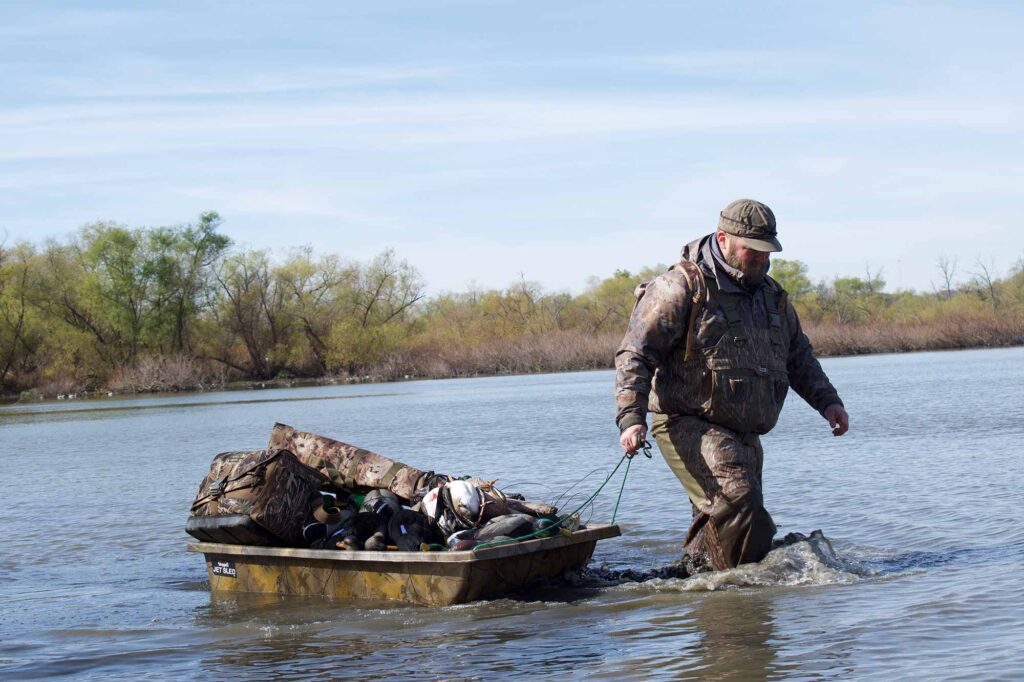
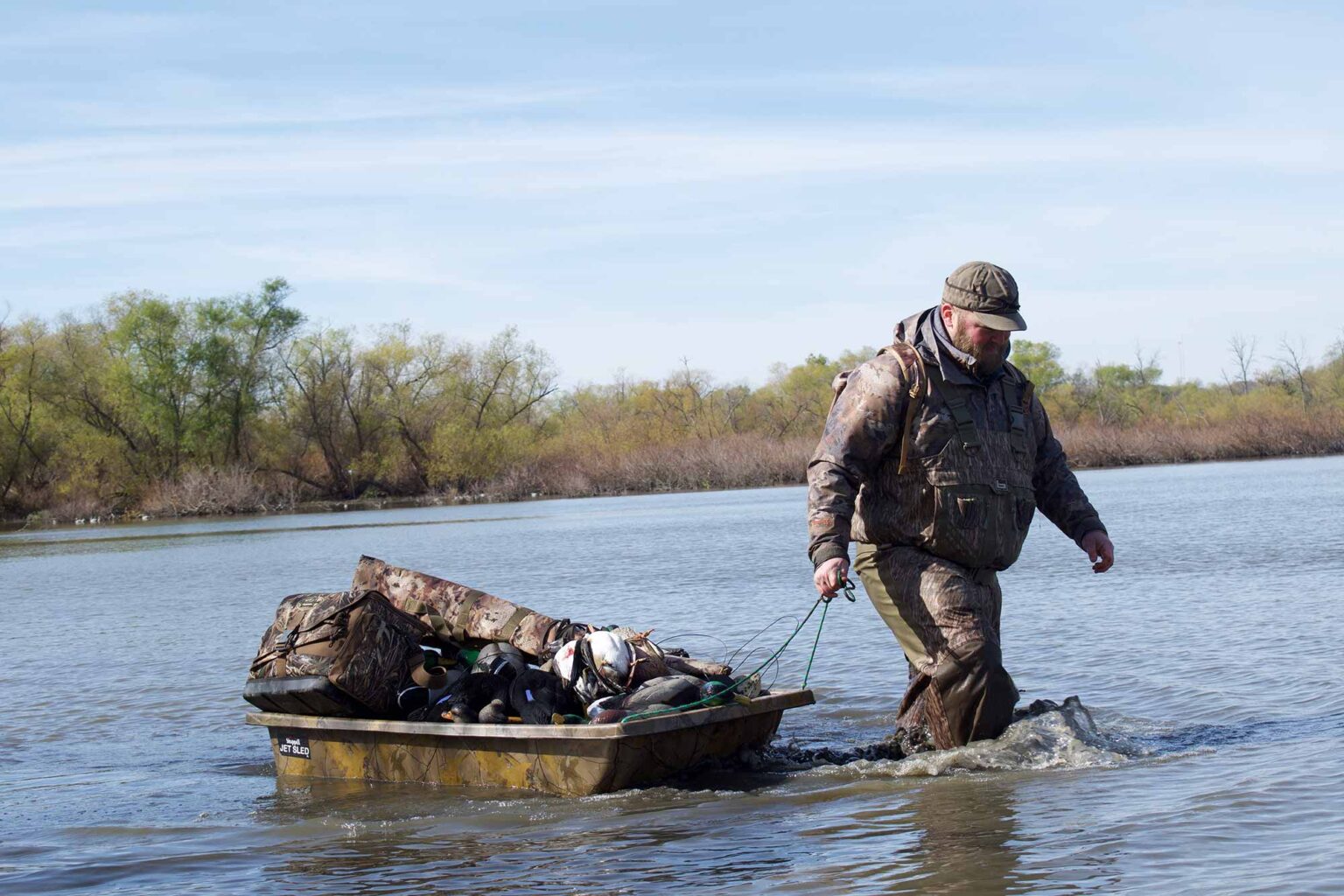
I couple the cart with a Jet Sled, which holds all my gear and fits perfectly into the Toughman. Beavertail and Momarsh also make good sleds, and Cabela’s still sells ice fishing sleds, but they aren’t as durable. I put the Jet Sled in the bed of my truck, load it up, and then once I’m ready to unload it, I get the cart down first, open it up and prop it up against the tailgate of my truck so I can slide the sled in myself without physically picking it up. The versatility of the sled is what you really need it for. Remember I talked about it being too muddy for the cart? Well, if you drill two holes in the front of the sled (don’t drill into the bottom or you will spring a leak) and run a rope through the holes, you now have a handle, and can pretty easily drag the sled through the mud. Another bonus is once you hit the water, just jettison the sled from the cart and take it with you. It makes throwing decoys easier, and if the water levels are high it’s a good place to keep any extra gear, like jackets and blind bags, from getting wet.
Bring the Snow Shovel
Some of the best mornings come after the temperature dips below 32 degrees the night before. I always love to hunt a cold snap, because it moves ducks. The issue on public land is there’s no way to keep water open, so you’re likely going to be dealing with some skim ice. Ducks don’t like that, so I bring my dad’s old carpenter’s hammer and a snow shovel with a 2-foot wide scoop on it. If the ice has gotten thick enough that it needs to be broken up, I go to work with the hammer and make a hole. Then, I’ll come in with the snow shovel and push all the ice out. I get a lot of odd looks from other hunters, and hear guys say “why the hell does that guy have a snow shovel?” But the same hunters have come and found me to ask if they can use it once we are in the marsh. I always oblige. Sure, I would probably kill more ducks having the only open hole, but it’s bad duck juju to ruin someone else’s hunt because they came unprepared. Plus, I run into the same groups of hunters a lot, and you never know when you’re going to need their help.
Go Light on Decoys
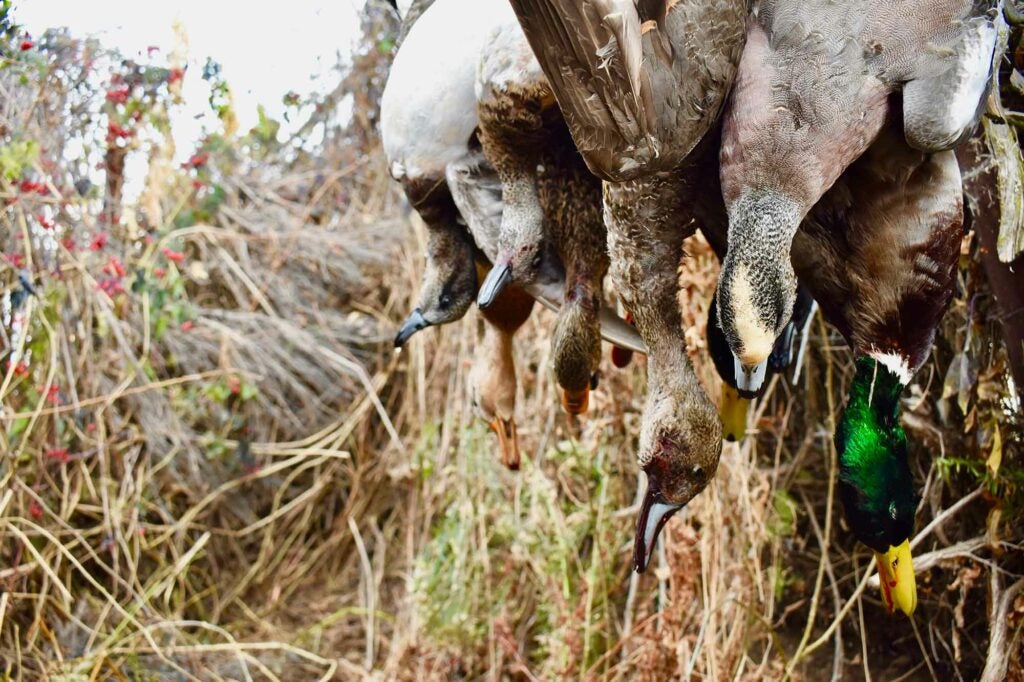
I like to have the option to run as many decoys as I can (up to five dozen), and the key to success on public land is showing ducks a spread they haven’t seen before. About half my spread is butt-up feeders. They are light, take up less space than full-bodies, and mimic ducks feeding, which is more natural than a blob of head-up decoys, which is what most of your competition is going to be running. For full-body floaters, I go with the Avian-X Topflight series, because they are fully flocked and have a mix of head-up and low-head feeders. I use mallards, pintails, green-wing teal, wigeon, and black ducks, depending on the time of year. Variety is a key ingredient to killing pressured public waterfowl, and you should always have a few black ducks in your spread on sunny days. They stand out so much more than any other decoy with their dark bodies.
If I have a really long walk in, but need a large decoy footprint, I go with inflatable decoys from Lucky Duck and Dakota Decoy. Or, Lifetime has the FlexFloat mallards that are hollow in the middle, so they cut down on weight. I rig all my decoys with 3- or 4-ounce weights so they are lighter. If you hunt shallow rivers, that might be a poor choice depending on the strength of the current. You’re better off with a heavier mushroom decoy weight that buries itself into the river bottom. Mallard silhouettes are awesome if you are hunting ankle-deep water, or want to add more decoys in the shallows or on river sandbars. You can easily pack in 50 silhouettes and create a much more realistic rig than your neighbors.
Every decoy spread needs motion, and I typically run two spinning-wing decoys. I don’t use mallards because they are bigger and more cumbersome. Go with teal, wood ducks or gadwall. They are just as effective and take up less space. On-water motion is also key to a good spread. My best results have been with Wonderduck. The quality is unmatched. Many of the on-water decoys are junk. They fill up with water or don’t float. I’ve never had that issue with Wonderduck. Plus, they are built like tanks. Mojo’s Flock a Flickers are good too. They are a cheap way for creating motion and they don’t take up much room. Jerk rigs are one of the best ways to create decoy motion on windless days, and they will never run out of batteries or malfunction, like electronic decoys sometimes do. Ducks also get conditioned to avoid spinners as the season goes along, but they will never grow wary of the jerk rig.
RELATED: 5 Keys to Killing Reverse Migration Mallards and Geese
Dress in Layers
I still see a lot of hunters wearing blue jeans and squeezing into Neoprene waders. God bless them, but most don’t last too long on the cold days. No matter the temperature, if you wear Neoprene waders you’re going to sweat on the walk in. You will be warm for a while, but then that sweat becomes the enemy as the morning drags on, and chills you to the bone. I wear a pair of breathable Orvis front-zip waders with a rubber-soled wading boot, and depending on the weather will wear one to three pairs of longjohns. Or I put on a Merino baselayer and wear an old (warm) pair of sweatpants. But before I walk out, I shove the sweatpants in a blind bag. I might be a little cold on the way in, but that beats having to leave early because I sweated my ass off on the walk in and the wind is crystalizing that perspiration to my skin. The wader/boot combo is a bit pricey, but I’ve had them for five years now without a leak, and the grip I get with the boots is far superior than the sole of any wader boot I have come across.
I don’t put a jacket on when walking into the marsh either. And typically I don’t even wear a parka unless it gets real cold. Most public water is going to be frozen up solid anyways if it gets to the point where I need a winter coat. I like to wear two or three baselayers (one of which will be Merino), and add a vest to keep my core warm. Sometimes I’ll just go with a Merino layer, Carhartt hooded sweatshirt and the vest (but always bring a jacket along in case it turns cold, or you fall in and need a dry/warm outer layer). The key is you want to be able to shed layers during those walks in and out without having to carry around a bunch of bulky clothes.
Take a Pump Shotgun
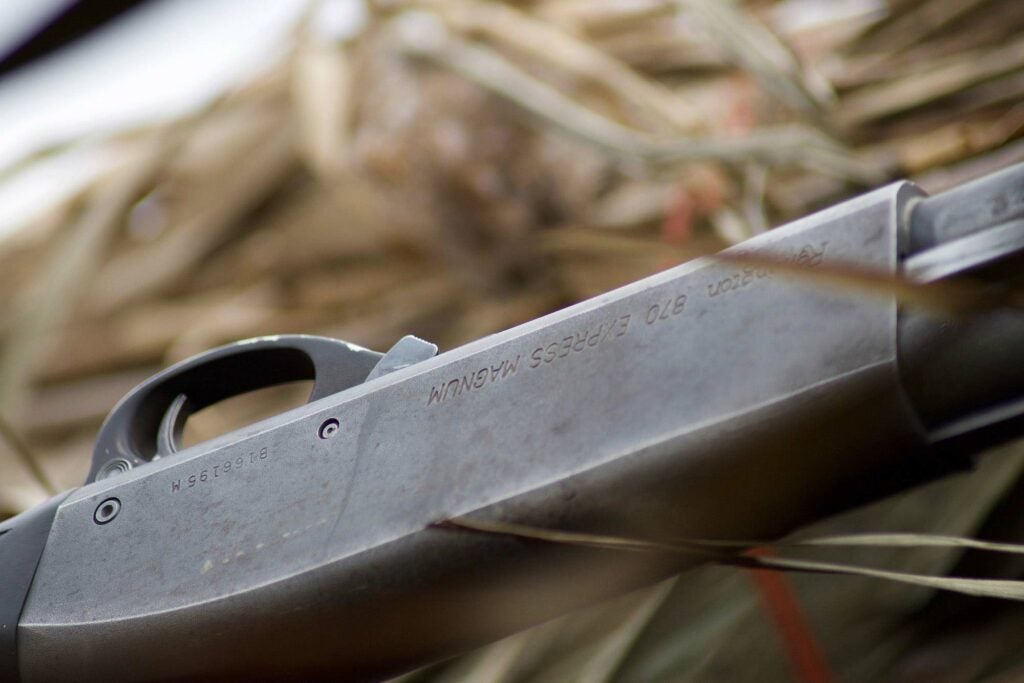
My favorite gun is an old semiauto Beretta, but I typically don’t take it with me to the walk-in. It’s reliable, but autoloaders have more moving parts than a pump-action, so there is a higher likelihood they will fail. And I don’t need a breakdown after walking in over a mile. A Remington 870 20-gauge is my ideal walk-in gun because it’s lighter than a 12-gauge and will function flawlessly. You can likely find a used one for less than $300 at a local gun shop. Pump guns are also damn durable, and public land is often harder on guns than private duck clubs. So you want something that can take a dip in the marsh and still run properly. You might not get that from an autoloader. There is no worse feeling than getting up at 3 a.m., doing all the work it takes to set up, and having your shotgun malfunction when the first flock comes in.
Read the full article here