





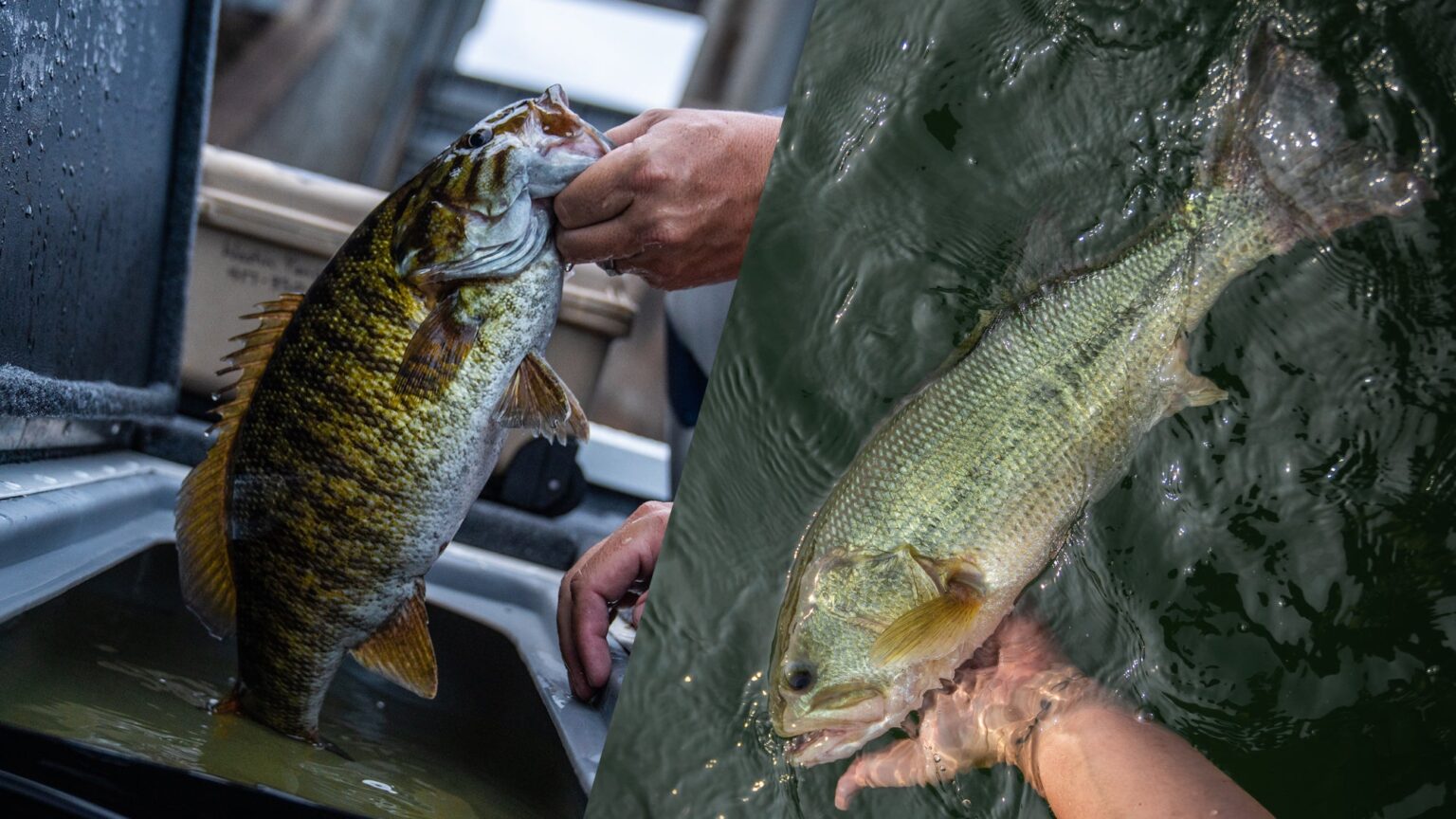

When it comes to smallmouth vs largemouth bass, there are probably more similarities between the species than there are differences. Both are among the most sought after freshwater game fish in the country. Both will readily take live bait and artificial lures, including many of the same baits and lures. And one or both can be caught throughout much of North America, as well as a few other places in the world.
All of that said, when it comes to telling them apart or targeting one vs the other, it’s the differences that matter, and there are a several of key ones to focus on—from the way they look and the environments they thrive in to the techniques used to trick them into biting. Here’s everything you need to know about smallmouth vs largemouth bass.
Table of Contents
- Appearance
- Size
- Range and Distribution
- Where to Find Them
- How to Catch Them
Smallmouth vs Largemouth Bass Appearance
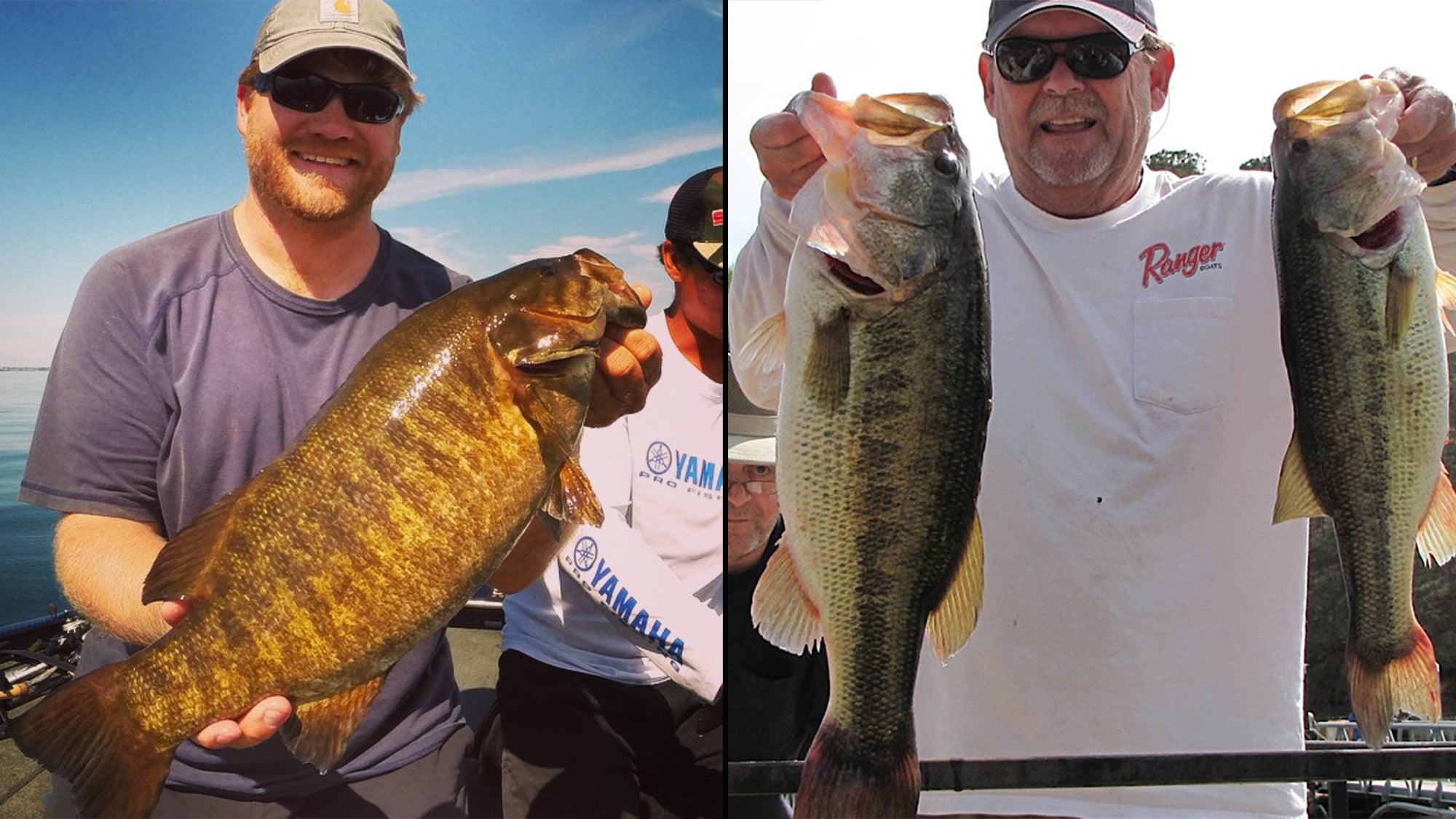
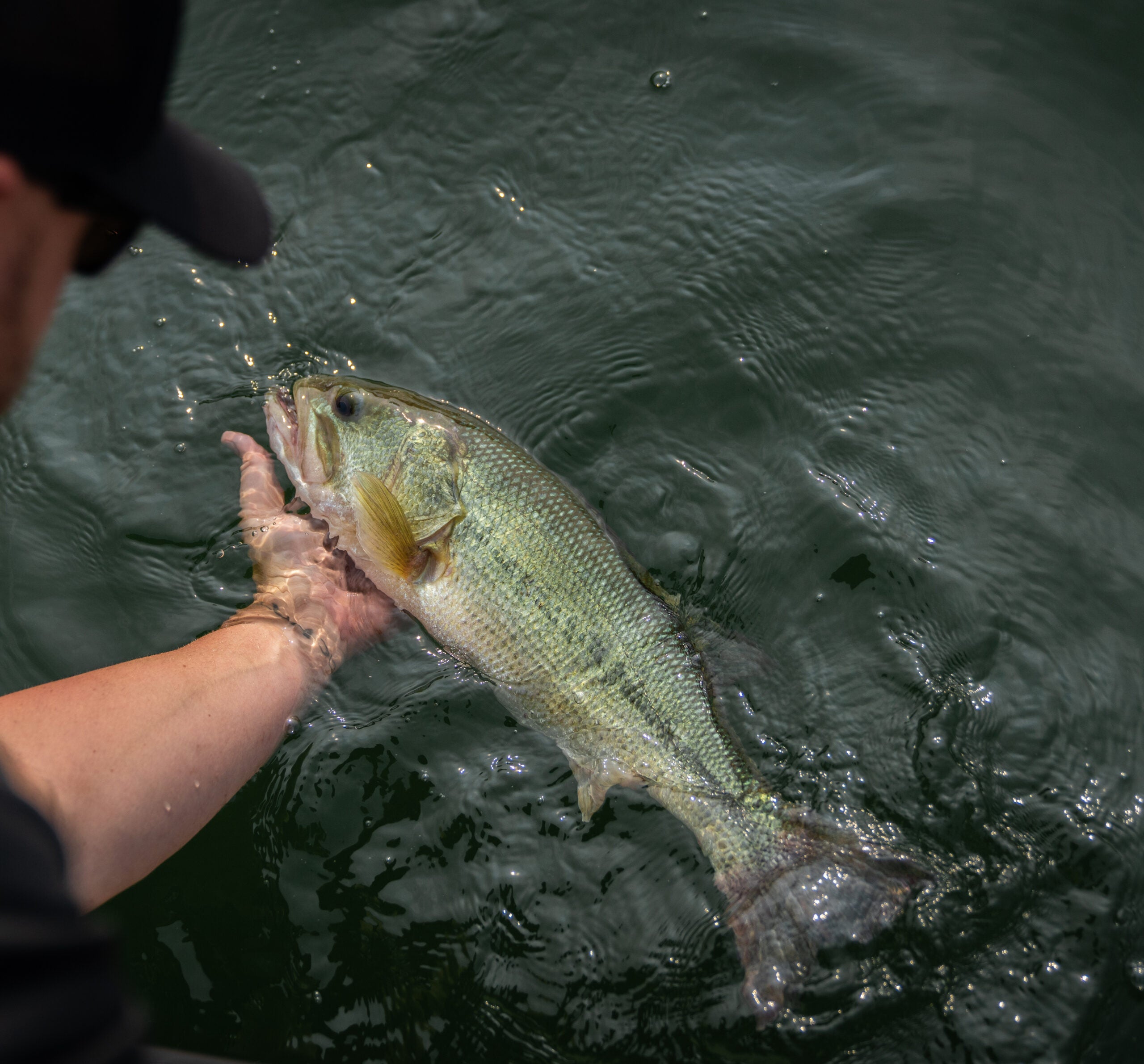
One of the biggest keys to identifying smallmouth vs largemouth bass is in their names. The smallmouth’s mouth is—your guessed it—smaller, with the corner of the jaw typically about even the eye, give or take. A largemouth’s jaw, on the other hand, typically extends past the eye.
Another key difference is the dorsal fin. A smallmouth’s has a shallow indent, so that it appears to be one continuous fin with a slight dip in the middle. The largemouth’s dorsal fin, however, has a deeper indent, to the point where it can appear to be two separate fins with a break in the middle.
The color and patterns on the sides of these fish varies widely within the individual species, but it’s typically easy enough to differentiate largemouth from smallmouth just by looking at their flanks in profile. Largemouth bass are typically green, ranging from dark in clear water to almost pale in muddy water, whereas smallmouths are typically more brown or bronze, hence their nickname, “bronzebacks.” Whereas largemouths have one line of large dark blotches along their lateral lines, smallmouth have more vertical bars, often with far more additional markings along their bellies and backs.
Size Differences Between Smallmouth and Largemouth Bass
Largemouth bass tend to grow a little longer, where smallmouths are often a little taller or deeper, from belly to back. That said, when it comes to top-end weight, largemouths can grow roughly twice the size of smallmouths. Whereas the world-record smallmouth weighed an astonishing 11 pounds, 15 ounces, the biggest largemouth known to man nearly doubled it, weighing 22 pounds, 4 ounces.
Top-end weight isn’t a good representation of the size comparison as a whole, however. A 4-pound bass of either species would be considered a very nice fish in most places. Although largemouth do tend to grow larger on southern fisheries, the chances of catching a bigger smallmouth vs largemouth bass increases the farther north you go.
Distribution of Both Species
Northern fisheries like Lake Erie and the St Lawrence River are known for their giant smallmouths, with thousands of 5-plus-pound bronzebacks perusing their waters. But as you work your way south of the Mason-Dixon line, you’ll find the chances of catching a quality smallmouth vs largemouth bass decreases, until you get down into places like Florida, and Mexico, where smallmouth bass do not exist and largemouths flourish.
Smallmouths thrive in the deep, clear, and cool waters often found in rocky highland reservoirs and glacial lakes. The species also does well in swift, shallow current, as long as the waters stay cool. The latter is why you’ll see good populations of hefty smallmouths below dams, even in Alabama for instance on lakes like Pickwick, Guntersville, Wilson, and Wheeler along the TVA (Tennessee Valley Authority) system.
Largemouth do much better as a whole in clear and/or stained lakes with abundant shallow cover, such as vegetation, docks, or brush. These bass also thrive better in warmer water compared to smallmouths, because the warmer water allows for a longer growing season for them. This is why largemouths in southern fisheries outgrow their counterparts in the North, outpacing bass of the same age by a pound or more of growth each year.
Where to Find Smallmouths vs Largemouths
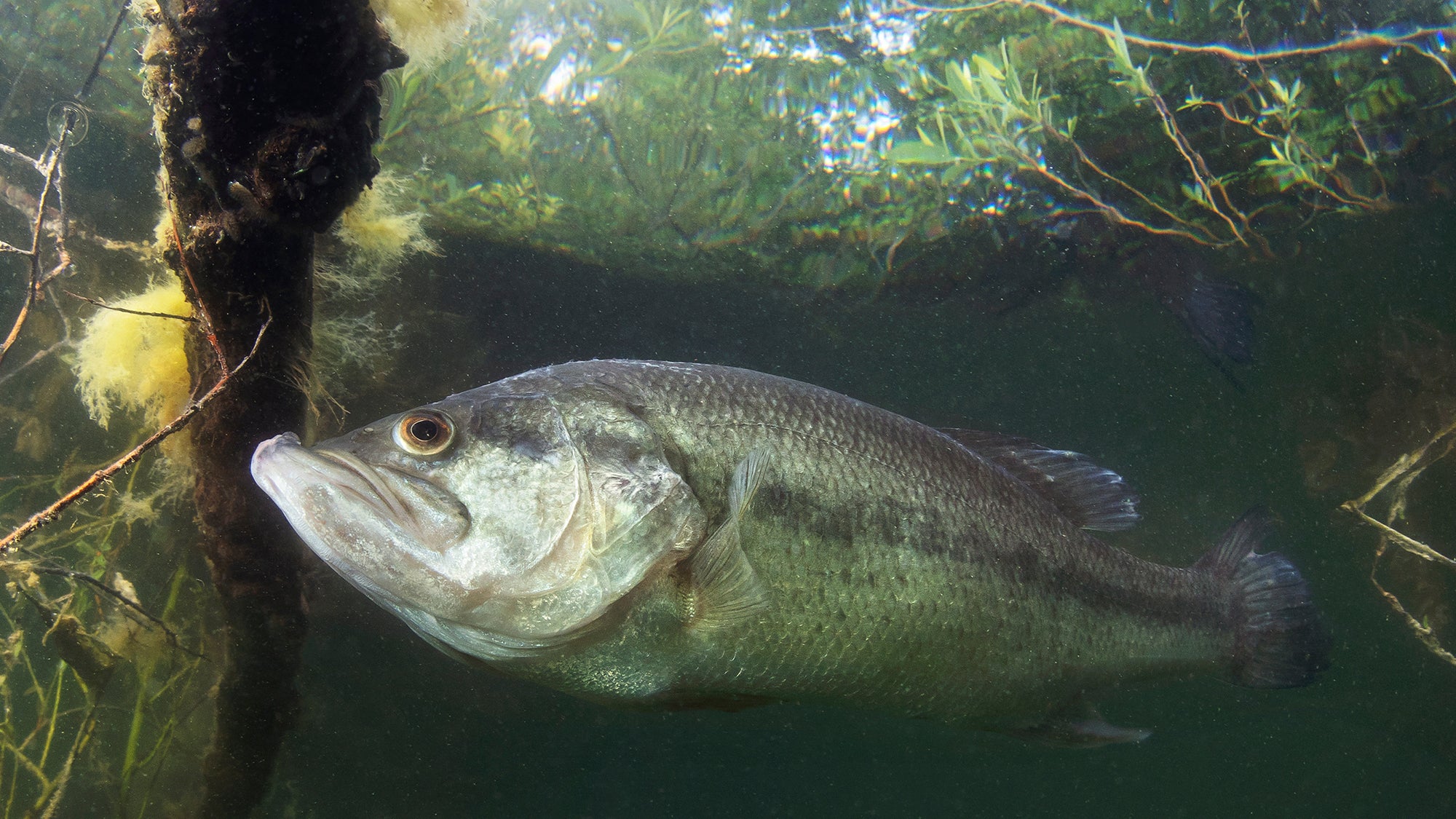
Smallmouth are more visual feeders, meaning they hunt their prey primarily using their sense of sight. Though largemouth do use sight to hunt as well, they often hone in on prey by feel, sensing tiny vibrations in the water using their lateral lines that run along their sides.
For this reason, smallmouths are more likely to be found roaming about on fairly smooth or rocky bottoms or hunting suspended up in the water. Largemouth however typically prefer to hang tight to some type of cover as they wait to ambush passing prey. It’s important to note that these are generalizations, as smallmouths certainly hang near cover at times and largemouth are known to suspend as well. But understanding these typical behavioral differences can help you locate and catch more bass of both species.
How to Catch Smallies and Largemouths

Because smallmouths are visual feeders, it’s important to use finesse tactics when targeting these fish in clear and calm waters. This is what makes drop-shots baits, Ned rigs, and Marabou hair jigs very popular and effective for smallies on both northern and southern fisheries. But when moving into swift and muddy water in either region, you’ll want to switch to spinnerbaits, crankbaits, and bigger jigs.
Largemouths can be targeted with finesse tactics as well, but the cover they like to relate to typically requires heavier gear. Frogs, jigs, topwaters, spinnerbaits, vibrating jigs, and crankbaits all work well depending on the water color, current, and type of cover.
If the water isn’t particularly clear, you can help largemouths locate your baits by using brighter or contrasting colors or by appealing to their sense of feel by using baits that either have rattles, churn water along the surface, or create vibration. These types of baits are particularly important the dirtier the water becomes and when fishing at night for both species.
Read the full article here