






Zarzuela de mariscos is a Spanish seafood stew that uses lots of different seafoods, tomatoes, peppers and a picada, a sort of zippy herb pesto, right at the end. It’s tasty, easy to make and versatile.
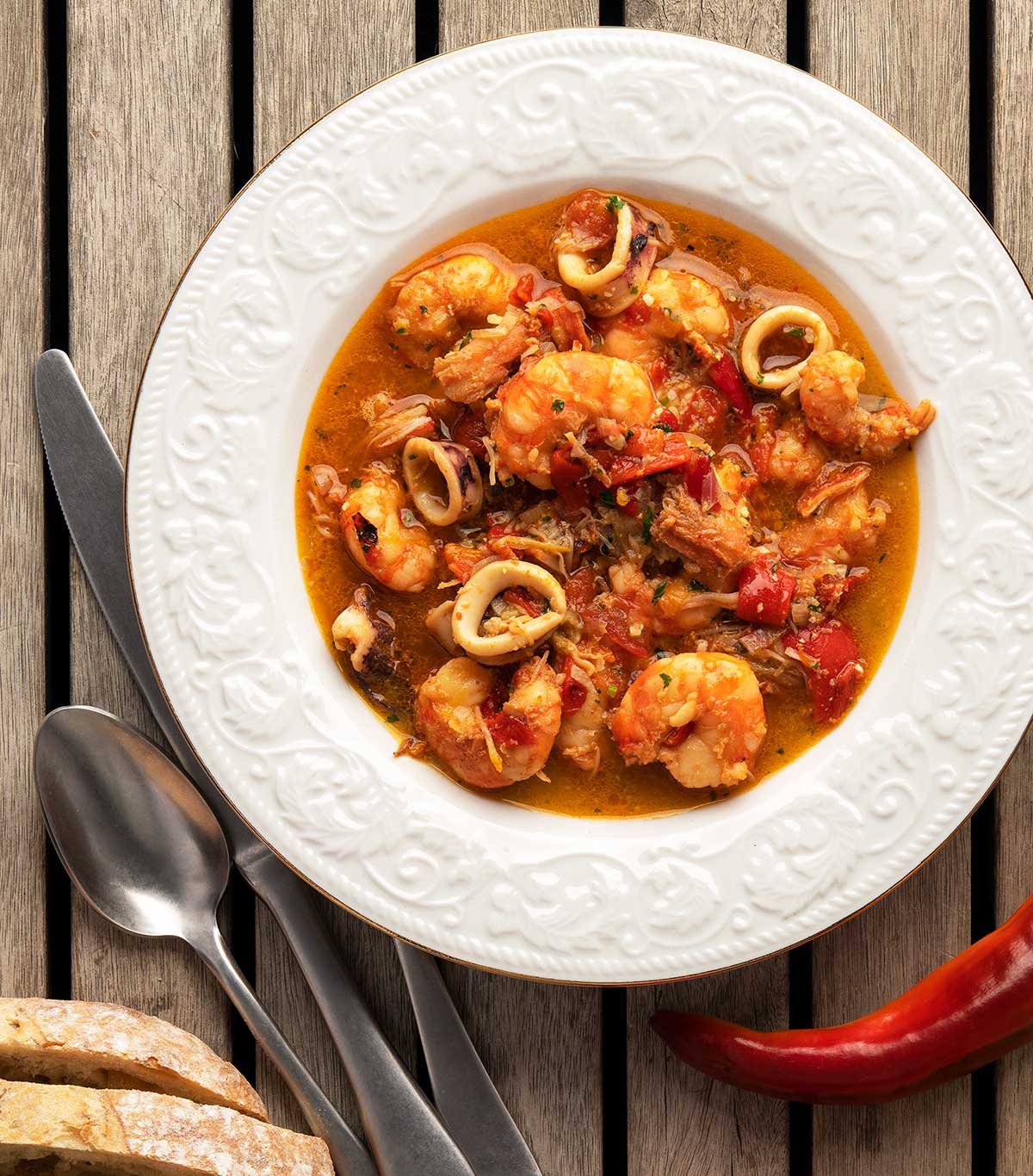
My recipe is heavily influenced by one in the fantastic book The Foods and Wines of Spain, by Penelope Casas. I highly recommend all her books.
At its core, zarzuela de mariscos is a light seafood stew not unlike cioppino or my East African fish stew, albeit with different flavors. Any combination of seafood will work here, and fish can make an appearance, too.
A word on the name “zarzuela.” It’s unclear exactly how the word for a bush that lives in central Spain morphed into a Catalan stew, but hey, some things in life are just mysterious. The most common modern meaning of the word is for a sort of opera. Go figure.
Seafood For Zarzuela de Mariscos
Anything goes. Really. But get more than a couple if you can. The best zarzuela de mariscos essentially use the entire cast from “Finding Nemo.” That’s a joke, but I commonly see five or six different kinds in the pot.
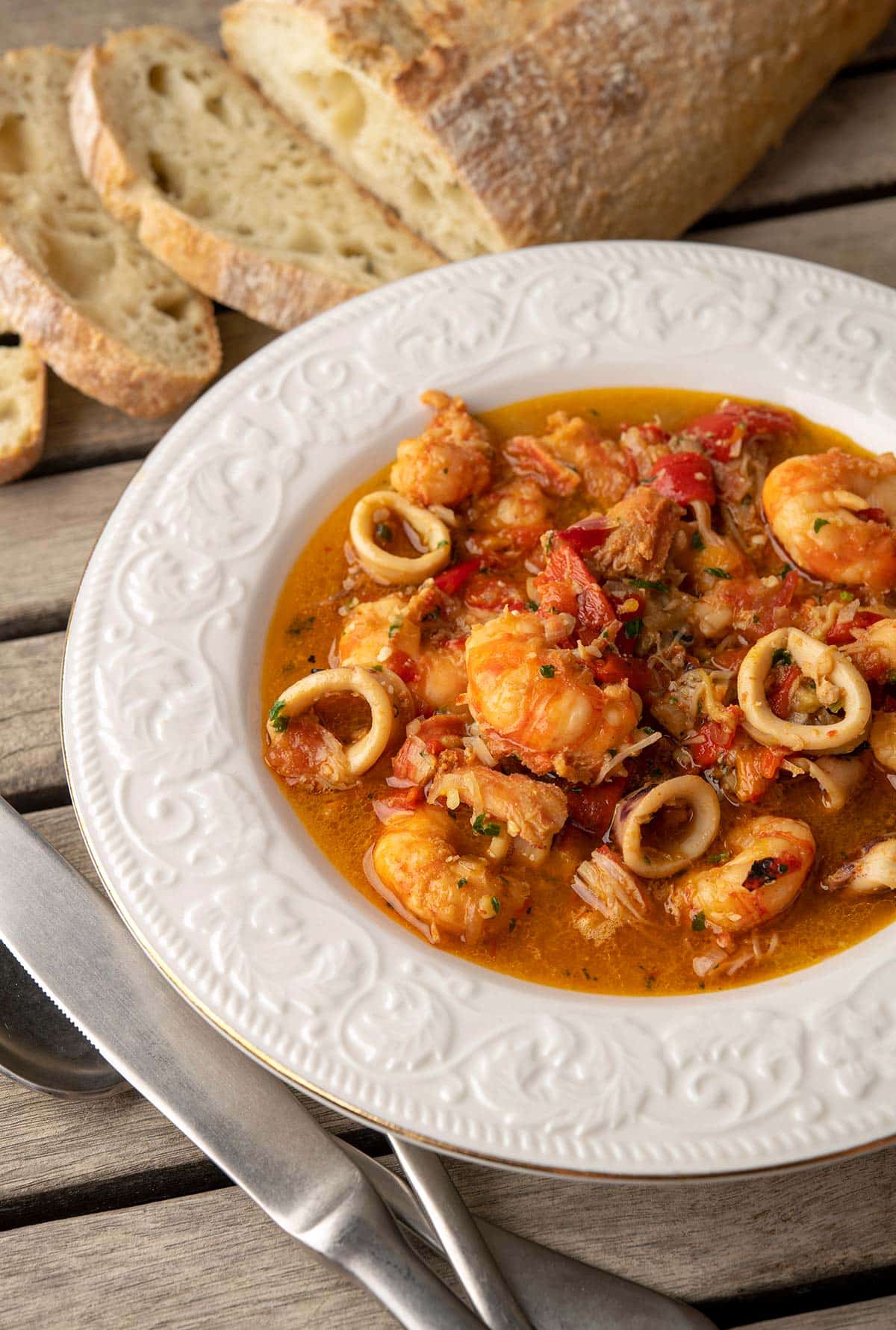
Here I am using spot prawns, squid and Dungeness crab. Mussels, small scallops, clams and lobster are all good options, as are crawfish tails, smoked oysters, finely chopped whelk or conch, and any sort of shrimp you can imagine. If you do use fish, make it a bit player, not the star.
My advice is to go to the fish market and ask what’s freshest and go from there. Pick at least three.

Other Ingredients
If you are familiar with Spanish cuisine, you’ll recognize the Usual Suspects: paprika, saffron, garlic, tomatoes and peppers. White wine shows up, as does parsley and lemon.
There’s one other thing that distinguishes zarzuela de mariscos from other seafood stews: the picada.
A picada is a bit like a pesto: You pound almonds, parsley and garlic in a mortar and pestle, sometimes with a little lemon juice to let it flow better. This goes into the pot with the seafood and it all comes together quickly.
Serving and Storing
Crusty bread is a key accompaniment, but you could serve this alongside rice.
I like to make this one of many courses in a Spanish feast. Zarzuela de mariscos goes really well right before fish with green sauce or the paella-like Spanish mushroom rice. If you want a great appetizer before serving the stew, try making some salt cod fritters with saffron aioli.
As with many seafood dishes, this one doesn’t store well. Make it and eat it. If you have leftovers, you can slowly heat them on the stovetop in a covered pot the next day. They’ll be OK, but not as good as the first time you served them.
If you liked this recipe, please leave a ⭐️⭐️⭐️⭐️⭐️ rating and a comment below; I’d love to hear how everything went. If you’re on Instagram, share a picture and tag me at huntgathercook.
Print Recipe
Zarzuela de Mariscos
This is a Spanish seafood stew popular in Catalonia. Use as many different kinds of seafood as you can. Serve with crusty bread and white wine or fino sherry.
Servings: 6 servings
Calories: 273kcal
Instructions
-
Heat up a cup of water and crumble the saffron in it. Let this steep while you peel shrimp, cut vegetables, etc.
-
Pound the almonds, salt and garlic in a mortar and pestle until it’s starting to become a paste, then add the parsley and pound into a smoother paste.
-
Heat the olive oil over medium-high heat in a large, heavy pot. Sauté the onion until transparent and soft, but not browned. Add the garlic and cook another minute. Sprinkle some salt over everything.
-
Add the shrimp and clams, brandy, tomatoes and roasted red peppers. Stir well and when this starts cooking nicely, stir and add the paprika, the saffron water and the wine. Bring this to a boil quickly, then add the squid and crabmeat.
-
Once all the clams have opened up, loosen the picada with the lemon juice and stir it into the pot. Serve at once with crusty bread.
Nutrition
Calories: 273kcal | Carbohydrates: 8g | Protein: 20g | Fat: 13g | Saturated Fat: 2g | Polyunsaturated Fat: 2g | Monounsaturated Fat: 8g | Trans Fat: 0.01g | Cholesterol: 152mg | Sodium: 807mg | Potassium: 440mg | Fiber: 2g | Sugar: 2g | Vitamin A: 1132IU | Vitamin C: 21mg | Calcium: 87mg | Iron: 2mg
Read the full article here