



The little things that can go wrong on the water and cost you a fish are practically innumerable. Some—like a strong steelhead running you into a logjam—might be unavoidable. Many, however, are angler error. Bad knots, for example, cost people fish all the time. Either you chose a knot that’s too weak for the application or you failed to tie a strong knot properly, but regardless, that’s your bad. Not understanding how to properly set your reel’s drag is another common mistake, as is getting too excited and setting the hook on a topwater frog bite too early.
I could go on, but this isn’t about fixing mistakes that fade with more practice and experience. There are a few issues that arise that can be easily missed or overlooked by even the most seasoned fishermen. Here are the three most likely to bite you at the worst possible time, and I know because they’ve all bitten me at some point.
Damaged Line
I’d make the argument that nothing costs anglers more fish than damaged line. I’ve personally lost a lot of fish to the issue, which is completely avoidable most of the time if you’re not lazy.
Read Next: The Best Fishing Line for Landing Any Species Of Fish
Here’s the scenario: You spend a day fishing, and all is well. You put all the rods rigged from that trip back in the garage. The next time you head out you figure, Hey, these rods are ready to go from last time. But then you connect with a lunker, set the hook, and the line parts with ease. Usually this is a result of a frayed or weak spot in your line, which can occur both on the water or during transport. That’s why it’s critical to closely inspect your line before each trip and on the water after a fight or snag, especially when you think it’s possible that your line contacted hard structure like a rock or wood.
To be clear, it’s not necessary to inspect the entire spool. You mostly need to be concerned with the first 5 feet closest to your hook or lure, but I like to check approximately 15 feet to be on the safe side. If you see chafes, slight shredding, or an off-color spot in your monofilament or fluorocarbon, cut the line above it and retie. With braided line, look for fuzzy spots or areas where the woven filaments have thinned or separated from the main strand.
Chipped Guides
Ever since a horrible night in 2013, I’ve become downright anal about inspecting my guides for chips. I had driven over an hour to the beach in New Jersey to surf fish for striped bass. When I got there, the water was boiling with fish blowing peanut bunker out of the waves. I tied on a plug and braced myself for action, but when I fired the first cast, the line parted and my plug went sailing off toward Portugal. No biggie, I thought. It must have been a bad spot in the line I missed. I tied on a metal spoon and snap! Same result.
It turned out that the ceramic insert in my tip-top guide had gotten chipped, creating a divot with a razor-sharp edge. Every time I casted with force, the guide would slice my braid. I left the fish blitzing and went home. Ever since, I’ve made the effort to check my guides before heading out. A great way to check them is with a Q-tip. Most of the time you’ll be able to see chips and rough spots, but if you run the Q-tip around the interior of each guide, the cotton will hang on abrasive or sharp sections.
Weak Hooks
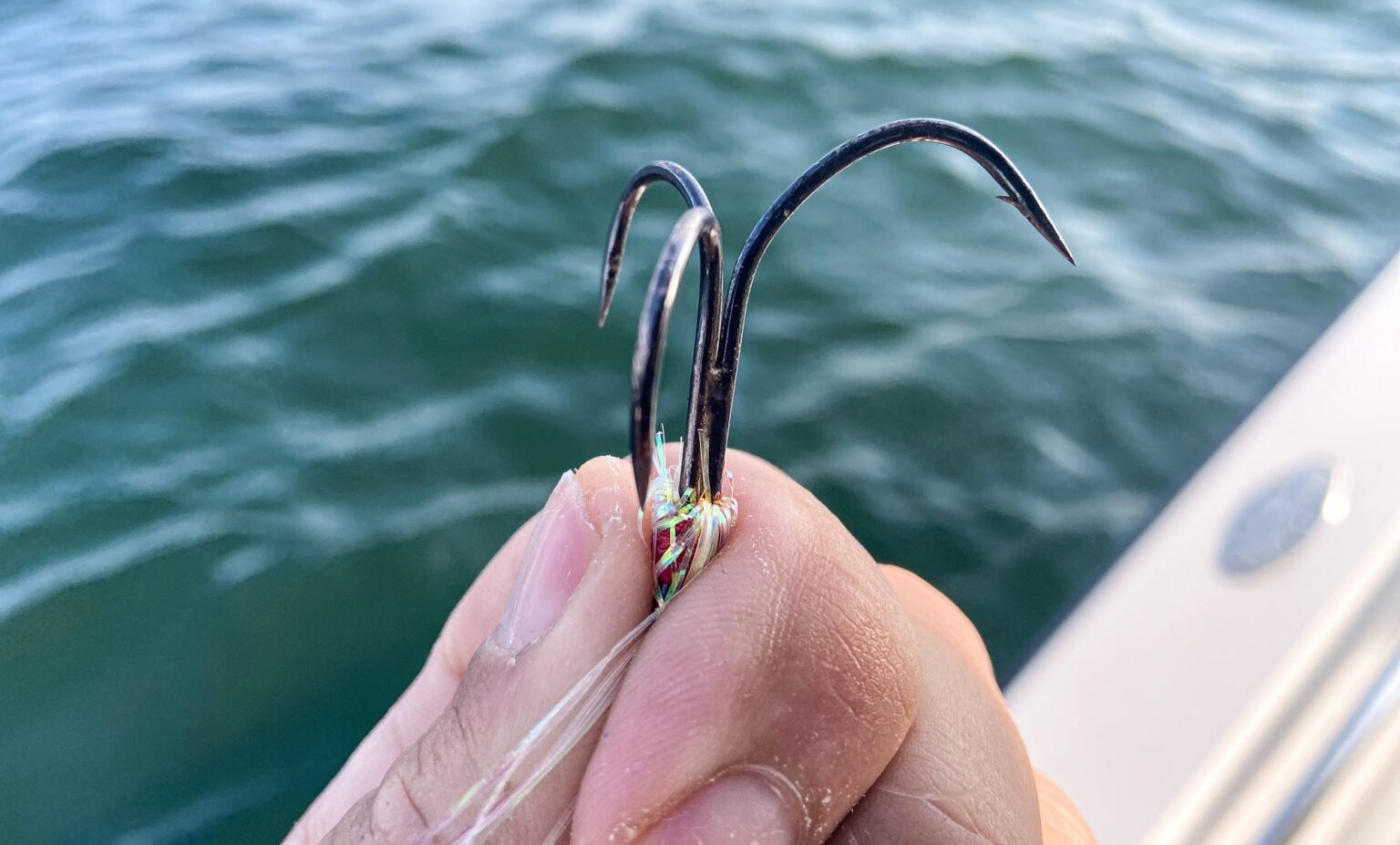
Everyone understands the importance of matching the size of their hooks to their target. Fewer people consider the gauge of their hooks, which is critical. Gauge refers to the thickness of the hook, which dictates its strength and rigidity. Tuna fishermen will target giant bluefins with relatively small hooks that can be hidden inside small pieces of bait. Despite the hook’s size, however, they are extremely thick and won’t bend or warp during what can be an hours-long fight.
Read Next: How to Choose the Right Fishing Hook
Folks get burned by hook gauge most when using soft-plastic lures for bass. They might grab a bulk pack of budget wide-gap hooks that perform perfectly well with smaller fish. Then one day a true hog grabs the lure and that thin, budget hook bends straight during the battle. I’m a firm believer in buying premium hooks from makers like Gamakatsu and Owner, because even their lighter-gauge hooks tend to be built strong. But if you’re targeting larger bass, saltwater species, or even catfish that will pull hard and test your reel’s drag, consider using a hook with a heavier gauge than you think you need.
Read the full article here