





Crankbaits are maddening.
On the surface, they seem like some of the easiest lures in your arsenal. Pick a plug that goes the desired depth, then throw it out, reel it in and repeat. But behind their simplicity is a complex lesson in fluid dynamics — a Chinese-algebra-level equation involving body shape (length, width, density, volume), weight (placement and amount), buoyancy, pull point and water resistance. It takes all those factors coming together correctly to make a lure to wiggle under the water in a specific way and at a specific depth.
Even the slightest change to any of the equation’s variables completely alters the end result. Anything from flat sides versus round, weight being placed a couple millimeters toward or away from the head, the coating being a little too thick or thin, the grade of balsa or type of plastic, or a pull point angled even a butterfly’s eyelash in any direction will impact the action of a bait.
If you ask pros like Wesley Strader of the Bass Pro Tour, one crankbait characteristic reigns as most important — the attribute that makes them crankbaits to begin with.
The bill.
“(The bill) is how you get a crankbait to run,” Strader said. “It gives the plug its action, deflection, depth, wobble, and many people don’t truly understand that or all that goes into the bill.”
To become one of those enlightened anglers, you’ll need to understand the three key aspects of crankbait bills: material, angle and shape.
Material witnesses
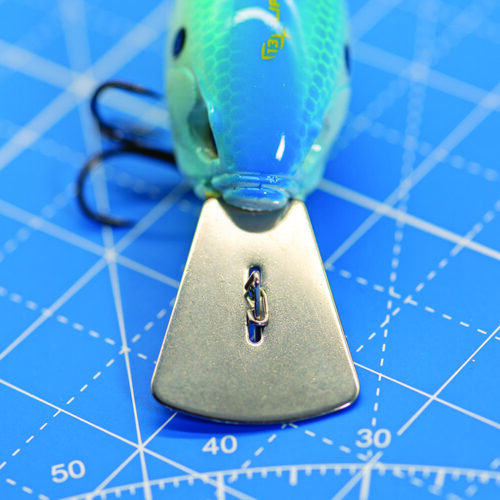
Technically, there are three materials that comprise crankbait bills: metal, lexan (or plastic) and circuit board. While a few niche exceptions still exist, most metal-lipped crankbaits went the way of the dodo decades ago, or at least got relegated into the “vintage” category.
That leaves lexan/plastic and circuit board, and both have their pros and cons.
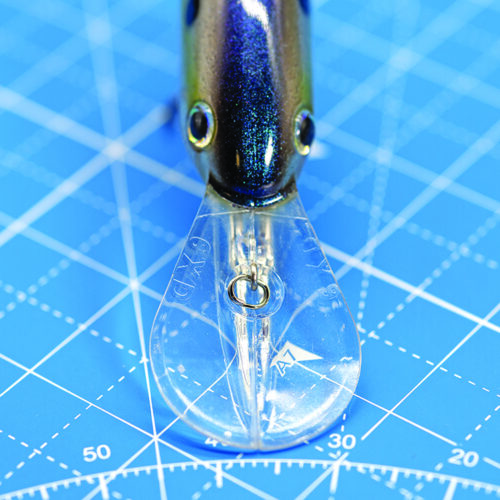
Lexan is by far the most common, whether the bill is a separate piece glued into the nose of the crankbait or molded as part of the body. Lexan bills are often the most aesthetically pleasing, as they’re clear and thus give the effect of not being there at all in the water, creating a more natural look.
But what really sets lexan lips apart is their durability.
“Lexan plastic is going to last a lot longer because it’s stronger,” Strader said. “The material doesn’t flex like circuit board, which allows it to be better for deeper-diving crankbaits, and if you’re grinding it against shell beds or rip rap, it’s not going to wear down near as fast.”
Case in point: When Strader won a 2018 Bassmaster Elite Series event on Kentucky Lake, he did so cranking riprap and pea gravel bars with a PH Custom Wesley’s Secret crankbait, which has a circuit board lip. After three days of doing so, he said one side of the lip had almost completely worn away.
So why use circuit board if plastic is stronger?
First, a circuit board lip with a tighter weave can still be quite strong. But any circuit board lip can be stronger than a plastic version in a key scenario – cold water. You see, lexan lips have no give, and if you’re cranking cold water (55 degrees or less), that rigidity can actually cause the bill to break if the lip isn’t thick enough. Hence, why so many anglers love circuit board bills for their flat-sided crankbaits or cold-water squarebills.
That brings us to another key attribute of circuit board material – the thickness, or lack thereof. It’s so thin it’s able to cut through water better and get a crankbait down to its desired depth quicker. It also tends to create a faster wobble at slower speeds thanks to less water resistance, which again bodes well for those cold-water scenarios. However, because of its flexibility, trying to tune a deep-diving circuit board bill can be about as frustrating as it gets, according to Strader. That’s why you don’t often see circuit board bills on crankbaits that dive deeper than 10 feet.
Shape shifting
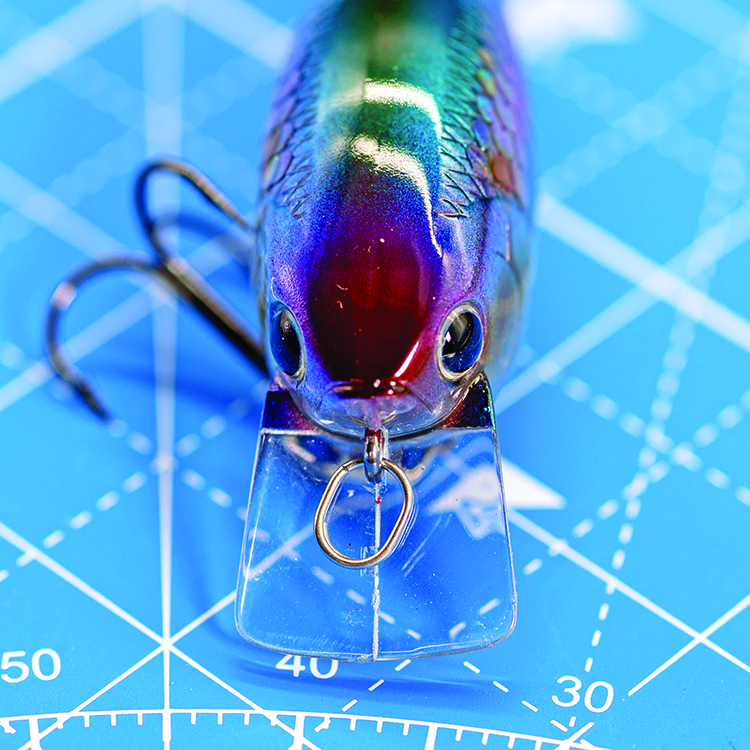
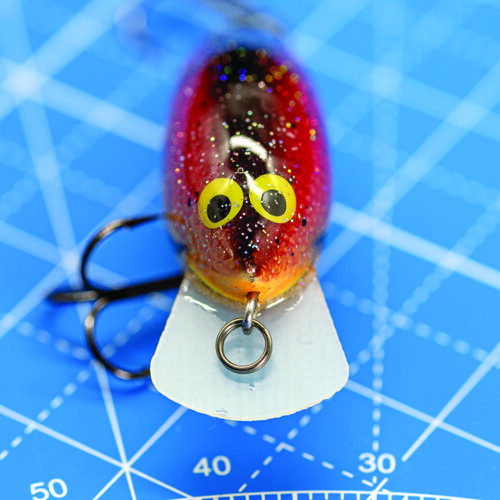
Round, square, coffin, diamond, spade, stair-stepped, double rounded — pick a shape and you’ve probably seen it on the front of a crankbait.
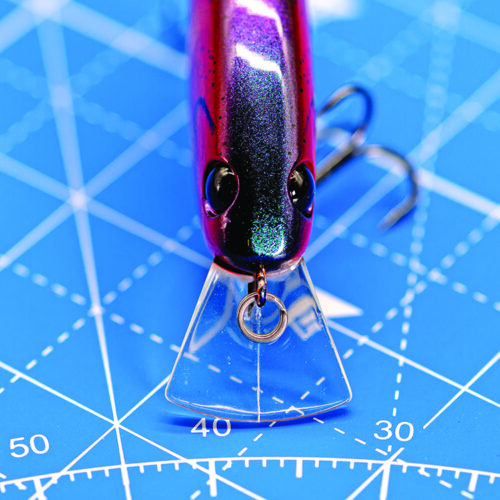
That said, while there are niche shapes out there, like the staggered bill on the Strike King Hybrid Hunter or coffin of the Jackall Digle, round and square represent the two bill designs anglers are most likely to encounter.
Again, the action these two shapes create can differ greatly based on the lure’s body and the bill’s angle. That said, there are some general rules that can help you understand how a crankbait will run based on its bill shape.
Round bills (those that are rounded in the front) tend to give crankbaits a tighter action with more roll, with the body of the crankbait wiggling less side-to-side and possessing some top-to-bottom rotation, creating a “rolling” action. This makes them ideal for colder conditions and fishing more open water.
Meanwhile, squarebills (those that are flat or squared in the front) tend to displace more water and give lures a harder, side-to-side wobble. That makes them ideal for deflecting off cover, as the hard edges will cause the lure to kick away from cover versus roll over it, which can cause the hooks to catch.
You may also notice there are plenty of crankbaits that seem to combine the two, especially when it comes to deep-diving models. That’s intentional.
While the idea of a squared bill deflecting off a deep shell bed seems ideal, given how hard most squarebills pull with a short lip, making that lip longer would mean an angler would need Popeye forearms to consistently get the bait deep enough. Thus, you’ll often see deeper-diving bills with squared sides and a rounded front. Some manufacturers take it further, creating bills with narrow sides near the body of the crankbait and a much wider end. Such a shape reduces the bill’s drag in the water, making it easier to get deeper with less pull, while still providing some degree of snag resistance.
Regardless of shape, bill length also plays a big role. A longer lip is needed to displace enough water to get a crankbait down further. Again, lip angle also factors in (more on that shortly), but a good rule of thumb is the longer the bill, the deeper the lure runs.
What’s your angle?
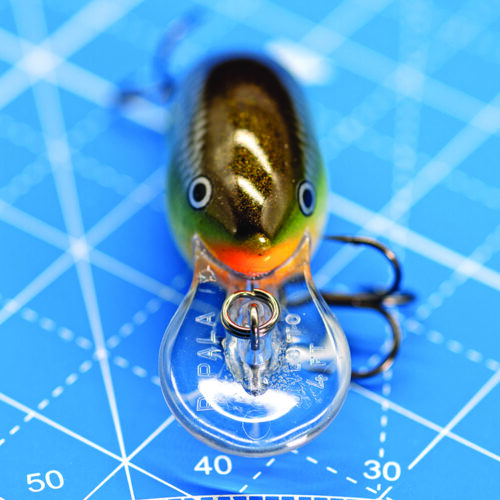
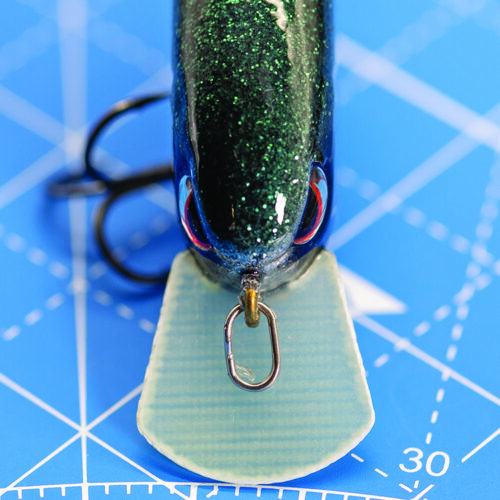
We’ve references bill angle a couple of times; now it’s time to delve into it.
Fortunately, it’s pretty simple.
“The more the bill points down (perpendicular to the body), the shallower it’s going to run,” Strader said. “The more it sticks straight out the nose (parallel to the body), the deeper it will go.”
For an illustration, take a look at the Rapala DT Series of crankbaits. The bodies are all similar in shape and size, with the main difference being the angle of the bill. A DT6 has a bill that’s narrow and angled more downward, thus only allowing it to dive to 6 feet. Meanwhile, a DT10 possesses a slightly larger bill that’s nearly perpendicular to the body, allowing it to get down to 10 feet. The DT20 features the largest bill in the series. It points straight out the nose, designed to send the bait to the depths.
The Berkley Frittside is another example – the No. 5 and No. 7 versions feature almost identical bodies. Yet, the lip on the 5 is shorter and angled more downward. The 7 has a longer, more parallel, coffin-shaped bill, allowing it to get deeper than the 5 despite having the same body.
It’s important to stress that these are just general rules of thumb. As established earlier, a lot goes into making a crankbait run to begin with, and even more into make a “good” one.
Still, there’s no factor more important than the bill. Understanding what each bill does and why will go a long way toward helping you determine when to choose a specific crankbait depending on the situation — and hopefully making crankbaits a little less maddening.
The post Bill Me – No two crankbait bills are built alike appeared first on Major League Fishing.
Read the full article here