







Musky, Northern Pike, and Pickerel belong to the Esocidae family, which as of 2024 contains four species in North America. This Esox Family identification guide will teach you how to identify Musky, Pike and Pickerel with ease as well as the hybrid Tiger Musky.
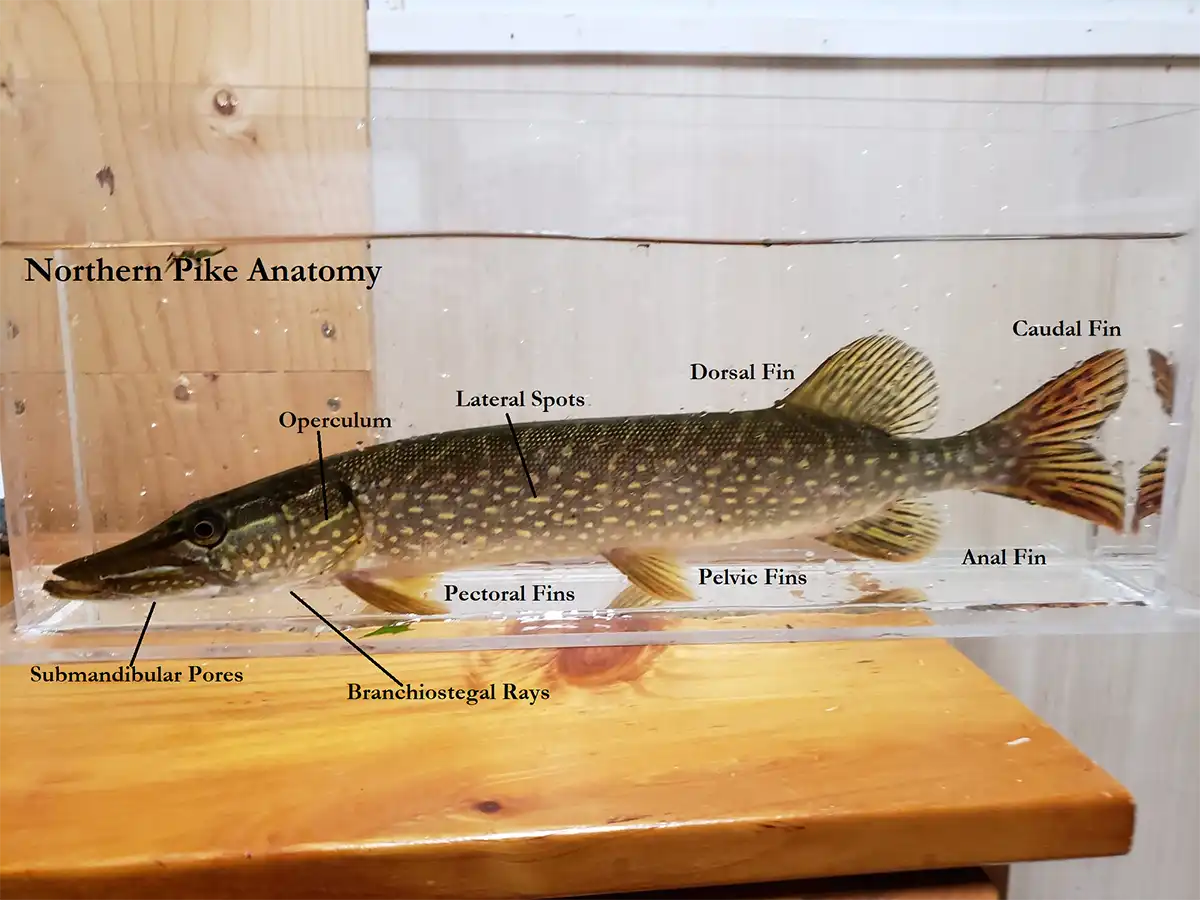
Whether you’re out on the water or on your next visit to the aquarium, there are several things to look for when identifying the individual fish in the Esox family.
Key Identifying Features
- Number of pores on each side of the jaw
- Facial, cheek, and operculum scaling
- Tail shape
- Body color
- Fin coloration or markings
- Lateral lines scale number
- Branchiostegal rays under jaw
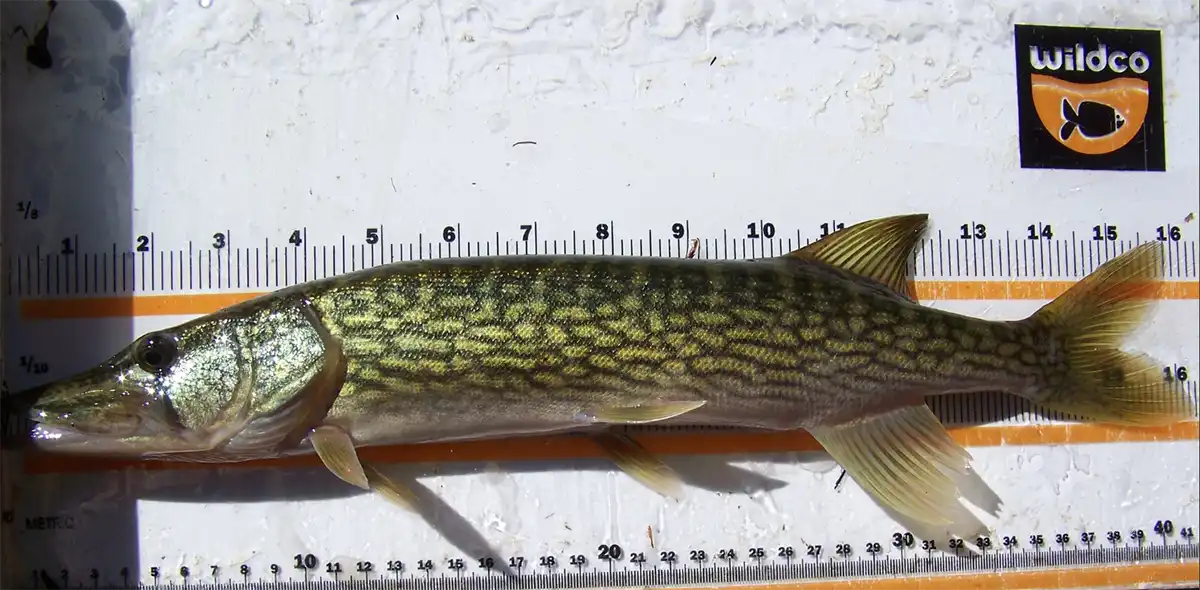
Chain Pickerel (Esox niger)
Chain Pickerel, or chain pikes to some anglers, are found from Texas, east to Florida and north into the Great Lakes. They prefer swamps, rivers and lakes with limited current. Often overlooked by anglers because of their smaller size, this bony and aggressive fish can be fun for all to catch. Chain Pickerel can reach sizes of up to 24 inches and weigh a couple of pounds.
The IGFA world record Chain Pickerel weighed 9.6 pounds and was caught in Homerville, Georgia.
Key Identifying Features
- Four pores on the jaw on each side of the jaw
- Facial scaling is found on the cheek and gill cover
- The tail is forked and has rounded edges
- Body colorations olive to dark brown with horizontal chain-like barring
- Fins are light yellowish to darker brown in color with no markings
- Lateral line scales 115-140
- 14 to 17 branchiostegal rays on each side

Musky (Esox masquinongy)
Muskellunge, or musky, are among the largest North American freshwater fish. Musky are found throughout the eastern US, parts of the Midwest and the Great Lakes including areas of Canada. They prefer lakes, rivers, creeks, and pools with flowing currents and can often be found around aquatic vegetation and timber. Musky are often called the fish of ten thousand casts, and demands the patience of anglers who pursue these predatory fish. They can reach lengths of more than 50 inches and weigh over thirty pounds.
The IGFA world record musky is 67.8 pounds and was caught in Hayward, Wisconsin.
Key Identifying Features
- Six or nine pores on each side of the jaw
- Facial scaling covers half the cheek
- The tail is forked and comes to a point
- Body color is olive to green with vertical barring or spotted
- Fins are darker in color
- Lateral line scales 140-175
- 16 to 20 branchiostegal rays on each side
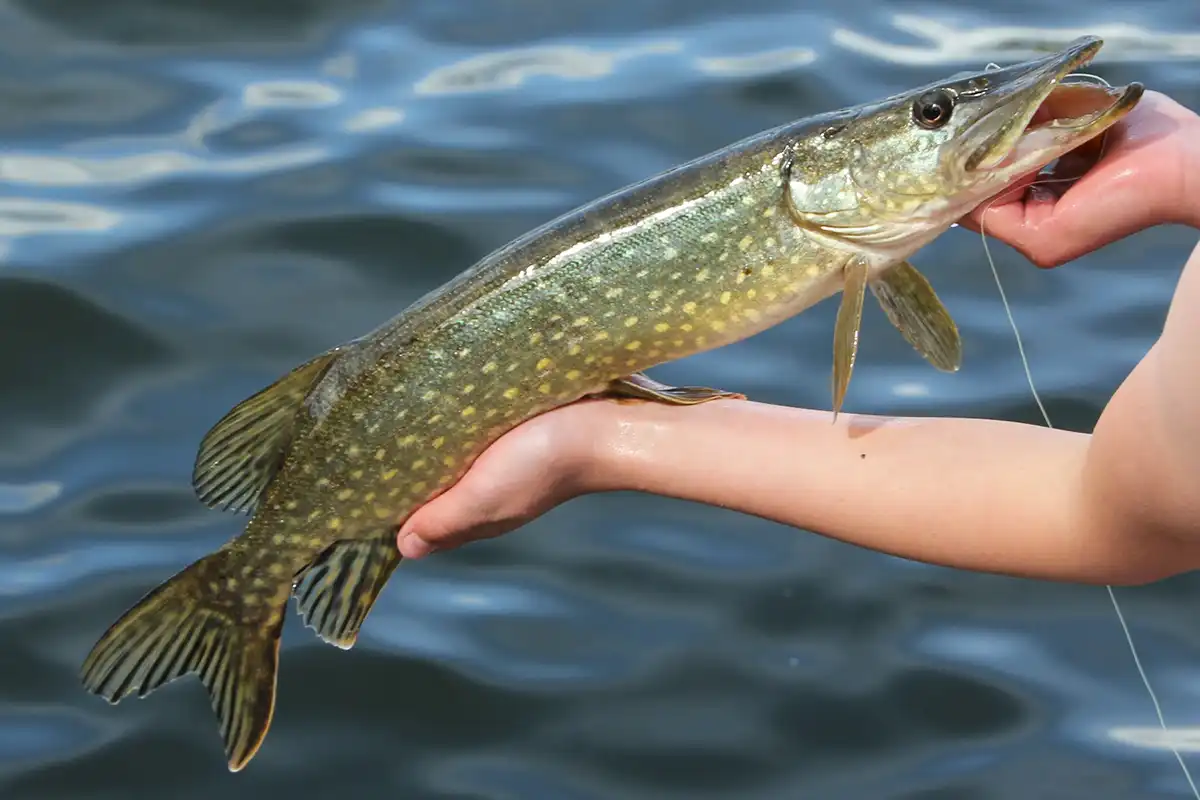
Northern Pike (Esox lucius)
Northern Pike, or northerns to some anglers, are another large predatory fish found throughout North America. Northern Pike are found as far north as Alaska, throughout most of Canada, as far south as Texas and along the eastern coast of the United States. They prefer lakes, rivers and streams with vegetation and rocky substrate. Northern Pike can reach up to forty inches and twenty pounds in weight.
The IGAF world record Northern Pike weighed 55.1 pounds and was caught in Germany.
Key Identifying Features
- Five or less pores on each side of the jaw
- Facial scaling covers the whole cheek
- The tail is forked and rounded at the ends
- Body color is green to brown with horizontal barring or oval spots
- Fins are lighter in color
- Lateral line scales 105-145
- 13 to 16 branchiostegal rays per side

Redfin Pickerel (Esox americanus)
Redfin Pickerel, or the Redfin Pike to some anglers, are one of the smallest members of the Pike family. It is found as far south as Texas, as far east as Florida, and as far north as the Great Lakes. Redfin are among the smallest members of the Esox family, and many anglers do not chase after these elusive fish. Redfin Pickerel will typically only reach about nine inches in length and weigh about a pound.
The IGFA world record Redfin Pickerel weighed 2.4 pounds and was caught in North Carolina.
Key Identifying Features
- Four pores on each side of the jaw
- Facial scaling is found on the cheek and gill cover
- The tail is forked and has rounded edges
- Body coloration yellow to brown with vertical barring
- Fins are light yellow to reddish in color with no markings
- Lateral line scales 94-117
- 10 to 14 branchiostegal rays on each side

Tiger Musky (Esox lucius × E. masquinongy)
Tiger Muskies are beloved by many anglers due to their fast-growing potential and aggressiveness. Tiger Muskies are not true Muskies. They are a hybrid stemming from the spawning of a Northern Pike and a Musky. These hybrids rarely occur naturally in native fish populations. The hybridization process leaves all Tiger Musky sterile; unable to reproduce. Tiger Musky can reach up to fifty inches and weigh over thirty pounds.
The world record Tiger Musky weighed 51.3 pounds and was caught in New Mexico.
Key Identifying Features
- Five to eight pores on each side of the jaw
- Facial scaling is found on the cheek and gill cover
- The tail is forked and has rounded edges
- Body coloration is green to gold with vertical stripes and spots
- Fins are spotted or have dark streaks
- Lateral line scales 124-140
- 12 to 20 branchiostegal rays on each side

As an Amazon Associate, we may earn income when you click on an Amazon link. Thanks for helping us do what we love.

Read the full article here