



We may earn revenue from the products available on this page and participate in affiliate programs. Learn more ›
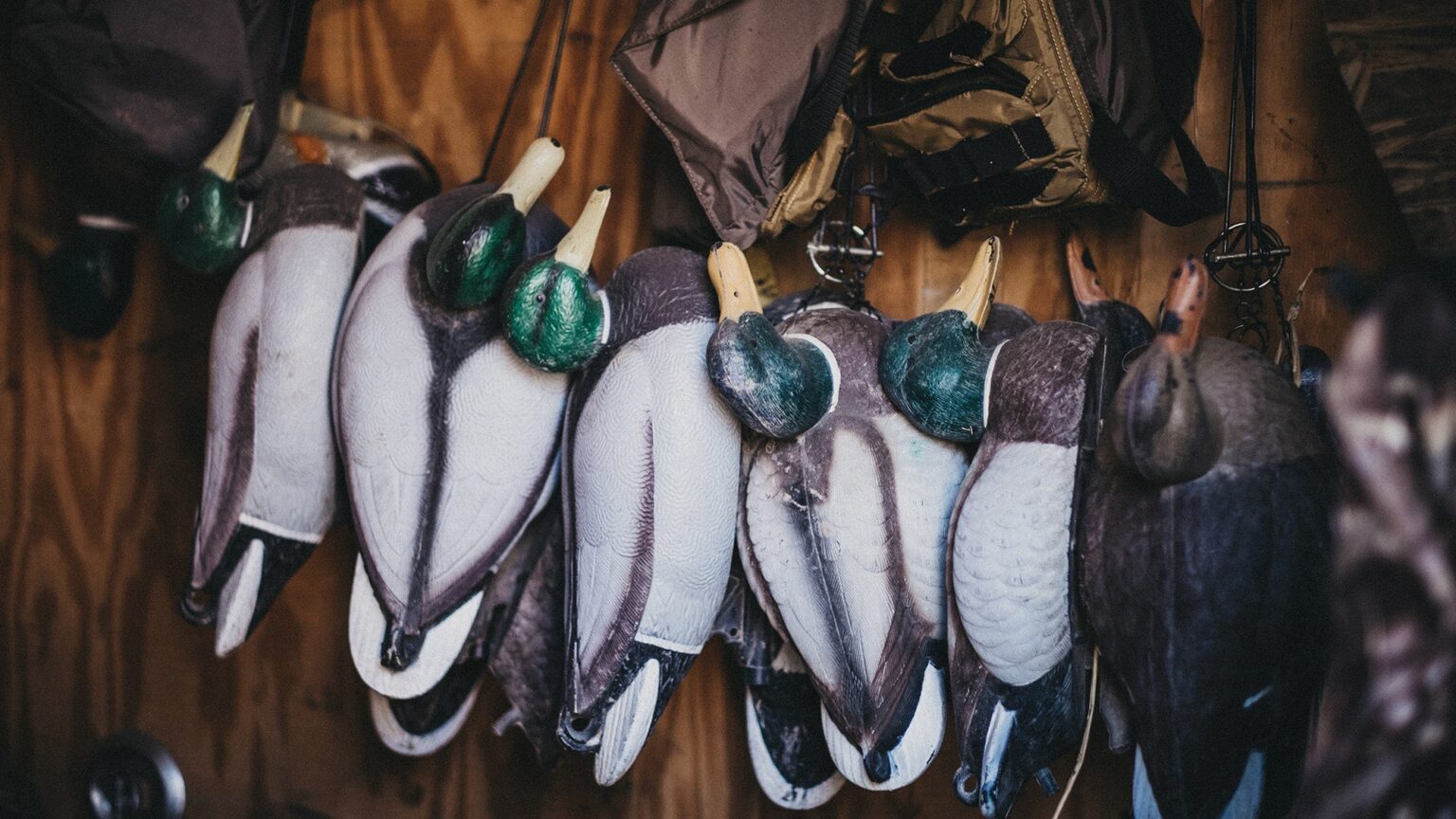
Half of my garage is solely dedicated to duck decoys. I have dozens upon dozens of mallards, black ducks, pintails, wood ducks, wigeon, and gadwall floaters. Then there are the full bodies, silhouettes, and motion decoys. Not to mention my family’s collection of vintage cork decoys. It’s safe to say, like many other duck hunters, I have a decoy addiction.
The benefit of hoarding decoys is that I’ve hunted over a wide range of decoy brands, styles, and materials. Over the years, I’ve come to like particular models for specific hunting situations and locations. But let me be clear: You don’t need dozens of decoys to kill a lot of ducks. As much as I hate to admit it, a simple spread of 12 mallard decoys will do the job just fine in most places.
So that leaves the million-dollar question: What are the best duck decoys? Hunters must consider style, species, time of year, size, paint schemes, and location when building out their spread. If you start to hunt different habitats, species, and locations, your decoy choice will vary. But that’s the fun part—you can slowly add to your decoy spread over time and fine-tune it to your hunting style.
Then, on those slow days in the blind, you can look out at your spread and debate the best duck decoys with your hunting buddies.
How We Picked and Tested Duck Decoys
The only way to test duck decoys is through excessive use in the field. Great decoys can withstand constant abuse from the elements season after season. That means being durable enough to be repeatedly thrown into the bed of a truck, dragged across the ground, frozen in ice, covered in mud, and submerged in water.
Over the past five hunting seasons, I’ve spent well over 100 days in the marsh. During that time, I’ve added to and changed my decoy spread more than I can count. I’m not easy on gear, either. My decoys get thrown into canoes, dragged across rocky riverbanks, banged up against ice shelves, and used in the highly corrosive saltwater.
I hunt in all types of habitats, from small freshwater streams to big reservoirs to icy rivers to saltwater marshes. My decoy selection varies from location to location, depending on what species I target and what hunting situation I’m in. My testing grounds ranged from rivers in northern Maine to tidal marshes in New York to flooded timber in Arkansas to the shores of the Pacific Northwest. I’ve hunted over spreads as little as four decoys and have set rigs with as many as 300. Every decoy on this list has helped me put ducks on my strap—and each is durable enough to last season after season.
The Best Duck Decoys: Reviews & Recommendations
Best Mallards: Final Approach Live Floating Mallards with Flocked Heads
Specs
- Species: Mallard
- Style: Floater
- Number of Decoys: 12 (7 drakes/5 hens)
- Material: EVA
Pros
- Drakes have flocked heads
- Realistic paint scheme
- Comes with a 12-slot decoy bag
- Slightly oversized design
Cons
The Final Approach live floating mallards were the foundation for all my decoy spreads during the 2023-24 duck hunting season. They’re durable, feature an ultra-realistic paint scheme, and are slightly oversized for greater visibility. The 12 pack comes with seven drakes, all of which have flocked heads, and five hens. This also includes eight different body postures.
I ran a dozen of these dekes in my home state of Colorado from late October to late January. The shape of these decoys, combined with the paint scheme, make them some of the most realistic on the market. The detail in the feathers, paint, and flocked heads are incredible. Unlike many modern plastic decoys, the FA live floating mallards ride low to the water, just like real birds do.
Due to the fully plumed color scheme, I didn’t break out these decoys until mid-season where I then used them all the way to the end of January. These decoys thrived in the worst conditions imaginable. I hunted in rain, snow, and ice, not to mention tough hikes and boat rides to the blind. After a full hunting season, they look as good as new, with only a few dirt marks on the flocked heads. —Ryan Chelius
Best Spinning Wing Decoy: Lucky Duck XHDI Spinner
Specs
- Species: Mallard
- Style: Spinner
- Number of Decoys: 1
- Material: EVA body
Pros
- Fully waterproof spinner
- Flocked black wings
- Wings always turn off white side down
- Realistic EVA body/paint scheme
- Long battery life
- Comes with remote
Cons
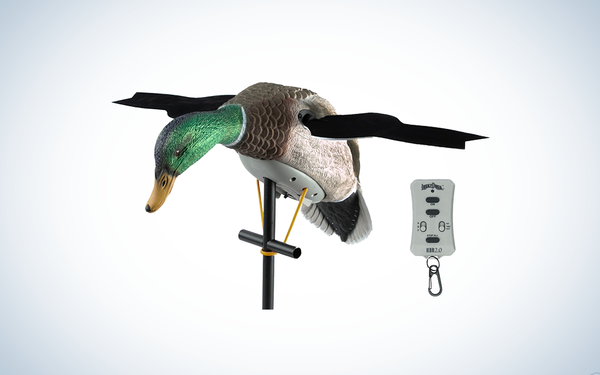
Lucky Duck released the new XHDI spinner in the summer of 2023, and it took home our Best New Decoy award last fall. After a full season of hunting with one, I can say this is the best spinning wing decoy I’ve ever hunted with. What makes it so good? For starters, it features magnetic wings that make sure they always turn off white side down. That might not seem like a big deal for the average duck hunter, but for obsessed waterfowlers, we know how easily white spinner wings can flare geese. This allows you to run spinners for ducks and shut them off for incoming honkers without issue.
Moving on to the rest of the decoy. This spinner features a realistic paint scheme and a durable EVA body. It is fully waterproof and runs on a 7.4-volt lithium-ion battery. Speaking of that battery, I was able to go multiple hunts without recharging my XHDI. Lucky Duck claims it has a run life of 16-20 hours—all I can tell you is I used it four hunts in a row without recharging it. The wings are also flocked to reduce glare and add realism. The kit comes with a 7-foot stake and remote kit. —R.C.
Best Full Bodies: Avian X AXP Full Body Mallards
Specs
- Species: Mallard
- Style: Full Body
- Number of Decoys: 6 (4 drakes/2 hens)
- Material: Rubberized molding material and non-chip paint
Pros
- Very durable
- Realistic paint scheme
- Five different postures
- Decoy bag included
- Moves well in the wind
Cons
- Full body decoys are expensive ($170 per six)
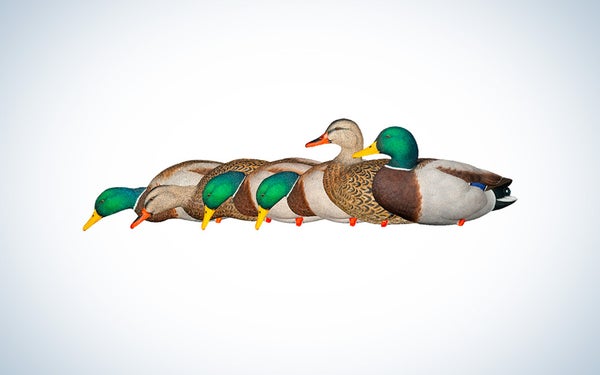
A large portion of hunters chase ducks in dry fields. This calls for different kinds of gear, including bibs, layout blinds, and full body decoys. And the best full body decoys you can buy are Avian’s AXP Mallards. They’re the dry field version of Avian’s fusion floater pack, featuring the same realism, durability, and paint scheme, but in a standing position.
Avian sells a six-pack of these full bodies for $210, but you can pick up the same ones on Amazon for $172. As I mentioned earlier, these dekes are durable and look fantastic. They come with a six-slot decoy bag and 17-inch orange stakes. I recommend accumulating some every few years and mixing in other species, like full body black ducks and wigeon, to give your spread more contrast and diversity. —R.C.
Best Black Duck Decoys: Avian X Top Flight Fully Flocked Black Ducks
- Species: Black Duck
- Style: Floater
- Number of Decoys: 6 (3 drakes/3 hens)
- Material: N/A
Pros
- Extremely realistic
- Flocked body
- Very durable
- Weight-forward keel for better movement
- Very dark from a distance
Cons
- Expensive for six decoys
- Flocking can be hard to clean
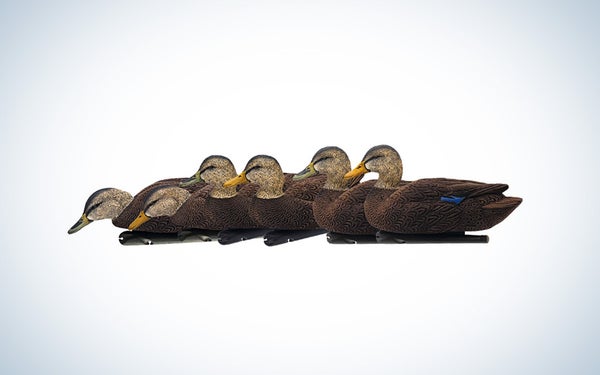
During the beginning years of my duck hunting career, I targeted black ducks almost exclusively. I hunted in the salt marshes of Long Island, where the black duck is king. Besides becoming almost invisible, realistic decoys are crucial for success. And these Avian X flocked black ducks are the most realistic-looking black duck dekes out there. Nothing else even comes close.
My salt marsh black duck rig usually consists of anywhere between six and 12 Avian X flocked black ducks and two mallard decoys. If you’ve spent any time hunting or observing black ducks, then you know just how dark these birds look on the water. They are jet black, and the further away you are, the darker they appear. These decoys imitate that look to a tee and should be a regular in any Atlantic flyway duck hunter’s spread. A half dozen will run you a little over $100, but you can often find them on sale for less. Just make sure to rinse them down after every few hunts in salt water. —R.C.
Best Pintail Decoys: Cabela’s Northern Flight Pintails
- Species: Pintail
- Style: Floater
- Number of Decoys: 6 (4 drakes/2 hens)
- Material: EVA blend
Pros
- Affordable
- Realistic
- Easy rigging
Cons
- Minor paint chipping after two seasons
- A little small
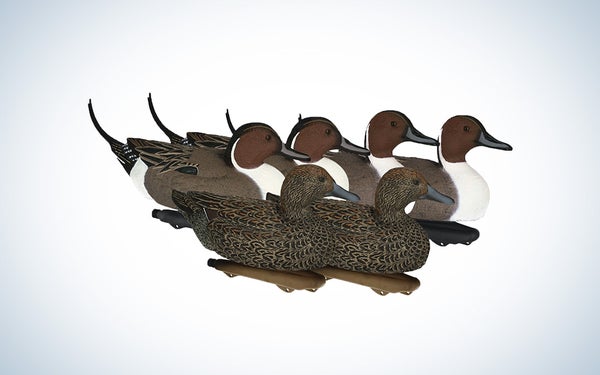
If I am being completely honest, I didn’t have high hopes for these Cabela’s pintail decoys. I bought them in a pinch while on a hunt last year because I left my “better” pintail dekes at home. Fast forward two years later, and these Northern Flight decoys are now my go-to pinnies for any floater spread.
The low price tag made me skeptical, but these decoys have proved their worth time and again. They’re made from an EVA blend construction and feature a great paint scheme. The split in the drake’s tail is one of the small details that I love. I’ve had minimal issues with dragging these birds over rocky banks and throwing them in the back of my truck. The only wear I’ve noticed is small paint chips here and there. But the overall integrity of the decoy has held up, and at $60 for a half dozen, you can’t ask for much better. —R.C.
Best Budget: Flambeau Outdoors Masters Series Mallards
Best Budget
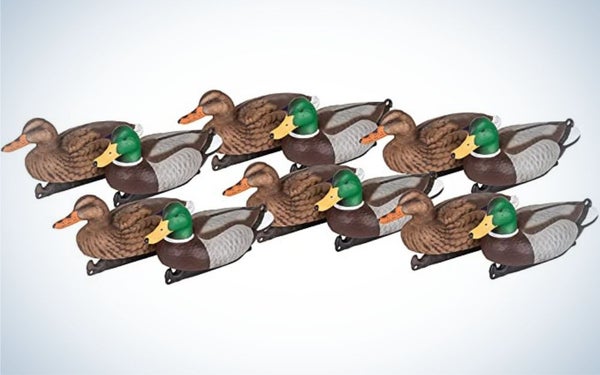
Key Features
- Weighted keel
- Good price point (if you shop around a bit)
- Life-size profile
- Six drakes/six hens per dozen
Pros
- Great starter/filler decoys
- Self-righting weighted keels
- Solid anchor points
- No serious depression if one breaks free and floats away
Cons
- They kinda look like the late Jackie Gleason in “The Honeymooners”
- Only offered in one body posture
- All upright heads could create the appearance of “danger”
My very first duck decoys back in The Day, circa 1980, were old Flambeau decoys that I used for years and years. Finally, I repainted most, if not all, of them as drake bluebills, and they enjoyed another life as big water divers.
Shop around, and you can find Flambeau’s Masters Series mallards for $4/each, which isn’t bad in this day and age. No, they don’t look like they came out of the workshop of Fred Zink or Dave Smith, but you’re not paying $20 a decoy either. Paint scheme isn’t your cup o‘ tea? Search knutsondecoys.com or parkercoatings.com, buy some colors that suit you, and touch ’em up. You’ll still be money ahead.
Just getting started ’fowling and on a budget? Here’s some great starter decoys. Or filler decoys, if you’re looking to bulk up a smaller out-all-season spread. Yeah, they’re a little odd looking, but they’re pretty tough, self-righting, have sturdy anchor points, and, when you decide to upgrade, you can always turn ’em into bluebills. —M.D Johnson
Best Diver Decoy: Tanglefree Flight Canvasback
Best diver decoy
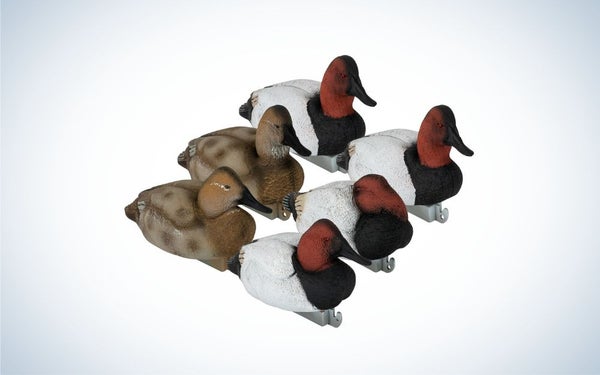
Key Features
- Foam-filled decoys
- Self-righting weight keels
- Brilliant colors
- 2-to-1 drake-to-hen ratio
- Natural body postures
- High relief feather detail
Pros
- Large size offers improved long-distance visibility on big water
- Foam filling provides pellet protection
- Six-pack includes more drakes (4) than hens (2)
- Sleeper and rester postures lend realism
- Tough…tough…tough
Cons
- Price tag ($170/dozen) might seem a tad high to some
- Heavy, but the majority are transported by boat, so…
The year was 1972, and a little California-based father/son company had just bounced onto the ’fowling radar with a single product – a no-tangle…Tanglefree!…decoy line and a lead anchor system that would, like Kleenex for any tissue and Xerox for any copy machine, serve as THE name for decoy cord, regardless of who made it, for decades to come. Today, Cory Foskett and the folks at Tanglefree still make that line, along with a lengthy list of other ’fowling products, including decoys.
Where Foskett and Tanglefree excel, perhaps, is in the diver realm; that is, with their canvasbacks, redheads, and bluebills. How tough? Think M1A1 Abrams tank tough, and you’re starting to appreciate Tanglefree’s divers. Foam-filled, these divers can – and often do – take a pounding. Perfectly positioned weighted keels ensure a smooth natural ride, even in rough water, while what I’ll call the ‘high-vis’ colors on the drakes truly POP against the oft-dark surface conditions. Rig ’em individual, or on 40” droppers for long-lines; either way, these are the cat’s meow. —M.D Johnson
Things to Consider Before Buying The Best Duck Decoys
Absolutely, you can rush right out or open up the Internet if you’re prone to such activity and buy the first pretty plastic ducks you come across. But, are those what you really need for your brand of ’fowling? Are they realistic in appearance? Will they hold up to the rigors of day-to-day ducking? Is the paint going to flake off almost immediately? It’s relatively simple, though. Do a little homework, answer a few to-the-point questions, and you’ll be well on your way to filling that shop, floor to ceiling, with dozens upon dozens. Trust me.
Species
Regardless of where you call home, mallard decoys are a safe bet, and will likely produce results. However, are mallards what you’re primarily hunting? Are they the most common duck in your neck of the woods? Maybe you need to think of a pack set—three or four different species of dabblers combined into one multi-species package. Or—what the hell—maybe a dozen mallards, and then a half dozen pintails, gadwall, widgeon, and green-wing teal. Make it look really real. And what about divers, the canvasbacks, redheads, bluebills, goldeneyes, and buffleheads? Give it some thought. What are you going to hunt?
Hunting Location
If you’re hunting a small corner in a secluded pin oak swamp for wood ducks, mallards, and the occasional black duck, then half a dozen mixed mallards and blacks should do just fine. If it’s Sandusky Bay bluebills on the menu…well, then, eight or 10 dozen—or more—drake ‘bills might be in order. Cornfield greenheads? Ah, now it’s time to dust off the silhouettes and the full-bodies. What you hunt and where you hunt those birds play a major role in what you buy and how many.
Weighted Keel vs. Water Keel
Most floating (floater) decoys today come with weighted keels; that is, the keel or bottom portion of the decoy is weighted, making the decoy self-righting when thrown. They’re nice, but they’re heavy. Water keels are hollow, and fill with water once they’ve landed, head-up. BUT, and it’s a big BUT, they don’t right themselves. Water keel decoys that land on their sides stay on their sides. Water keel decoys are light, though, and make an excellent decoy for the walk-in ‘fowler looking to cut down on weight.
Number
On any given day, a dozen decoys will work … or 100 dozen won’t work. It all depends on the birds, the wind, the pressure, and more. That said, there’s nothing wrong with starting off with a dozen mallards and building from there. Think you enjoy this ’fowling gig? You can always add more decoys; it’s what we do.
Floaters vs. Full-Bodies vs. Silhouettes
Floater decoys are meant for use on the water. That’s where they shine. Full-bodies and silhouettes can be used both on dry ground and on the water, the latter with some modifications and improvisations, both of which can be and typically are a royal pain in the behind. So think: Are you going to hunt over a foot or more of water? Or are you going to hunt dry fields, with an occasional foray onto six inches of temporary sheet water, where full-bodies and/or silhouettes can easily be used?
Price
And finally, there’s the price. Mallard decoys can range from a low of $5 apiece to upwards of $30 per duck. Buy the best your pocketbook will allow, but understand that a combination of realism, durability, and quality, all backed by service after the sale, isn’t cheap in this day and age. Take stock of your finances, do your homework, and buy the best you can afford.
FAQs
Q – How much should a dozen duck decoys cost?
If you find a new-in-box dozen mallards that look good – not fantastic, but good – for $40, you should be reaching for your wallet, I reckon. More realistic is a price tag per dozen mallards of—ballpark – $100. Though as low as $80 and as high as $150 is common. Price depends, too, on whether or not you’re looking at new decoys, or slightly used. Garage sale mallards may cost $2 each, a call-your-buddies bargain, especially if they’re in a condition where they can be immediately used. The moral of this story is – Shopping around never hurts.
Q – Are six duck decoys enough to be successful?
Six decoys CAN be enough, if you’re on a little body of water where the ducks want to be. Given this scenario, two decoys may be plenty. How many decoys you’re going to use depends on different things. Puddle ducks, e.g. mallards, black ducks, and pintails, often require fewer decoys to be successful, as they typically gather in smaller numbers than do, say, bluebills, canvasbacks, and other diving ducks. Here, decoys numbers equal what you’re hunting, and where. Rule of thumb.
Q – What should I look for in a ‘good’ duck decoy?
This one’s simple – Does it look like a duck? Is the body shape right? Is it in a natural relaxed posture? Is it the right size? Colors? Give it a whack. Does it appear rugged and durable? Can you easily and securely attach an anchor line clip to the keel? Is the keel rigid, or does it flex, meaning it might be relatively short-lived and a trouble spot? And once again, does it look…yep…like a real duck?
Final Thoughts on the Best Duck Decoys
There are a lot of companies producing duck decoys nowadays. Most of them are good. Some are exceptional, while others are okay. Most of these decoys will, on any given day, fool a mallard or two, but there’s a hell of a lot more to consistently decoying ducks than merely buying a dozen Brand ‘X’ mallards and tossing ’em out willy-nilly. Decoys – the physical decoys themselves – are just the beginning. A part of the puzzle.
Why Trust Us
For more than 125 years, Field & Stream has been providing readers with honest and authentic coverage of outdoor gear. Our writers and editors eat, sleep, and breathe the outdoors, and that passion comes through in our product reviews. You can count on F&S to keep you up to date on the best new gear. And when we write about a product—whether it’s a bass lure or a backpack—we cover the good and the bad, so you know exactly what to expect before you decide to make a purchase.
Read the full article here