






We may earn revenue from the products available on this page and participate in affiliate programs. Learn more ›
So, you got a new compound bow for upcoming hunting season. Or maybe you’re planning to upgrade the accessories on your current bow. Either way, that’s great. It’s sure to improve your confidence going into next season, and probably your bow’s performance, too. That is, if you know how to set up a compound bow properly.
If that seems a little intimidating, don’t worry. We’ve got you covered. Learning how to set up a compound bow and tuning it is actually easier than ever before. Modern bows are remarkable machines crafted to exact specifications, and today’s accessories are no different. I set up and tune between 15 and 20 bows annually, and I can tell you many if not most bows are cam-timed perfectly out of the box. That means there isn’t much more for you to do than attach accessories and properly tie in a D-Loop and peep sight.
Before I set up any compound, I like to first give the check the bow over thoroughly to make sure it’s in good working oder, and I like to choose and build my hunting arrows. (You don’t have to do the latter, but I prefer this order.) Once that’s done, all you have to do is follow these seven steps for how to set up a compound bow.
How to Set Up a Compound Bow, Step-By-Step
Step 1: Attached the arrow rest.
The first step for how to set up a compound bow, arrow-rest mounting has changed significantly over the last three years. Many models still connect to the riser via the bow’s Berger hole(s), but some models, like many from QAD and others that have adapted QAD’s Integrate Mounting System, mount to a pair of dovetail slits recessed into the back face of the bow’s riser. The good news is that all of them are very simple to attach. Just level your bow in a bow vise, follow the rest manufacturer’s instructions to install it to the riser, and eyeball it level. Don’t lock it down too tight yet.
Step 2: Time your drop-away rest.
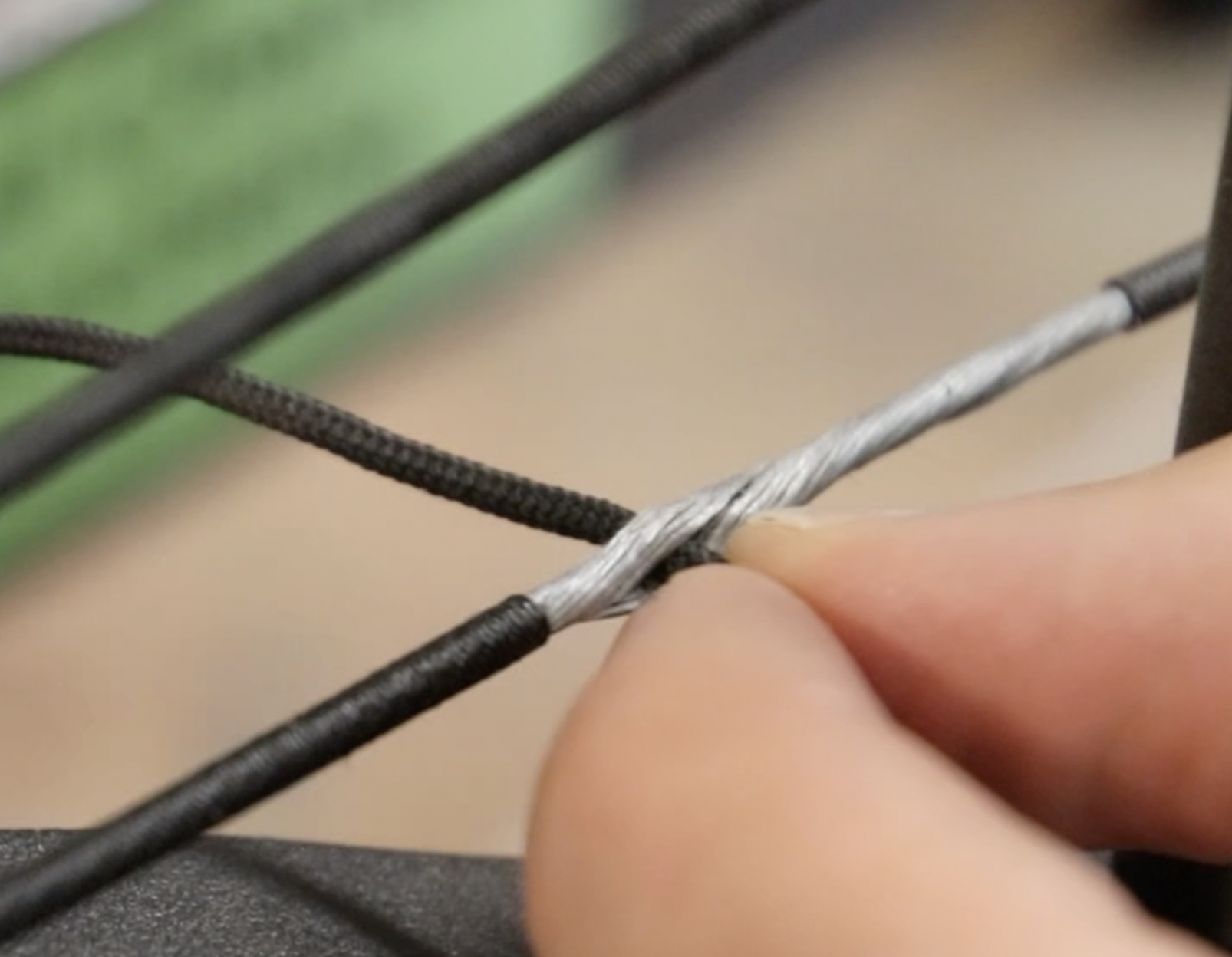
If you are using a drop-away rest, you now need to attach the rest’s cable to one of the bow’s limbs or to the down cable, depending on the model of rest you use. Timing a rest is not difficult, but it’s a key step in how to set up a compound bow. You can use a draw board if you have one, or you can simply draw the bow with a release set not to fire and watch as the rest’s arms come up. As you draw, the rest’s arm should reach its vertical position about the same time your bow’s cams roll over to let off. Some rests, like those from QAD, have timing marks to help guide you; in this case you need a friend to watch the timing marks as you draw.
If you need to speed up a cable-driven rest, you simple shorten the cord that goes into the down cable. If you need to slow the rest down, lengthen the cord. When using a limb-driven rest, the limbs will time the rest for you as long as the attachment cord is tight. Most quality drop-away rest will come with good instructions. Eventually, you’ll need to serve or otherwise secure a cable-driven rest into the down cable, but don’t do that just yet, because you may want to adjust it first.
Step 3: Level an arrow to find your nocking point.
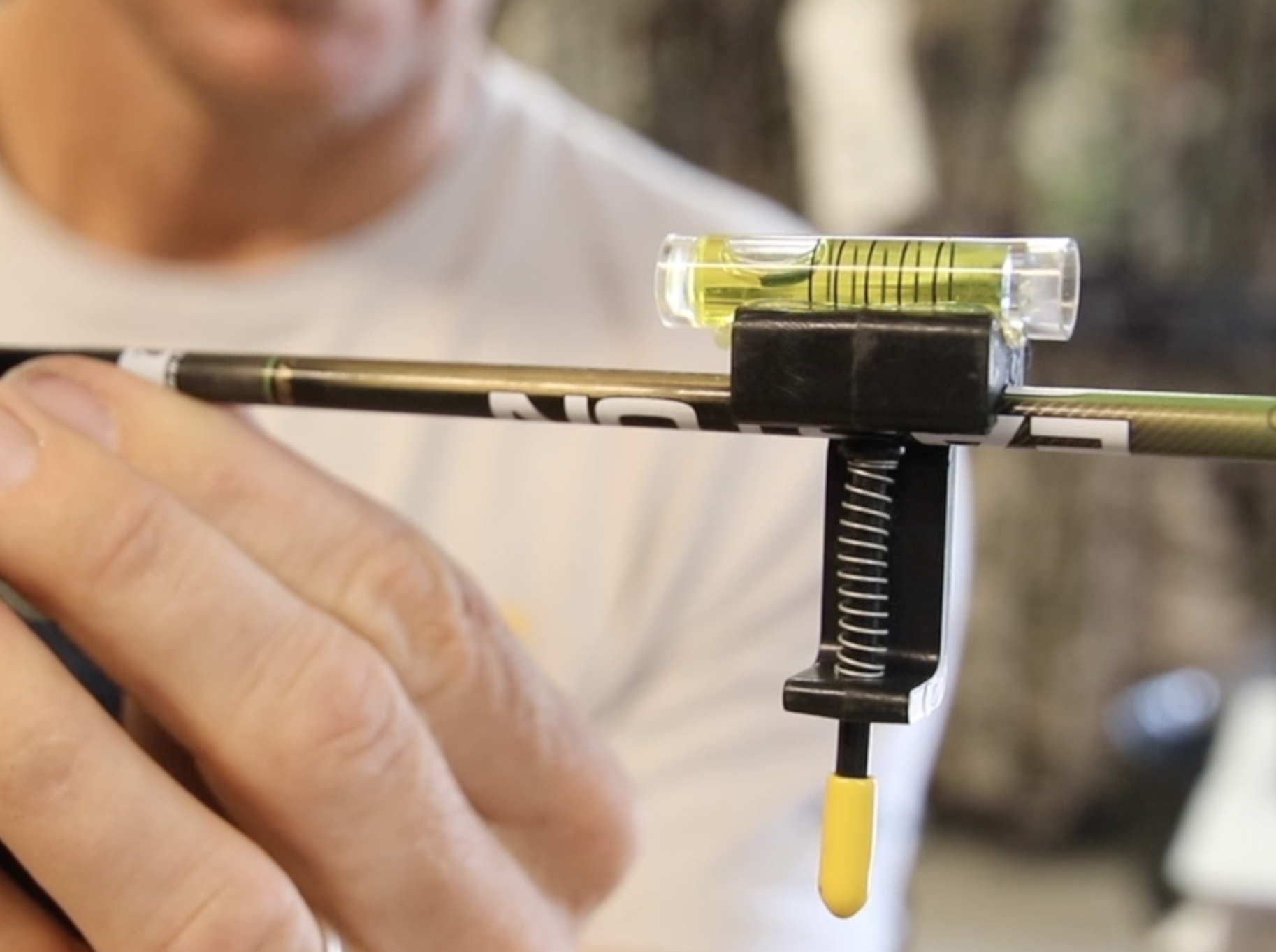
Next, take one of your hunting arrows, put it on the raised arm of the rest, and then attach it to the string in a spot that looks level. Now eyeball the arrow more closely, and adjust the arrow’s nock up and down on the string until it looks perfectly level. The arrow should run off the string, dead center through the bow’s Berger holes.
Next, attach an arrow level or use a laser-leveling device to confirm and fine-tune. I always start with a level nocking point, knowing I can adjust the rest up or down if needed later during the tuning process.
Make a pair of marks on the string with a fine-point silver Sharpie, one above the arrow’s nock and one below. Remove the arrow, and you’re set to tie on your D-loop. Some bowhunters will tie a nock set, which is nothing more than string serving that covers each silver mark. I do this, but it’s not mandatory. In my opinion, nock sets help with precision and prevent nock pinch, and if you need to change your D-loop, you tie it in above and below the nock set. But if you want to skip it, that’s fine.
Step 4: Tie in a D-loop.
Before tying in a D-loop for the first time, pull up a Youtube video of a certified bow technician doing it, and follow along as practice. The process is not complicated, but you will want to master it, because it is a key step in how to set up a compound bow properly.
Start by cutting a piece of D-loop material about 5 inches long. You can always trim; while you’re learning, having more string to work makes it easier. Place the bow horizontally in a bow press with the string facing up, and start practicing. Slow down the video you’re watching and match every loop, twist, and turn perfectly.
Once you’ve got the process down, tie your D-loop around the silver marks on the bowstring. Use a pair of nock pliers to suck the loop down tight, trim any excess material, burn the ends of the cord down, and use the butt of the lighter to press the burnt section into the knots. Finally, verify that the knots face opposite of one another, as they should. If they don’t, do it over until it’s right. You don’t want a D-loop coming apart as you draw your bow, so double-check and be certain.
Step 5: Install your peep sight.
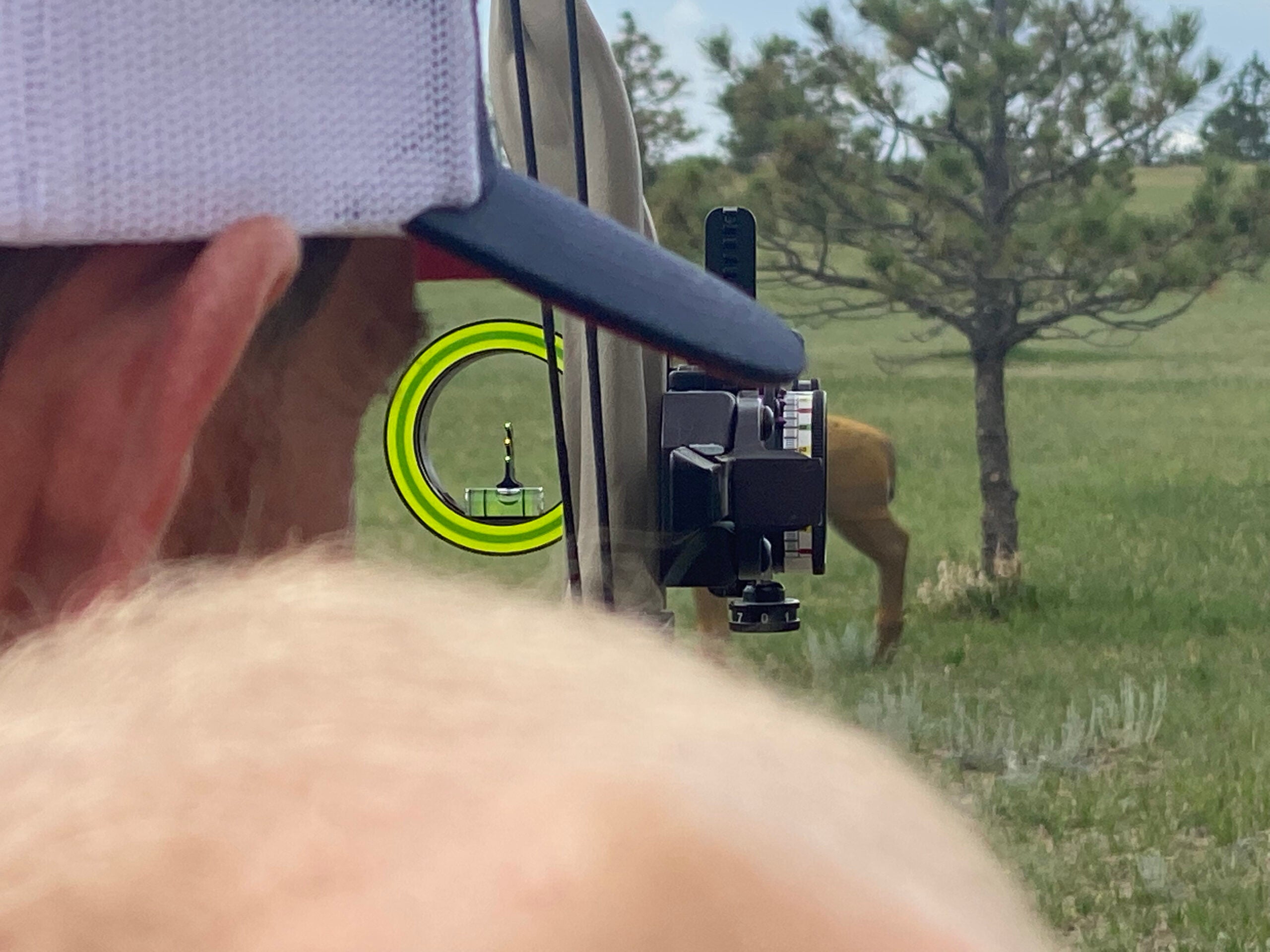
Now it’s time to install your peep sight. Typical peep sight height is usually between 5-1/2- and 7 inches above the center of the D-loop. You may find your ideal height is more or less, but this range is a good starting point. If your bowstring is brand new, the string manufacturer will place a piece of serving string through the middle of the bowstring, and it’s there for a reason. This string separates the strands in half, so half of the string sits on one side of the peep notch and the other on the other half. If you bought a used bow and no peep is inserted, or you removed your peep for some reason and have no idea where half-and-half would be, press the bow, guesstimate, insert the peep and look. It’s pretty easy to tell if you have more strands on one side of the peep than the other.
Once you’ve pressed the bow and separated the strings strands half-and-half, insert the peep. Then release the pressure on the limbs, and the string will grab the peep and suck it down into the string. You will be serving the peep in eventually, but not yet.
Step 6: Mount your bow sight.
The next step is to attach your bow sight. Thread the screws that came with the sight into the riser, and your sight is attached. It’s that simple. After that, step outside, draw your bow with an arrow loaded and a target set at a close distance, shut your eyes, crawl into your anchor, and then open your eyes. The center of the peep should align with the ring around the sight’s housing. If it doesn’t, you just need need to move the peep up or down until it does. This is a process, and you want to ensure your peep-to-sight alignment is perfect before you tie your peep in.
Step 7: Serve the peep sight in.
Like learning to tie a D-loop knot, watching a Youtube video will provide clarity for this step in how to set up a compound bow, too. There are many ways to tie in a peep sight; the main goal is that once it’s tied in, the peep doesn’t move.
That’s it. Your bow is almost ready for tuning and the range. But first, shoot a few arrows to make sure there is no contact with the arrow vanes and rest and that the latter is timed properly. Then go ahead and crank the rest tightly to the riser and secure the drop-away cord firmly to the down-cable. Finally, make there no wild nock travel—arrows obviously tailing hard left, right, up, or down. If the arrows are flying pretty well, you’ve done you job and are ready (with a few important caveats) for Part 5 of the series, paper tuning.
Read the full article here