




We may earn revenue from the products available on this page and participate in affiliate programs. Learn More ›
A bi-partisan bill that would direct tax-stamp revenue from the sale of firearms suppressors to the nation’s conservation trust fund and expedite federal approval of silencers was introduced in Congress Thursday.
The bill, sponsored by representatives Blake Moore (R-UT) and Jared Golden (D-ME), would reallocate the estimated $200 million collected this year by the Bureau of Alcohol, Tobacco, Firearms, and Explosives to the Pittman-Robertson to fund wildlife management, habitat, and shooting range infrastructure across the country. Suppressor tax-stamp revenue is increasing about 40 percent annually as more shooters and hunters invest in the firearms accessory.
A portion of revenue from the tax stamp, required by the National Firearms Act of 1934 (NFA), would be directed to ATF in order to expedite the approval process to qualified buyers to fewer than 90 days. Currently, ATF approval takes between seven and nine months.
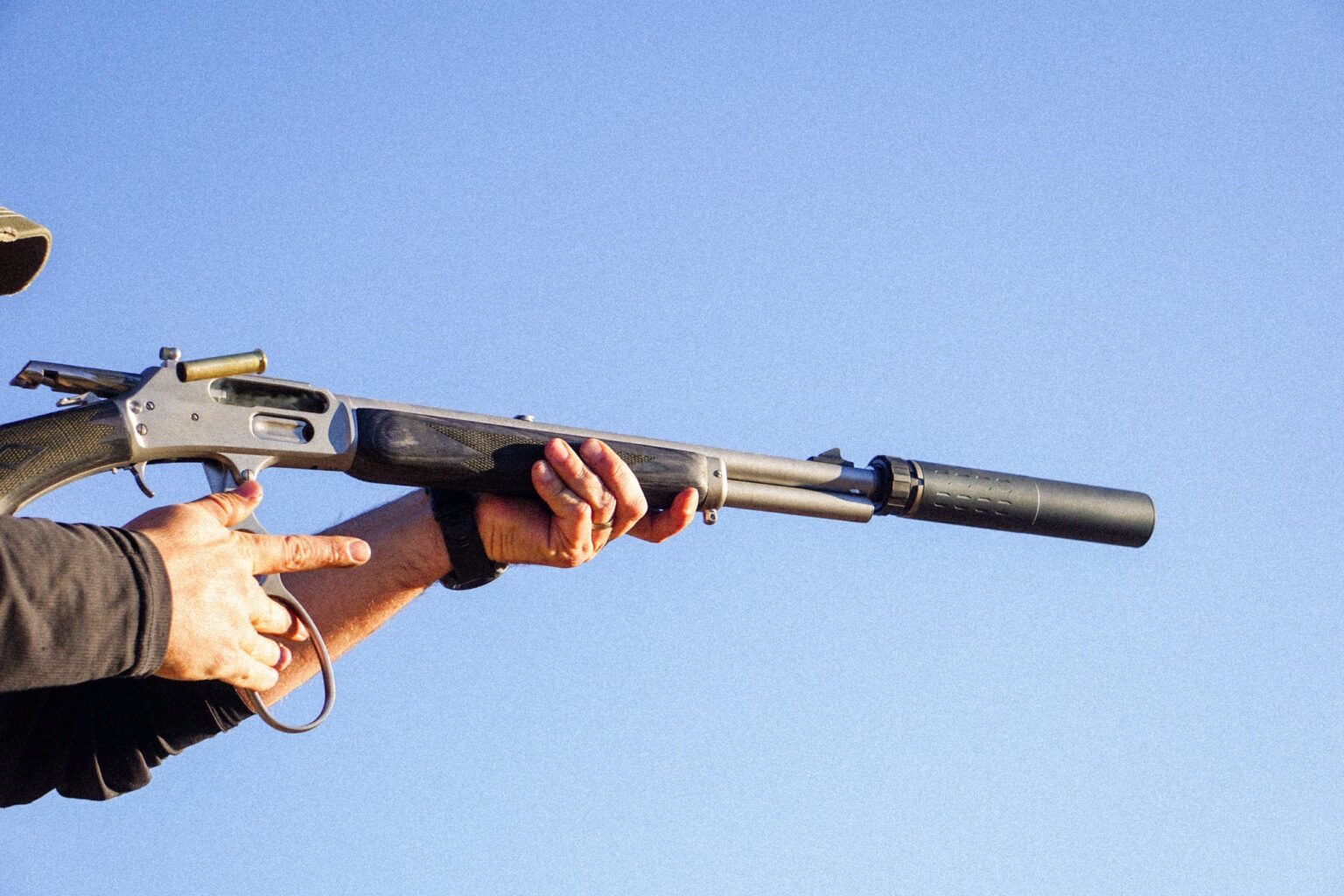
Suppressors are defined by the ATF as Class 3 firearms, the possession of which requires the $200 special tax stamp and a clean background check. Revenue from the tax is expected to exceed $200 million in 2023, as suppressors become more available and normalized as firearms accessories that can reduce shooters’ hearing loss, dampen recoil, and lower game-spooking noise. Tax-stamp revenue is currently deposited in the U.S. T reasury without any specific direction.
The Tax Stamp Revenue Transfer for Wildlife and Recreation Act would reallocate that tax-stamp funding to the Pittman Robertson Wildlife Restoration Trust Fund, popularly known as the P-R Fund. Specifically, 15 percent of the total revenue would go to the ATF’s NFA division in order to expedite the processing of suppressor applications. The remaining 85 percent would be deposited in the P-R Fund to support wildlife conservation, law enforcement, and hunter recruitment. Fifteen percent of the P-R contribution would be earmarked for the development, maintenance, and operation of recreational shooting ranges.
“These dedicated ranges enhance safety, reduce environmental impacts of shooting, and contribute to the recruitment and retention of ethical hunters and shooters,” says Moore. “I am pleased to introduce this important bill that underscores our commitment to conserving America’s natural heritage, investing in outdoor recreation, and making ATF’s processes for law-abiding citizens more efficient. This bill represents a transformative step in funding our nation’s wildlife conservation while streamlining federal processes.”
The criteria for obtaining a suppressor wouldn’t change with passage of the legislation, stresses Golden. Buyers will still have to undergo federal background checks and require ATF approval before they can possess suppressors.
“By paying fees for licenses and equipment, Maine outdoorsmen have sustained our state’s recreational opportunities for generations,” Golden said in a statement. “Applying this same principle to the sale of accessories like silencers will increase consistency with the law, bolster conservation efforts in Maine, and make the background check process more efficient and effective.”
Sponsors are unsure which congressional committee will hear the bill. It may be jointly referred to the House Ways and Means Committee and the House Natural Resources Committee. Its fate in the sharply divided Congress is uncertain, but Moore noted that popular bills such as the Great American Outdoors Act required a couple of congressional sessions to win approval.
The Tax Stamp Revenue Transfer bill has broad support from the wildlife-conservation community, and was developed in part by the National Shooting Sports Foundation. The bill has been championed by Brandon Maddox, owner and CEO of Silencer Central. Simplifying what he calls the “opaque and historically complicated” process to possess a suppressor will lower barriers for lawful customers of all silencer manufacturers.
“I look at the bill as both a good-government and a public-health and -safety measure,” says Maddox. “It’s beneficial to hunters and to their sonic health. We recognize that for most of us, hunting is a social activity, and the ability to converse in the field is a safety issue and an important part of the cultural legacy of hunting. Silencers also reduce recoil, and make shooting more enjoyable, especially for beginning shooters. And they’re beneficial to hunting, because the smaller sonic radius is less disruptive to wildlife. Lastly, by directing funding to shooting ranges, we’re recognizing the huge contributions of recreational shooters to the P-R fund.”
Maddox says the long waiting period between when his customers apply for a tax stamp and when it’s approved by the ATF has been a major barrier to shooters and hunters.
“What other product do you purchase and then wait nine months to possess?” says Maddox. “It’s the same background check and process that we undergo for fully functioning firearms, which by law takes less than three days for qualified buyers. There is no evidence that lawfully obtained suppressors have any role in violent crimes, and by earmarking funds for shooting ranges, we are investing in the future of hunting, shooting, and conservation in America.”
While there are clear benefits for hunters and shooters with this bill, it also incentivies federal authorities.
“In addition to current and future generations of sportsmen and women and wildlife, the bill is intended to significantly benefit the ATF,” says Mitch Butler, senior partner of Natural Resource Results, a government-affairs firm that represents many conservation organizations and helped Maddox conceptualize the bill and work with sponsors to draft the legislative language. “The bill puts a deadline on approval, and provides funding to reduce administrative barriers so that the Bureau can meet that deadline.”
Sales of suppressors have increased sharply over the past decade as their benefits have become widely recognized and as more companies have entered the market. Last year, the ATF processed about 700,000 tax-stamp applications. The number is projected to reach 1.1 million this year. That would generate $220 million in tax-stamp revenue. According to the Tax Stamp Revenue Transfer bill’s calculus, that would earmark $33 million to the ATF, while an estimated $187 million would be added to the P-R account. Of that, approximately $28 million would be dedicated to shooting-range development and infrastructure.
“The Tax Stamp Revenue Transfer for Wildlife and Recreation Act will provide a significant plus-up to the Pittman-Robertson account for the purposes of bolstering recreational shooting opportunities and enhancing wildlife conservation,” says Jeff Crane, president and CEO of the Congressional Sportsmen Foundation. “Moreover, the legislation will provide ATF with the resources they need to process firearm suppressor applications in a timely manner. It’s an example of bi-partisan cooperation on an important bill, and we’re thankful for two Congressional Sportsmen’s Caucus members, vice-chair Rep. Golden and member Rep. Moore for their leadership.”
Read the full article here