


We may earn revenue from the products available on this page and participate in affiliate programs. Learn more ›
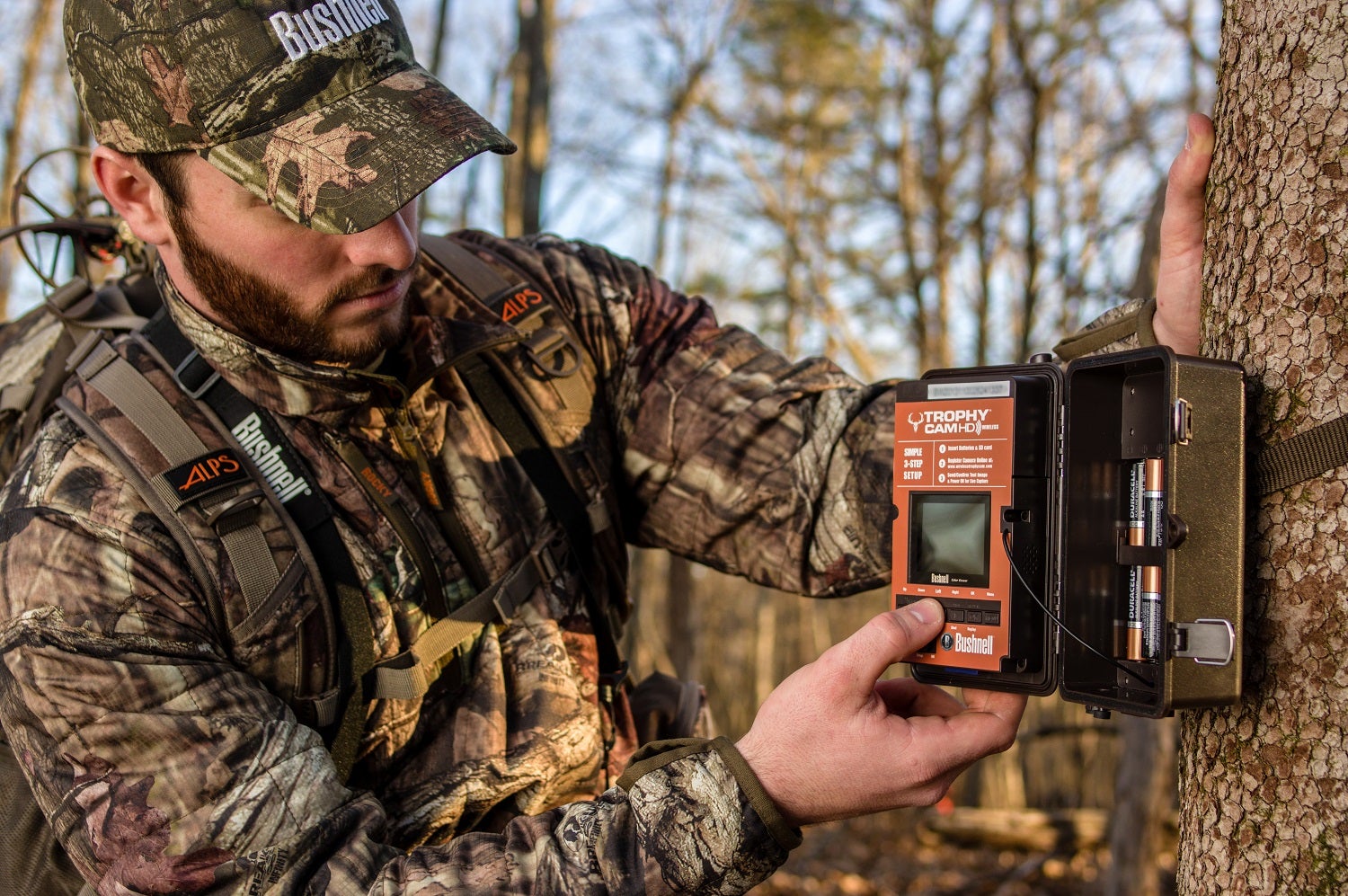
Fresh out of its packaging, that shiny new trail camera holds unlimited potential, promising to reveal brilliant images of a hidden world. Fulfilling that promise, however, rests largely on your shoulders. You have to place the device in the right spot to get quality photographs of good bucks. And that prospect can make beginners uneasy, as they wonder where to put trail cameras.
Don’t fret. Figuring out where to put trail cameras for good images of deer really isn’t that complicated. In fact, experts say that following common-sense guidelines can help you set your cameras at photo hotspots in no time. And it only takes a little more know-ho to learn where to put trail cameras for big bucks specifically.
Table of Contents
- Basics: Where to Put Trail Cameras
- Top 5 Big Buck Trail Camera Spots
- Troubleshooting: Where Not to Put Cameras
Basics: Where to Put Trail Cameras
Most new trail-cam users intuitively realize that where it’s best to put trail cameras are in spots that naturally attract deer and other critters: feeding areas, travel corridors, deer trails, and other locations where animals congregate. Fields, food plots, and similar open areas are natural places for cameras because they attract wildlife and offer open views of relatively large spaces. Picking the right spots to mount a camera near a field, however, can be tricky, so here are some expert tips.
Put Trail Cameras on Inside Corners
Trent Marsh, editorial manager for Spypoint, likes to place cameras at inside corners, where two types of habitats converge, such as a field that juts into timber.
Read Next: How to Mount a Trail Camera
“When you have an inside corner, that’s an area that deer will feel more comfortable and secure,” he said. “Getting good photos of moving deer is tough with any camera, so I want to place cameras where deer are more likely to linger. A small grass or clover plot on an inside corner is a natural transition area where an animal will hang out. You often see turkeys strut in these locations as well.”
Focus on Field Edges
Ted Marum, who guided whitetail hunters in several states for 20-plus years and still runs 70 to 80 trail cameras on his leases, also prefers specific field scenarios.
“In summer, I like to put them where there’s a couple of different crops that come together, like corn and soybeans or corn and alfalfa, on a corner,” he said. “Bucks love to walk the edges of those corners.”
Marum also focuses on field-edge licking branches, which are low-hanging tree branches bucks use to deposit their scent. “Deer hit them all year, so I’ll set them on those,” he said. “If you just walk the field edges, you can tell the ones they’re hitting—the ones they’re mouthing and chewing on.”
Bust Out a Mineral Block
Marum also uses mineral products to attract bucks to trail camera setups. Whitetails crave minerals in spring and summer, so using these sites lets you pull deer to specific spots instead of trying to decipher their movement patterns. Further, creating those sites lets you position cameras ideally, such as facing them north or south to avoid the rising and setting sun. (Make sure mineral products are legal in your state before using them.)
“I’ll throw a mineral block out in the middle of nowhere in a draw and then throw a camera on it, and it’s amazing what shows up and what lives in those remote little-bitty draws,” he said.
Don’t Overthink Where to Mount a Trail Camera
Marsh said many folks overlook somewhat obvious areas for where to put trail cameras. “People sometimes think you need to get way back in the woods to get good photos, but sometimes that first tree line is a great spot, too,” he said. “It keeps you from having to get too far into the woods to get to your camera. The main thing is don’t overthink it. If you find good sign, hang a camera. You can always move it later.”
Where to Put Trail Cameras for Big Bucks: Top 5 Spots
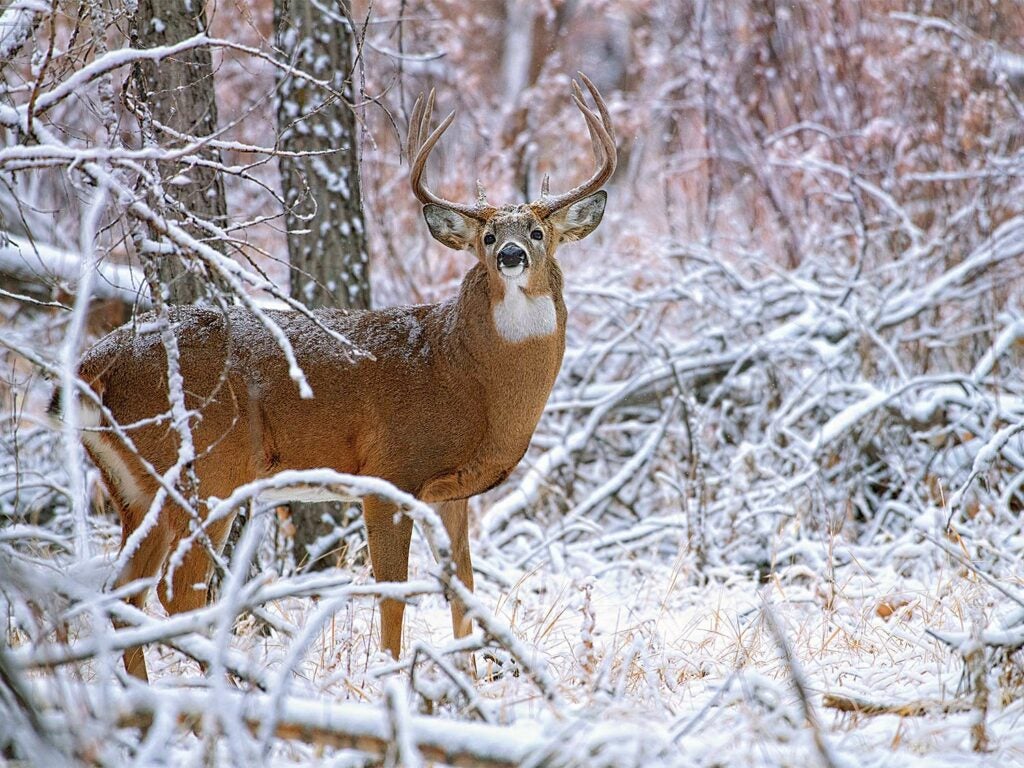
Everyone hunter, beginner or expert, wants to check their trail-cam cards and see pics of big bucks, and because trophy whitetails tend to be elusive, it’s temping to think that you have to put your cameras in special, secret places to capture images of these bruisers. But while there is a little truth to that, for the most part you don’t, as long as you’ve got big deer around. Here are five great places (and times) to get pics of whopper bucks.
- Bait Stations: It’s not legal everywhere, of course (so check regs), but the simple fact is that nothing puts deer of all sizes in front of a your trail camera like a pile of corn or other bait. Big deer may get shy about coming to bait during the season, but in late summer, when they are un-pressured and focused on food, even the biggest bucks will pose for your camera at a bait pile.
- Summer Mineral Licks: If you can’t or don’t want to use bait, a mineral lick will draw big bucks nearly as well all through summer, as bucks crave minerals while their antlers are growing.
- Entry Trails to Summer Feeding Areas: The biggest bucks, often in bachelor groups, are not shy about hitting late-summer and early-fall ag crops and food plots. Place your cam on the field edge looking toward the food near a good entry trail.
- Mock Scrapes: If you can’t or don’t want to use bait or minerals, mock scrapes are next best option for putting good buck in front of your cameras. Mock or real scrapes at or along field or plot edges work year round and especially in late summer and early fall, but as the season progresses, scrapes in staging areas off the main feeding area or further into the woods can be better for capturing big bucks.
- Rut Funnels and Pinch Points: When big bucks start covering lots of ground during the rut, place cameras on in natural funnels and pinch points like saddles, bench trails, inside corners, the heads of washes, creek bottoms, and the like. Choose a camera with a fast trigger speed and set it parallel to a buck’s line of travel.
Troubleshooting: Where Not to Put Trail Cameras
Trail-camera neophytes often struggle with a common mistake: Mounting cameras at seemingly good locations that don’t pan out. Marum focuses on typical animal behavior at various spots to weed out unproductive areas. For example, he avoids placing cameras at creek and fence crossings, as deer are usually moving while traveling through those places, making it difficult for cameras to capture good images. He also eschews another popular camera setup.
“I very seldom put them on water holes in the summer because bucks hardly use them,” he said. “Does use them unbelievably. But they’re lactating and running a lot of moisture through their bodies. With bucks, there’s a lot of heavy dew in the mornings, and I think they get most of their moisture through their foods.”
Factor in Trigger Speed and Positioning
Wherever he sets cameras, Marsh avoids positioning the units perpendicular to the subject area, as that limits their effectiveness. “Trigger speeds vary a lot, and even the very fastest are going to struggle with deer that are running if it’s at a 90-degree angle to the lens, especially if it’s close to the trail at all,” he said. “One picture of a deer is great, but I really want two to six to get as many looks at it as possible. So I want to catch a detection early and let the deer work toward or away from the camera so I can get multiple looks, especially as the year goes on and bucks start showing more of their potential. I want to know what I’m looking at.”
Despite their best efforts, beginners might not capture great trail-camera images at first. Positioning and using the units can involve substantial trial and error. Marsh said that’s to be expected and suggested an easy troubleshooting process.
“First, double-check the sign,” he said. “If the sign is still strong but you aren’t getting photos, you may have done something wrong with the camera. Maybe you have it tilted too much, or the traffic is too far away to trigger the camera. With the photos you do get, pay attention to how the deer are acting. Are they on edge? Do they look nervous? Spiral out from where you thought the traffic was, and see where it is now. It might not be far—just a few yards one direction or the other.”
Where to Put Trail Cameras to Account for Changing Deer Patterns
Marum said the seasonal behavioral shifts of animals can also guide trail-cam tweaks. As deer change patterns from summer into autumn, he keys more on areas deeper in timber, and active scrapes and licking branches (bucks work licking branches all year, but most scraping activity in the North occurs in October and November). What’s more, he doesn’t run his cameras year-round.
“I usually I put them out about July 10,” he said. “Then I run them all summer, through the fall, and then usually into mid- to late January. I don’t run them early, other than a little bit for turkeys to figure out where they are. I use them in summer, fall and then winter, and basically winter is just to see which deer made it through.”
Keep Tweaking Your Trail Camera Setups
Your wildlife images are waiting. Find a spot to mount your trail camera, and start collecting pictures. And if your photos aren’t great at first, tweak your setups. Much of the fun with trail cameras—as with any outdoors pursuit—involves the constant journey of learning.
Read the full article here