



We may earn revenue from the products available on this page and participate in affiliate programs. Learn more ›
Alligator hunting is having a lot more than a moment in recent years. With the popularity of alligator hunting TV shows and folks posing with goliath gators on social media, a growing number of hunters from all around the country want to travel to a southern swamp and get their gator. If that’s you, here’s what you need to know before you go.
First, it’s important to understand that the gear and techniques needed for alligator hunting depend largely on where you’re planning to hunt. Some states allow you to use rifles or set lines, while others don’t. Most states that have an alligator hunting season let you chase the critters at night, but Louisiana does not. What’s more, regulations for hunting a private lake might be completely different than those for alligator hunting on a public wetland. The point is, alligators are one of the most strictly regulated big-game species in the South, and you need to read up on the regs for the state you plan to hunt before you set out on any trip.
With that out of the way, we’re going to focus on the classic alligator hunting style—and the one that’s the most fun if you ask me. Most recreational hunters pursue alligators at night from a boat with heavy bowfishing equipment, often with a stout fishing rod and big treble hook nearby for backup. It’s a hunt that begins not unlike an evening of chasing bullfrogs. You use a good light to spot the reflection of a gator’s eyes and then move in for a shot. Most of the time, alligator hunting is fairly anticlimactic—but it’s still worth remembering that you’re tangling with a giant reptile that can and happily will sever your arm with a bite and a twist.
Where to Go Alligator Hunting
Alligators can tolerate slightly brackish water, but they’re a freshwater species and are thus hunted on meandering, inland river systems most of the time—the type found all over the Deep South. You can also find gators in isolated swamps, oxbows, drainage ditches, and lakes. Gators are adaptive and opportunistic; they will make a home anywhere clean water, cover, and food in the form of fish, turtles, frogs, snakes, and various invertebrates are found. They’ll, of course, tackle larger prey, too, including deer, wild pigs, and stray dogs. Many a problem gator has been removed from golf course water hazards and apartment complex ponds.
Alligator Hunting Archery Gear
Shots at alligators are usually very close, 10 yards or so, and so the same bow you use for deer hunting will likely work fine for alligators—provided you don’t mind subjecting it to swamp water and abuse. Me, I’d prefer a semi-retired hunting bow set to 70 pounds (compared to the 60 pounds I use for whitetails). There’s no such thing as too much penetration on alligators. Crossbows, especially rugged recurve designs like those from Excalibur, also make a lot of sense for alligator hunting, since they’re easy to shoot at night and provide more than enough power.
The equipment needed for alligator hunting is similar to standard bowfishing equipment, but beefed up a bit. The bowfishing line needed is heavier, as are the reels and arrow points (which tend to be of a compact diameter for better penetration). The primary difference in alligator gear and standard bowfishing gear is that the line is tethered to a break-away float or buoy that the alligator pulls with him into the water—and that you use to keep track of him after the shot. If your line is tethered directly to your bow, like you’d do when shooting carp, chances are good your bow is going with the gator into the water.
Spotting and Sizing Alligators
Gators can be seen sunning on shorelines during the day, and if you’re sneaky, you might even be able to get close enough to one for a shot—but don’t count on it. Alligators are much easier to approach at night. You can spot them by the glow of their eyes in the beam of a good light. A bright flashlight can work for this, but most dedicated alligator hunters carry a bright headlamp with a red or green-filtered lens and a rheostat, which allows the hunter to dim the light’s beam as he gets to within range of the gator. It’s always best to keep the beam mostly above the gator, and only illuminate its eyes with the bottom edge of the light cone, until it’s time to shoot.
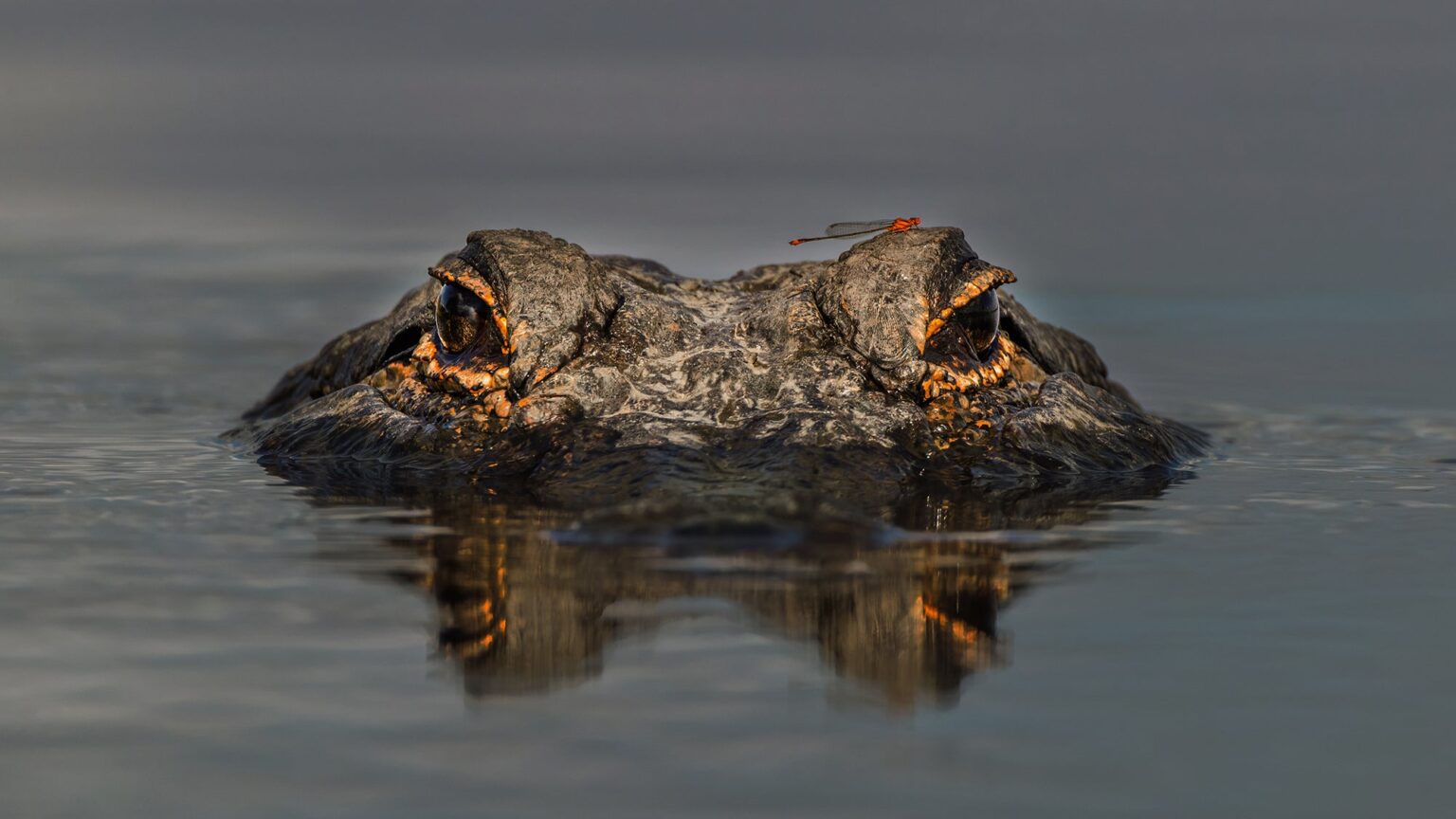
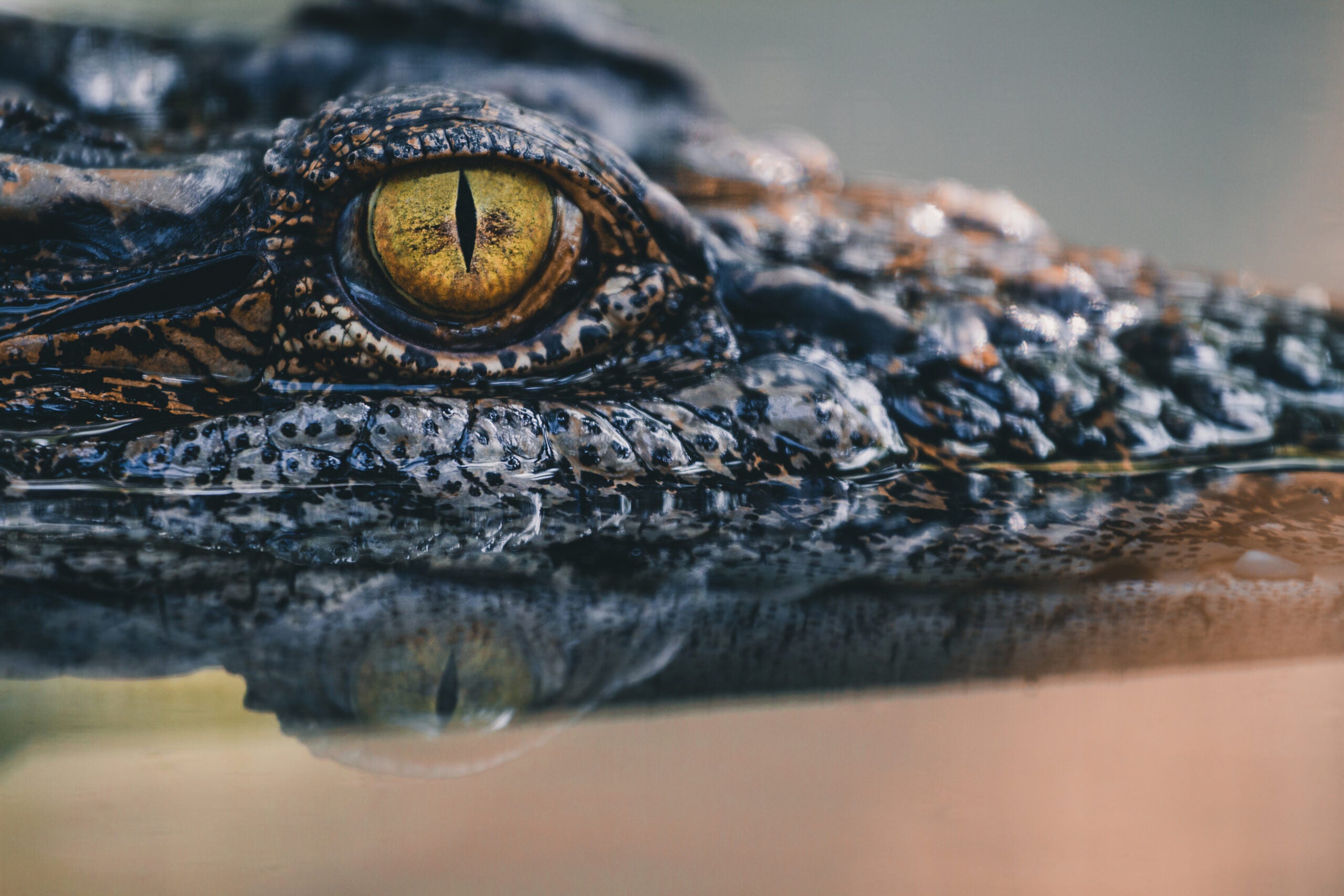
As with sizing up bullfrogs, you can roughly determine the size of a gator by looking at his glowing eyes while alligator hunting at night. Their eyes sit high on their head and are close together. It’s worth noting that I have the head of a 10.5-foot alligator next to my desk, and its eye sockets are 3 inches apart. Look for that width, as well as glowing eyes that seem to be the size of golf balls. A snout and nose that’s 12 to 13 inches from the eyes is a dead giveaway of a really big alligator.
Taking the Shot While Alligator Hunting
Some hunters swear by using a boat’s outboard motor to idle to within range of alligators, with the rationale being that the big reptiles hear the sounds of recreational boat traffic all the time, and are thus used to it. Others prefer a quieter approach with an electric trolling motor, or perhaps even drifting with river currents and steering with a sculling paddle.
The Approach
All of these methods of propulsion can work (check your regs before using the outboard). The best way to move on the water you’re hunting probably depends on how much boat traffic the area gets during the day. Keeping the boat on a straight and steady drift with a trolling motor has been productive for me in the past. Keep the lower edge of the light beam on the gator’s eyes, but gradually hit him with more light as you get closer and prepare to shoot. It’s worth noting here that most alligator hunting is a team effort, and it makes sense for one person to pilot the boat and run the light while the other person grabs the bow and prepares for the shot.
The Shot
Ideally, your first shot hits in the soft spot behind the gator’s front leg; the heavy scales, called scoots, on the back are far more difficult to penetrate. If you have time after the shot, set your bow down and get hold of the line before the gator pulls the buoy overboard. Otherwise, use your light and boat to keep track of and follow the float as the gator heads for open water. You need gloves to handle the line during this phase of the hunt, and it’s important to remember not to wrap the line around your hands (or anything else in the boat). Play the gator slowly, using the excess line to give and take, same as you would when fighting a big fish on a rod and reel.
Speaking of rods and reels, most serious gator hunters keep a short, heavy saltwater spinning rod and reel spooled with heavy braid handy in the boat, and it’s equipped with a 12/0 weighted treble hook, which can be cast over the gator to snag him. Otherwise, you might need to hit the gator with another arrow and buoy—or two or three. The more lines you have into the gator, the better your chances of bringing him to the boat.
The Coup De Gras
Alligators surge with incredible power, but they tire quickly. If all goes according to plan, you’ll soon have the critter thrashing at the boat side. Some states allow hunters to use firearms—often restricted to handguns—to finish dispatching a gator. Even a .22 Long Rifle can work for this, but a little more power, maybe in the form of a +P hollowpoint from a .38 Special, never hurts. Bang sticks, most of which are chambered for .357 or .44 Magnum cartridges, are also popular, and mandatory in some states.
Either way, you’ll want to hit the gator in the flat spot on his skull, directly behind the eyes and above the ears. On a 10-foot gator, it’s a target about the diameter of a baseball. A hit there will destroy the brain and kill the gator quickly, even though it’s apt to wiggle and kick for some time afterward, as all dead reptiles are prone to doing.
If you miss? Well, the gator might be stunned for just long to come back to life upon pulling it in the boat. Seasoned alligator hunters make sure to hit the right spot, and then secure the gator’s jaws closed with heavy tape for good measure. Really, the only way to know for sure a gator is good and dead is after he’s rendered into nuggets and served deep-fried with Cajun seasoning and a nice remoulade sauce.
Read the full article here