



Wild turkey is my all-time favorite game meat. It’s easy to cook, it has plenty of rich flavor, and it’s just about impossible to beat fried turkey nuggets dipped in spicy barbecue sauce. Talk to any serious turkey hunter, and they’ll agree. However, not all turkey hunters know how to butcher a turkey and get every cut of meat.
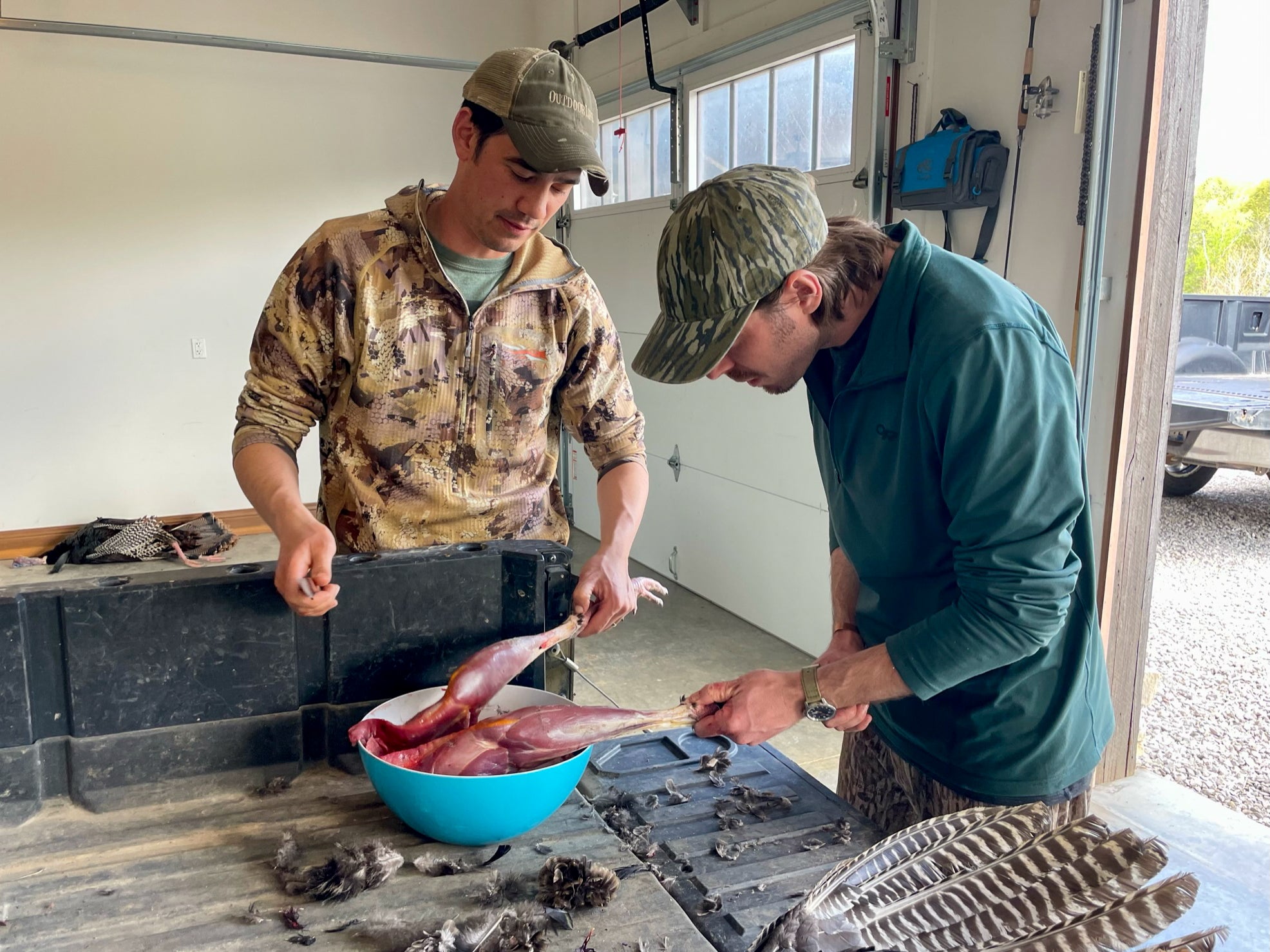
In the video below, my turkey hunting buddy Josh Dahlke does a really nice job demonstrating the basic butchering process on a wild turkey. With most of the birds I shoot, I follow the exact same process Dahlke uses here.
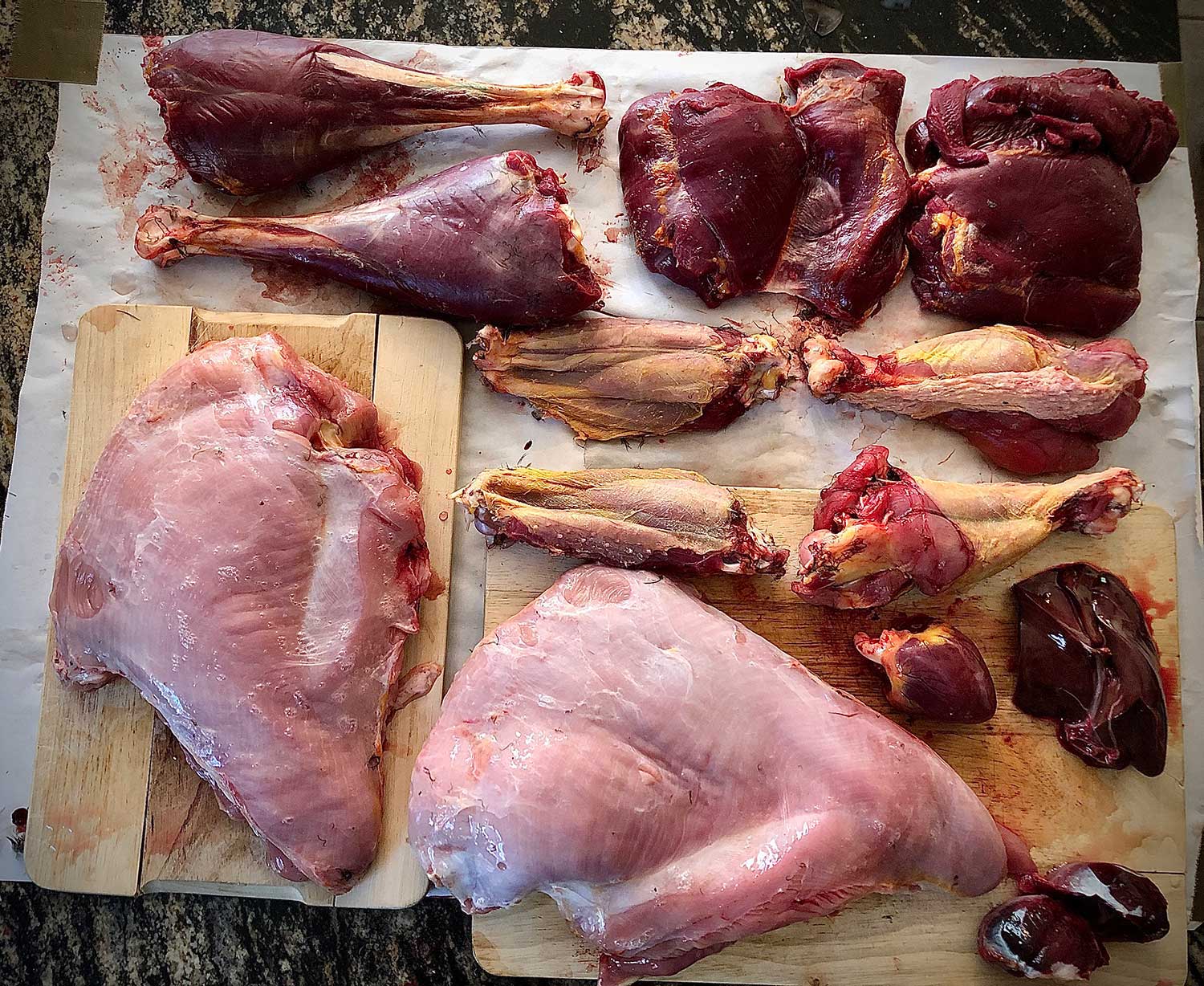
But sometimes, I want more than just the breasts and legs. Some turkeys are killed on hunts that are more meaningful, and I want to savor every bite as a way of making that hunt last just a little longer. Here are the main cuts and organs you can harvest when you butcher a turkey:
- Two breasts
- Drumsticks and thighs
- Wings
- Giblets
- Bones
The breasts and legs (meaning drumsticks and thighs) are the most popular cuts and you can see how to remove them in the video above. Wild turkey wings are often overlooked, mostly because they are a hassle to pluck and clean. But if you go through the trouble of harvesting turkey wings, you’ll be rewarded with surprisingly meaty cuts that can be served up in a killer buffalo wing recipe. The giblets consist of the gizzard, heart, and liver. Heart and gizzard meat are pretty similar (rich and a little chewy, in a good way) when fried and dunked in hot sauce. The liver, of course, has more of an iron taste.
The Breast
Everyone takes the breast meat from their turkeys. But not everybody gets all the breast meat they should. The key to leaving no meat on the bone is to use an ultra-sharp, flexible blade. You don’t want to use your thick deer hunting knife for this job. The breastbone has curves and angles that you need to work the blade around. It’s more like filleting a fish than quartering a deer. (Read our review of the best hunting knives, here.)
Also, the breast meat on a turkey goes up much higher on what I’d call the shoulder of the bird. Make sure you peel back the skin all the way up to the wing to ensure you don’t miss any of that golden meat. After you’ve pulled each breast from your bird, it’s time to think about how o freeze each hunk of meat. On a big tom, I like to cut each breast in half so that I’ve got four dinners worth of turkey breast meat. The top of the breast is thicker and has an almost roast-like consistency. I’ll slice the breast in half so that I’ve got one thick, condensed cut and then a wider, thinner cut.
How to Butcher Turkey Drumsticks and Thighs
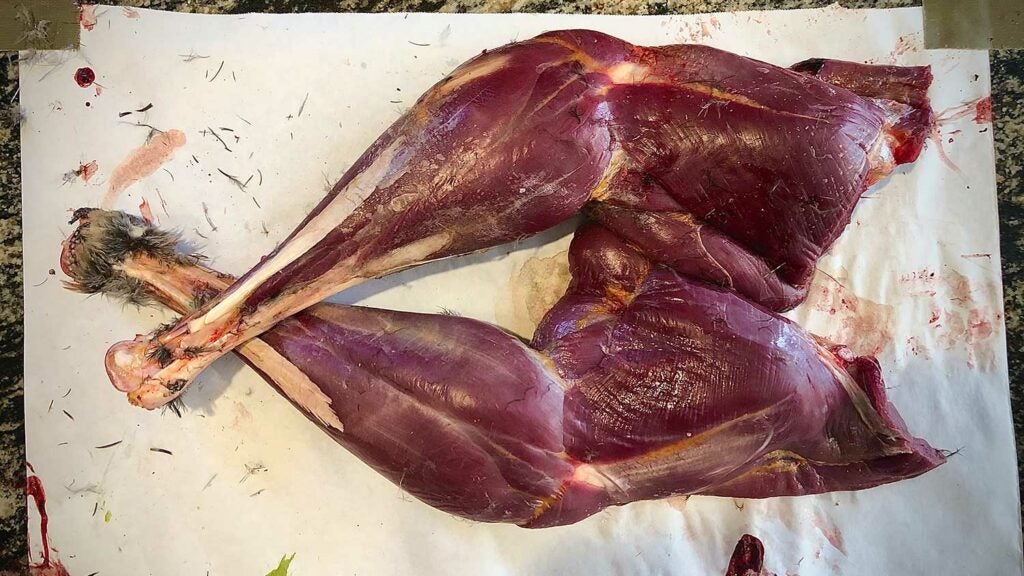
The leg meat on wild turkeys can be juicy, tender, and delicious, as long as you treat it right. Pulling them off your bird is pretty simple.
Remove the Legs from the Turkey
Skin down to the knee joint and peel away the skin from both sides of the leg. Then press the leg away from the body until you pop the hip joint. Cut from the inside of the leg, separating it from the body. You should never have to saw or break bones while butchering your bird. Simply cut through the joints. To separate the foot from the leg, press your blade through the middle of the knee joint (this is where a stouter hunting-style blade comes in handy) to remove the foot from the leg and you’re good to go.
Separate the Drumstick from Thigh
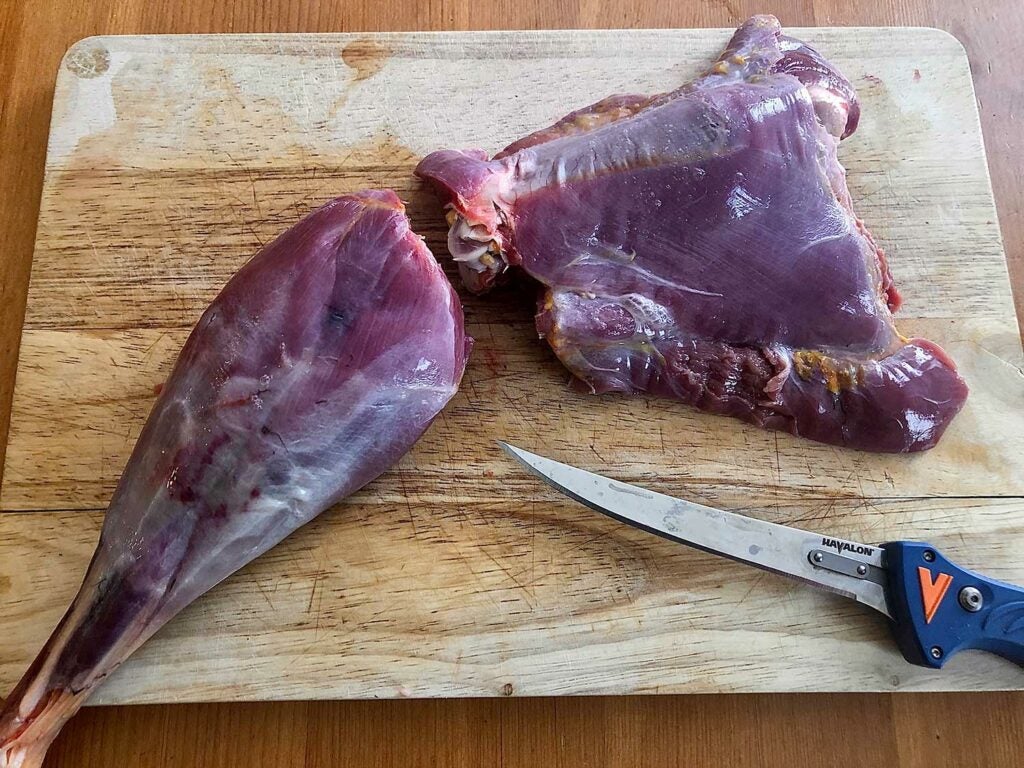
The key here is to separate the drumsticks from the thighs because they are anatomically different. The drumsticks have thick, heavy tendons running through them vertically, almost like the spokes of a bicycle wheel. No matter how you prepare the drumsticks, you won’t be able to cook down these tendons. So, you’ll need to shred the meat of the drumsticks. The thighs have tendons too, but they are not nearly as thick. If you slow cook the thighs, you can eliminate the chewiness of these tendons and wind up with delicious dark meat. The other benefit of splitting the thighs from the drumsticks is that two thighs or two drumsticks make a meal for two people (if you’ve got more to feed, you’ll just have to shoot more turkeys).
Separate the the drumstick from the thigh by cutting through the knee joint. First cut through the meat on the back of the joint, the line that separates the drumstick from the thigh will be obvious—just cut along that line. Then bend the drumstick backward and feel for the middle of the joint with the tip of your knife. When you find the soft spot in the joint, cut through it and the two pieces will come apart.
The Wings
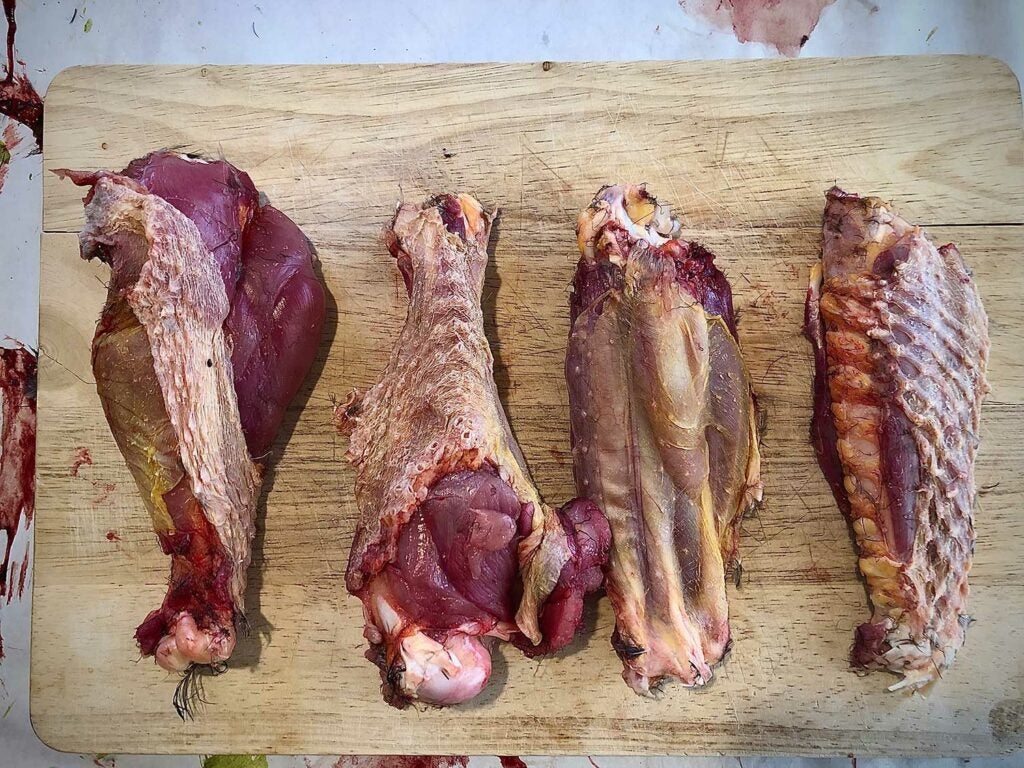
I’ll be honest: the wings take a good amount of work. After you’ve removed the breast meat, pop the wing joint by pushing it away from the body (similar to how you did with the thigh) and cut the wing off the body. Now, you can separate the two parts of the wing. Imagine the two types of the chicken wings you get at a bar—the drumette (which is shaped like a drumstick) and the flat or wingette (two little bones and meat in the middle). Separate these two sections by popping the joint and cutting through it and then get to plucking and skinning. Pluck off the small feathers and use your knife to cut away the big primary feathers. What you’ll end up with what looks like over-sized chicken wings, but unfortunately you can’t cook them like oversized chicken wings. Wild turkey wings are tough. I once tried to sous vide the wings for six hours and then fry them … and even then they were too tough to enjoy (though the flavor was great). My turkey hunting buddy Josh Dahlke has perfected a wild turkey buffalo wing recipe that’s definitely worth trying. There’s a surprising amount of meat on the wings, and they’re worth working on if you’ve got the time and determination.
Read Next: A Recipe for Wild Turkey Dumpling Soup
The Giblets
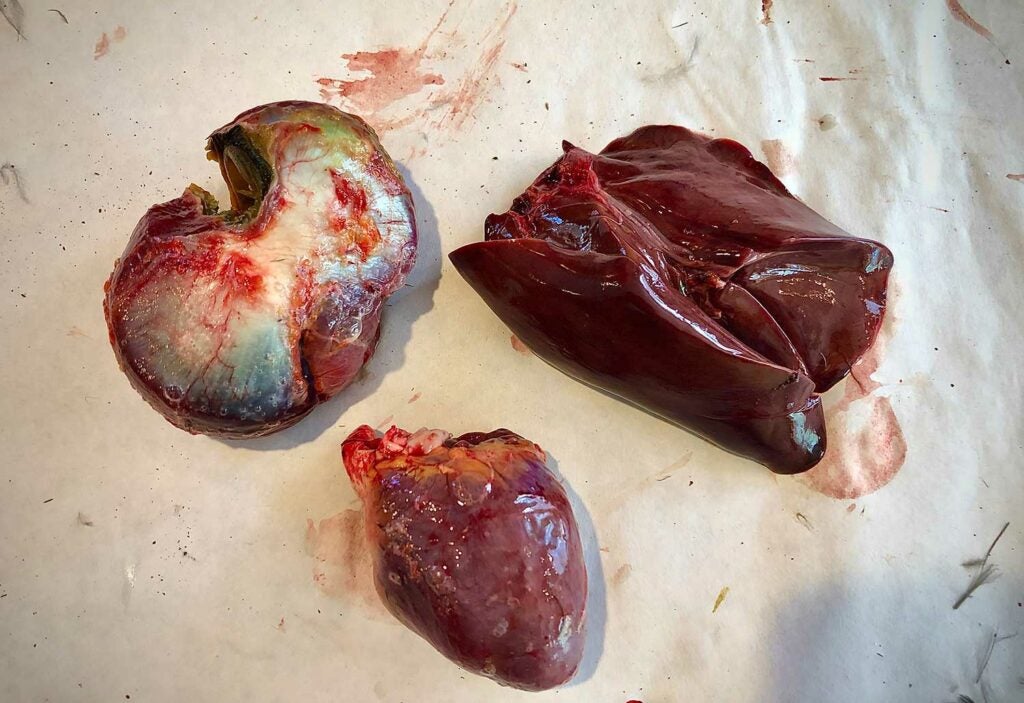
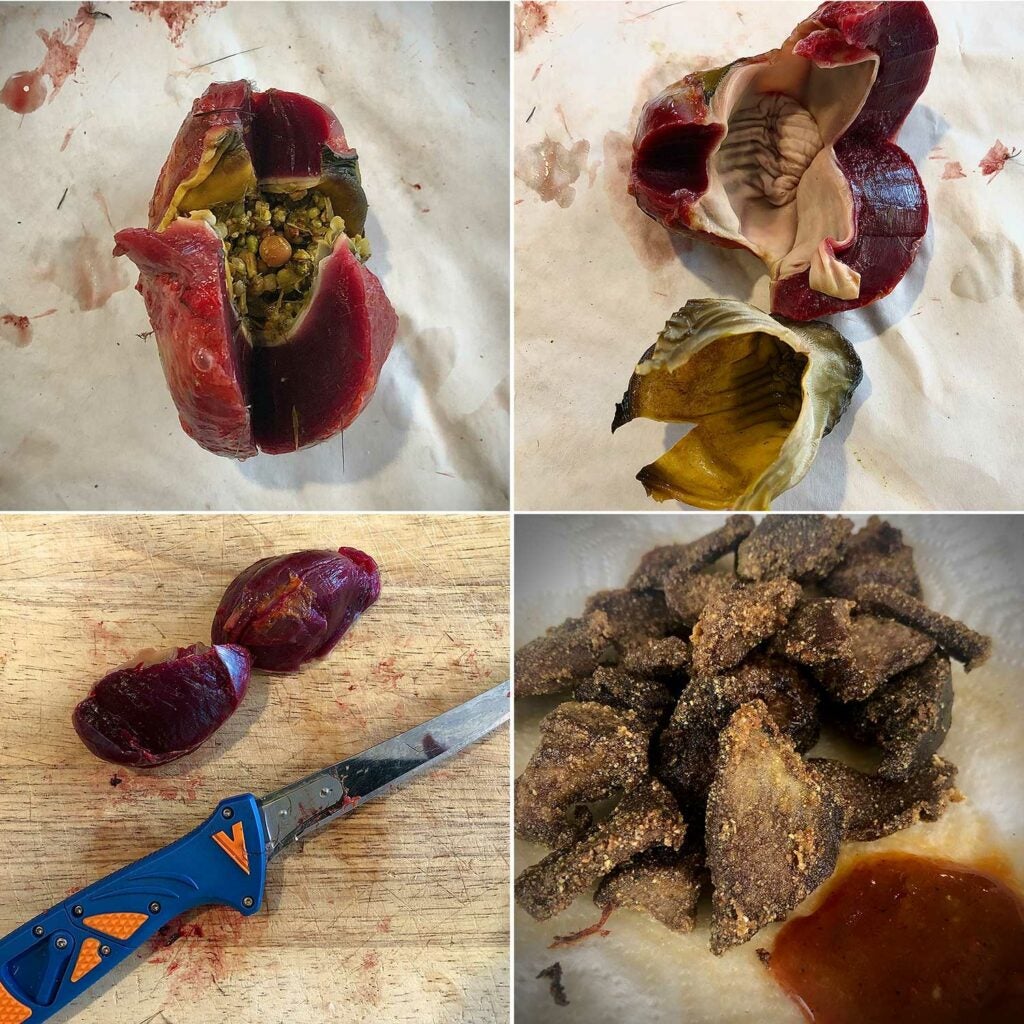
Now for the organs. I do this part last so I don’t get any guts on the other cuts of meat. Carefully slice into the bottom of the body cavity (below the breast bone) and then reach up and grab the gizzard, heart, and liver. The gizzard is a big, firm ball that’s full of pebbles or gravel (known as grit) and helps the turkey digest its food. This organ takes a little bit of prep work before its ready for the fryer. First, carefully slice open the gizzard and remove all the grit and the thick layer holding them. If you’ve seen the Netflix series Stranger Things, this layer kind of looks like the Demogorgan’s head. If you have no idea what the hell I’m talking about, it’s that super-tough liner inside the gizzard itself. Rinse the meat thoroughly and then peel away the gray inside tissue and the outside silver skin (using a sharp fillet knife). When I do this, I end up with two hunks of firm read meat. I’ll slice these into thinner chunks and also slice up the heart and liver and soak it all in milk overnight. Then I mix them in flour, cornmeal, seasoning, and fry them until they’re crispy. Serve with hot sauce. The heart and gizzard meat is very mild, with the gizzard having a little bit more chew to it, but in a good way. Both are delicious. The liver, well, it tastes like liver. Here’s a more in-depth look at how to remove and cook wild turkey giblets.
The Bones
Trendy health and culinary people are all excited about bone broth these days. Well, bone broth is essentially the same thing as stock, and you can make it pretty easily with the bones from your wild turkey.
The big-ticket items here are the neck, which you can skin, and the keel bone (or sternum) which will be exposed after you remove the breast meat. You can also take the thigh bones, which are stout on big toms.
Stock is a key ingredient for soups and stews, and it’s pretty cool to use to use homemade stock for a wild turkey stew, all from the same bird. If you decide to cook the bird whole Thanksgiving-style, use the remaining carcass for soup. That truly utilizes every bit of meat including those two little ‘tenderloins’ on its backend.
READ NEXT: Best Vacuum Sealers
Your turkey hunt may be over, but this bounty of meat and bones will give you the chance to relive it again and again.
Tips: How to Butcher a Turkey
- With the recent bird flu outbreak, be extra careful transporting wild bird carcasses and contaminating your butchering gear after cleaning a wild turkey. Follow these guidelines.
- Consider keeping the spurs, beard, and fan from your turkey. They’ll last far longer than the meat will.
- Remove pellets from the meat while butchering. You might see entry wounds in the breasts and legs of your turkey from stray pellets. Press on these wound channels with your finger or follow them with a thin, sharp knife and remove pellets from the meat. This will help from chomping into pellets, which can be especially painful if you’re shooting small, hard TSS pellets. Also consider using a small metal detector to find stray pellets in your meat.
- Similarly, trim and wash any bloodshot meat. If a section is bloody and questionable looking, remove it. This will preserve the taste of the rest of the cut.
- Butcher a wild turkey right away, especially if you are harvesting innards.
- After each cut is removed from the turkey, clean and wash the meat thoroughly. Make sure to wash off blood, feathers, and dirt. Pat the meat dry and also let it air dry on a rack before freezing or cooking.
Read the full article here