

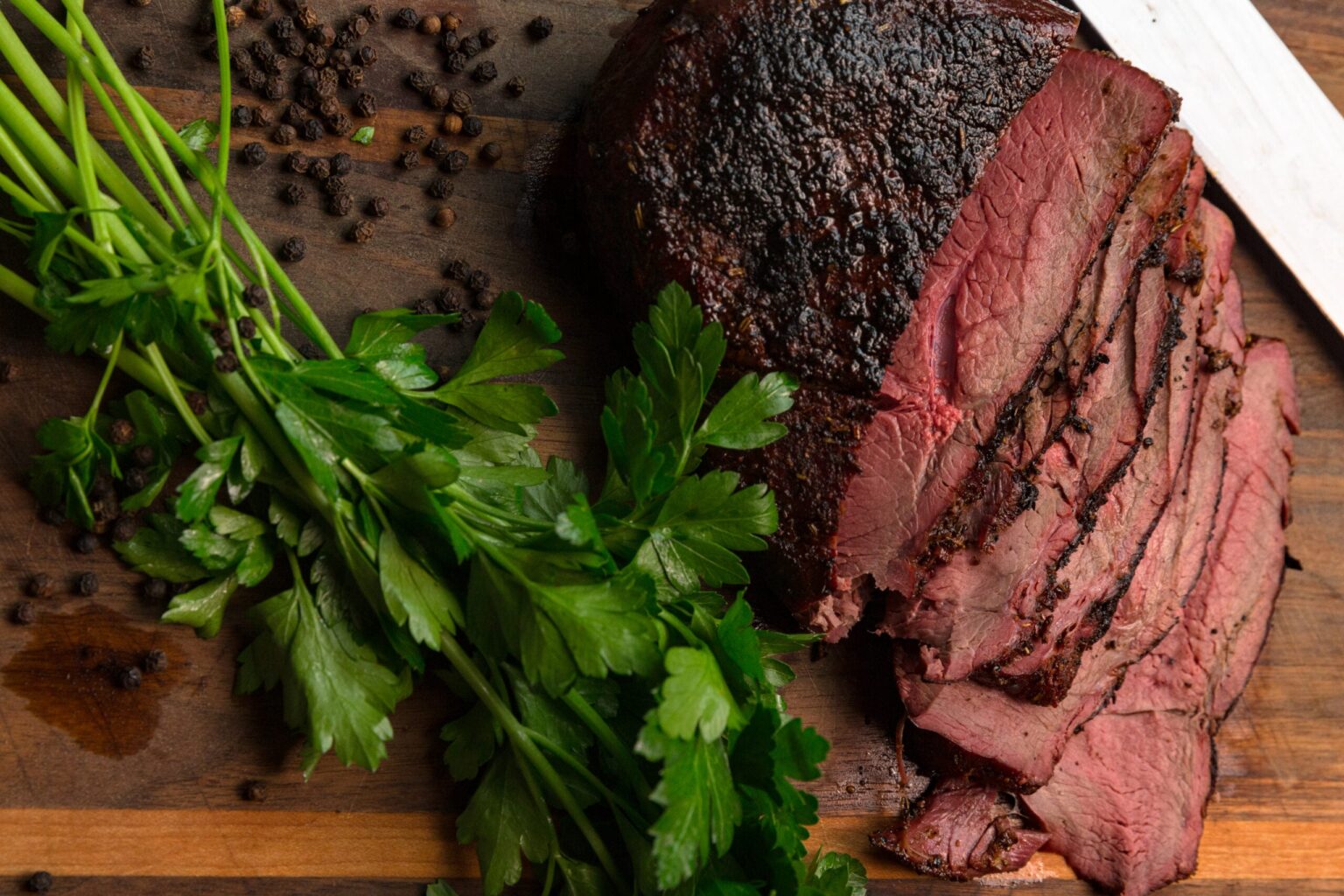

Perfectly cooking each venison roast from a whitetail deer can require very particular techniques. Unless the goal is to make venison stew with every chunk you chop off, no universal method exists when it comes to maximizing the flavor and texture of each individual roast. In this venison recipe guide, we’ll break down what roast best serves what purpose while also giving you an idea of what to expect in terms of tenderness and flavor.
An internal meat probe is highly recommended (check out our reviews of the best meat thermometers). It helps you guarantee you can follow along with these instructions and eliminates variables such as an inaccurate oven reading.
Basic Tips for Butchering Whitetail Deer
Most hunters can easily pull both venison backstraps and tenderloins, but start to feel intimated when it comes to breaking down the roasts in the front shoulder and hindquarter. I believe the best way to learn to is practice, so below are some helpful tips to guarantee you won’t mess up anything while learning hands-on:
- For the hindquarter, follow the muscle seams when cutting open. The hindquarter will unfold neatly if you do so.
- Use a sharp knife and start by making incisions with the blade coming up, toward you, and not down into the meat. Be careful, go slow, but by doing this, because you will only be able to cut within seams, this should prevent you from cutting into roasts.
- Use your fingers more than your knife. After the initial incision, run a few fingers through the seams, and you will start to understand how the hindquarter breaks down. Cut minimally, mostly doing so where you might get hung up on fascia or fat.
- For the front quarter, you can separate the blade roast from the lower portion by cutting across at the first joint below the shoulder. The angle can be a bit tricky, but the goal is to separate the blade roast at that joint.
How to Trim a Venison Roast of Silver Skin
Generally speaking, deer fat does not have a desirable taste. The same is true for silver skin, or fascia, both of which will create gamey flavors if cooked. Because of this, you want to trim away anything that isn’t ruby-red venison. However, you only want to do this ahead of cooking. Leaving the silver skin on when freezing means you have an extra layer of material protecting your venison from freezer burn. Upon thawing out, this silver skin is best removed when the roast is partially frozen, as you can take a sharp filet knife and carve away only the necessary thin layers.
When separating roasts in the hindquarter, a benefit of trimming away anything but red meat will also ensure you remove the one lymph node located near the center of each hindquarter. If kept attached, this node will certainly make your meat taste gamey if cooked.
Venison Roast Cuts That Are Best for Stew and Burger Meat
The following venison roasts are found on the hindquarter but in my opinion, they are smaller and often better saved for trim (whether used as stew meat or turned into burger grind).
Top Sirloin
This venison roast sits at the rear of the deer, behind the backstraps and where the hindquarter is attached. Yes, a skilled butcher, when carving off the hindquarter, can preserve this and keep entirely intact. However, even a perfectly pulled top sirloin will be half the size of a top round. So, for this reason, I suggest saving for the grind or stew pile.
Tri-tip
This cut is small on beef, which is approximately three times larger than a deer. And after trimming fat (which you might not do on beef), it is even smaller. So, using the same logic as above, these are better utilized in fresh burger grind or potentially sliced fajitas (or something similar).
The Best Venison Roasts: From Most Tender to Least Tender
To both rank roasts and present options for cooking, I solicited the expertise of The Bearded Butchers, owners of Whitefeather Meats, purveyors of spice blends, and hosts of a 2.58-million-subscriber YouTube channel where they share butchering wisdom passed down in their family for generations. They’ve butchered and cooked more deer, elk, bison, and beef than they can count, so I was thrilled to have them share insights here.
While we are ranking from most tender to least tender, a certain degree of that is arbitrary and could depend on if the deer was dry-aged, for example, or how it was prepared—such as the difference between cooking a roast medium-rare vs. turning into a stew where bites melts in your mouth.
1) Venison Tenderloin
The name says it all. The only roast located inside the deer cavity, tenderloins are sometimes called “inner loins” or even “fish.” These aren’t very big coming from most deer. They’re best pulled when the deer has had time to cool off but—not done so too late. Tenderloins are both indeed tender and tasty, but likely the least deer-like flavor you will encounter among venison roasts. Put another way: They just don’t have that wild deer personality. But some folks like that.
How to Cook Tenderloins
Liberally season and let sit whole at room temperature for a couple hours. Heat peanut oil (or similar high-heat cooking oil) to 400 degrees. Fry for 2-3 minutes, just enough time to create crust on outside. Allow to rest uncovered for 10 minutes before eating.
2) Venison Backstrap
I believe that a backstrap should be kept whole—never cut into medallions or, God forbid, butterflied medallions. However, I do sometimes endorse cutting a venison loin in half—especially larger backstraps and especially if you aren’t going to eat the whole loin in one sitting.
Backstrap is the perfect marriage of tenderness (while not to the level of tenderloins) and personality. You know you are eating deer, but the flavor won’t overwhelm even those with pre-conceived aversions to wild game.
How to Cook Backstraps
Liberally season. Keep in fridge until ready to cook, at least couple hours to fully absorb seasoning. Either smoke or low roast at 200 degrees for approximately an hour until the internal temp reads 108 degrees. Remove and lightly oil and sear each side on a grill or flat top heated to 600 degrees for 1 minute per side. Allow to rest, lightly tented with foil, for 10-15 minutes before carving and serving.
3) Venison Sirloin Tip
This venison roast is sometimes called the “football” roast because it looks like a football. More that one muscle exists in this roast, though, it can be cooked whole. Some hunters like to cut their sirloin tip into thick steaks or even thinner, perhaps 1/4-inch width, to create jerky. This is a very versatile cut with a good helping of flavor.
How to Cook a Venison Sirloin Tip
Liberally season. Keep in fridge until ready to cook, at least couple hours to fully absorb seasoning. Either smoke or low roast at 200 degrees for approximately an hour and a half—or 2 hours or more until the internal temp reads 120 degrees. Remove and lightly oil and sear each side on a grill or flat top heated to 600 degrees until each side is either slightly charred or has a nice crust. Allow to rest, lightly tented with foil, for 20-30 minutes before carving and serving.
Another option is to cook a sirloin roast in a crockpot. “It’s the perfect size for the pot,” the Bearded Butchers said. “For us, that’s a crockpot. Low for 18-20 hours. It’s the best!”
4) Top Round Venison Roast
Similar in size to the sirloin tip, the top round would be best described as a fat football that was flattened a bit. Muscle striations run end to end, meaning when you slice, to go against the grain, you can just carve from one tip to the other. Mouthfeel, when cooked medium-rare, presents a bit of resistance in this roast is still, for the most part, pretty tender and quite flavor with a noticeable hint of deer.
How to Cook a Venison Top Round
Either try the same method suggested above for the sirloin tip, or seal with spices and bacon grease, sous vide at 120 degrees for 3-4 hours, depending on size, then remove, pat dry, and sear over an open fire until a hearty crust forms on all sides (likely total of approximately 5 minutes over a hot fire). Let rest 20-30 minutes uncovered before carving.
5) Venison Blade Roast
The biggest whole roast from the front shoulder, this will include the shoulder blade from the deer unless you bone it out, which is a bit of a process but indeed possible. It contains more collagen and fascia compared to the roasts from the hindquarter. If cooked to medium-rare, it’ll be a bit chewier, have a more distinct deer taste, but that could be a welcomed change of pace for some deer hunters.
How to Cook a Venison Blade Roast
Either cook medium rare using methods shared above, or cube, spice, sear, and add to beef stock and a bit of red wine to tenderize via low simmer for 3 hours. This could serve as the main component of an amazing stew.
The Bearded Butchers recommend cooking a blade roast similar to a beef chuck roast: “This makes a great bone in pot roast. It’s your typical ‘roast and vegetables’ roast.”
6) Mock Tenderloin
This roast is also pulled from the front leg but taken from below the shoulder, below the blade roast. It is indeed small on a deer and will look a lot like the tenderloin, but won’t be as tender. Think of this roast as a tougher, more-deer-flavored version of the tenderloin.
How to Cook a Venison Mock Tenderloin
Spice and leave out at room temp for 2 hours. Sear in bacon grease in a skillet until a solid crust forms on all sides, remove and let rest uncovered for 10 minutes before serving.
7) Eye of Round
Found between the top and bottom round, this roast is a bit bigger than the tenderloin, though not nearly as tender, with almost the shape of a small backstrap. Long muscle striations make this a bit chewier compared to other roasts. Similar to other hindquarter roasts, this roast presents less-distinct deer flavor compared to front shoulder offerings.
How to Cook a Venison Eye of Round
Spice, seal with a bit of porter beer and barbecue sauce, sous vide for 1 to 2 hours at 108 degrees, remove and sear over a hot open fire until a crust forms on all sides (likely 2-3 minutes total). Let rest for 10 minutes uncovered before carving. The Bearded Butchers add that this is a great roast to roast and shred because of the long muscle fibers.
8) Venison Bottom Round
Considered by the Bearded Butchers to be the least tender venison roast, there is still some succulence to be had here. Muscle fibers run diagonal in this roast, so in order to cut against the grain for maximum tenderness, pay attention to these lines when carving. Lots of flavor in this roast, even if it is a bit chewy.
How to Cook a Venison Bottom Round
Pick any of the smoker or sous-vide ideas from above, then create an onion au jus in which you can dip thinly slice pieces from this roast. The Bearded Butchers typical make jerky or stew from this roast.
Read the full article here