





For hunters looking to bag all of North America’s waterfowl species, the mottled duck is one of the more localized and difficult birds to harvest. Looking much like a cross between a hen mallard and a black duck, the mottled duck is a southern resident, calling Florida and the Gulf Coast home. Hunters willing to venture this far south are likely to experience warm weather, challenging shooting, and possible run-ins with alligators in hopes of bagging the wary duck.
Much like their mallard counterpart, mottled ducks are excellent on the table. But unlike the widespread greenhead, mottled ducks are some of the most geographically restricted species. Proving to be one of America’s hard to find and greatest all-around waterfowl trophies.
Appearance and Vocalization
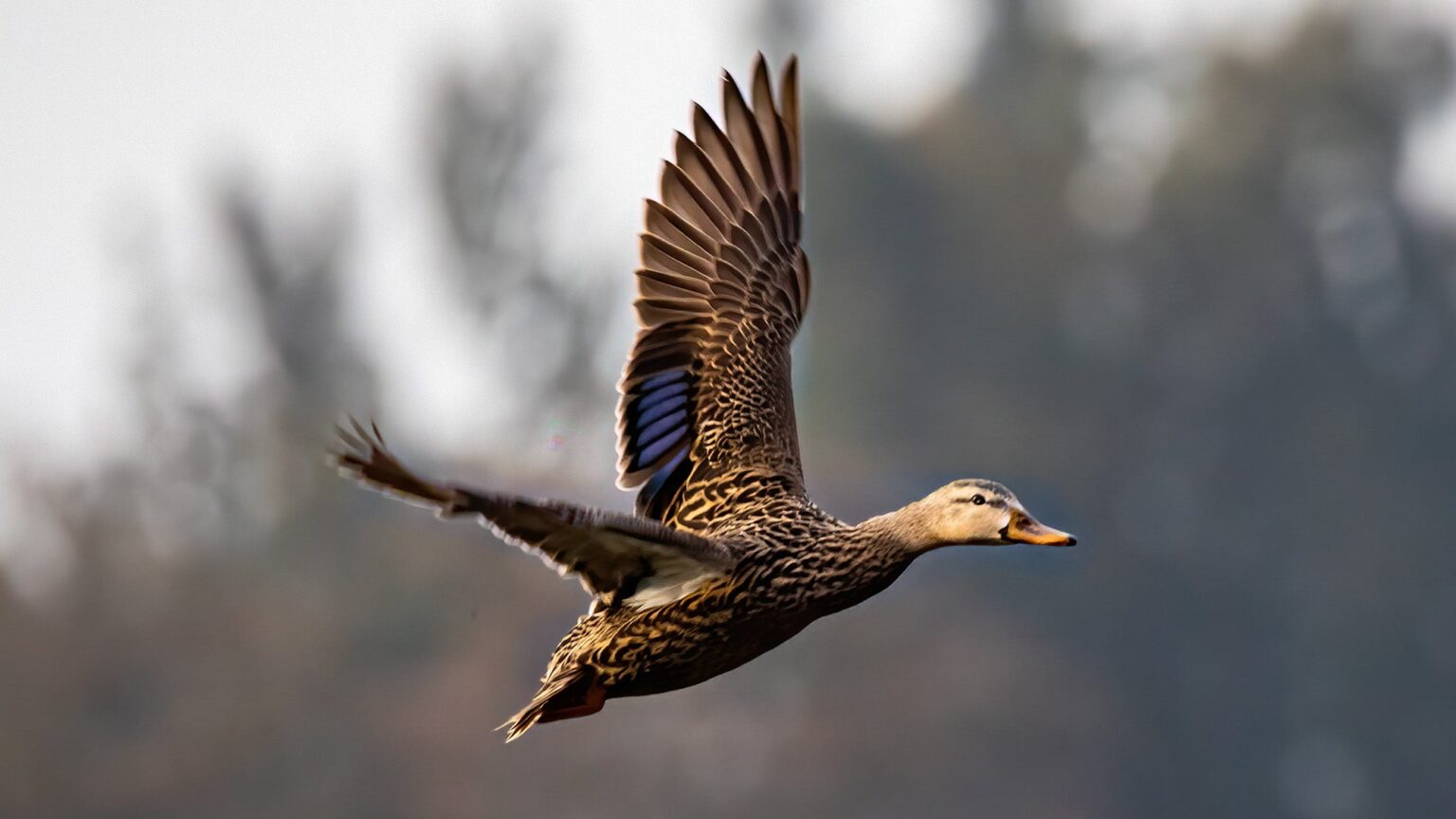
In hand, a mottled duck looks a lot like a dark hen mallard or black duck. The drake mottled sports an eye-catching yellow bill (same as a drake black duck), with a distinctive black patch where the bill opens—a part of the duck’s anatomy known scientifically as the bean. Both sexes are a mix or ‘mottling’ of brown, buff, and black. Drakes and hens both show a beautiful soft buff head and throat. The female’s bill is a greenish-yellow or sometimes a light orange color, with black markings or spots.
Though not always easily seen afield, hen mallards will have white borders above and below an iridescent blue speculum on the wing. Mottled ducks lack these white borders or bars and feature black markings around the speculum, similar to that of a black duck. According to All About Birds, mottled ducks with white in their tails are said to have some ‘mallard’ in them, as pure strain mottled duck tails are entirely dark.
Mottled ducks sound almost exactly like mallard ducks. Hens produce the well-known quack, along with the machine-gun ticka-ticka-ticka chuckle, often heard as they feed or when flying high overhead. The drakes make an odd, lispy dweek…dweek repetitive call that hunters often reproduce with excellent results.
Distribution and Population Statistics
In the U.S., mottled duck populations are relatively limited in scope, with the species being found in south Texas and points east along the Gulf Coast to the Florida Panhandle. Coastal Georgia and South Carolina, too, will hold some specimens, as will part of Mexico along the Gulf. Scientifically, two populations are recognized: one in Central and South Florida and the other to the west along the Gulf.
According to the North American Breeding Bird Survey, the mottled duck population has shown a steady, albeit slight decline over the past half-century, with numbers currently estimated at just over 450,000 individuals. Degradation of coastal marshes and urban sprawl pose conservation issues; however, the biggest threat to pure-strain mottled ducks lies in their hybridization with released and/or feral mallard ducks. The U.S. Fish and Wildlife Service puts the annual harvest of mottled ducks between 20,000 and 50,000.
In an effort to conserve mottled duck numbers, the state of Louisiana instituted a daily bag limit of zero (0) mottled ducks during the first 15 days of the 2023-24 regular season, after which the daily bag limit was increased to but one (1). Florida allows hunters a single mottled duck as part of their daily limit. In Texas, the harvest of mottled ducks, which also includes any dusky ducks—Mexican-like ducks, black ducks, and hybrids thereof—is prohibited for the first five (5) days of the season before it opens to one mottled duck per day afterward.
Habitat
Classified as dabblers, mottled ducks show a preference for shallow water, either fresh or brackish, where they fill a varied diet with food ranging from aquatic plants and seeds, including smartweed and wild millet, to an array of invertebrates, crustaceans, and small shellfish. They will also occasionally eat small fish.
Temporary wetlands, e.g. sheet water resulting from heavy precipitation or traditional agricultural practices like rice production, will also attract and hold ducks. In densely populated parts of Florida, mottled ducks aren’t hesitant to spend time in urban/suburban settings.
Hunting Methods
The tactics used successfully for mallards can also be applied to those seeking mottled ducks. Finesse and subtlety are imperative as the essentially non-migratory mottled ducks see quite a bit of hunting pressure throughout the whole of a 60-day season. Light calling, small ultra-realistic decoy spreads, which might include a majority of hen mallard and/or black duck fakes, and in-depth scouting can all prove beneficial.
On the Table
Mottled ducks taste a lot like mallards, which are pretty tasty. Still, it all depends on what the ducks have been eating as to its ranking on the palate. Rather, any dabbler, mottled ducks included, dining on seeds and light aquatic grasses should be good. But the same dabbler eating minnows and fingernail clams? Not so much.
Read the full article here