

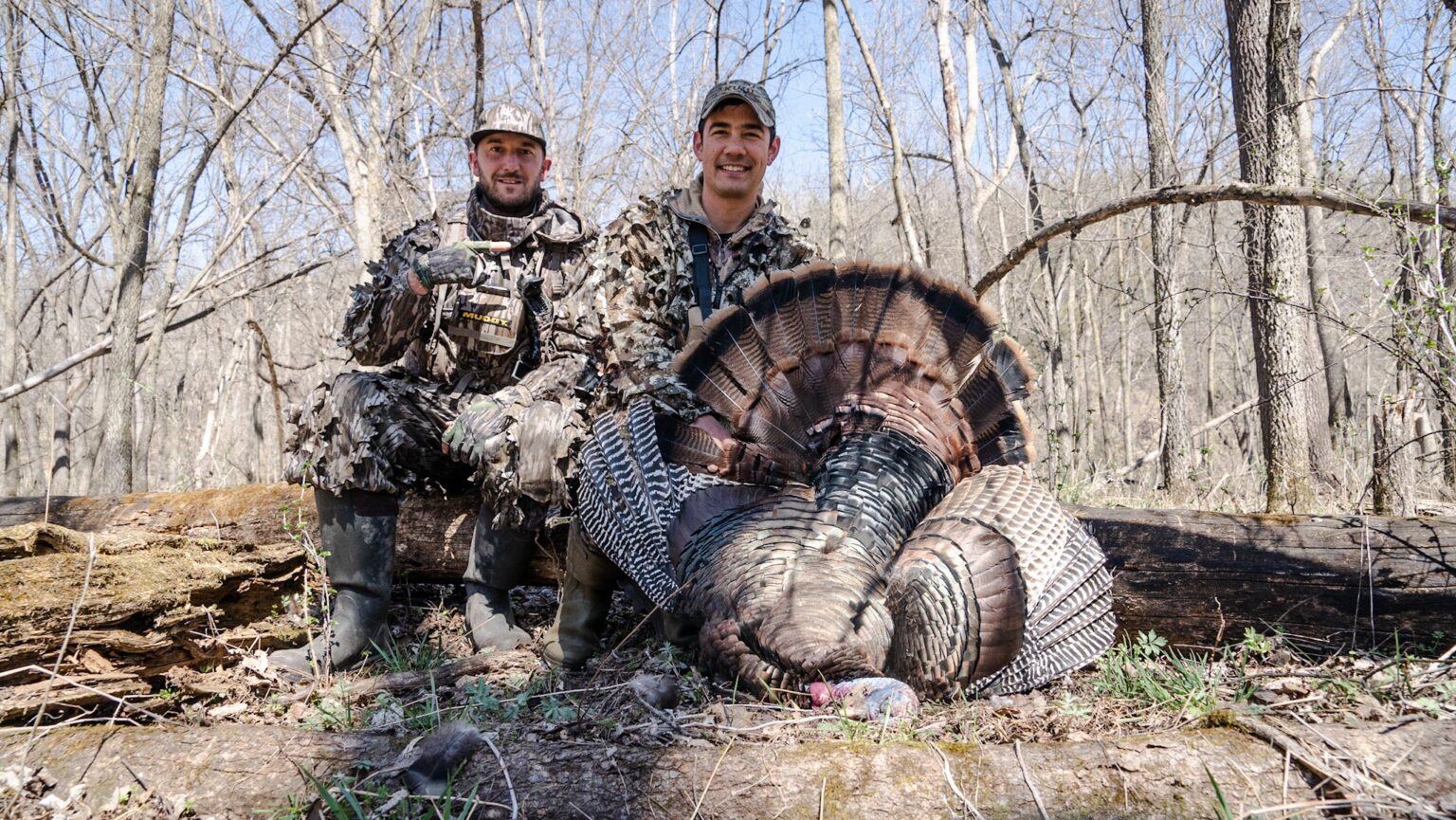

Turkeys are tough. They’re covered in dense feathers, and their vital area is deceivingly small—this is especially true for strutting toms. Because of all this, you must shoot a tom in the head and neck in order to kill him cleanly and ethically. Quite simply, putting the core of your shotgun pattern on a tom’s neck and head will drop him in his tracks.
But it does get slightly more complicated than just “put it on his head!” Turkeys move constantly, and their heads move the most. Shot distances vary, which changes the spread and density of your gun’s pattern. Then there’s the challenge of turkey hunting with a bow, which requires a whole different type of shot placement. In order to simplify turkey shooting and help you make the quickest, cleanest kills possible, I’ve put together an in-depth guide on where to shoot a turkey.
Where to Shoot a Turkey with a Shotgun
Decades ago, shotshell expert Tom Roster conducted the most in-depth turkey load lethality test of all time. In a report on that testing, he says that the fourth cervical vertebrae down from the head is the ideal aim point for killing a turkey quickly. Winchester copyrighted targets with an “XX” marking this aim point (which you can see circled in red in the photo below, left). Hitting a turkey here with a tight pattern ensures that pellets will strike the skull and vertebrae, which makes for a very quick kill. It essentially shuts the tom’s lights off.
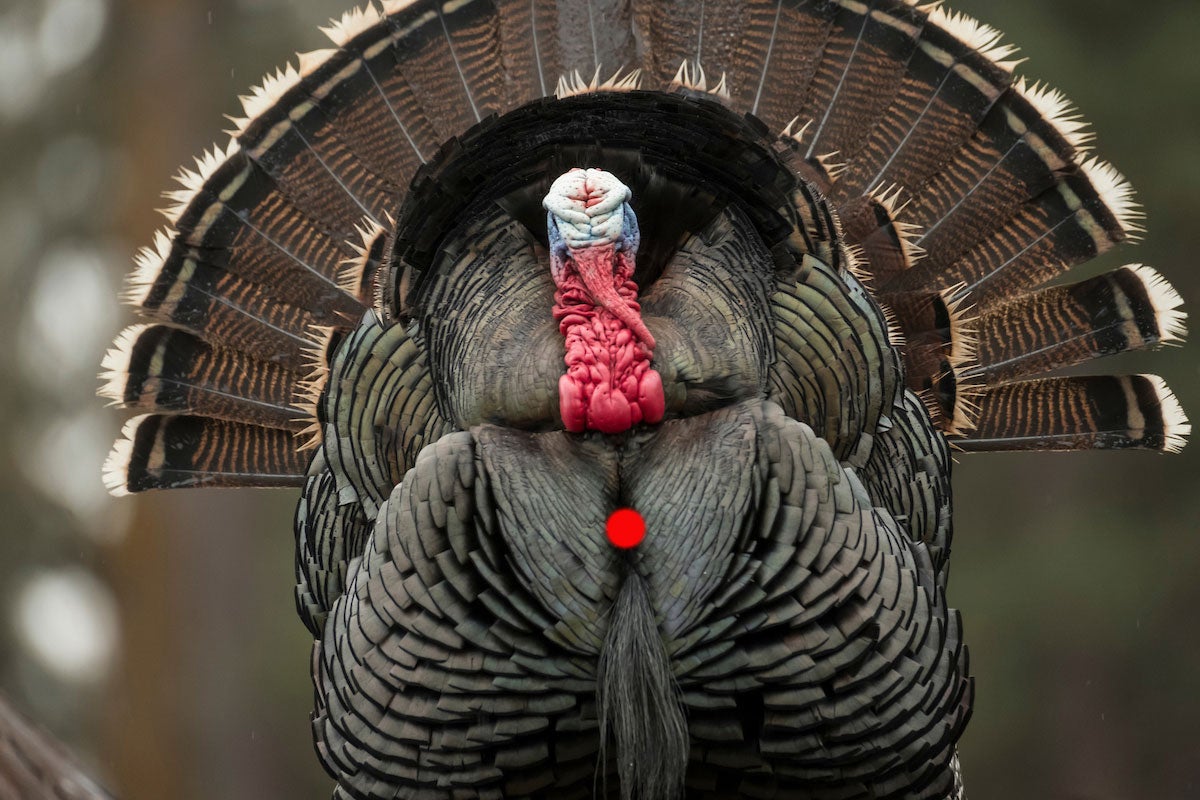
However, I recommend aiming slightly below Roster’s point. See the red dot in the photo below (right) for my ideal aim point.
There are several reasons to aim here. First, there is a clear aim point: just above the large caruncles on the neck (which are usually glowing bright red on a fired-up gobbler). You can further bracket your aim point by holding where the black feathers meet red skin. Hit this area and the core of your pattern should strike the tom in the neck with a few pellets from the top of your pattern hitting him in the skull. This aim point is ideal whether a turkey is facing you, walking away, or broadside.
Second, turkeys move their heads frequently. At close range, your spread of pellets fired through a tight turkey choke is barely bigger than a softball. So if you aim higher at close range and the turkey bobs his head as you squeeze the trigger, you’re likely to miss. However, my aim point just above the caruncles on the neck stays relatively still, even while the gobbler’s head is bobbing back and forth. Just watch the Instagram video of a gobbler walking below. As the tom’s head rocks forward and back, the area we’re aiming for remains still, which makes for a much easier target on a walking bird.
Lastly, turkey hunters (especially those not shooting red dot sights) tend to miss high. With all the excitement of a gobbler strutting into range, many shooters fail to get their head down on the gun. Instead of looking down the barrel, they look over it, which causes them to hit high. An extreme version of this will cause a miss no matter where you aim, but it doesn’t hurt to shade just a little lower on the neck.
The downside of a lower aim point is that on longer shots, it’s likely that some pellets will hit the top of the turkey’s breast, which means that you might have some pellets in your meat. It’s pretty easy to pick a few pellets out when you’re butchering the bird, but you can also buy a small metal detector to make sure there are no strays left over.
If you shoot a tight turkey choke, don’t be worried about meat damage. I typically kill four to six toms a year with this aim point and rarely lose meat because it’s bloodshot.
Turkey Shooting Tips
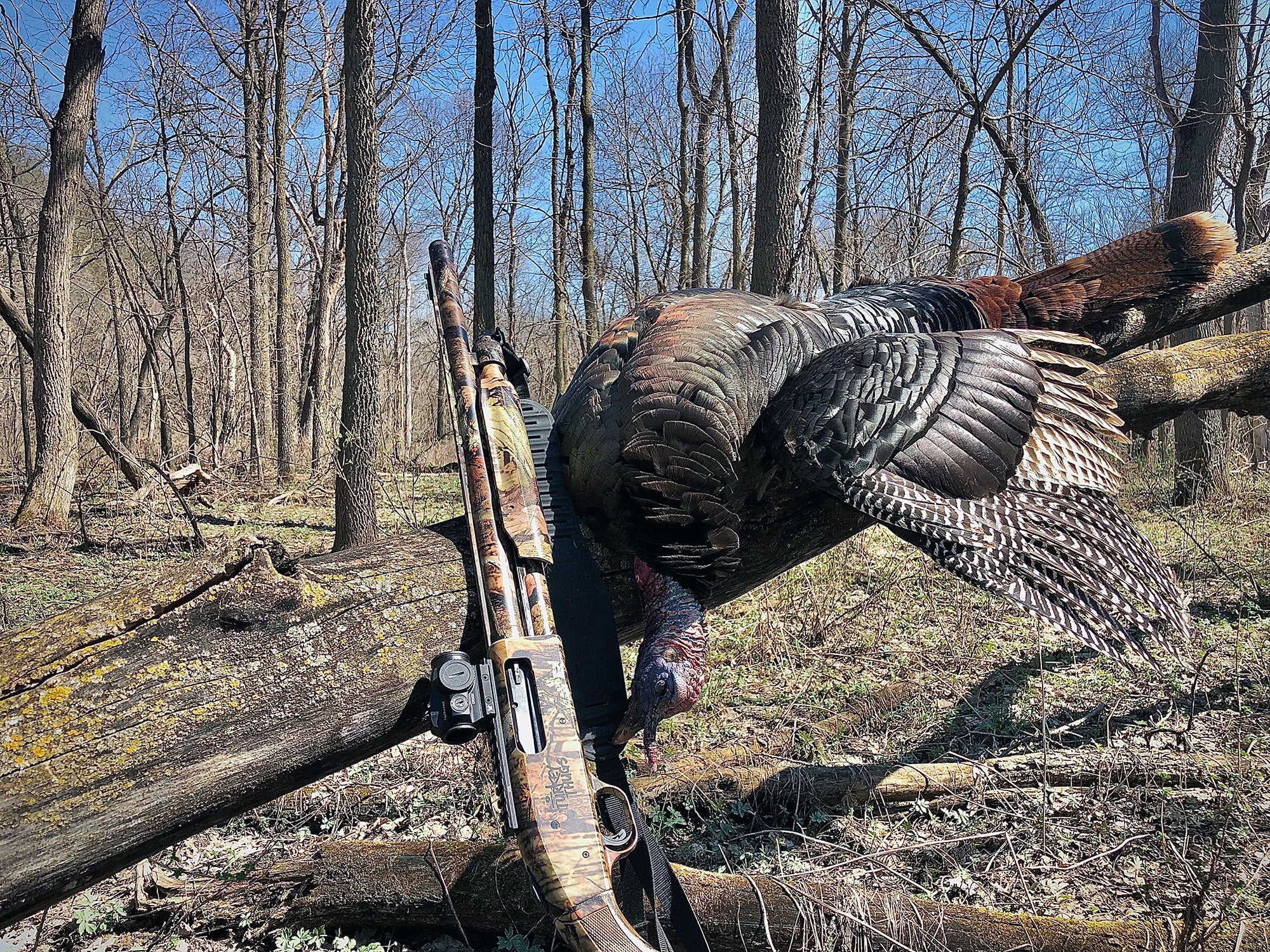
Beyond knowing where to shoot a turkey, you should know a few things about ethically killing gobblers.
Don’t Shoot at a Turkey That’s in Full Strut
Shotgun hunters should avoid shooting at a strutting tom because his neck is curled and his head is tucked close to his body. This makes it easy to miss the core skull/vertebrae area. Turkeys that are hit in the body often roll over and then get up running. This is not an ideal result. To bring a gobbler out of strut, give him a few clucks on a mouth call (but be ready to shoot). If you’re not using a mouth call, simply moving your gun ever so slightly so that it covers the tom is often enough to catch his eye and bring him out of strut. But again, be ready to shoot.
Pattern Your Gun
Patterning your turkey gun is critical. Not all shotguns hit exactly where you aim them. You need to know your exact point of impact and the density of your pattern at all the ranges you intend to shoot. Don’t shoot beyond the capabilities of your load/choke/gun combo. For most hunters shooting lead turkey loads, that’s going to be a max of about 45 yards, but it could be less depending on your pattern. You want about 100 pellet strikes within a 10-inch diameter circle, or about 200 pellet strikes within a 30-inch diameter circle. Hunt with a rangefinder.
Identify Your Target and Know What’s Beyond It
This is one of the core rules of hunter’s safety and it’s especially important for turkey hunters. We need to make sure that we are shooting toms (or jakes and bearded hens where legal). Make sure you see a visible beard of a live turkey (not a decoy) before putting your finger on the trigger. It’s also important to make sure that you don’t accidentally hit any turkeys near the bird you’re aiming at. Remember your pattern will spread several feet wide at longer ranges. You don’t want stray pellets to hit collateral birds that are next to or behind your tom.
Where to Shoot a Turkey with a Bow
Shooting a turkey with a bow is much more challenging than shooting one with a shotgun. Turkeys look big when their feathers are puffed up in full strut, but their vitals are relatively small. Plus, they typically don’t leave great blood trails, even when hit well. Here are your options.
Head and Neck
There are different “decapitator” style broadheads out there with extra-wide cutting diameters. With these broadheads you aim square for the turkey’s neck and either miss completely or kill him cleanly. But that’s not the only option for archery turkey hunters.
Broadside
For a broadside shot on a turkey, you want to strike them through the heart and lungs, which are lower than you might expect. Move up the leg and slightly toward the base of the wing. The video below from Heartland Bowhunter shows about perfect shot placement. The Heartland crews shoots a ton of toms each year with archery gear. Aim where they aim.
Facing Away
If the tom is strutting away from you, aim for the vent (or base of the fan). If the tom is walking away from you, shoot him square in the middle of the back just above the tail fan. See the video below for proper shot placement.
Facing Head On
Bowhunters can shoot a strutting tom, you just need to understand the target is smaller than it looks. If the tom is squared up, facing you directly, aim just an inch or two above his beard. Make sure your arrow doesn’t drift left or right. You want to bury your pin inline between the gobbler’s beard and its head.
Final Thoughts on Where to Shoot a Turkey
Turkeys are easier to miss than you might think. Hunters are able to shoot ducks flying through the air, how could we possibly miss a turkey standing in the open at 35 yards? Misses mostly happen because a shooter gets excited and jerks the trigger, while also pulling their head off the gun. So stay calm, keep your head down, and press the trigger. I think misses also happen because shooters don’t always pick a specific aim point. They just shoot in the general direction of a tom’s head/neck. So, focus closely on the gobbler’s neck where black feathers meet red skin, let your bead or red dot hover just above the big caruncles and … bang! Dead turkey.
Read the full article here