





Broken into two different subspecies, the fulvous and the black-bellied whistling ducks, or tree ducks as they are often referred to, reside in the southernmost part of the country. Florida, Louisiana, and Texas hold the highest populations of both birds, where they are commonly taken by hunters. Of the 41 huntable North American waterfowl species, whistling ducks and the select southern states where they live draw hunters from all over the continent looking to complete their quest of harvesting every duck and goose.
Due to their tall and lanky nature and feet that extend well beyond the body, whistling ducks don’t look very much like their fellow dabblers. Fulvous and black-bellies display a slower wing beat and longer silhouette than the more commonly hunted waterfowl. Nonetheless, they feature an impressive combination of colors and feathers that are unique and eye-catching. Here is everything else you need to know about the tree duck species.
Appearance and Vocalization
The U.S. is home to two types of whistling ducks: the black-bellied whistling duck and the fulvous whistling duck, commonly called the fulvous tree duck.
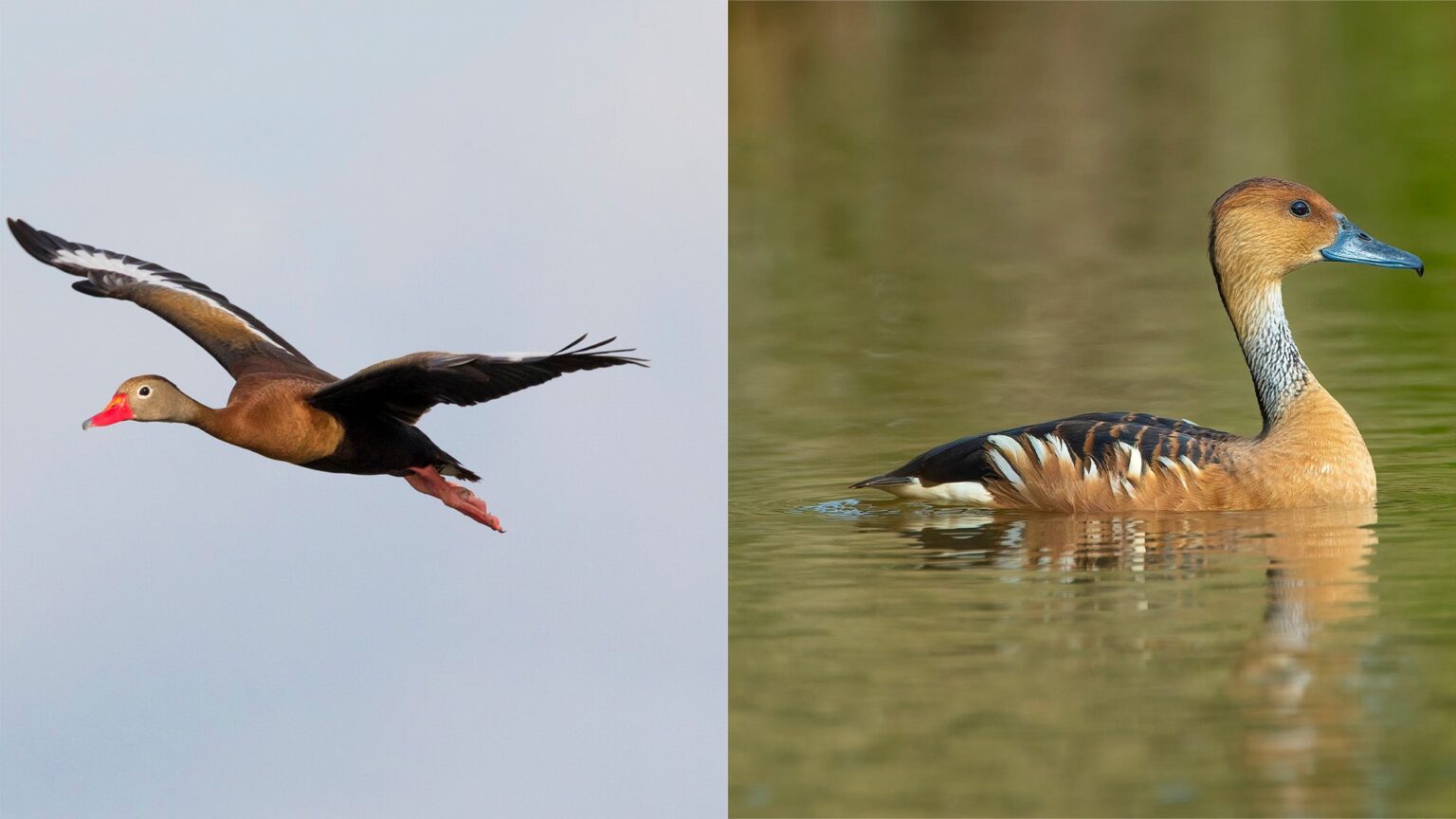
The black-bellied whistling duck (Dendrocygna autumnalis), once seen, is unmistakable. Weighing from 2-2.5 pounds, the black-bellied is a long-legged, lanky duck, easily identified by a reddish-pink bill and almost comical pink legs. The sexes are similar in appearance, with the female (hen) perhaps being a bit more subdued. However, both males and females sport a predominantly chestnut chest and back, black belly, and soft grey face. Both sexes display a white wing patch in flight, and both fly with legs outstretched past their body. True to their name, black-bellies make a multi-note pleasant-sounding whistle in flight, as well as while on the ground.
The fulvous whistling duck (Dendrocygna bicolor) is similar in build to their black-bellied cousin. However, the fulvous sports a bluish-grey bill and legs. They also feature a soft brown color, with wide black barring on the back/sides, white stripes on the flanks, and an all-white under-tail. Fulvous whistling ducks are a bit smaller than the black-bellied, but weigh about the same. The fulvous makes a high-pitched two-note call, similar to a wood duck’s pre-dawn squeal.
Distribution and Population Status
Originally found in Central and South America, along with the extreme southernmost portions of Texas and Florida, black-bellied populations have been steadily increasing. Today, these interesting ducks can be found in much of the southern U.S., as well as southern Arizona and New Mexico, north to the Carolinas, and up into parts of Mississippi, Alabama, and Georgia.
Similarly, fulvous whistling ducks have been spreading throughout the southern U.S., with populations now established from southern California eastward to Florida. Both subspecies winter, with some exceptions, south of the border into central Mexico. Both black-bellies and fulvous whistling ducks are considered to be species of ‘low conservation concern,’ according to the Bird Conservancy’s Partners in Flight (PIF) database. Threats to these populations currently involve habitat loss and water quality issues.
Habitat
Both black-bellies and fulvous whistling ducks are classified as dabblers and, therefore, prefer shallow freshwater ponds and marshes. They will ‘tip up in search of vegetative material and other aquatic plants, including reed canary grass, smartweed, and knotgrass. Invertebrates and smaller shellfish, such as worms, nymphs, dragonfly larvae, and fingernail clams, are also on the menu.
Whereas black-bellies are primarily grazers, the fulvous whistling ducks often filter feed—similar to northern shovelers—by using their sensitive bills as strainers in their quest for small seeds. Black-bellies are more likely to feed in dry fields than are the fulvous, which prefer flooded or permanent water.
Preferred nesting locations constitute a major difference between these two whistling cousins. The black-bellied is a cavity nester, while the fulvous will build a more traditional bowl-shaped nesting platform. Fulvous nests can usually be found among tall reeds, cattails, and other brush. The common clutch size for both subspecies is 8 to 15 eggs.
Hunting Methods
Though both fulvous and black-bellies will decoy into spreads and respond to calling, most whistling ducks are taken incidentally via pass shooting. Few hunters target black-bellies or fulvous specifically. However, some folks will set rigs of hand-painted black-bellied floaters or, more commonly, a spread consisting of black-bellied silhouettes, like those offered by Bluewinged Productions. Rod Haydel offers the W-19 Whistler Call that duplicates the sounds of both black-bellies and fulvous ducks to a T. Hunters looking to knock both species off their bucket list should consider hunts in central/south Florida and southern Texas.
On the Table
Most hunters welcome whistling ducks on the plate. They have a reputation for being a great eater and tasty meat. Some believe they are just as good, if not better than any corn-fed mallard.
Read the full article here