




If you were to write a list of what grizzly bears eat, the result would look shockingly similar to a grocery list you might find on your own refrigerator. Unlike plant-eating deer and elk, carnivorous wolves or big cats, and predatory game fish, bears are true omnivores, meaning that they eat large quantities of both meat and plants. Sure, deer have been known to nibble on some meat here and there, and wolves might occasionally snack on blueberries. But grizzly bears are consistently filling their bellies with meat, fruits, plants, bugs, nuts, fish, and even the occasional mushroom—not to mention the seemingly endless supply of human food they eat out of dumpsters and campground trash cans.
For those of us who live and spend time in bear country, it’s important to know what grizzly bears eat. It’s always possible to suddenly find yourself between a grizzly and its intended meal while hiking or hunting in the backcountry—especially if you’re foraging for huckleberries or packing out elk meat. That’s why it’s important to be “bear aware” so you can avoid an encounter or prevent an attack if an encounter escalates. Learn how to use bear spray and carry it. If you’re grizzly hunting in Alaska or Canada, pick one of the best bear hunting cartridges. If you choose to carry in bear country, research the best bear defense handguns. Above all else, always pay attention to the habitat where you’re hunting, hiking, or camping, and learn to recognize what a grizzly bear eats. Here’s a guide to their favorite foods.
What Grizzlies Eat Depends on Where They Live
Avoiding hunger is one of a grizzly bear’s primary concerns. This is especially true as they emerge from their winter dens in the spring and later in the fall when they enter hyperphagia, or the final push to bulk up as much as possible before the winter. Grizzlies are known to eat up to 30 pounds of food per day, which comes from a variety of sources.
Different Regions, Different Diets
Grizzly bear range is a sliver of what it used to be, Montana Fish, Wildlife and Parks bear biologist Jamie Jonkel tells Outdoor Life. Historically grizzly bears occupied most of the United States, Europe, Africa, and the Middle East. Nowadays, despite their limited modern range, they thrive in a variety of habitats with many different food sources in each place.
“[Their diet] varies a lot by region,” Jonkel tells Outdoor Life. “Even here in Montana, there are different types of habitat. If you compare the Yellowstone ecosystem to the Missoula area, it’s totally different. If you go to the north around Glacier [National Park] and Libby, it’s totally different. Then you go out to the coast in Alaska, and that’s different. There’s a lot of variation out there.”
Seasonal Shifts in Grizzly Bear Diets
All these places that grizzly bears inhabit experience significant climatic changes throughout the year. Of course, every critter in these regions prepares for winter in their own ways. But unlike other species, Jonkel points out, grizzly bears must prepare for multiple months of complete inactivity without any access to food. This means their focus on eating becomes even more intense when heading into winter than, say, an elk’s.
When grizzlies first come out of torpor, or the state of near-hibernation they exist in throughout the winter, Jonkel says, grizzly bears reliably look for winterkill or roadkill to scavenge. Once spring green-up begins, they eat forbs, berries, and nuts. The availability of these different food sources is constantly shifting with the seasons. They also prey on newborn calves, fawns, and the occasional livestock as elk, deer, and domestic animals move through the birthing season. Then, once bears enter hyperphagia in the late summer and fall, gut piles left behind by hunters become a food source of choice. Fall mushrooms, fruits, and late-season plants are also attractive.
Food sources from human activity are available pretty much year-round, but they become especially accessible in the spring, summer, and fall when hiking, camping, and backyard activities are more common.
A Detailed List of What Grizzly Bears Eat
The best way to understand what grizzly bears eat is by breaking their diet into a few different food groups. These include:
- Berries
- Nuts
- Forbs, roots, and mushrooms
- Meat
- Insects
- Human food and attractants
Everything a grizzly bear might eat falls into one of these groups.
Berries
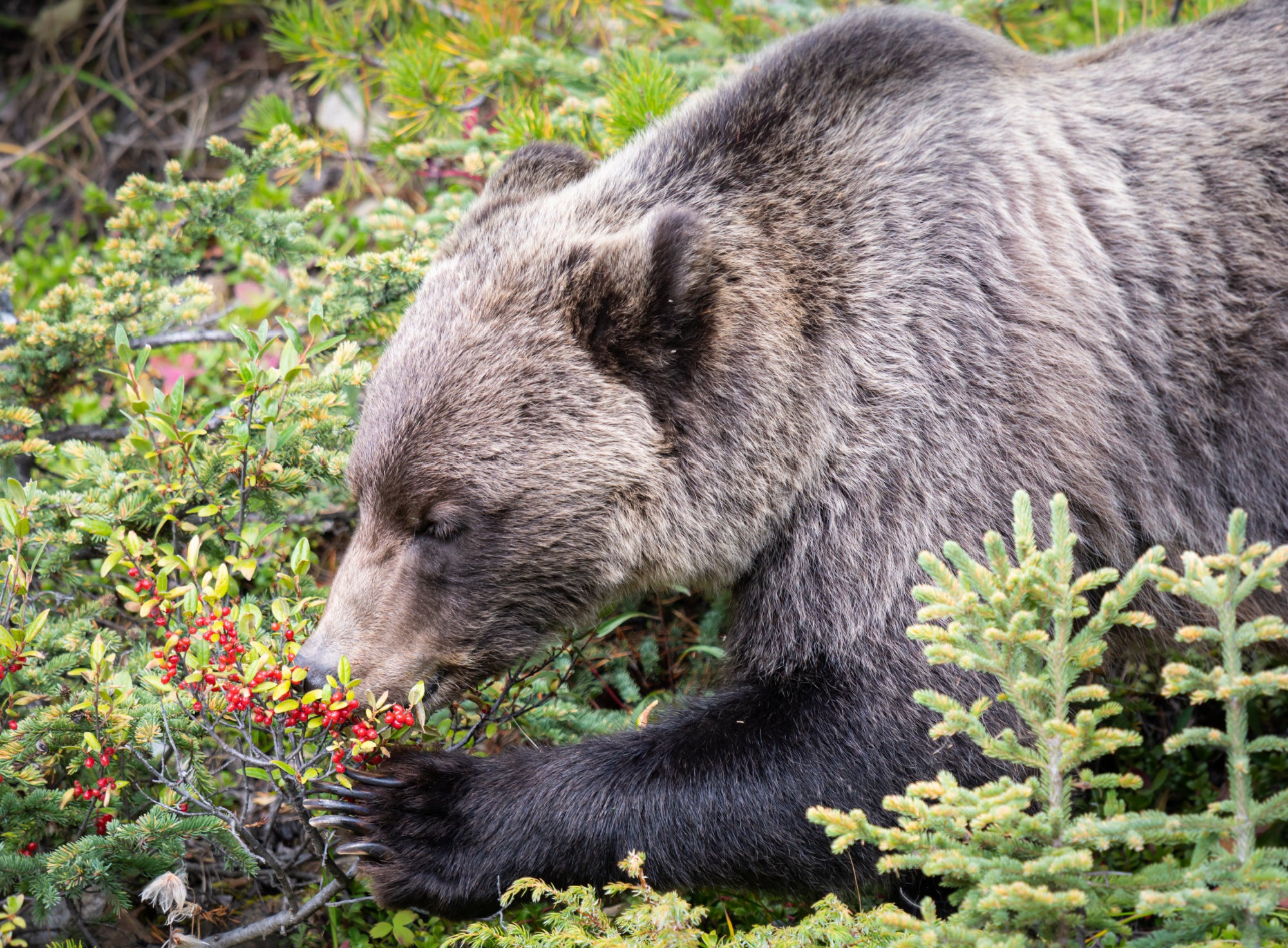
The cliche that bears love berries is absolutely true when it comes to grizzlies. “Once the berries come on, boy, that’s big sugar time,” Jonkel says. He rattles off a list of berries that grizzly bears tend to rely on. They include:
- Bearberries
- Buffaloberries
- Chokecherries
- Cranberries
- Elderberries
- Hawthorn
- Huckleberries
- Mountain ash
- Rosehips
- Serviceberries
- Snowberries
Nuts
Nuts are one of a grizzly bear’s greatest sources of fat and calories, Jonkel says. Whatever bears don’t get from meat, they must get from these small, nutritional powerhouses. They eat a lot of whitebark pine nuts, which are available early in the spring during green-up. Grizzly bears will also raid stores of nuts made by squirrels, gophers, and other rodents, but whitebark pine nuts are the primary ones they seek on their own. (Meanwhile, black bears eat acorns, chestnuts, walnuts, beech nuts, and countless other varieties across their range.)
Forbs, Roots, and Mushrooms
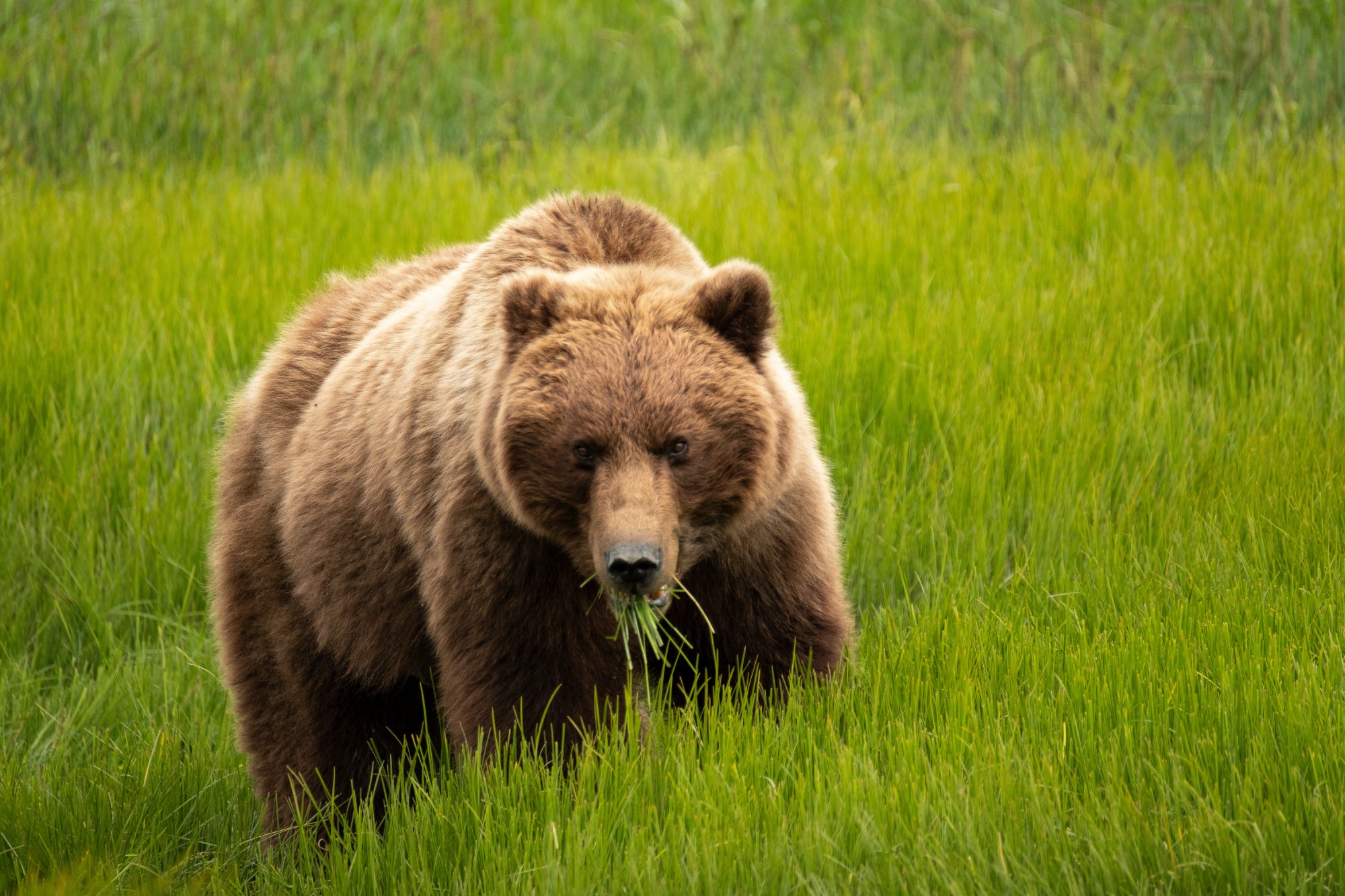
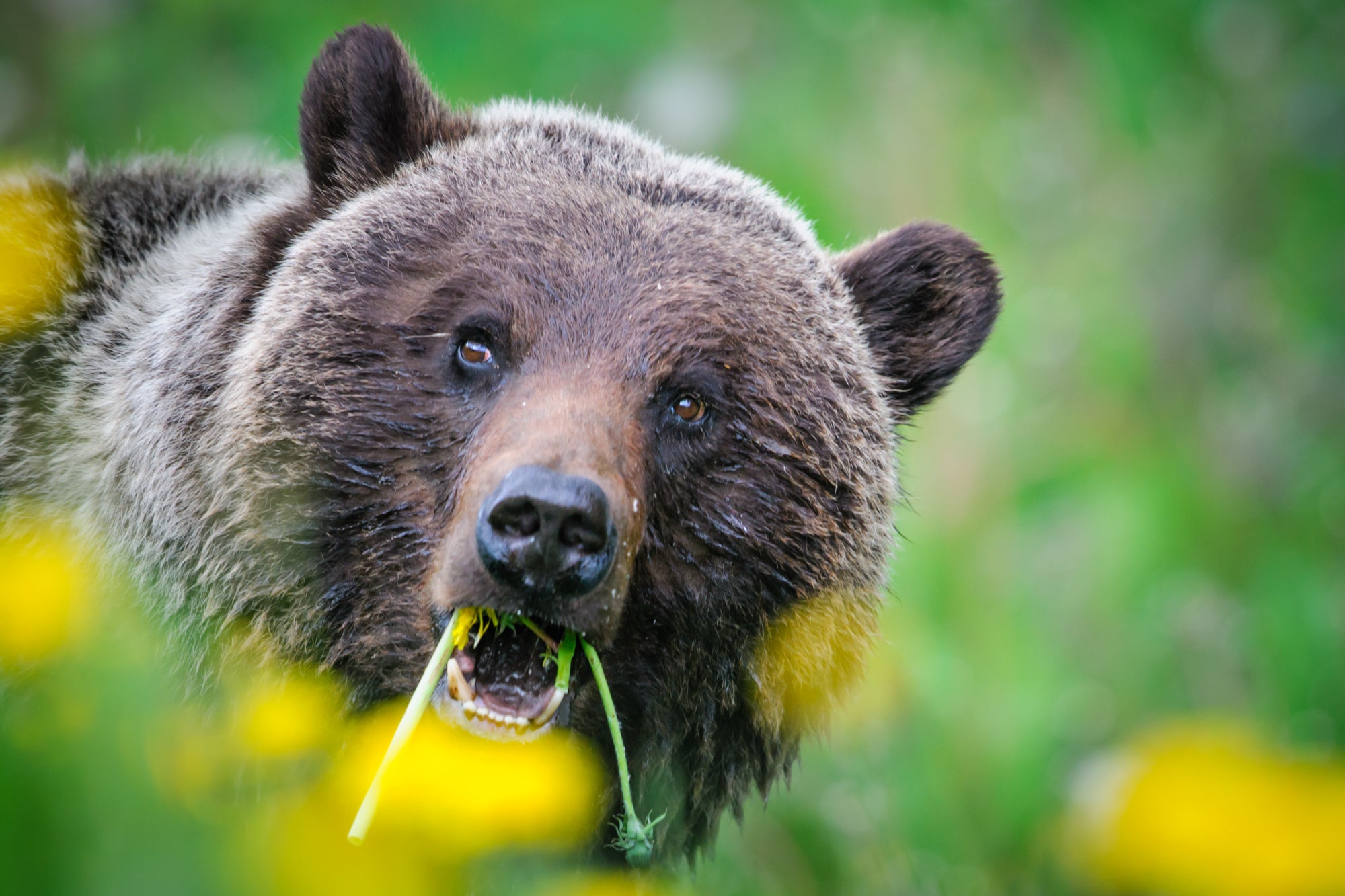
While it’s hard to envision a grizzly bear with a mouth full of salad, they eat a lot of green matter, plant tubers, and mushrooms. That’s especially true during spring green-up when grizzlies emerge from torpor and are low on nutrients, Jonkel says. Their favorite plants and fungi include:
- Balsamroot
- Camas
- Cow parsnip
- Dandelions
- False truffles
- Fireweed
- Glacier lily
- Grasses
- Horsetail
- Morel mushrooms
- Nettles
- Puffball mushrooms
- Quackgrass
- Spring beauty
- Yampa
Meat
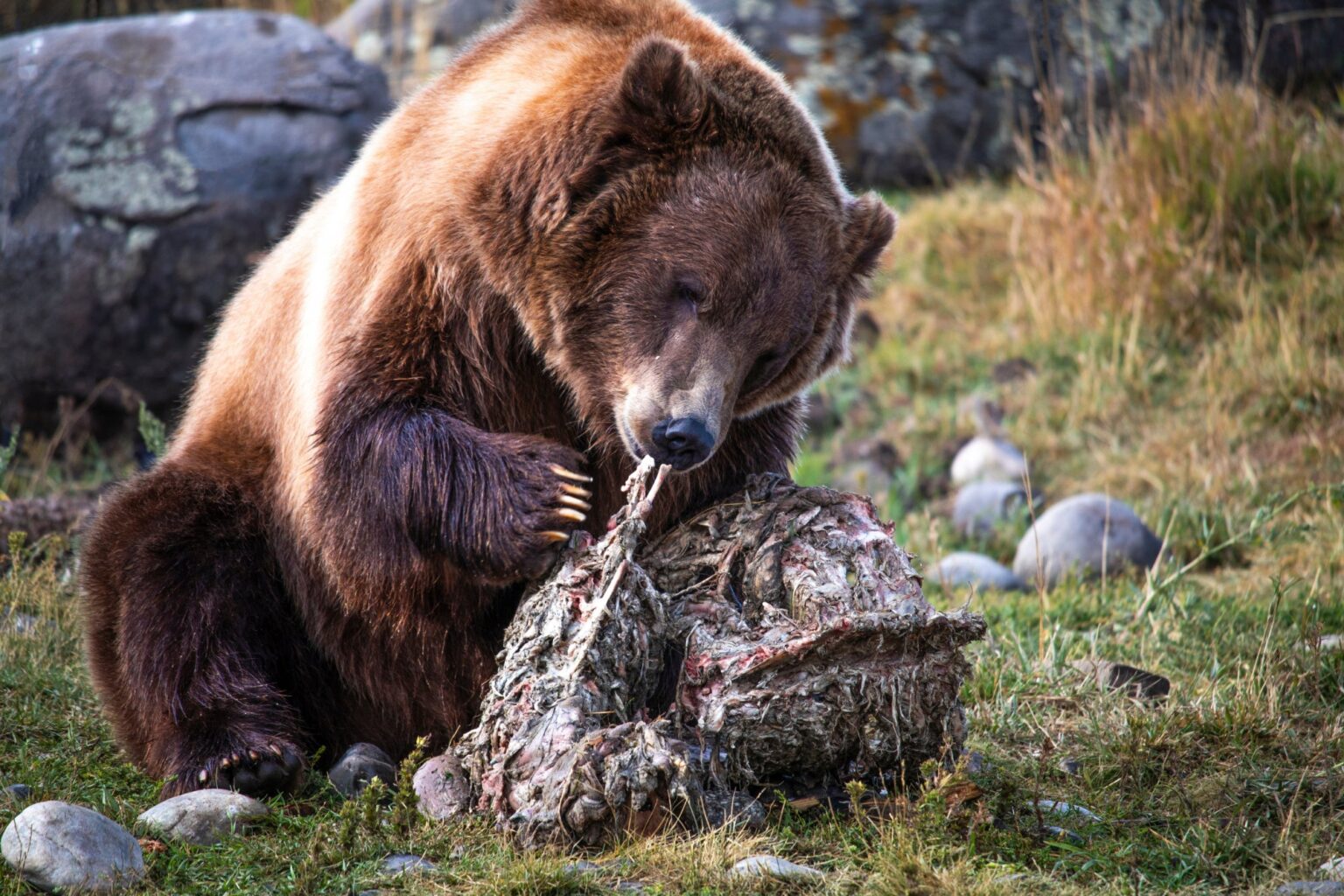
Since grizzly bears are technically scavengers, Joonkel says, they don’t eat much meat that they kill themselves—at least, not as much as they find and steal from other predators.
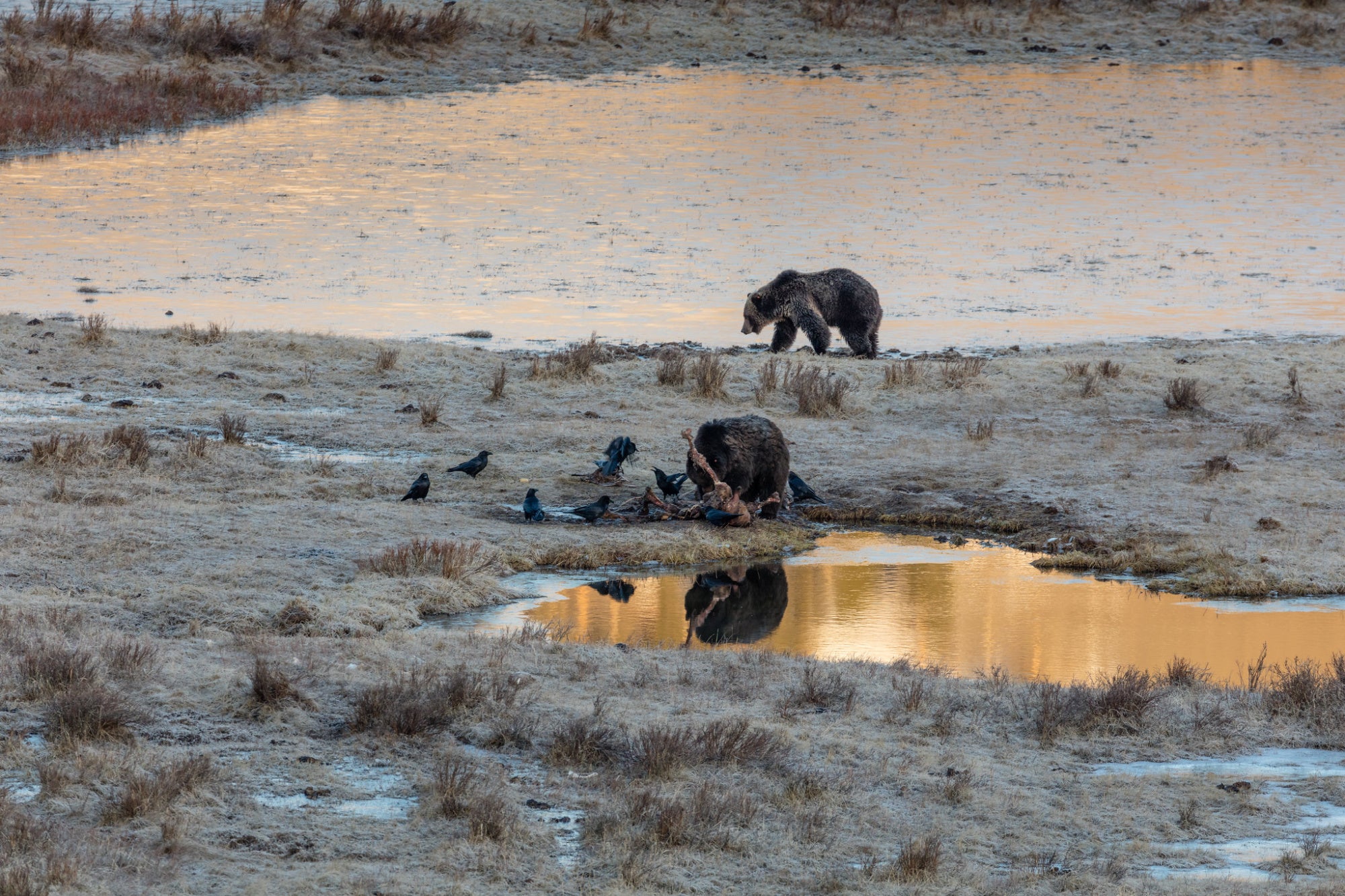
“Bears aren’t very good hunters,” he says. “Sometimes they get lucky. They’ll take advantage of an elk or a deer that was sick or hit by a car or has a broken leg. Once in a while you’ll find a bear that’s a good hunter, but most of the time they’re pretty bad. They scavenge a lot of kills. Lion kills, wolf kills, coyote kills, and hunter kills.”
When they do prey on living animals, usually they kill defenseless calves and fawns, sick animals, or old, malnourished animals. They also love raiding nests for eggs, Jonkel says. Grizzlies most commonly eat:
- Beached whales
- Deer fawns
- Elk calves
- Grouse eggs
- Livestock
- Mice
- Moose calves
- Old, sick, or injured prey species
- Salmon
- Seals
- Turkey eggs
- Turtle eggs
- Waterfowl eggs
Insects
With all the plant matter they eat, grizzly bears also come across lots of insects, which contribute a surprising amount of protein to their diets. Especially in the chilly morning hours of early spring, Jonkel explains, bugs like grasshoppers are sluggish, making them all the easier to catch and eat. A grizzly’s favorite insects include:
- Ants
- Army cutworm moths
- Grasshoppers
- Ladybugs
- Salamanders
- Wasps
- Worms
Human Food and Attractants
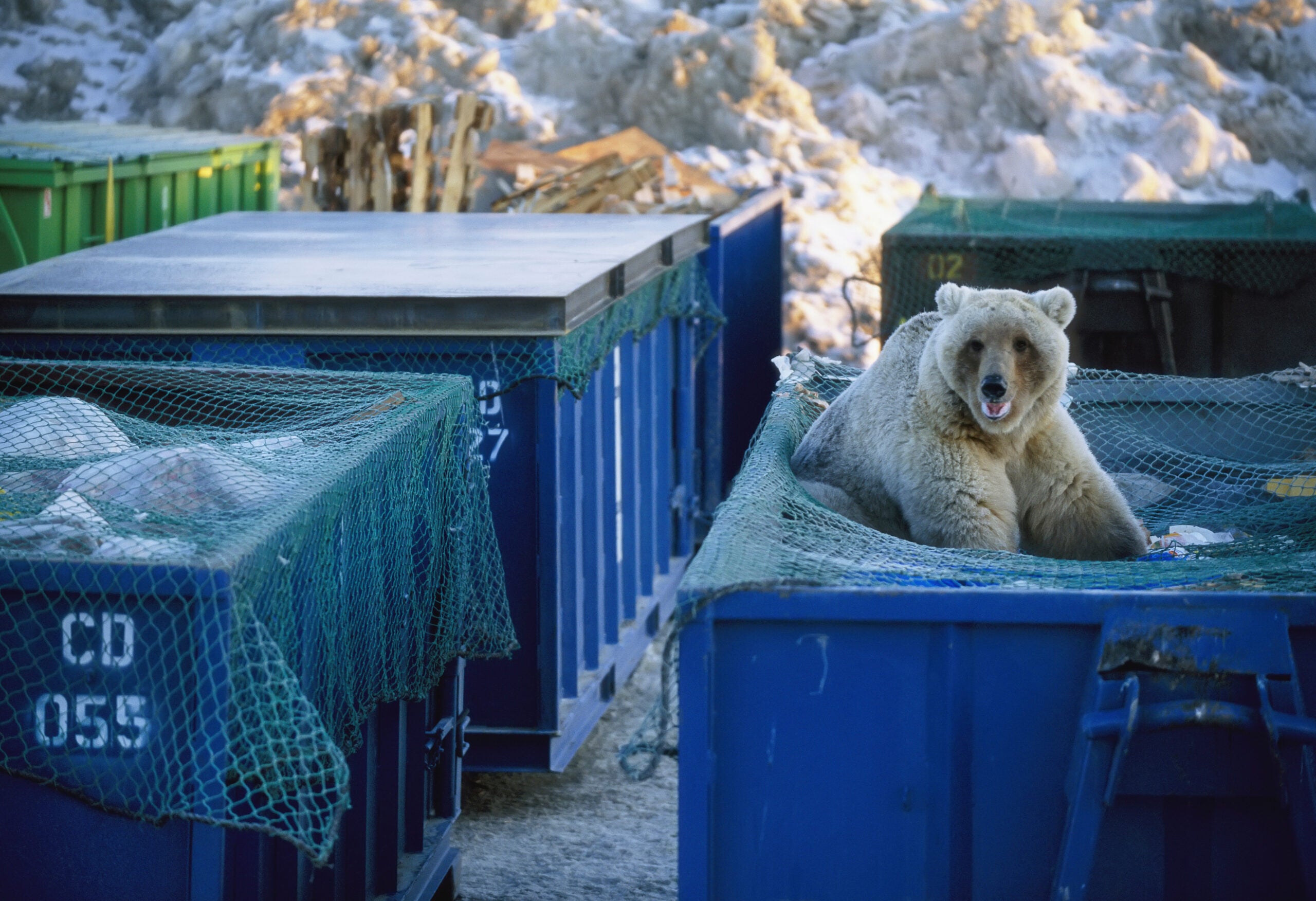
This is a trick category. It’s impossible to list every human food (and inedible items) that a grizzly bear might eat, since they’ve proven themselves capable and willing to eat most anything they find that smells potentially edible. This includes:
- Birdseed
- Compost piles
- Food waste
- Honeybee hives
- Non-food items, like diapers and plastic
- Perishable and non-perishable groceries
- Pet food
- Trash
Top 5 Food Sources for a Grizzly Bear
While both the grizzly bear’s widespread range and the extreme seasonal shifts in those places make it difficult to nail down a concise list of five food sources, Jonkel mentioned five important food categories and how they each serve a grizzly bear’s nutritional needs. They are, in no particular order:
- Berries, for sugar
- Carrion and insects, for protein
- Grasses, for nutrients
- Forbs, for nutrients
- Nuts, for fat
Grizzly Bear Diet FAQ
What is the main prey of a grizzly bear?
A grizzly bear’s primary prey includes newborn ungulates such as deer, elk, caribou, moose; old or injured ungulates; and fish for grizzlies who live near water. They also prey heavily on eggs from different species of migratory and game birds, like turkeys, grouse, and ducks.
What is a grizzly bear afraid of?
Grizzly bears should be afraid of humans, as long as we handle the responsibility of hazing them properly. When grizzly bears become human-conditioned, they lose that fear and start to expect food from homes, garbage containers, and campgrounds. Other than humans and each other, grizzlies don’t have any natural predators. Even if a bear is scared or surprised, it might attack—especially in the case of a sow defending her cubs. Bear attacks are rare, but absolutely possible. If you carry bear spray in bear country, you have a better chance of ensuring that grizzly bears stay afraid of you, and therefore away from you.
Why do grizzly bears eat each other?
Grizzly bears have been documented occasionally scavenging meat from already-dead grizzly carcasses. This is a behavior lots of meat-eating scavengers exhibit. In meager times, when meat is scarce and they need the protein, a grizzly bear is capable of eating another grizzly bear. They also commit infanticide, or kill a competing bear’s cub, as a way to get a sow to go into estrous again so he can breed her.
Final Thoughts on What Grizzly Bears Eat
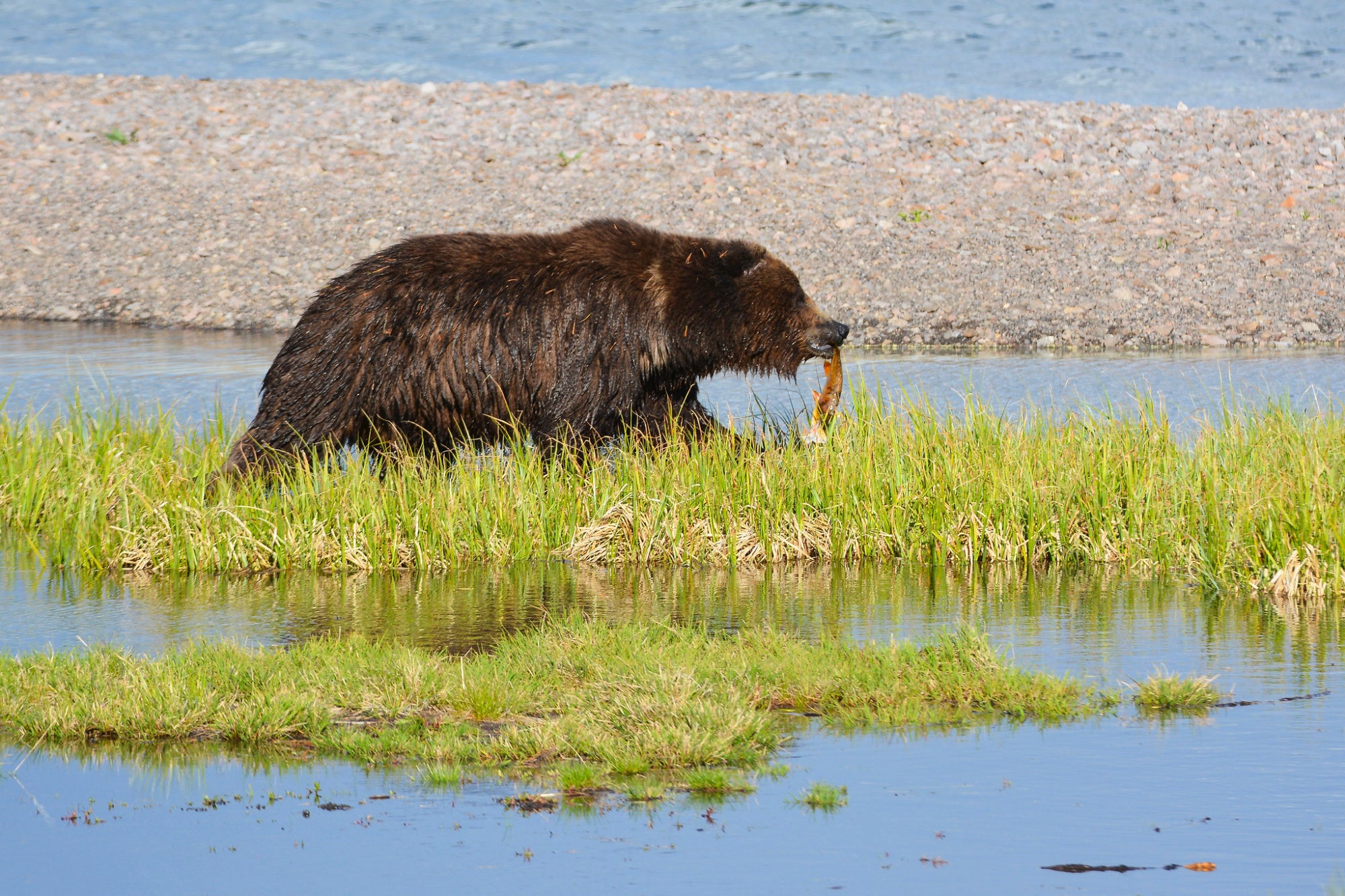
Contrary to popular belief, grizzly bears are hardly the blood-thirsty, hard-hunting predators they’re often made out to be. While they do encounter lots of humans and initiate their fair share of defensive attacks, their diets are heavily composed of forbs, insects, fruits, mushrooms, and nuts. When they do eat meat, it’s often scavenged from a different predator’s kill site, a hunter-harvested carcass, or a prey animal that’s easy for them to take down—domestic or wild.
Read the full article here