





All elk are deer, but not all deer are elk. Wait…what? They’re both signature species of the American West, but the differences between elk and deer are significant. While they’re both members of the family Cervidae (the Latin genus tagged to all species of deer), the differences between the two species are significant enough that it’s pretty easy to know exactly which critter you’re looking at with a little practice. Here’s what to look for when deciphering between elk vs deer.
Size
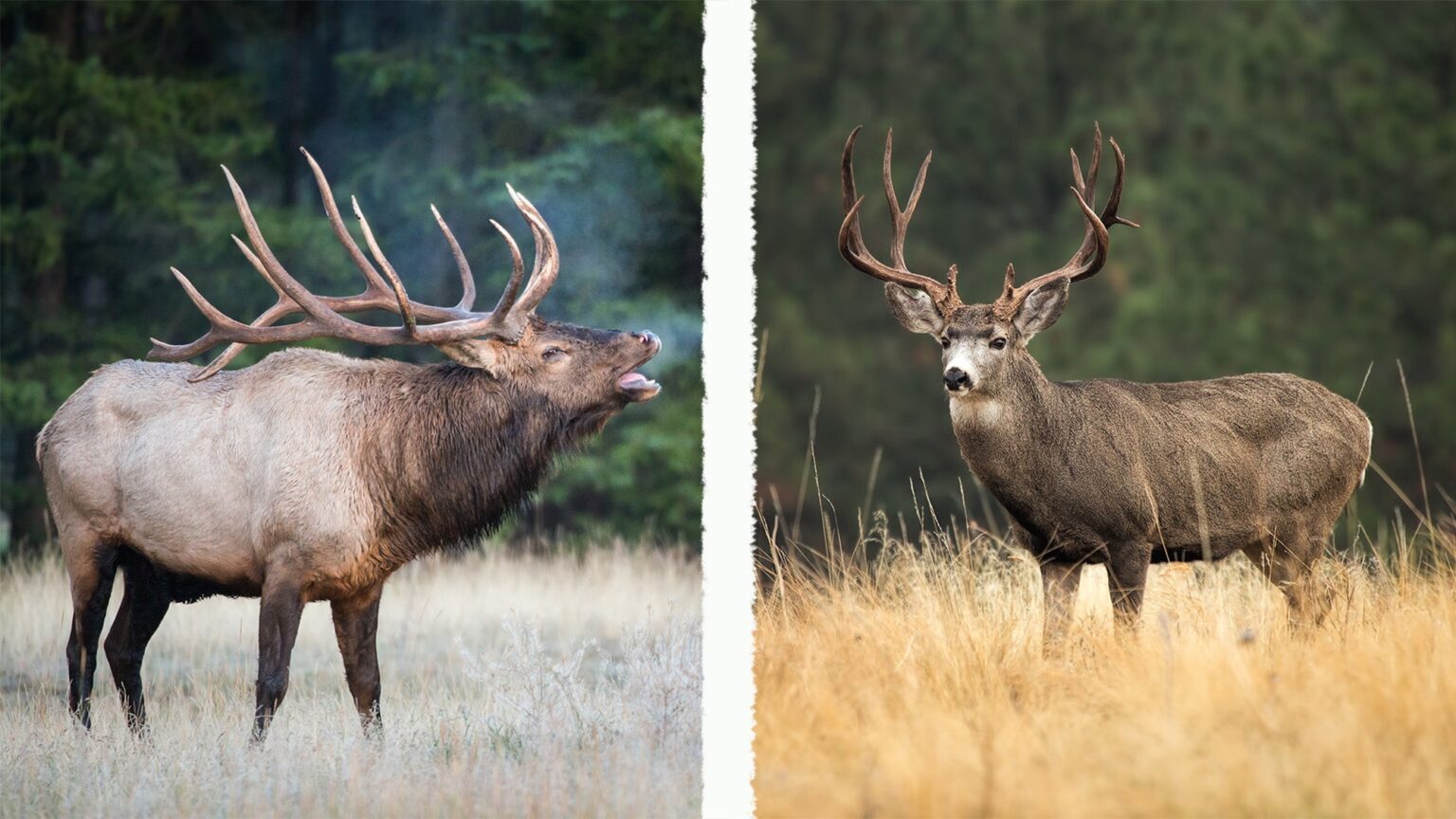
This is the biggest tip-off, as elk are way bigger. The second-largest of the deer species (only moose are bigger), a mature bull elk can weigh as much as 1,000 pounds and stand 5 feet at the shoulder. Even a cow elk can weigh up to 600 pounds and is only slightly shorter than her mate.
In contrast, a really large buck mule deer will tip the scales at 450 pounds and stand a tad over 3 feet at the shoulder. Does will be significantly smaller, standing about 3 feet at the shoulder and a big old girl will weigh only 200 pounds.
Color and Coat
The easiest way to decipher between the color. Elk appear almost two-toned, with a tan or creamy body and flanks, and a distinct mane that extends from the shoulder to the ears. This mane will be dark brown or russet and stand in stark contrast to its body. Elk also have a really tiny tail but a prominent rump patch that looks creamy.
Mule deer are fairly uniform in color, from hindquarters to face. While they’ll appear reddish-brown in their short summer coats, by fall they’ll be more grey brown. Mule deer got their name from their rope-like tail, which has a black tip.
Elk vs Deer Social Behavior
Elk are much more herd-oriented and travel in groups, typically divided by sex during spring and summer. During the fall rutting season, bulls will separate from each other and seek out cows, which remain in harems (groups). The largest bulls in a herd will gather these groups of cows and try to keep them separate from other bulls. The peak of elk breeding is typically in early fall, from September through mid-October. After the rut, elk will gather again in large herds for the winter.
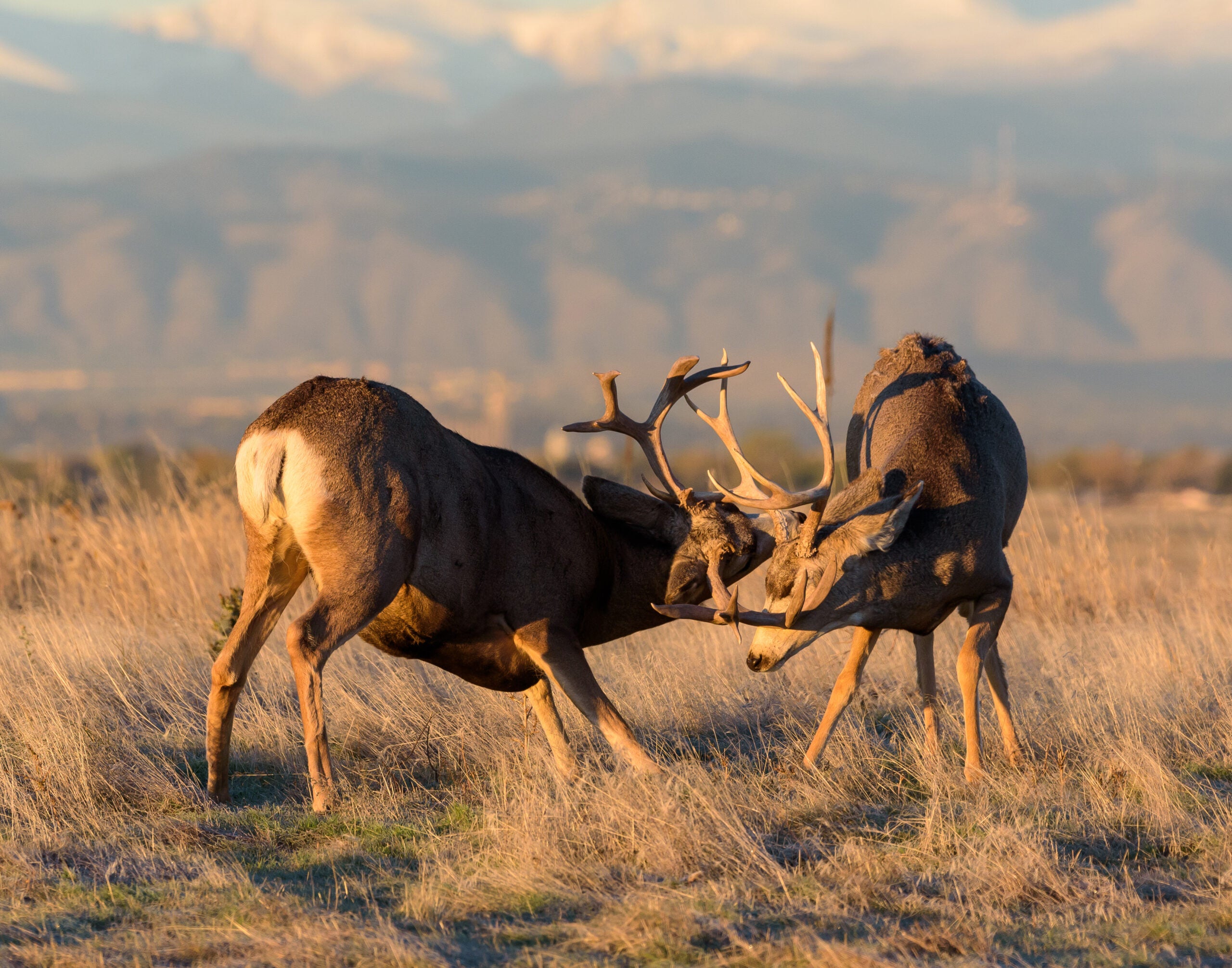
Mule deer are comparatively more solitary. While family groups of does will remain together for much of the year, as will “bachelor” groups of bucks, these gatherings are far smaller than elk herds. When the breeding season rolls around late in fall—late October through late November—bucks will single out a lone doe that is ready to breed and try to keep her away from other bucks. After breeding this doe, the buck will seek out another willing female and continue this behavior throughout the rut. Following the breeding season, deer will gather in larger groups for the winter; these groups are often focused in areas of good food and protection from snow and cold.
Elk vs Deer Antlers
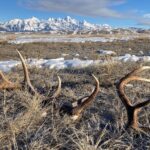
This is another sure tip-off, as the headgear worn by the males of each species look drastically different. While a young bull or buck might only grow a set of spikes their first year, elk antlers will be significantly larger in the following years. Like all members of the deer species, elk will shed their first set of antlers in the winter, then grow a new—and usually larger—set the next summer. Bull elk antlers consist of a long, sweeping main beam that arches over the bull’s back and toward its rump. Tines will grow skyward from this main beam and result in a dramatic-looking, unmistakable set of antlers.
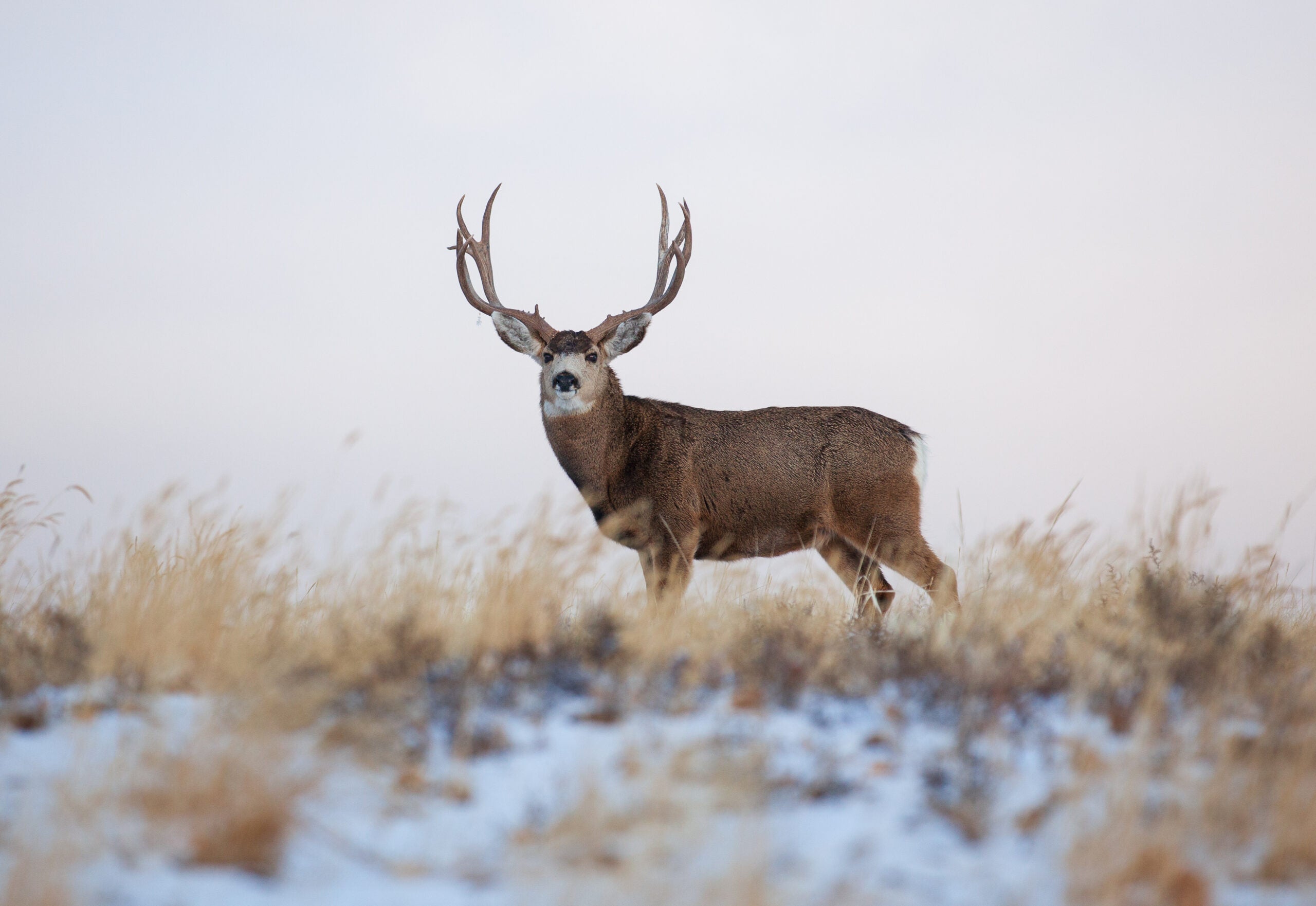
Meanwhile, deer antlers will consist of a pair of main beams that grow upward for a short distance, then project to the sides and front of the buck’s face. Tines will sprout skyward from these main beams and, in the case of mule deer, will typically fork. In short, if you’re looking at antlers that grow over the animal’s back, it’s an elk, and if they grow straight up and forward, it’s a deer.
Elk vs Deer Vocalization
Once again, it’s hard to mistake an elk when it comes to the way animals “talk” to each other. Elk are far more vocal than deer, probably because of their herding tendency, which requires constant communication. The most unmistakable elk sound is the bugle, which bulls do to attract cows during the rut, as well as to warn other bulls that they’re ready to fight if necessary. Depending on conditions, bugles can be heard from a mile or more away. Bugles can also vary quite a bit, too, as bulls will often “chuckle,” which sounds like an abbreviated, staccato bugle. Or, they’ll sometimes “glunk,” which is more of a guttural sound often following a bugle.
Cow elk communicate to other cows, as well as their calves, by mewing or chirping, another elk vocalization that can be heard for a significant distance. And, elk will “bark” when they are alarmed or frightened.
Deer are almost mute in comparison. While does and young deer utter a sheep-like bleat to communicate with each other, this sound is relatively quiet; under most conditions, these sounds are audible from only a short distance. Bucks grunt when they’re pursuing does during the rut, and to warn off challenging bucks. Both does and bucks will issue a brief snort when alarmed or frightened.
Elk vs Deer Food
This is the one area where distinctions are more subtle. Since both elk and deer are “deer” they’ve both evolved to browse on the buds and twigs of young trees and brush. Elk, however, also favor grazing and can be seen eating grass in mountain meadows or parks while deer are less likely to dine in such spots.
Read the full article here