





Any hunter worth their salt knows habitat destruction is bad for deer for a variety of reasons. These include loss of quality food sources, disruption of migratory corridors, and overcrowding on nearby remaining habitat. But a collaborative research effort involving the University of Minnesota, Northern Michigan University, the University of Manitoba, Voyageurs National Park, and the Voyageurs Wolf Project has recently published new evidence that human alterations to forested ecosystems might also tip the scales in favor of one of a whitetail’s biggest predators.
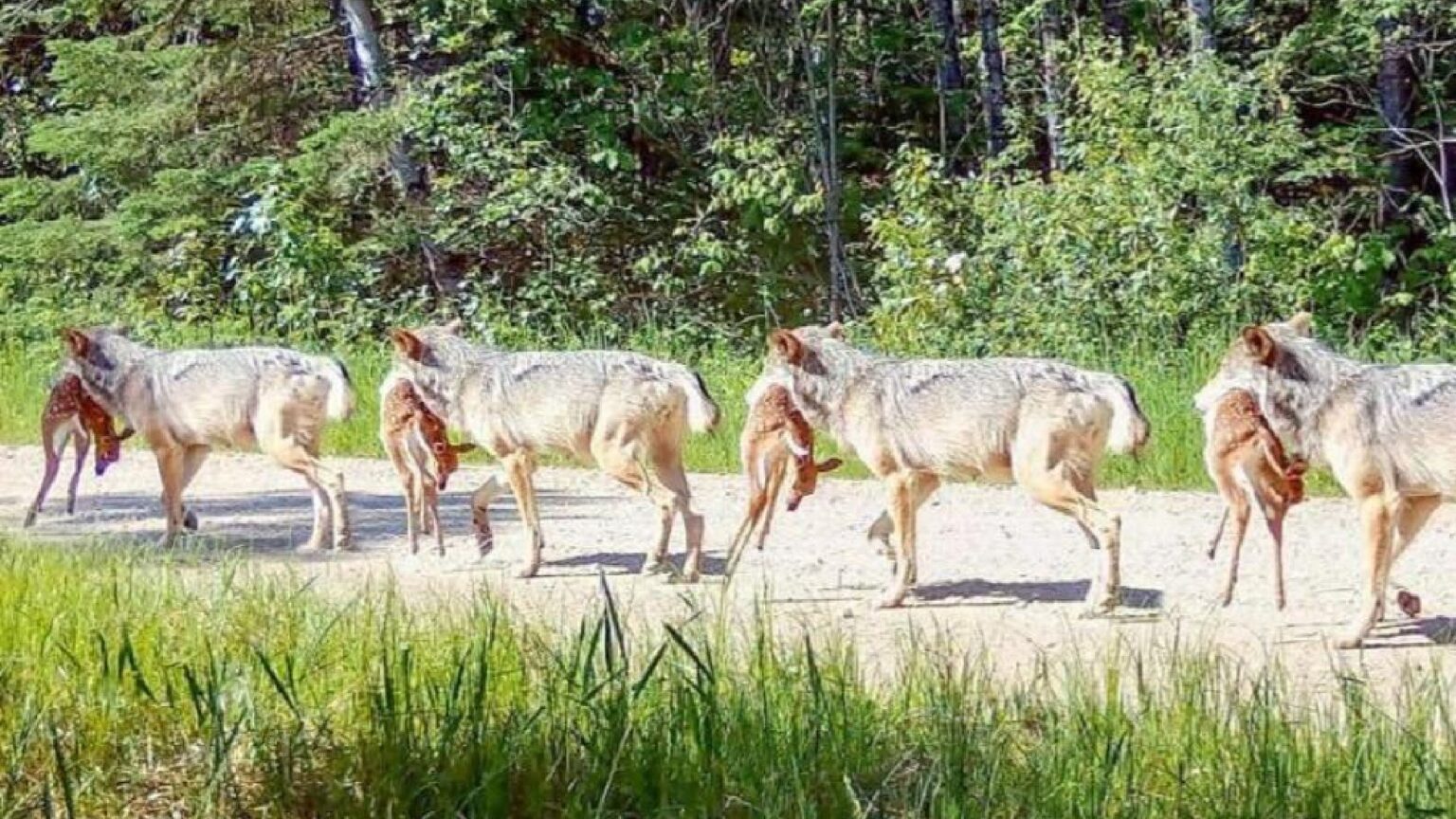
The study, published in the October issue of research journal Ecological Applications, found that wolves prey on more whitetail fawns in areas where humans have impacted historically forested landscapes. Areas with clear-cuts, recently constructed roads and trails, urban sprawl, new human infrastructure, and other anthropogenic changes actually seem to create hotbeds for deer. And in the Upper Midwest where wolf populations are strong, wherever deer go, their canine predators aren’t far behind.
“When we put all of the pieces together, it is pretty clear that the cumulative effects of all major aspects of human activity in the Northwoods—logging, infrastructure development, and road and trail development—have fundamentally changed where and how wolves hunt deer fawns here,” said Sean Johnson-Bice, a University of Manitoba Ph.D. candidate and co-lead author of the study, in a University of Minnesota press release. “The rules of this predator-prey game change when people alter ecosystems, and it’s possible we have created conditions that may have tipped the scales in the predators’ favor.”
Some of these human impacts to landscapes in the Northwoods have actually drawn more deer in. Clear-cuts catalyze thick understory regrowth, which deer love to feed on and bed in. Does will often birth fawns in old clear-cuts with a few years of forest regeneration to protect them. But wolves prey on fawns at shockingly higher rates in these areas compared to elsewhere, the study shows. This could mean the apex predators are learning to expect deer on these human-impacted landscapes.
It’s not just logging that’s having an impact, either. The study points out that wolves gravitate to the forest roads, power line corridors, and UTV trails that cut through our forests. This is because the predators, like humans, like to travel in these straight-line corridors where it’s easier to walk and navigate. The authors also found that wolves kill a higher than expected number of fawns near man-made structures like cabins and barns, since deer are drawn to the available food that’s often found there.
“The premise is really quite simple: human activities change where deer are on the landscape, and wolves go where the deer are,” said co-lead author Thomas Gable, a University of Minnesota postdoctoral researcher and Voyageurs Wolf Project leader.
Read Next: Why Is Deer Hunting in the Northwoods on the Decline? And Will It Ever Rebound?
Northern Minnesota and Isle Royale were the only parts of the Lower 48 with viable wolf populations in the mid-20th century before recovery efforts began in the Rocky Mountains and the Northern Great Lakes region. Minnesota is currently home to 2,700 wolves. Meanwhile, hunters there harvested over 172,000 deer in 2022. But even if they aren’t the primary culprit of what feels like shrinking deer numbers in the Upper Midwest, hunters swear that wolves at least partially contribute to that squeeze.
“Deer and wolves evolved together,” Minnesota hunter, fishing guide, and outdoor writer Stu Osthoff told Outdoor Life contributor Patrick Durkin in 2022. “They’ve always coexisted in northern Minnesota … but when you combine wolves with harsh winters and declining habitat anywhere, deer struggle.”
Read the full article here