


I wiped my blood-smeared phone screen on a clean patch of T-shirt and pressed play. A big-game biologist from South Dakota started explaining the murky process of slicing a whitetail’s neck open at the throat.
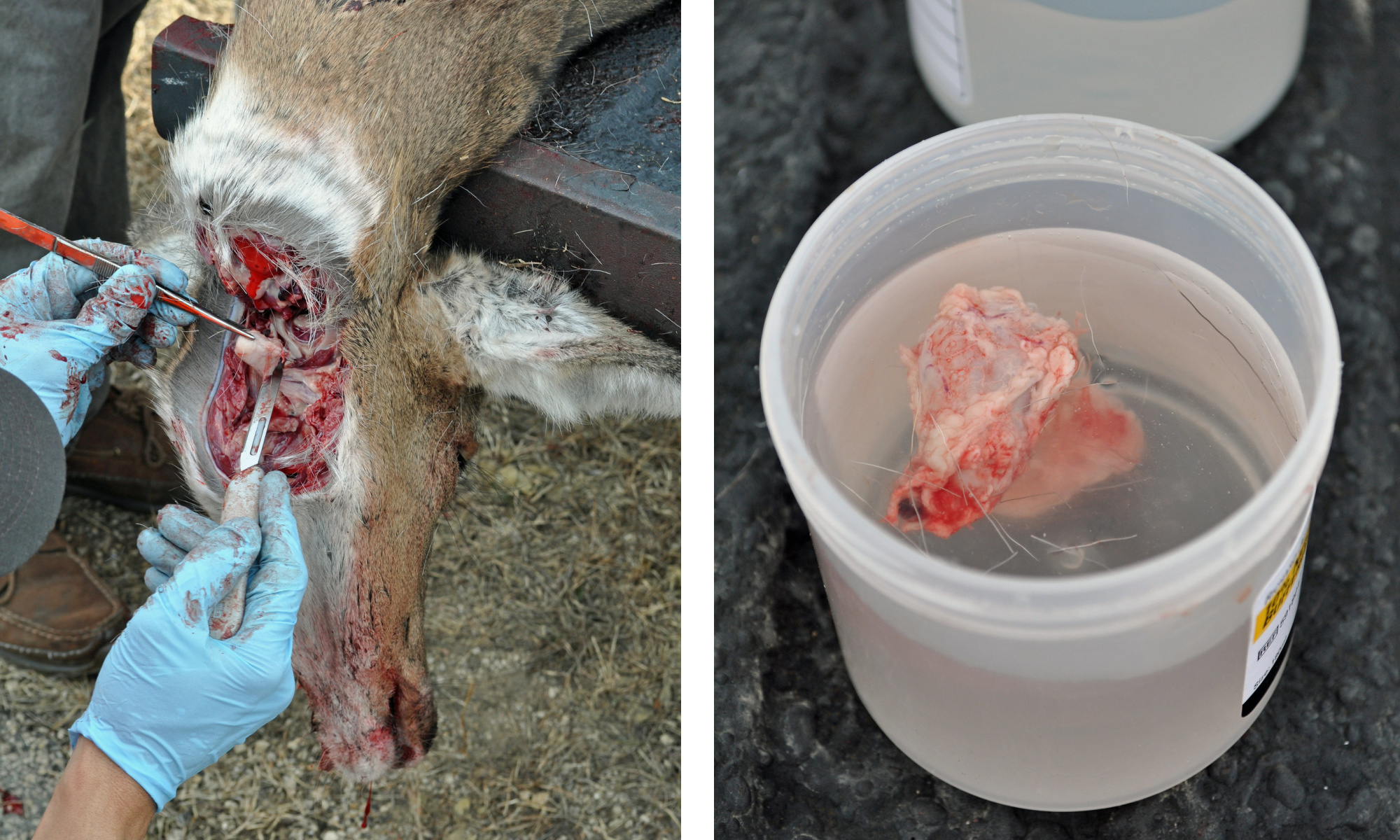
I prodded the doe’s neck and cut into the white throat patch. Once I got through the windpipe, I made an “S” cut, as instructed. The folds of flesh and connective tissue in the video looked foreign compared to what lay in front of me. Performing a sloppy lymphadenectomy with only a YouTube video for guidance proved trickier than anticipated. But I wanted to know: Did this deer that I planned to butcher and eventually eat have chronic wasting disease?
As I dug out what I hoped were the lymph nodes, it occurred to me how few people would understand why I felt the need to dissect the animal I had just killed. Even though the number of hunters who support CWD testing and research seems to be growing (and there are still plenty of hunters who think CWD concerns are overblown at best and a conspiracy at worst), the wider public isn’t in the loop. Odds are that a majority of Americans have either never heard of CWD, or don’t really care.
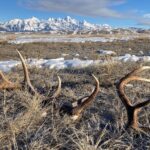
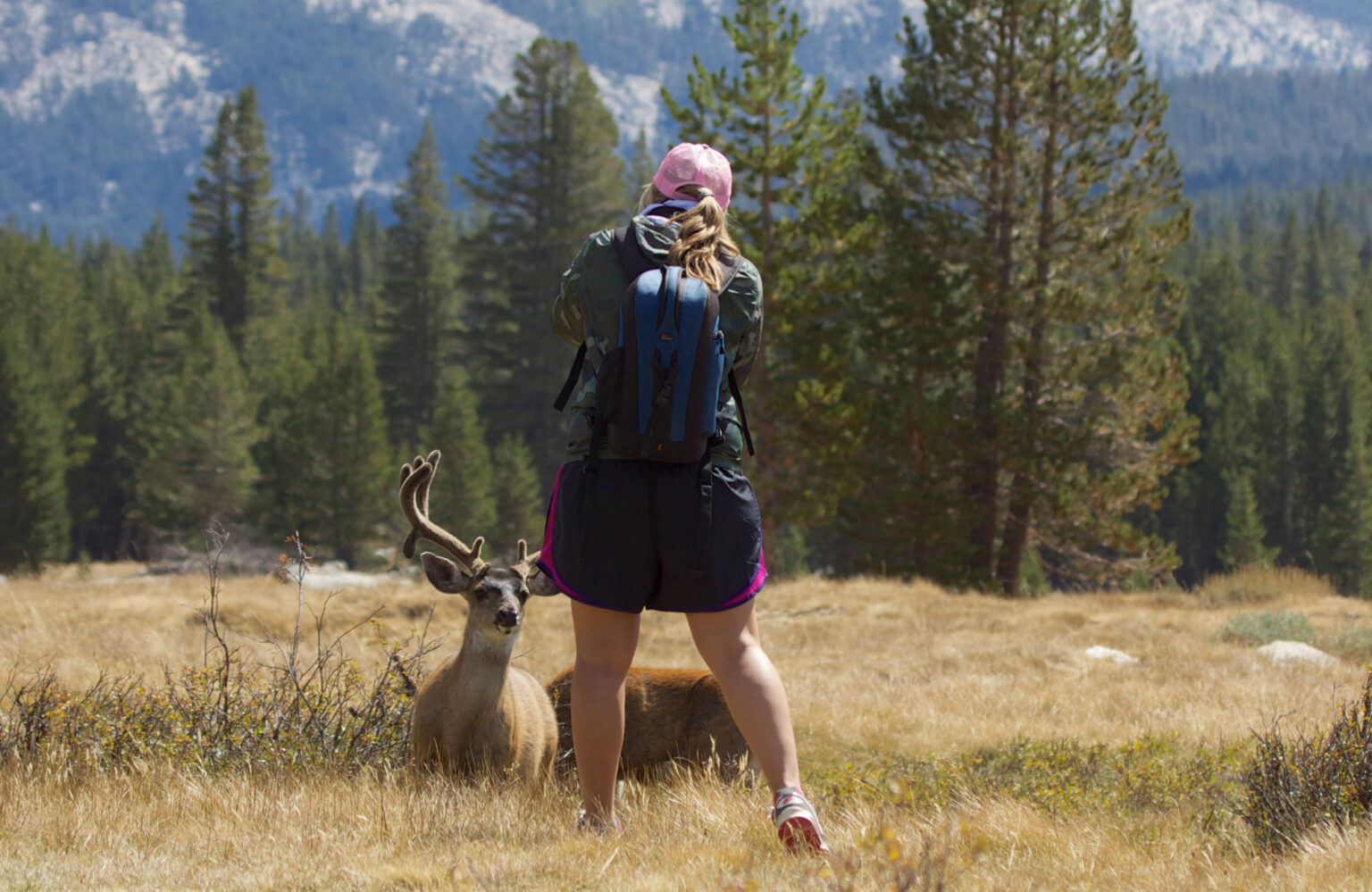
That could change if the lone mule deer that tested positive in Yellowstone National Park in November becomes patient zero in a local outbreak. In that case, Yellowstone might become the continental stage CWD researchers and advocates have been waiting for. America’s first national park has hosted more than 3 million visitors every year since 2006, peaking at 4.86 million visitors in 2021. It is also home to some of the most observed and photographed free-roaming wildlife in the world.
Even if Americans’ recent ballooning interest in outdoor recreation doesn’t directly equate to an understanding of wildlife issues like CWD, a lack of familiarity doesn’t stop some Yellowstone visitors from trying to aid what they perceive as imperiled wildlife. Some even take it too far, like attempting to “rescue” a bison calf or calling for the National Park Service to perform interventional surgery on a wolf missing its lower jaw.
That’s because Americans (whether they hunt or not) are overwhelmingly conscious of wildlife. A majority of Americans want their government to act that way, too. A survey conducted by the Pew Research Center found that 62 percent of 11,000 respondents think the federal government does too little to protect animals and their habitats. During peak summer visitation, Yellowstone is home to between 10,000 and 20,000 elk and 1,800 to 1,900 mule deer, which means tourists are likely to see both. So if a car full of Yellowstone visitors drives by a mule deer in the late stages of CWD that’s drooling, starving, and stumbling around on Department of the Interior land, they might just try to do something about it.
CWD in National Parks
Yellowstone is not the first national park where CWD has shown up, YNP public affairs specialist Linda Veress tells Outdoor Life. Cervids have tested positive in Devil’s Tower National Monument, Grand Teton National Park, Rocky Mountain National Park, Wind Cave National Park, Amistad National Recreation Area, and Buffalo National River. (She noted that many other NPS units are within a short distance of known cases.)
“Since 2008, the proportion of female elk infected with CWD in [Rocky Mountain National Park] has fluctuated between 6 [and] 13 percent,” Veress writes in an email, noting that more information is available at the RMNP website. “CWD was also found to be the leading cause of death among adult females [in RMNP]. This research is ongoing … We have also documented severe disease burden in elk at Wind Cave National Park [in South Dakota].”
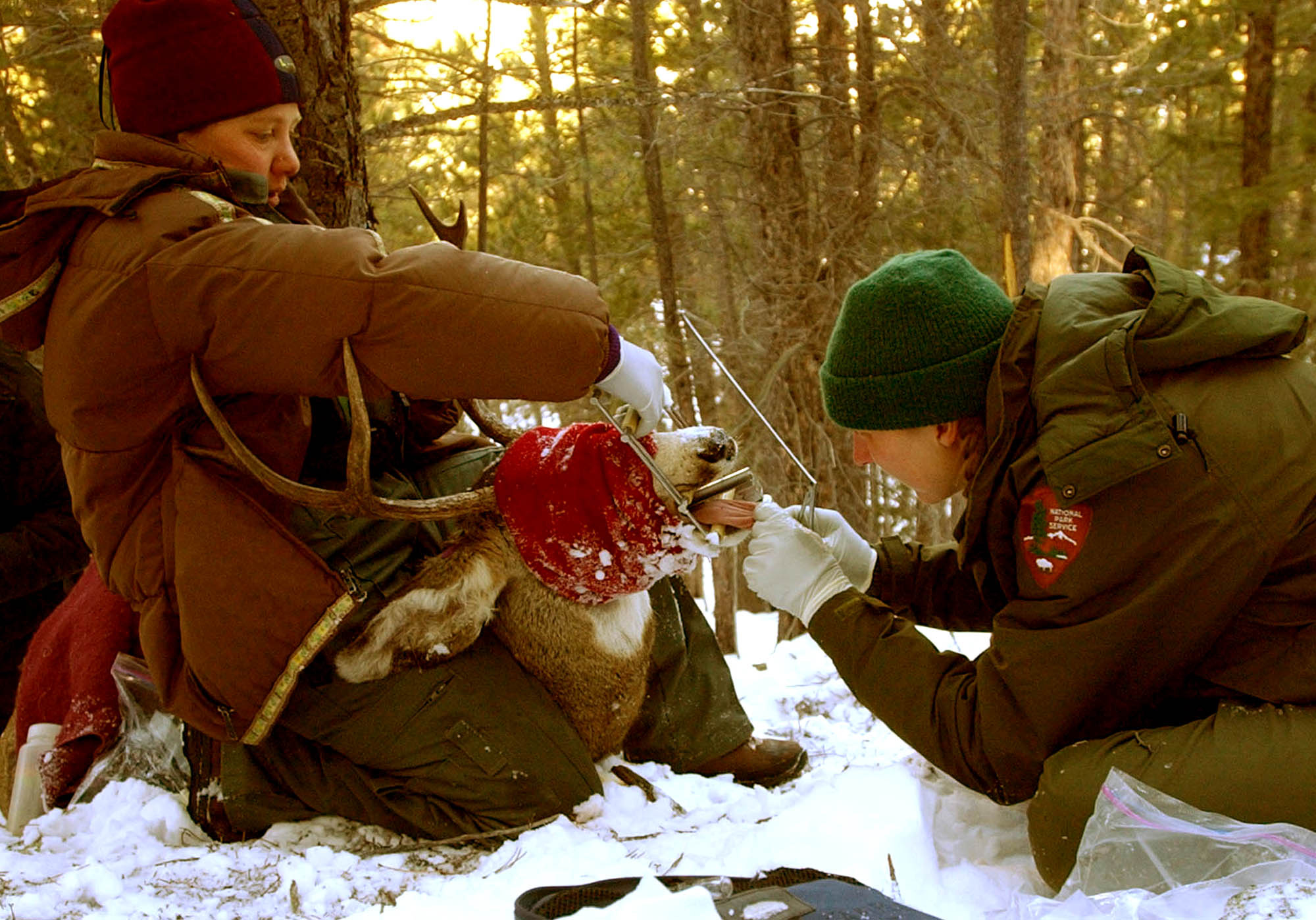
While CWD causes rapid decline in some elk herds on NPS lands in Colorado and Wyoming, it has a less serious effect on others. As Veress points out, these variations depend on other factors like reproductive success and recruitment, as well as the impacts of predators and humans. Because CWD doesn’t take a one-size-fits-all toll on cervids, it can’t have a one-size-fits-all solution — which is why arming individual state fish and game agencies with funding for disease mitigation efforts is so important.
Funding the Fight
A year has come and gone since Congress passed the CWD Research and Management Act, a funding bill that made $70 million available to state and tribal wildlife agencies for, unsurprisingly, CWD research and management. This was a major win for big game biologists, especially those in the now-32 states that host the disease. A study conducted by employees from the Kentucky and Michigan wildlife agencies found that CWD host states spent an average of $773,000 a year on CWD surveillance, testing, and research. (That average dropped to $503,000 when non-host states were included.) The range of expenditures per state was wide: Oklahoma spent less than $8,000 while just over the border, Texas spent over $2 million. But the act is also written to sunset in 2028, and it’s unclear if the funding will be renewed or vanish.
Wildlife Management Institute director of special programs and CWD Alliance founder Matt Dunfee is hopeful that the public might become more engaged with CWD — and more likely to support future funding for mitigation efforts — if they witness the disease’s impacts in a public place like Yellowstone. But such a strategy will require visitors to engage with what they see, rather than fear it.
“Rather than an apocalyptic vision, we can make a constructive, cohesive vision that really pulls on the fact that ownership of wildlife resources in North America is unique,” Dunfee says. “[Wildlife is] owned by every United States resident visiting the park. It’s up to them to support state and federal fish and wildlife management agencies in doing what needs to be done to manage the disease.”
Currently, NPS staffers are revisiting their 2021 Chronic Wasting Disease Surveillance Plan and will complete an update in 2024, according to Veress. As for the visitor experience, she says nothing has changed with the discovery of CWD in Yellowstone, and that “if visitors see any sick or dead wildlife, they should notify an NPS employee as soon as possible and avoid contact with the animal.”
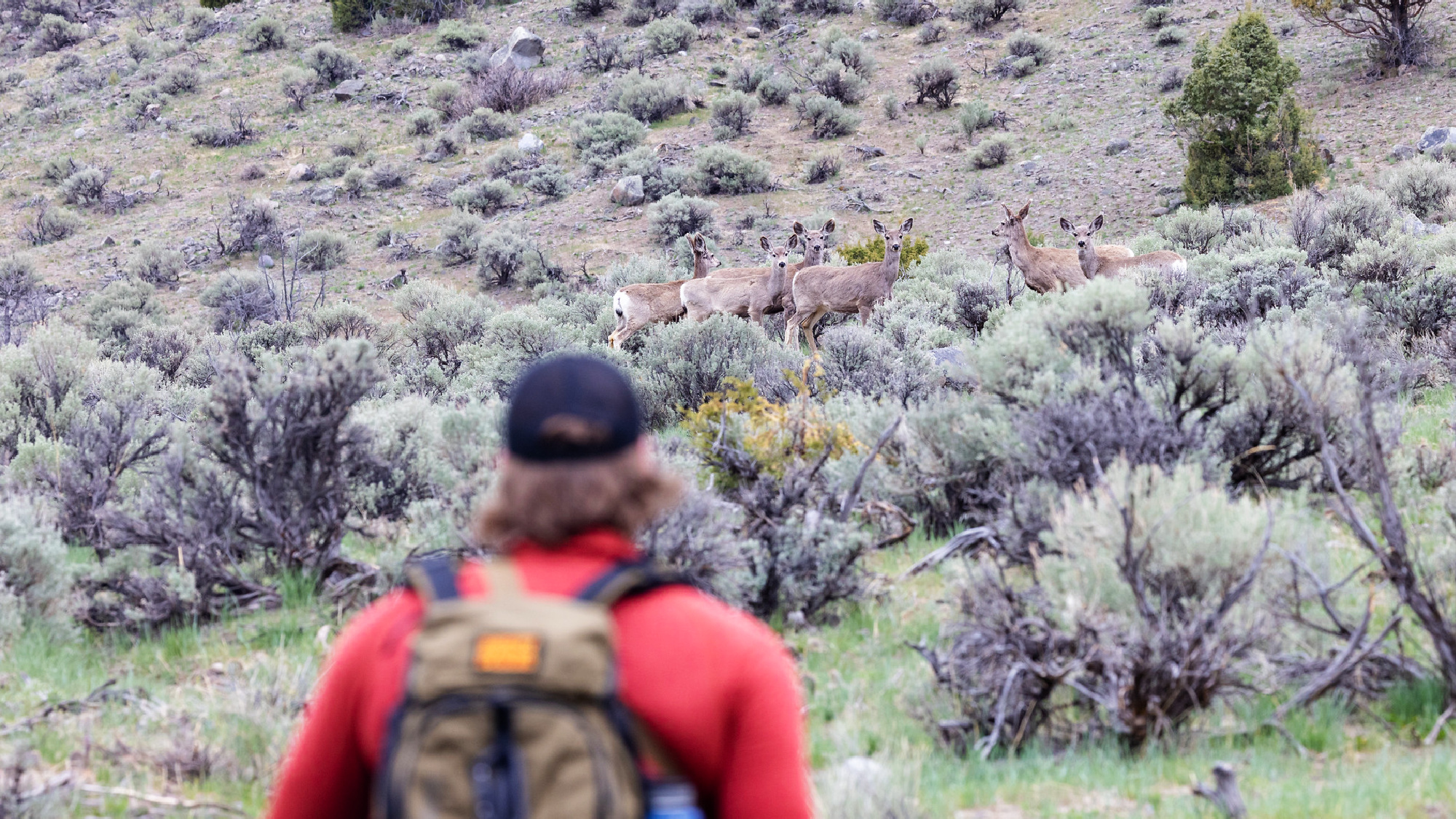
There’s the potential upside to CWD landing in Yellowstone: millions more eyes looking for sick deer and elk, witnessing CWD’s impact on these species, and recognizing just how real and serious CWD actually is. Many sick cervids don’t show symptoms for the first year or two of infection, which makes the disease seem like a smaller deal than it actually is. But when symptoms do eventually show up, they take a serious toll on the animal’s outward appearance. Seeing is believing.
The Deadly CWD Lull
Arizona Game and Fish Department wildlife science coordinator Jim Heffelfinger would never say more CWD anywhere is a good thing. But if CWD becomes a visible issue in Yellowstone, the best case scenario is that visitors witness its gruesome impacts, become interested, vocalize support for crucial funding initiatives, and become part of the solution.
“The research we do for CWD is all dependent on having support from Congress to fund those programs,” Heffelfinger tells Outdoor Life. “There is some money flowing, but that money is contingent on all the stakeholders and representatives saying ‘Hey, this is important.’ And without public awareness and support of CWD as a serious disease that we need to research and actively manage right now, you won’t see that funding. The people who hold the pursestrings won’t be very interested in putting money into those efforts because they’re not hearing about it from the public.”
This isn’t a new issue, Heffelfinger says. Public interest in CWD has been a roller coaster for decades, peaking every time a batch of states become new hosts and bottoming out in the years between those discoveries. Funding seems to follow a similar trend.
“Back in the 90s, when CWD started spreading and people started getting excited about it, there was a flurry of money that went into research to learn more about it,” Heffelfinger says. “It was all the rage. Everyone was talking about CWD. Agencies were starting to hire veterinarians to have on staff. Then those vets were talking about CWD a lot. But I think people got burned out on hearing about it. It was still spreading, but it wasn’t spreading fast. That big flurry of initial research was done, and agencies kind of fell into ‘Well, I’m not sure what we can do about it.’”
Then a “lull in chatter” happened, Heffelfinger says.
“People weren’t talking about it as much at national meetings,” he says. “There probably weren’t as many significant papers coming out, and that’s because there wasn’t much research going on.”
Something bad happened roughly five years into that quiet period: CWD started spreading faster. Between 2010 and 2015, 10 states — roughly a third of all current host states — documented their first captive case, their first free-ranging case, or both. The lull in chatter was over.
“We started learning a lot more about prion diseases,” Heffelfinger says. “We started getting some early modeling efforts in Wyoming that showed a population-level effect that introduced a drain on the population … Colorado started looking back on their data and finding that in some of the hunt units where they increased harvest, prevalence of CWD went down. In place where they backed off, got real conservative with harvest, let deer populations get dense, let buck age structure get older, let buck-to-doe ratios get closer to one-to-one, those prevalence rates went up.”
In other words, CWD rates declined in hunt units where hunters were allowed to shoot more deer. This was an awkward and unpopular conclusion, one that only further drove an already-burgeoning distrust in CWD science and specialists. Heffelfinger chalks up modern CWD skepticism to angry Wisconsin whitetail hunters who became vocal in the early 2000s, shortly after Wisconsin’s first positive test in 2002. The Wisconsin Department of Natural Resources proposed aggressive culling measures to limit the disease, but backed off in response to the hunter outcry.
Doug Duren knows all about those hunters. He lives, farms, and hunts among them in southwestern Wisconsin, where some counties deal with almost 30 percent CWD prevalence rates — some of the nation’s highest — 21 years after the first case was discovered in the state.
“I don’t get the sense the general public knows very much nor cares very much about CWD. I also don’t get the sense the general hunting public knows very much about it,” Duren says. “It’s really a resistance to science. Why is this so hard for people to wrap their heads around? It’s a threat to the immediate hunting experience if we’re going to ‘do something’ about chronic wasting disease. That’s a big part of the problem.”
In some strange version of the future, this could be where non-hunting Yellowstone visitors might come into play. If CWD-skeptical hunters have failed to step up to the plate and support data-driven management decisions because they don’t want to stray from status quo, maybe the non-hunting public can take a swing. After all, as Duren asks, isn’t CWD sort of an animal welfare issue, too?
“Why aren’t animal welfare organizations talking about CWD? Well, charismatic megafauna, deer are not,” Duren says, referring to the popularity of wolves and bears among animal-rights activists. “But who wants to drive through a landscape that has a bunch of sick animals on it?”
Of course, for CWD management to become an animal welfare issue would require that animal welfare organizations learn to stomach animal death as an ethical solution, which many seem incapable of doing. But therein lies the very reason why hunters should want to engage with their agencies and wildlife biologists on this issue; because we’re the best equipped community to do so.
The Misinformation Disease
Dunfee, the founder of the CWD Alliance, says that CWD skepticism seems to be shrinking.
“I don’t think there are many hunters anymore who think these thirty-two states and five Canadian provinces are just making this stuff up,” he says.
Despite this progress, a loud minority still perpetuates conspiratorial rhetoric about the government introducing the disease to captive deer pens and inventing the disease to get more funding. But Yellowstone visitors from coastal cities and suburbs aren’t likely to become aware of these fallacies, unless they start visiting online hunting forums or often-private Facebook groups.
What the public does read is Newsweek, Forbes, and the New York Post. These three outlets alone get a combined 336 million pageviews a month. And in November, they all published headlines about “zombie deer” being discovered in Yellowstone.
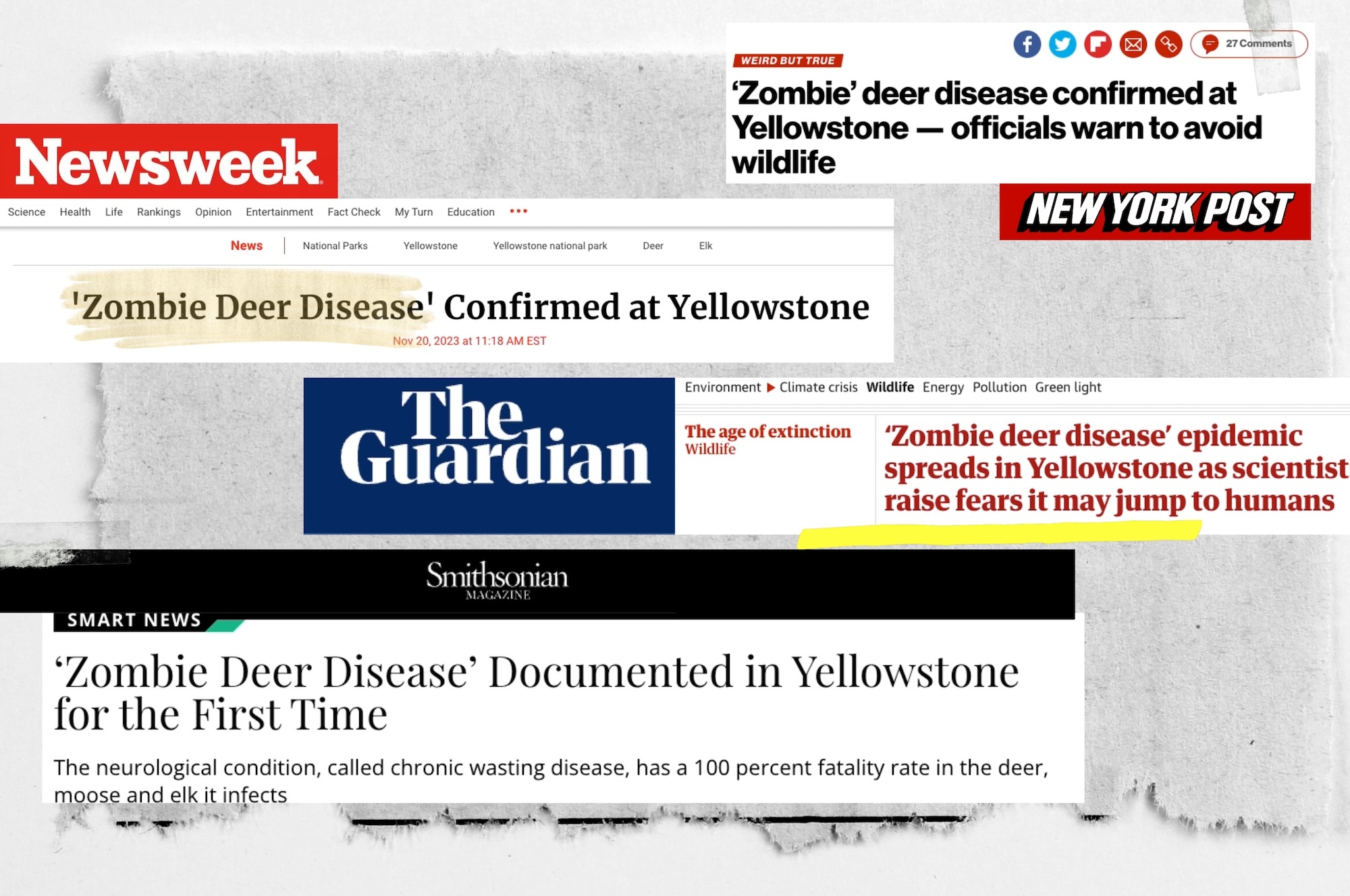
Calling CWD the “zombie deer disease” is a ridiculous and problematic mischaracterization, as OL editor-in-chief Alex Robinson has previously explained. It’s also a great way to make sure the Yellowstone discovery worsens the CWD misinformation spread rather than helping address it. By hyperbolizing the disease, the phrase pokes fun. It turns a very real, very deadly condition into a scene from a bad horror flick. If only CWD were that fictitious.
Read Next: Here’s What Top Chronic Wasting Disease Researchers Can’t Say on the Record
But it’s not. And according to all three CWD experts interviewed in this article, the discovery of CWD in Yellowstone is a sign that the disease has actually been in the park for some time (though how long is unclear). CWD’s slow-acting nature means it can infect a herd without sick animals becoming symptomatic right away. That delay is one of CWD’s most dangerous assets. Managing a disease like that requires foresight and proactive measures. But our response has been largely reactive, always a few steps behind and a few dollars short.
As for my doe, CWD was not detected in the lymph nodes I sent in for testing. That was good news. But the clock is ticking for cervids in Wyoming and elsewhere, and one day I’ll probably send in a sample that comes back positive. That’s why the CWD chatter can’t stop. In fact, it probably needs to go mainstream. America’s most iconic national park could be the perfect place to start.
Read the full article here