




Backcountry Hunters and Anglers, the upstart conservation organization that coined the “Public Land Owner” movement, recruits members at trailheads and pint nights, and made caul fat cool, has a new leader.
Vermonter Patrick Berry last month was named chief executive officer of BHA. He succeeds Land Tawney, whose 10-year tenure as CEO was marked by rapid growth, increased relevancy, and a reputation for disrupting the gentility of the conservation establishment.
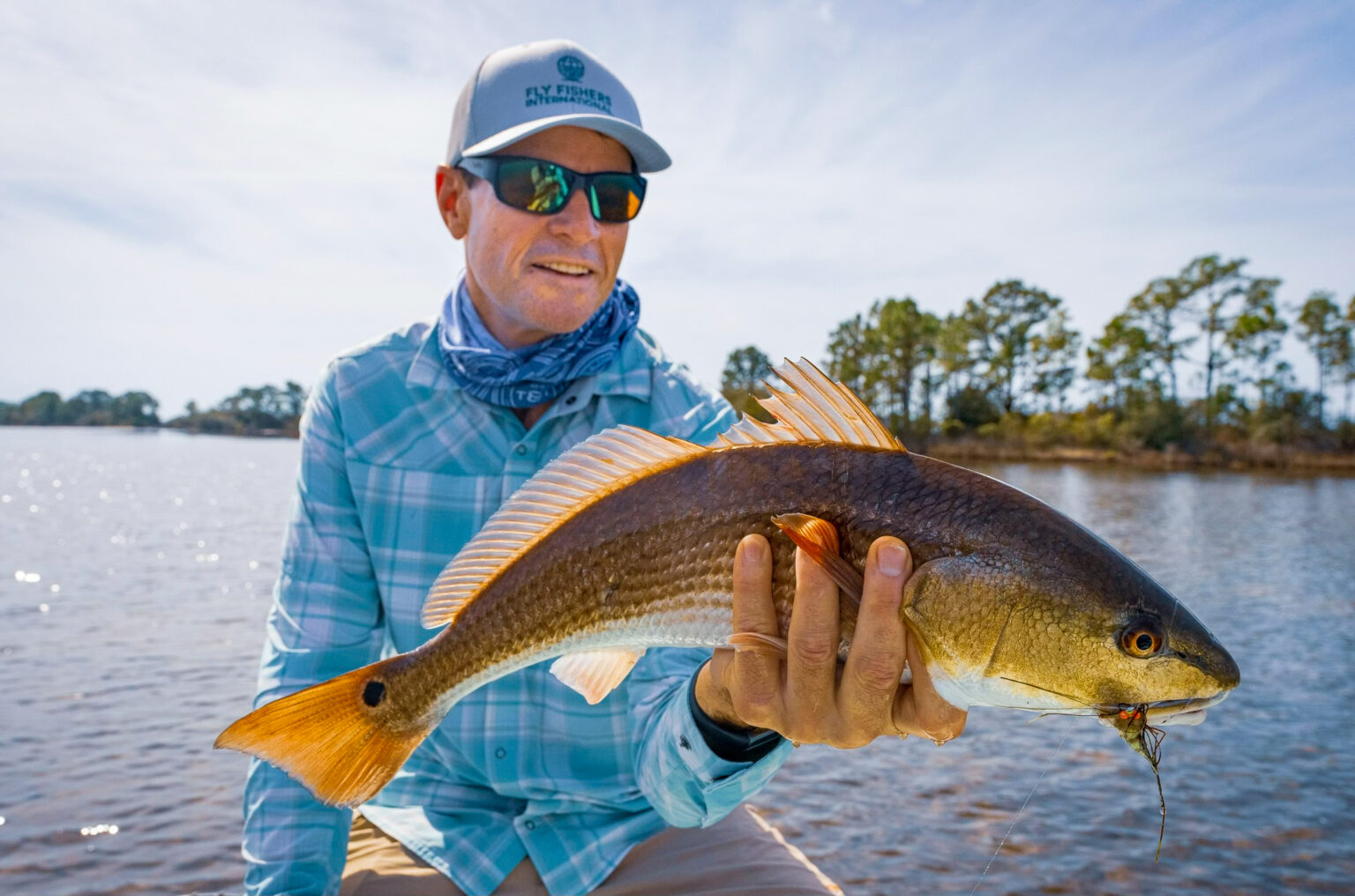
Before joining BHA, Berry served as president and CEO of Fly Fishers International, focusing on strategic planning and conservation advocacy. He is the former director of the Vermont Fish and Wildlife Department and has a deep background in institutional giving and environmental policy. Berry is no stranger to BHA’s headquarters in Missoula, Montana. He spent nearly a decade in the state working as a graduate student, trout-fishing guide, commercial fly tyer, and artist. While Berry will keep an office in Missoula, he will continue to reside in Middlebury, Vermont.
Berry joins BHA at a transitional time in the organization’s life. As it enters its third decade, BHA is without many top-level executives. John Gale, BHA’s vice president of policy and government relations, accepted a senior executive service position with the BLM. Katie McKalip, long the voice of BHA in her role as vice president for external affairs and communications, took a similar position with Ruffed Grouse Society in October. And Tim Brass, BHA’s state policy director and the organization’s longest-tenured staff member, left early last year for the Colorado Department of Natural Resources. Tawney left BHA in July. Senior volunteers said that he had lost confidence of the board.
Meanwhile, the organization has struggled to manage meteoric growth. The non-profit that found early success by being small, scrappy, and irreverent grew fast during the pandemic, adding chapters, leaders, and whole new programs to appeal to veterans, college students, and late-onset hunters. BHA has more than 350,000 members and supporters and chapters in 48 states, Washington, D.C., two Canadian provinces, and one Canadian territory. BHA’s membership trends younger, hipper, and more physically active than that of many conservation groups. Maybe because BHA’s advocacy for wilderness protections has been considered a camouflaged fellow traveler of environmental groups, BHA has been labeled a “Green Decoy,” along with Trout Unlimited, Izaak Walton League of America, Theodore Roosevelt Conservation Partnership, and others by right-leaning organizations for “pushing a radical environmental agenda.”
Managing a Mature Conservation Org
A number of BHA members observed that Tawney was an effective start-up CEO, capable of bottling the collective energy of BHA, which he described as “grassroots badassery” that appealed to a younger, vocal, and more ethnically and economically diverse membership than its peers in the non-profit conservation arena. But the same members noted that Tawney struggled to take BHA to a more stable next era, one that didn’t depend on bonfires, bro hugs, and shank meat to sustain itself.
Berry acknowledges the challenges created by BHA’s rapid growth, and intends to damper the blaze slightly as the outfit reconsiders its roots and invests in its structural health. A dedicated spaniel owner (Berry runs two English Cockers and three English springers, all decorated field-trialers) he slides into a dog metaphor.
“A puppy doesn’t really need much,” he observes. “You get a leash and a training bumper and that gets you through their first phase. But as that puppy gets older, you need additional training stuff: a place board, an e-collar if you’re into that sort of thing, maybe a training table. And then you get to where you’re managing a mature dog, and you might need a flight pen for birds, you have to cultivate relationships with farmers for access, maybe you invest in a trailer. You have to keep up with what its needs are.
“With BHA, we have this dog that has grown a lot and its leaders have to mature ourselves in terms of what we do to support that growth. That’s a natural part of an organization that grows, and for the last few years trying to keep up with that growth was Job One, and it was plenty. At a fundamental level, BHA grew faster than it could mature. We now have to catch up to ourselves and create the ability to support all these chapters and build systems around them.”
But Berry says that doesn’t mean BHA will rely on middle managers to navigate growth. Instead, he says “our next steps are baked into our past.”
“I’m very enthusiastic about BHA maintaining its role as point of the spear on conservation policy issues at the local and national levels,” he says. “There’s no expiration date on the value of accessible public land just as there’s no expiration date on people trying to exploit politics by selling off or compromising our public land. Thanks to our members and volunteers, we are more relevant now than we’ve ever been.”
One of BHA’s strengths has been its influence at local and state levels in addition to shaping national conservation policy. The organization was among the most vocal proponents of the landmark 2020 Great American Outdoors Act, which increased access to federal public land and funded long-overdue infrastructure needs in federal parks and refuges, and was a leader in successfully lobbying Congress to permanently fund the Land and Water Conservation Fund. BHA was a leading advocate for permanent protections for Minnesota’s Boundary Waters and Alaska’s Bristol Bay, and has been an outspoken supporter of the creation and enlargement of national monuments, including the controversial Bears Ears National Monument in Utah. Earlier this week, BHA filed an amicus brief in Wyoming’s corner crossing case that could open millions of acres of federal land in the West to recreationists. On the state level, BHA has been active in both shaping conservation policy and contributing volunteers to public-lands access and habitat work.
All that work will accelerate under his watch, Berry says.
“People should understand my ironclad commitment to the fundamentals of the organization that got us here,” he says. “But we’ll be making a distinction between BHA-HQ-level priorities and the necessary variability of priorities on the local level. That’s a balance that BHA will always have to strike to ensure that the organization remains one cohesive community even with those local and regional differences.”
Maintaining that balance has sometimes divided its members along regional lines, says a longtime volunteer who spoke on the condition of anonymity. He is hopeful that a native Northeasterner might be able to grow BHA in that direction, and that Berry’s background in fisheries might also broaden its appeal. But both dynamics are fraught.
“How to broaden the appeal of the organization, particularly in the East, without sacrificing the focus on the West where the majority of the public land resides is something that everyone is hoping there’s a plan around,” says the volunteer. “More important might be the identity of BHA as a whole. In my mind, and in the minds of a lot of our members, the core of BHA is in the name — Backcountry Hunters and Anglers — and kind of in that order.”
A Turn to the Middle
Berry stresses that the group will continue to focus on iconic Western wilderness landscapes, but he advocates for a more elastic definition of backcountry.
“Not everybody can afford the money or the time to go to the Bob Marshall or Frank Church [wildernesses] or Alaska,” he says, “but there’s a mosaic of town forests and wildlife management areas and refuges in almost everybody’s backyard, no matter where they live. We have the opportunity to bring in more people to our community by helping them understand and celebrate the backcountry as they define it.”
Berry is excited to turn the organization’s advocacy to stream access, but to promote the notion that “backwaters” can be as aspirational and inspirational as “backcountry.”
“There’s a meaningful frontier of work to be done on stream access around the country,” he says. “Whether it’s a state law, or a single landowner who blocks access to a public waterway, we’re going to be paying attention to impediments to access to our public aquatic resources. In a lot of communities around the country, BHA will continue to be relevant and create a bigger community and influence because of stream access issues.”
But Berry says BHA’s main strength is to appeal to hunters and anglers who are turned off by dogma associated with the polarized discussion around hard-core environmentalism on the left and gun-rights absolutism on the right.
“So much of what is happening in this country is defined by the extremes,” he observes. “In conservation, you have anti-hunters — anti-sciencers, I call them — who are trying to control what happens on public land. They are living in a fantasy world where they don’t understand how the natural world works and how important hunters are as partners to natural-resource managers. On the other side you have too much of the hunting community that’s been defined by the gun-rights community. There’s an overlap, but they’re not the same thing. Somewhere in between are people who like to be outside, hardcore hunters who don’t want to be tied to the negative perceptions of the gun-rights community and anglers who are unapologetic tree-huggers who don’t want to be tethered to the preservation community. Those are our people.”
Berry notes that BHA’s ability to coalesce around centrism is both durable and curiously perishable.
“For some reason people seem hellbent on making their tent as small as possible by putting up litmus tests and barriers to participation,” he says. “That’s not the way to create a movement. BHA is the home for everybody and anybody who is tired of being defined by the periphery and wants to be part of a bigger community where there are common values and shared interests.”
BHA’s long-time volunteer says the organization’s ability to walk the line between those distracting poles is based around that personality of Tawney’s “grassroots badassery.”
“As a group of unapologetic hunters with a heterogeneous base, BHA has never looked like a typical rod-and-gun-club but was able to fend off the Green Decoy attacks because of the authenticity of the membership and leadership. It was the only game in town that could bring a lifelong elk hunter and a trout bum and a hunting-curious newbie all together at the same bar to have a good conversation and build an advocacy base for the resource. The enthusiasm of volunteers is what has driven BHA’s relevance and ability to punch above its weight.”
Read Next: In a Tale as Old as the West, Wealthy Californians Moved to Montana and Blocked Historic River Access
How Berry manages to bottle that cocktail of expectations, and rekindle the enthusiasm and energy that drove BHA in the pre- and mid-COVID years, will likely determine his success and that of the organization.
“My sense is that BHA came along at exactly the time that people needed it,” Berry says. “BHA gained its stature because people needed to find a way to be involved, to make a difference, and to be part of a community that shared the things they loved. That includes the traditions and activities of people who live to go hunting and fishing, who use the words ‘fuck’ and ‘dude’ as both common nouns and salutations, and who can’t help — and aren’t interesting in helping — who they are. Those are BHA’s people. Those are my people.”
Read the full article here