

By using this site, you agree to the Privacy Policy and Terms of Use.
Accept
Afield DailyAfield Daily
  • Home
  • Hunting
  • Fishing
  • Cooking
  • Camping
  • Gear
  • Videos
Search
More Topics
  • Outdoor
  • Conservation
  • Survival
 
  • Guns
  • Gear Review
  • ATVs
Quick Links
  • Community
  • Customize Interests
  • Bookmarks
  • Privacy
  • Terms
  • Press Release
  • Advertise
  • Contact
© 2023 Afield Daily. All Rights Reserved.
Reading: $70K Robot Dog Will Haze Wildlife at Alaska Airport
Sign In
Notification Show More
Latest News
It’s OK to Keep Trophy Crappie
Fishing
GALLERY: Team Knighten Industries sweeps the board at Builders FirstSource Qualifier Match 3
Fishing
The Best Tactical Flashlights of 2024
Gear
FantasyFishing.com Insider: Everything you need to know about Kentucky Lake
Fishing
Man Fined After Illegally Stashing 1,000 Pounds of Shed Antlers
Conservation
Aa
Afield DailyAfield Daily
Aa
  • Camping
  • Hunting
  • Fishing
  • Cooking
  • Gear
  • Survival
  • Conservation
  • Videos
Search
  • Home
  • Videos
  • Sections
    • Hunting
    • Fishing
    • Cooking
    • Camping
    • Gear
    • Survival
    • Conservation
  • Quick Links
    • Community
    • Customize Interests
    • Bookmarks
Have an existing account? Sign In
Follow US
  • HUNTING
  • FISHING
  • COOKING
  • SURVIVAL
  • VIDEOSHOT
© 2023 Afield Daily. All Rights Reserved.
Conservation

$70K Robot Dog Will Haze Wildlife at Alaska Airport

Afield Daily
Last updated: 2024/04/01 at 6:30 PM
Afield Daily

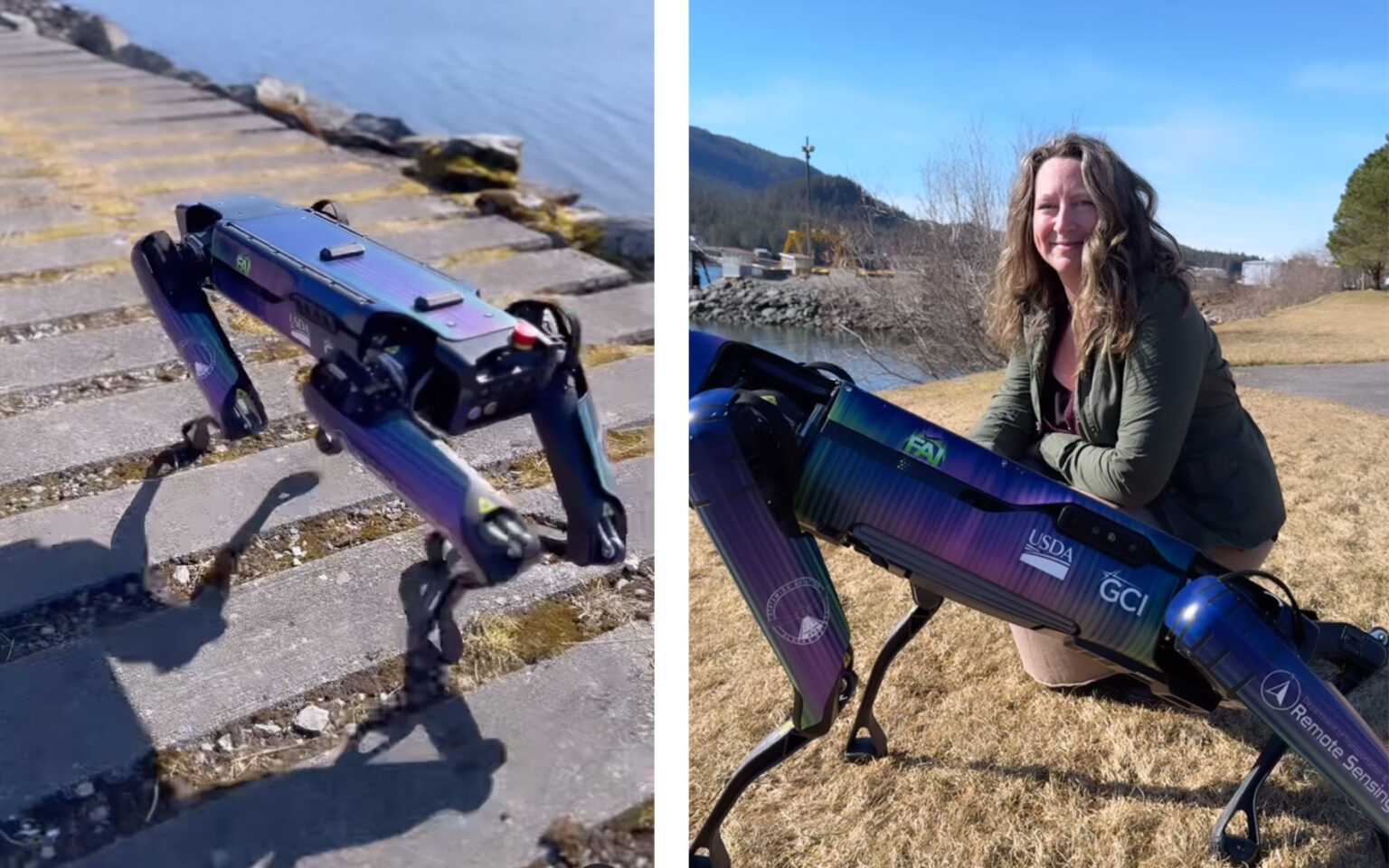
Alaska’s second largest airport is putting effort and resources into avoiding airplane-wildlife collisions — namely by bringing a $70,000 robotic dog named “Aurora” onto the team to scare wildlife away from runways in Fairbanks, the Alaska Department of Transportation and Public Facilities announced in mid-March. 

Aurora is named for the design on the robot’s body, which is meant to look like the northern lights, or aurora borealis.

“Aurora is the first of its kind wildlife hazard reduction robot,” AKDOT program manager Ryan Marlowe told the Alaska State Legislature Committee on Transportation on March 19. “It will be used in Fairbanks for the sole purpose of clearing wildlife. This will give us the ability to test routine, every-hour-on-the-hour … clearing out the infield.”

USDA biologists would deploy the robot, built by Boston Dynamics, to sweep natural areas near the four runways at Fairbanks International Airport. Aurora would also carry an automatic dependent surveillance–broadcast system, also known as ADS-B, to communicate its location with pilots and air traffic controllers, Marlowe said. He also mentioned that Aurora’s efficacy at Fairbanks International Airport could lend to using the same robot at other airports, as well. 

“We can make it look like a coyote, or a fox,” Marlowe says. “The sole purpose of this is to act as a predator and allow for us to invoke that response in wildlife without having to use other mitigation. It will be a first of its kind for the FAA and with the community.”

Aurora’s construction and implementation was funded with a Federal Research Grant, according to an AKDOT Instagram post. Commenters on the post were largely critical of the robot and the movement as a whole, calling it a waste of state resources. One commenter even argued that using a robot to deter wildlife was a job one person could do with living dogs. (Currently, Alaska employs humans and loud noises, like paintball guns, to deter wildlife from nearby runways.)

Read Next: This Happened to Me: I Flew a Plane with Zero Training

In his presentation, Marlowe recalled the story of Capt. Chesley Sullenberger, who made an emergency landing with an Airbus A320 full of passengers on the Hudson River in 2009 after a flock of geese compromised both engines during take-off from LaGuardia Airport. Bird and other wildlife deterrence is important for safer airport operations. But in Alaska, other proposed plans like flying drones to spray wildlife with grape juice and releasing pigs into airport infields to eat bird eggs didn’t quite meet the mark, the Associated Press reported.

In 2023, the FAA Wildlife Strike Database recorded 93 wildlife collisions with airplanes in Alaska. Of those, only two of them were non-bird wildlife, both muskrats. Some 19,623 collisions occurred nationwide that same year.


Read the full article here

[ruby_static_newsletter]
Leave a comment

Leave a Reply Cancel reply

Your email address will not be published. Required fields are marked *

You Might also Like

Conservation

Man Fined After Illegally Stashing 1,000 Pounds of Shed Antlers

5 Min Read
Conservation

First Grizzly Bear in Bighorn Mountains in a Century Euthanized for Predation

4 Min Read
Conservation

Idaho Man Busted with More Than 1,000 Pounds of Poached Shed Antlers

5 Min Read
Conservation

As Wolf Management Debate Reaches a Fever Pitch, the Interior Department Hires a National Mediator

22 Min Read
Conservation

Wardens Seek Information About Elk Poaching Spree in Idaho

2 Min Read
Conservation

Florida Now Using Gambling Revenues to Fund Conservation

4 Min Read
Conservation

Wildlife Commissioner Fined For Hunting Turkeys Baited with Crickets

2 Min Read
Conservation

Louisiana Approves Black Bearing Hunting Season for 2024

3 Min Read
//

Afield Daily is your one-stop news website for the latest articles and tips about hunting, fishing and camping, follow us now to get the content you want.

Quick Link

  • PRIVACY POLICY
  • TERMS OF USE
  • PRESS RELEASE
  • ADVERTISE
  • CONTACT

Hot Topics

  • HUNTING
  • FISHING
  • COOKING
  • SURVIVAL
  • VIDEOSHOT

Sign Up for Our Newsletter

Subscribe to our newsletter to get our newest articles instantly!

[mc4wp_form]

Afield DailyAfield Daily
Follow US

© 2023 Afield Daily. All Rights Reserved.

Join Us!

Subscribe to our newsletter and never miss our latest articles, podcasts etc..

[mc4wp_form]
Zero spam, Unsubscribe at any time.

Removed from reading list

Undo
Welcome Back!

Sign in to your account

Lost your password?