



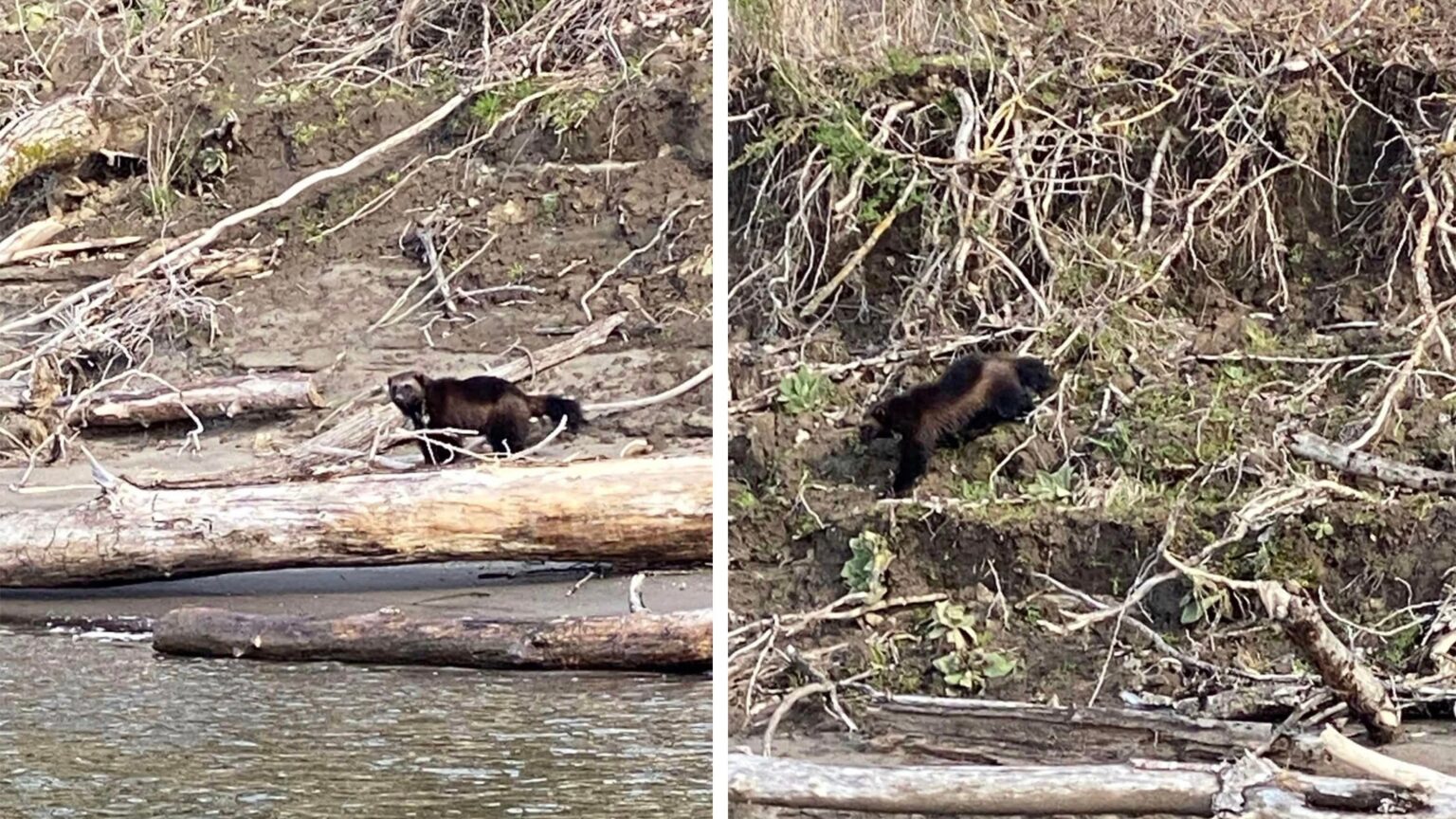

On March 20, two anglers on the Columbia River snapped photos of a wolverine trotting along the riverbank on the Oregon side, near Portland. Three days later, the wolverine was spotted again near the town of Damascus, the Oregon Department of Fish and Wildlife tells Outdoor Life. These sightings wouldn’t be such a big deal if wolverines weren’t listed as threatened in the Evergreen State. When it comes to understanding where wolverines live, it’s easier to first understand where they don’t live. In Oregon, that used to be anywhere outside of the Wallowa Mountains. Until now.
The two anglers submitted the photos to local non-profit Cascadia Live and ODFW, who confirmed the wolverine sighting. This marks the first time a wolverine has been spotted outside the Wallowas in over three decades, an ODFW press release says. And in those 30-plus years, the known population of wolverines in the Wallowas has gone from zero, to three, to just one, according to ODFW wildlife biologist Kaly Adkins.
“For the last 10 years, we thought that Oregon only had one resident wolverine,” Adkins tells Outdoor Life. “He’d been documented annually in the late winter to early spring around the Wallowas. It was the survey season of 2010 to 2011 when three wolverines were documented in the Wallowas, and that was the first observation in Oregon for quite some time. Then after that, two were never seen again in Oregon, but the adult male has been seen multiple times.”
This male is easily identifiable for biologists, thanks to the distinct markings on his chest (these markings are like fingerprints for wolverines) and the few digits missing from one of his front paws, likely the work of a trap, Adkins says. But it is unclear whether the wolverine spotted near the river is the one known resident. The photos the anglers took aren’t sharp enough to confirm any missing toes or specific chest markings. But if it was, that would mean the wolverine traveled over 200 miles from the Wallowa range in the far northeastern corner of the state to the stretch of the Columbia near Portland.
Wolverines are very territorial and need big home ranges to roam. They also need high-alpine snowpack, since wolverines cache their food in snowbanks. The Wallowa mountains meet all those needs, which is why it wouldn’t make sense that the known Wallowa wolverine would leave his area, Adkins explains. That means there is a decent chance the wolverine spotted this week along the Columbia River is a new wolverine, thereby doubling the state’s resident population expanding the species’ known range in Oregon as far west as the Cascades.
ODFW officials thought wolverines were extirpated from the state by the late 1930s. Oregonians reported scattered sightings from the 1960s to 1990s, but none were verified. The first modern report of a wolverine didn’t come until 1990: When a vehicle struck and killed a wolverine near Cascade Locks, it became clear that Oregon was still home to the species.
Where Do Wolverines Live?
Much of the North American wolverine population lives in Alaska and Canada. In fact, wolverines are so abundant in this part of North America that, despite their threatened status on Oregon’s state endangered species list, they are a species of least concern at the federal level. Wolverines were a candidate for the endangered species list in 2020, but the U.S. Fish and Wildlife Service withdrew the proposal. Currently, USFWS is considering listing the species as threatened, and will announce its determination in November.
Determining the exact boundaries of the wolverine’s range in the lower 48 is tricky, Adkins says. Their penchant for deep snow, high altitudes, and long distances from human disturbance make them elusive. The estimated population in the lower 48 ranges from 25 to 300 individuals, according to the National Wildlife Federation.
“In the lower 48, their accepted range is really hard to pin down,” she explains. “Typically, they’re in sites that are extremely inaccessible in the winter time. But winter is also the easiest time to track them and when they are sticking tight to their home ranges, because it’s their breeding season and they need to take care of their kits. So they’re not dispersing over huge distances during [the winter]. But it’s really difficult for the typical wildlife biologist who isn’t a professional tele-skier to get to those areas to survey them.”
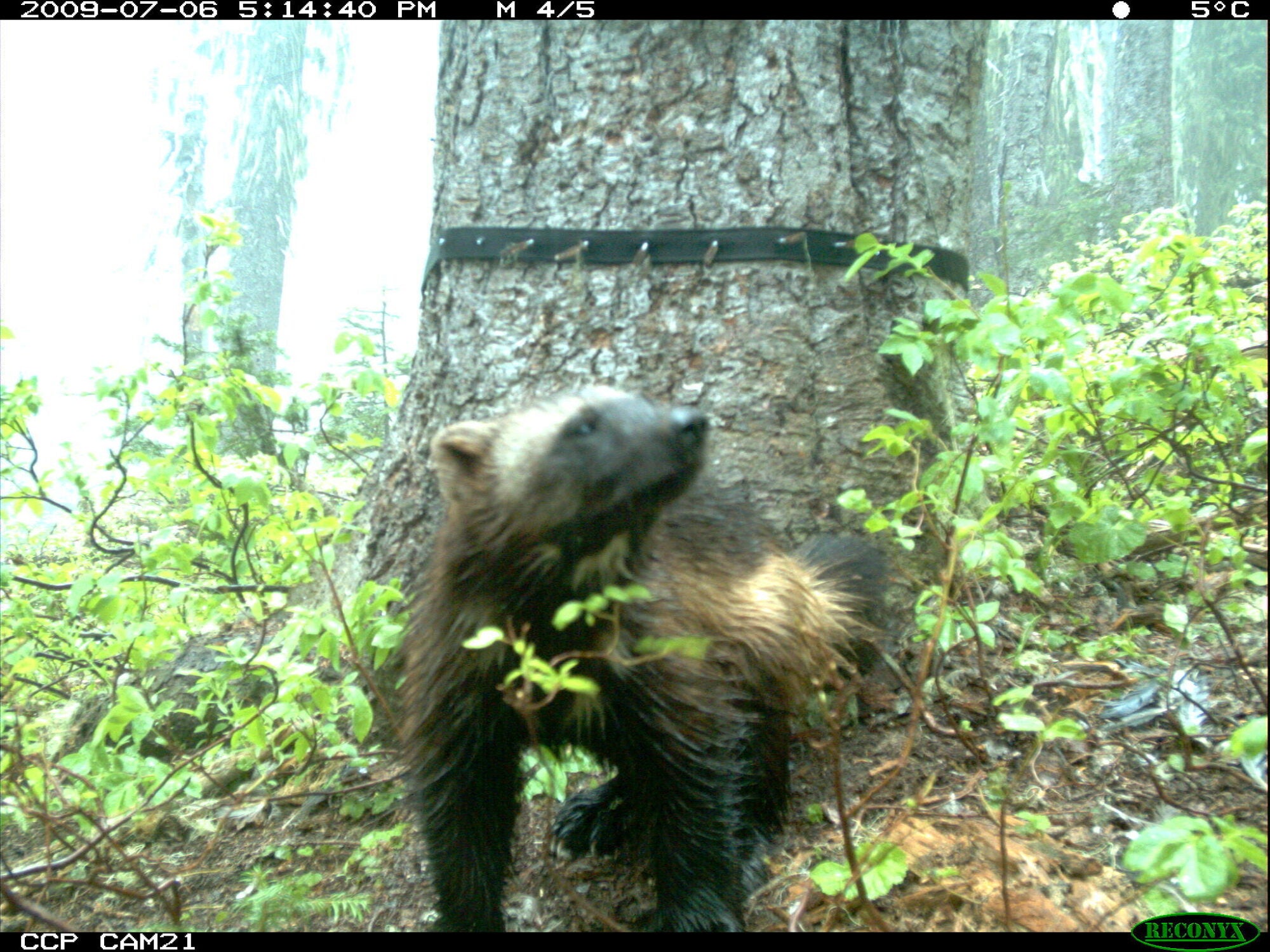
The Western Association of Fish and Wildlife Agencies is currently conducting a multi-year wolverine working group that includes a monitoring project every five years to better understand the species’ range. Member states of the Wildlife Chiefs’ Forest Carnivore Sub-Committee (formerly the Wolverine Sub-Committee) include California, Oregon, Washington, Idaho, Montana, Wyoming, and Saskatchewan. The last sighting in California was 15 years ago, according to Adkins. All other member states have confirmed wolverine populations.
What Is Wolverine Habitat?
Any mountain range that offers remote, high alpine wilderness with deep snow in the winter and limited human interaction is suitable wolverine habitat, Adkins says. But every cluster of mountains from the Sierra Nevada to Alaska’s Brooks Range and east to the Rocky Mountain Front fits those parameters in one way or another. While climate-change-induced drought is reducing snowpack in the more southern reaches of that expanse, wolverines could be pretty much anywhere in the Mountain West that meets their needs.
But wolverines also disperse at surprisingly far distances between winters. They can travel up to 30 miles a day when hopping between what Adkins calls “islands of habitat.” They settle into a snowy spot with good food availability (wolverines prefer snowshoe hares, rodents, and scavenged meat) for their breeding season, which lasts from December through March. They then spend the rest of the year roaming. As temperatures climb in the summer, wolverines will retreat to higher elevations. But they won’t go so high that they run out of cover or prey..
Read Next: Washington Deer Hunter Shoots a Buck, Then Three Wolverines Chase It Off a Cliff
“You wouldn’t necessarily think of a wolverine living at the top of Mount Hood. Even they have their limitations as to what’s too barren,” Adkins says. “Wolverines have this history of being the last true wilderness creature. When you think of wolverines, you think of rugged country and wilderness. All of those assumptions are pretty true.”
Read the full article here