




When it comes to putting food on the table, few predators are more primed to take down big game than North America’s wolves. Ranchers have watched them decimate sheep and cattle, and hunters and hikers have come across kill sites littered with broken bones. Even dog owners have watched helplessly as their four-legged best friend meets a grisly, horrific demise. But the questions of how wolves hunt, what tactics they use, and how they distribute their kill afterward fascinate biologists to this day.
How Wolves Hunt Big Game
The prey wolves chase varies with the type of environment they live in, Yellowstone Wolf Project research associate Kira Cassidy tells Outdoor Life. Western wolves rely on elk, bison, and maybe the occasional bighorn sheep or pronghorn. Wolves in the Midwest hunt deer, moose, and beavers. But ultimately, they’re opportunistic hunters and will eat whatever meat they can get their jaws around—including livestock, of course. The size of the prey animal determines the size of the pack.
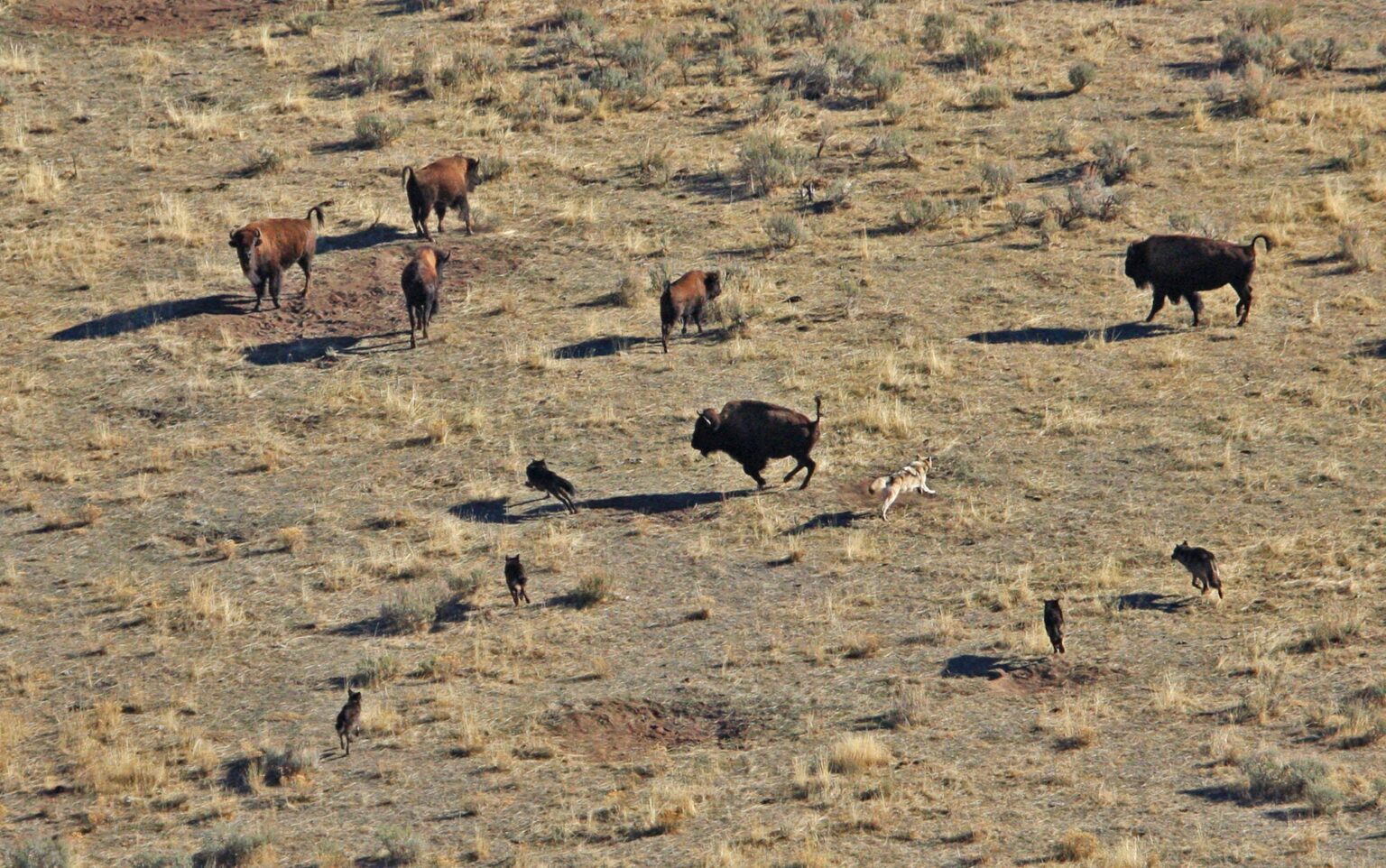
“Different pack sizes will be more efficient at certain types of prey,” Cassidy says. “A pack that wants to hunt bison has to have nine to 13 wolves. A cool study by Dan MacNulty found that, if you have less than nine wolves, the chances of successfully hunting a bison are extremely low. More than 13 helps out a bit, but we have less and less data as packs get bigger.”
Cassidy explains that a pack of four wolves is sufficient for hunting elk and other similar-sized big game. Pups might even try to join in, but they usually get death-glares and rebukes from mature females. Adults don’t want the pups ruining the coordinated effort. In most hunts, each wolf seems to have a job based on its body size, says Cassidy, citing a different study by Dan MacNulty.
“The females and younger males will be the ones that chase and split one out of a herd to pursue,” she says. “The really big males, who are usually three or four years old and can be 125 pounds, might have a hard time keeping up with the chase. But if the rest of the pack can pick out which [elk] they’re going to take down and then slow that animal down a bit, maybe grab onto the backs of the legs or the armpit area, that big, heavy male will usually come in and grab the throat, using [his] bodyweight and that muscle to bring that animal to the ground.”
How Do Wolves Hunt Small Game?
Wolves also rely on smaller animals to supplement their diets between big game kills. Similarly, what small game they eat depends on where they live. Rabbits, hares, voles, beavers, snakes, squirrels, mice, and even fish and birds add to a wolf’s diet. A 2021 study published in Behavioral Ecology found that wolves can adapt their hunting methods to ambush smaller game that has poor eyesight. They also pounce on scurrying rodents like foxes do.
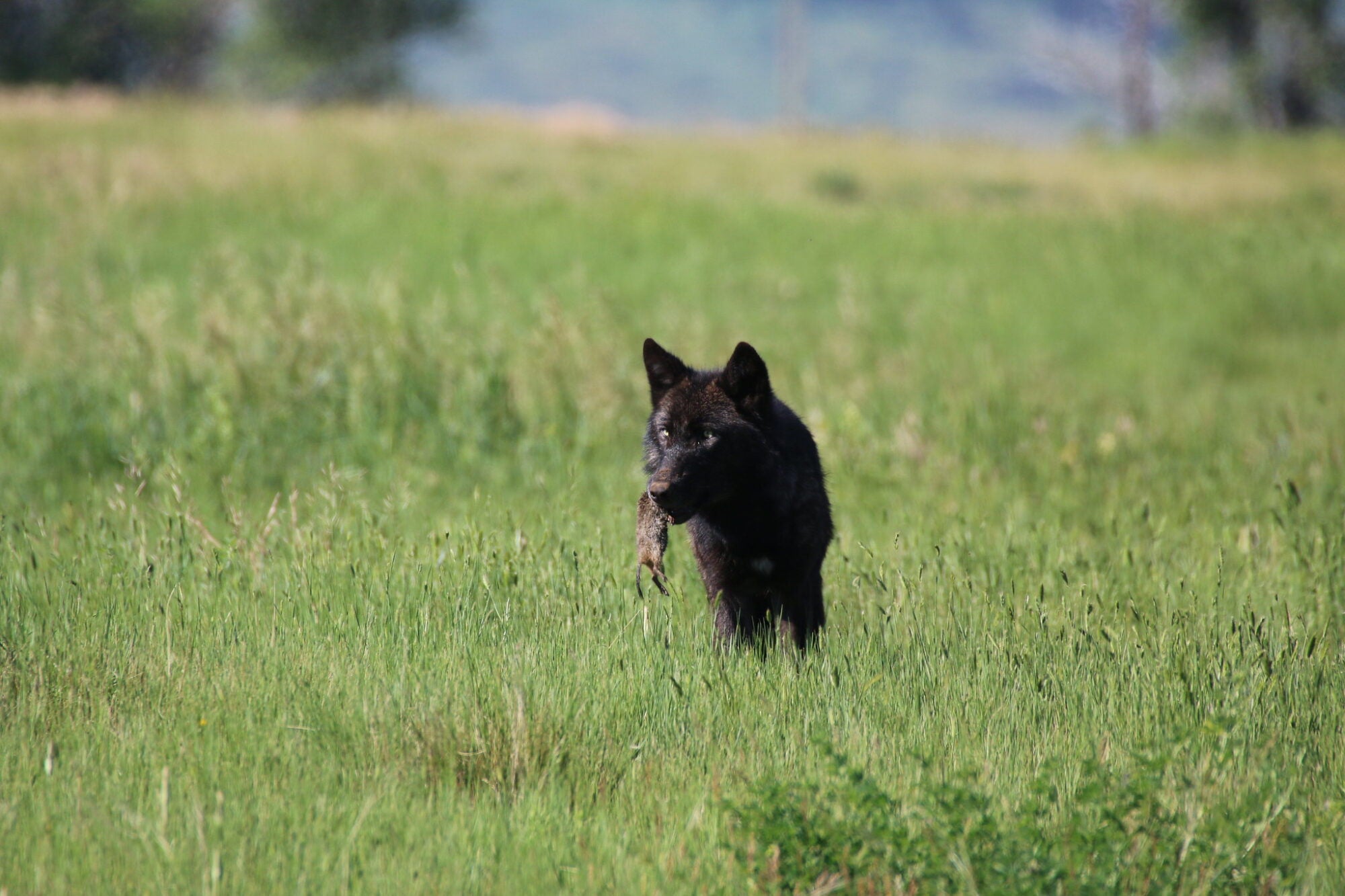
In parts of Alaska, wolves fish for salmon during the abundant late-summer runs. Wolves aren’t as efficient at hunting in water as bears, Alaska Fish and Game biologist Dave Person pointed out in an Alaska Fish and Wildlife News article. But they can catch enough fish to sustain pups. Researchers think this might cause a much higher pup survival rate—around 90 percent—than in other parts of their range where wolves don’t have access to the nutrient-rich fish.
Do Wolves Hunt Each Other?
When hunger pushes wolves to the brink, they’ll scavenge on pretty much any meat they can find. But in Yellowstone, only one documented instance of a wolf feeding on another wolf exists, Cassidy confirms. In that instance, a severely mangy wolf fed on an already-dead wolf carcass. Otherwise, wolves kill each other over territory and food sources—not out of cannibalism.
“The number-one cause of mortality in Yellowstone wolves is other wolves. If you take humans out of the equation, it’s probably the cause of mortality in other places. They’re incredibly territorial. We’ve estimated about 10 percent of the adult population every year is killed in conflicts between packs, and that matches what you would expect from ancient hunter-gatherer societies. [In] warring areas where there’s not enough resources or space for everyone, there might be more conflict.”
How Wolves Hunt Can Be Risky
Sometimes, mature wolves are powerful enough to take on a moose or elk on their own. Cassidy has witnessed this twice while working at Yellowstone. But when they attempt such feats, they also put their lives at serious risk. Even hunting in a pack can lead to death.
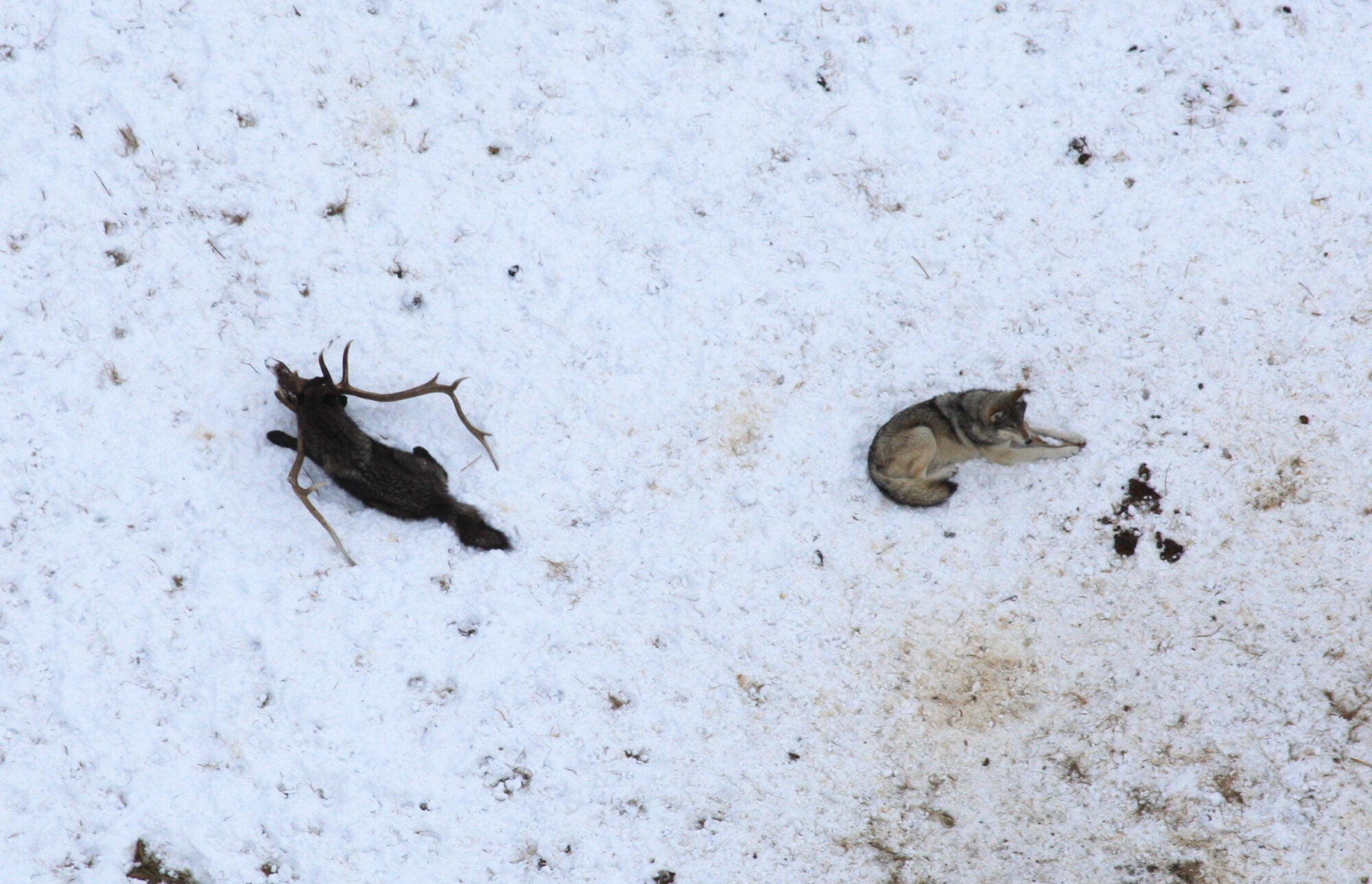
“Of all the wolves we’ve collared in Yellowstone, 15 percent have been killed during the hunt by the prey,” Cassidy says. “That means getting kicked, or gored, or stomped. I’ve collected quite a few dead wolves where that was their cause of death. You can see the massive trauma. Sometimes it’s one big kick to the chest, sometimes to the head, and one time we found a dead wolf that had received a little kick to the perfect spot on the ribs, maybe even from a deer or elk calf. They’re super tough, they get injured a lot, and sometimes they can be really unlucky.”
Cassidy recalled one Yellowstone wolf she was monitoring as part of her research that suddenly took a turn for the worse health-wise.
“All of a sudden he was losing weight, he was in terrible shape, he was limping. When he died, on the last day of his life, he killed an elk by himself, and then he was killed by another pack of wolves. He refused to leave the elk he just killed because he was so starving and in such poor shape. He wouldn’t leave, so they killed him.”
When the research team retrieved his body and cleaned his skull, they discovered something shocking.
“We realized that his skull had been broken about four months prior. There was so much calcification on the jaw that was trying to grow back, but it never really fit back together, it just had this bone growth everywhere. So he had probably been living with a broken jaw for about four months,” Cassidy recalls. “I have no idea how he was able to make that kill on the last day, let alone eat or drink. They live through so much crazy stuff that happens during these hunts, and they have to do it in order to eat.”
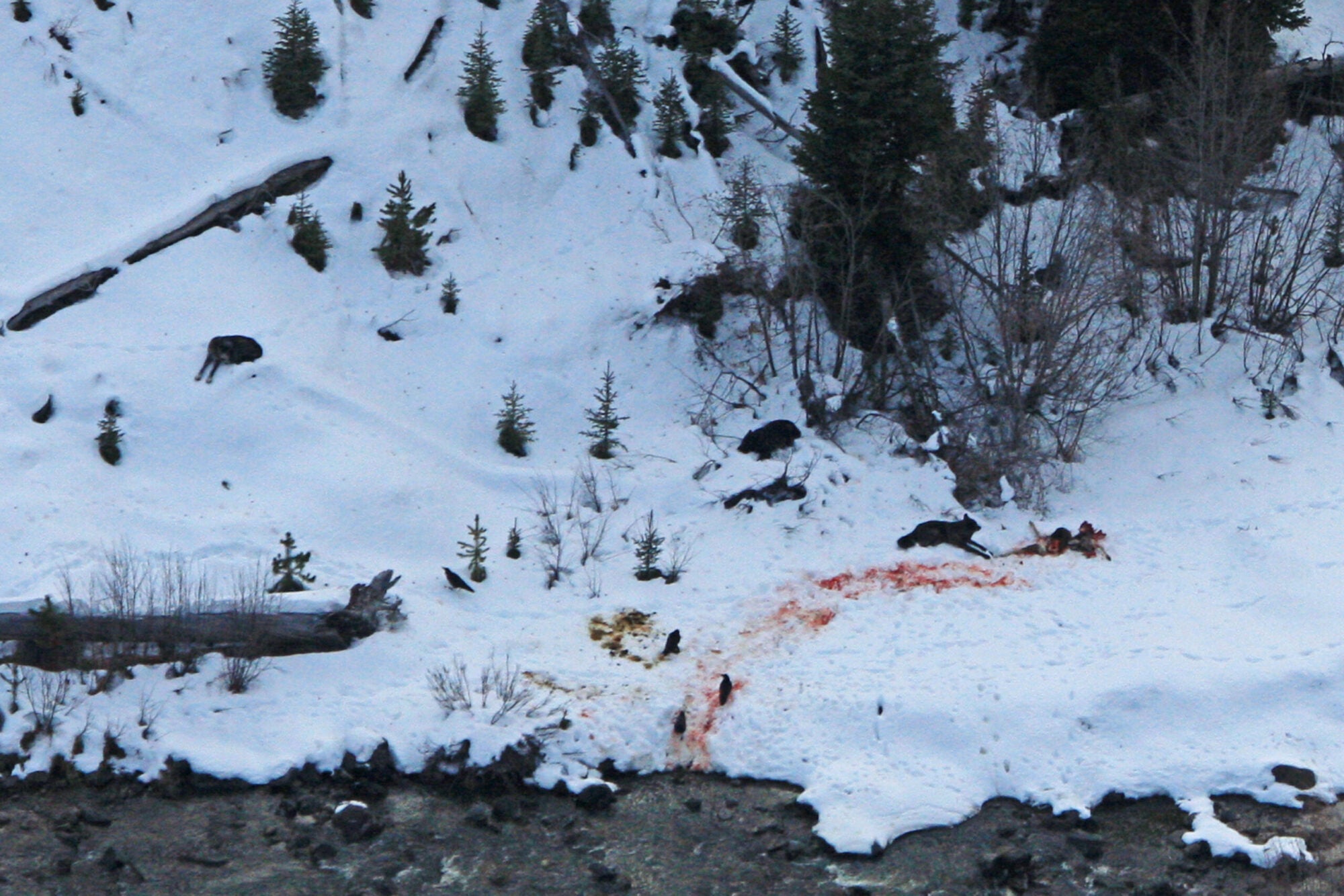
Wolves attempt plenty of hunts that aren’t successful, too. There is a gap in research regarding success rates, Cassidy says. But the general estimate is that only about 5 to 10 percent of hunts end with meat on the ground.
Do Wolves Waste Meat?
Lots of complaints about wolves involve some mention of them being wasteful hunters. They sometimes kill multiple stock or big game animals at a time, creating more food than they can eat in a few sittings. They might feed on the liver and other organs first, or, if their prey was pregnant, possibly the fetus. But Cassidy has some explanations for these behaviors.
First, wolves don’t cache their food like mountain lions, bobcats, and other predators. That means a carcass will stay relatively intact and on the open landscape when they’re not feeding on it. This leads to faster discovery by ranchers, hunters, or hikers. It might look wasteful at first. But the wolves will eventually finish all the meat, bone marrow and all, if the carcass remains untouched.
“I have really not seen, in my almost-16 years on the wolf project, wolves leaving a carcass for good that still has any meat on it,” says Cassidy, who grew up hunting and has a first-hand appreciation for salvaging meat. “When we take samples from the kills they make, we’re lucky if we find all the bones. They pick the ribs completely clean. Some of that is scavengers, as well. But wolves can only fit so much in their stomachs.”
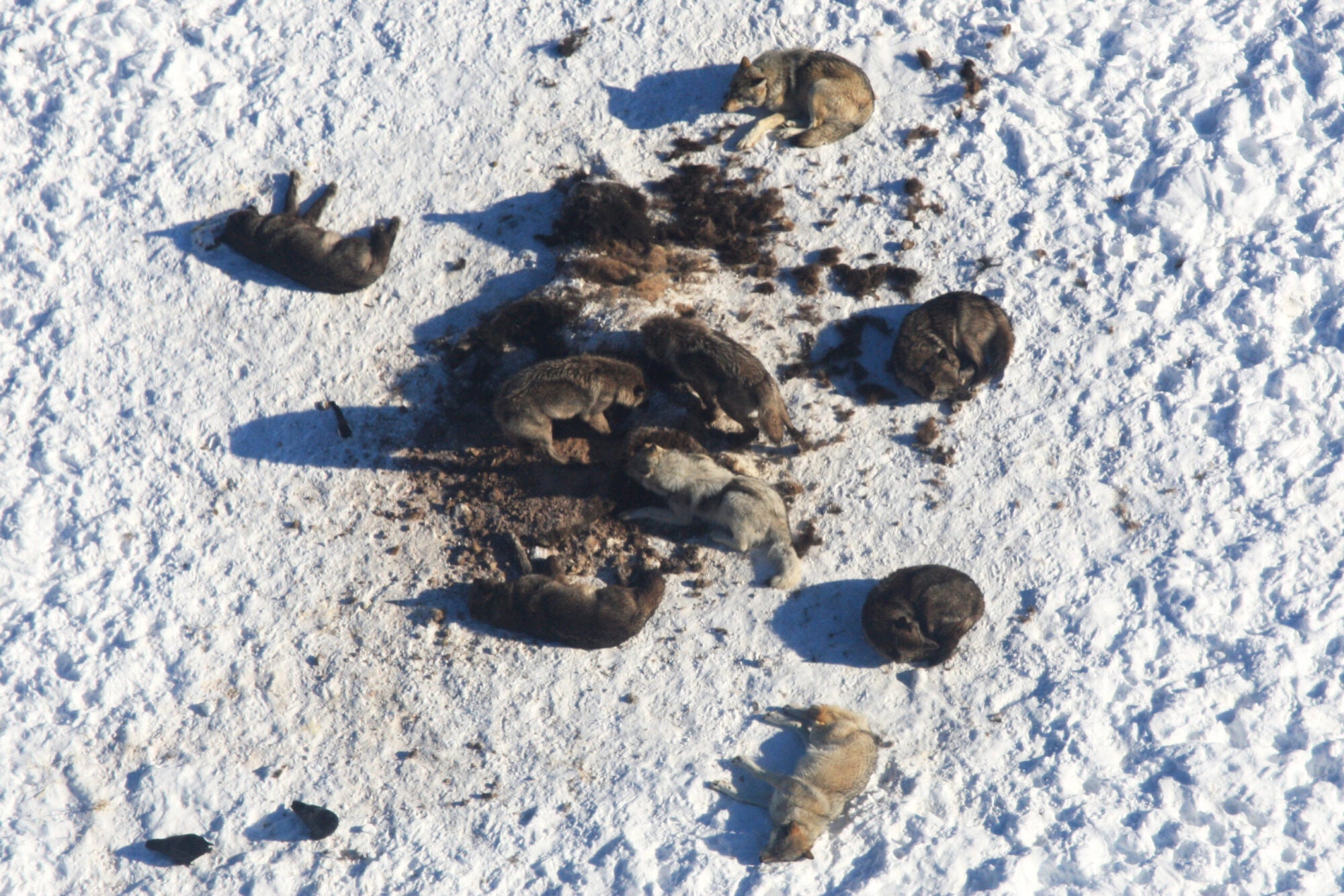
A pack might be able to eat about 20 to 60 pounds of meat in one sitting before needing sleep to digest, she explains. They often sleep anywhere from 100 yards to a half-mile away from the kill site. Then they do it all over again.
“Depending on the size of the carcass, they might stay for days. But when people come across the carcass just after the first feeding bout, and realize the liver is gone and some of the meat, and the lungs and heart and fetus, that is upsetting,” she says. “But depending on how far away they travel to sleep, or maybe they heard snowmobiles coming and took off because they’re scared, almost every time they’re going to come back that night when people are gone and they aren’t afraid.”
If left alone, wolves will chew right down to the gristle and bone marrow—something most predators don’t have the jaw power to do. When food is plentiful, sometimes a pack will leave behind a last meal or two on a carcass that they can turn to in leaner times. This came in handy for people living and working in the wilderness centuries ago.
“There was this old legend when Europeans were settling the West,” Cassidy says. “The rumor was that if you are starving and you can’t find food out there, find a wolf kill. There will always be one meal left on it for you.”
Why Do Wolves Eat Animal Fetuses?
Wolves eating animal fetuses certainly fuels the human perception that wolves are evil, demonic killers. But, once again, biology plays a part in the explanation.
“The fetus is probably one of the most nutrition-dense parts of the entire carcass,” says Cassidy. “In late May or early June, I’ve seen a wolf hunt and kill an elk by herself, start feeding on it, grab the fetus, and carry it back to the den. Wolves will start having pups in late April. So there will be this carousel of getting food and bringing it back to the den to the nursing mothers. They’re lactating and need calories and they can’t necessarily leave the pups if it’s cold. So they’ll bring chunks of meat back. But that probably means the carcass doesn’t have any wolves on it most of the time.”
Hunters at Heart
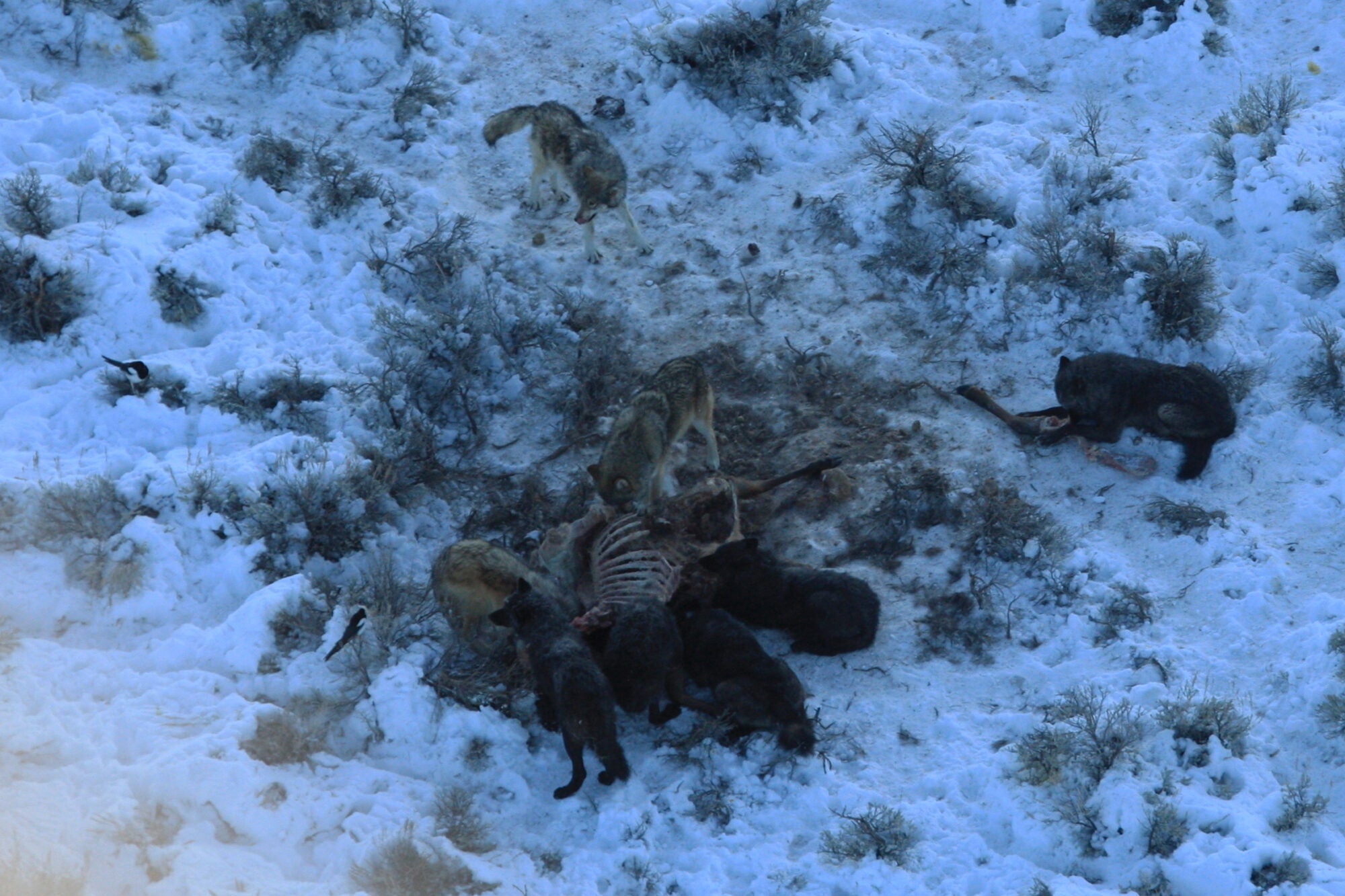
Similar to how non-hunters might misunderstand why hunters get satisfaction out of killing wild animals for food, it’s easy to misunderstand a wolf’s evolutionary predisposition to the practice, Cassidy says. But ultimately, they’re just doing what they must to survive.
Read Next: Lone Michigan Wolf Travels a Record-Setting 4,200 Miles Across Great Lakes Region
“I know people have been disturbed when they’ve seen videos of wolves hunting and they’re wagging their tails or play-bowing at the prey. They look like they’re having a blast,” she says. “But they have to do it to live. So evolutionarily, I think they get a dopamine hit doing this with their packmates, and it’s very exciting. If it wasn’t, it would be very hard for them to push through to get that food they need.”
Read the full article here