



By using this site, you agree to the Privacy Policy and Terms of Use.
Accept
Afield DailyAfield Daily
  • Home
  • Hunting
  • Fishing
  • Cooking
  • Camping
  • Gear
  • Videos
Search
More Topics
  • Outdoor
  • Conservation
  • Survival
 
  • Guns
  • Gear Review
  • ATVs
Quick Links
  • Community
  • Customize Interests
  • Bookmarks
  • Privacy
  • Terms
  • Press Release
  • Advertise
  • Contact
© 2023 Afield Daily. All Rights Reserved.
Reading: Can California Eradicate These Giant Invasive Rodents from Its Wetlands?
Sign In
Notification Show More
Latest News
It’s OK to Keep Trophy Crappie
Fishing
GALLERY: Team Knighten Industries sweeps the board at Builders FirstSource Qualifier Match 3
Fishing
The Best Tactical Flashlights of 2024
Gear
FantasyFishing.com Insider: Everything you need to know about Kentucky Lake
Fishing
Man Fined After Illegally Stashing 1,000 Pounds of Shed Antlers
Conservation
Aa
Afield DailyAfield Daily
Aa
  • Camping
  • Hunting
  • Fishing
  • Cooking
  • Gear
  • Survival
  • Conservation
  • Videos
Search
  • Home
  • Videos
  • Sections
    • Hunting
    • Fishing
    • Cooking
    • Camping
    • Gear
    • Survival
    • Conservation
  • Quick Links
    • Community
    • Customize Interests
    • Bookmarks
Have an existing account? Sign In
Follow US
  • HUNTING
  • FISHING
  • COOKING
  • SURVIVAL
  • VIDEOSHOT
© 2023 Afield Daily. All Rights Reserved.
Conservation

Can California Eradicate These Giant Invasive Rodents from Its Wetlands?

Afield Daily
Last updated: 2023/04/28 at 12:19 AM
Afield Daily

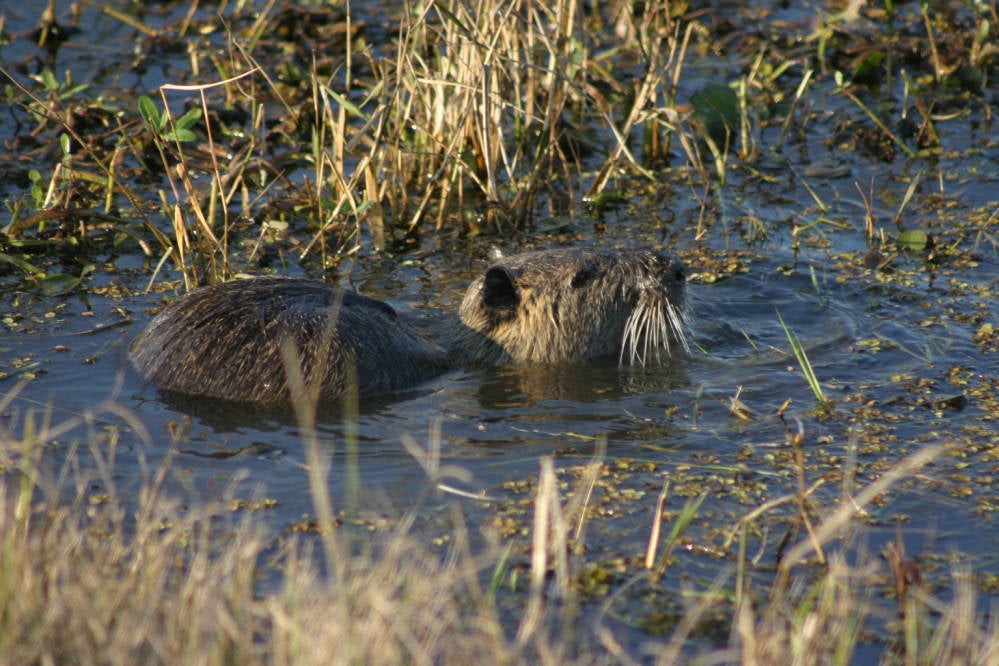
A two-foot-long rodent, which most resembles a beaver and muskrat, is wreaking havoc in Californian wetlands. Nutria — introduced to the U.S. from South America in 1899 — are a highly destructive animal, whose deep burrows have been known to take down levees and dams and decimate vegetation. 

The Mendota Wildlife Refuge, known for its legendary duck hunting in the San Joaquin Valley, is a recent victim of this rodent’s invasion. Greg Gerstenberg, former head of the nutria eradication project for California State Fish and Wildlife, told MKJNOW that officials “pulled about 220” nutria out of the refuge in about four weeks last year.

According to the California Department of Fish and Wildlife, Nutria can consume up to a quarter of their body weight in plant material in a day and the rodents “do not construct dens, they burrow, frequently causing water-retention or flood control levees to breach, weakening structural foundations, and eroding banks.”

Nutria were first detected in central California in 2017. There are established populations of nutria in every continent except Antarctica and Australia, and established invasive populations can be found around the U.S. There is a year-round open season on Nutria in Oregon, a bounty for Nutria in Louisiana (which has paid out more than $30 million for over 6 million kills), and the rodent has even made the Texas “most unwanted” species list. 

In California, the rodent has been hard to control, since private land often harbors populations. “You can clean five miles of river, and if you have one parcel that has a pond on it, and you don’t have access to it, they can just keep coming and re-infect that area,” explained Gerstenberg. 

Officials in California are looking to Maryland, which eradicated its last nutria in 2015 from the Chesapeake Bay region, for guidance. The Chesapeake Bay Nutria Eradication Project (CBNEP) removed over 14,000 nutria between 2000 and 2015. The state only recently announced that the state is free of the pest. The project lasted over 20 years. 

Read Next: Colombia Struggles to Control Exploding Population of Over 100 Invasive Hippos

During the nutria’s time in Maryland, 5,000 critical acres of wetlands were lost in part to nutria impacts. The wetlands there, like those in California, provide critical ecosystem functions and habitat for waterfowl. 

California’s eradication efforts are underway. The interagency Nutria Response Team is busy mapping nutria populations and making plans for cross-departmental collaborations. Where the current population stands, the state believes that “eradication is feasible with rapid response.”


Read the full article here

[ruby_static_newsletter]
Leave a comment

Leave a Reply Cancel reply

Your email address will not be published. Required fields are marked *

You Might also Like

Conservation

Man Fined After Illegally Stashing 1,000 Pounds of Shed Antlers

5 Min Read
Conservation

First Grizzly Bear in Bighorn Mountains in a Century Euthanized for Predation

4 Min Read
Conservation

Idaho Man Busted with More Than 1,000 Pounds of Poached Shed Antlers

5 Min Read
Conservation

As Wolf Management Debate Reaches a Fever Pitch, the Interior Department Hires a National Mediator

22 Min Read
Conservation

Wardens Seek Information About Elk Poaching Spree in Idaho

2 Min Read
Conservation

Florida Now Using Gambling Revenues to Fund Conservation

4 Min Read
Conservation

Wildlife Commissioner Fined For Hunting Turkeys Baited with Crickets

2 Min Read
Conservation

Louisiana Approves Black Bearing Hunting Season for 2024

3 Min Read
//

Afield Daily is your one-stop news website for the latest articles and tips about hunting, fishing and camping, follow us now to get the content you want.

Quick Link

  • PRIVACY POLICY
  • TERMS OF USE
  • PRESS RELEASE
  • ADVERTISE
  • CONTACT

Hot Topics

  • HUNTING
  • FISHING
  • COOKING
  • SURVIVAL
  • VIDEOSHOT

Sign Up for Our Newsletter

Subscribe to our newsletter to get our newest articles instantly!

[mc4wp_form]

Afield DailyAfield Daily
Follow US

© 2023 Afield Daily. All Rights Reserved.

Join Us!

Subscribe to our newsletter and never miss our latest articles, podcasts etc..

[mc4wp_form]
Zero spam, Unsubscribe at any time.

Removed from reading list

Undo
Welcome Back!

Sign in to your account

Lost your password?