



What do turkeys eat? Back in my day, we didn’t answer that question by searching it up on Google. What we’d do was go for a walk in the woods—where there was no internet at all—and scout by studying scratchings and following cows around, waiting for them to sh*t. Actual cow sh*t, you see—what with all the kernels of corn and seeds that go undigested within in—makes for choice gobbler grub. You get that tip for free.
But times have changed. Sometimes my editors come to me and say, “People are searching for the answer to this question, so please answer it.” And apparently, a whole lot of people are typing in, “what do turkeys eat?” I figure I only have a limited amount of time to cash in on this before publishers also notice that artificial intelligence can do it for cheaper, and so I’m going to give you an old-school lesson on what wild turkeys will eat, gleaned from my experiences of having hunted them for the past 28 springs in nine different states, interviewing biologists, and managing wildlife habitat.
What Do Turkeys Eat? Just About Anything
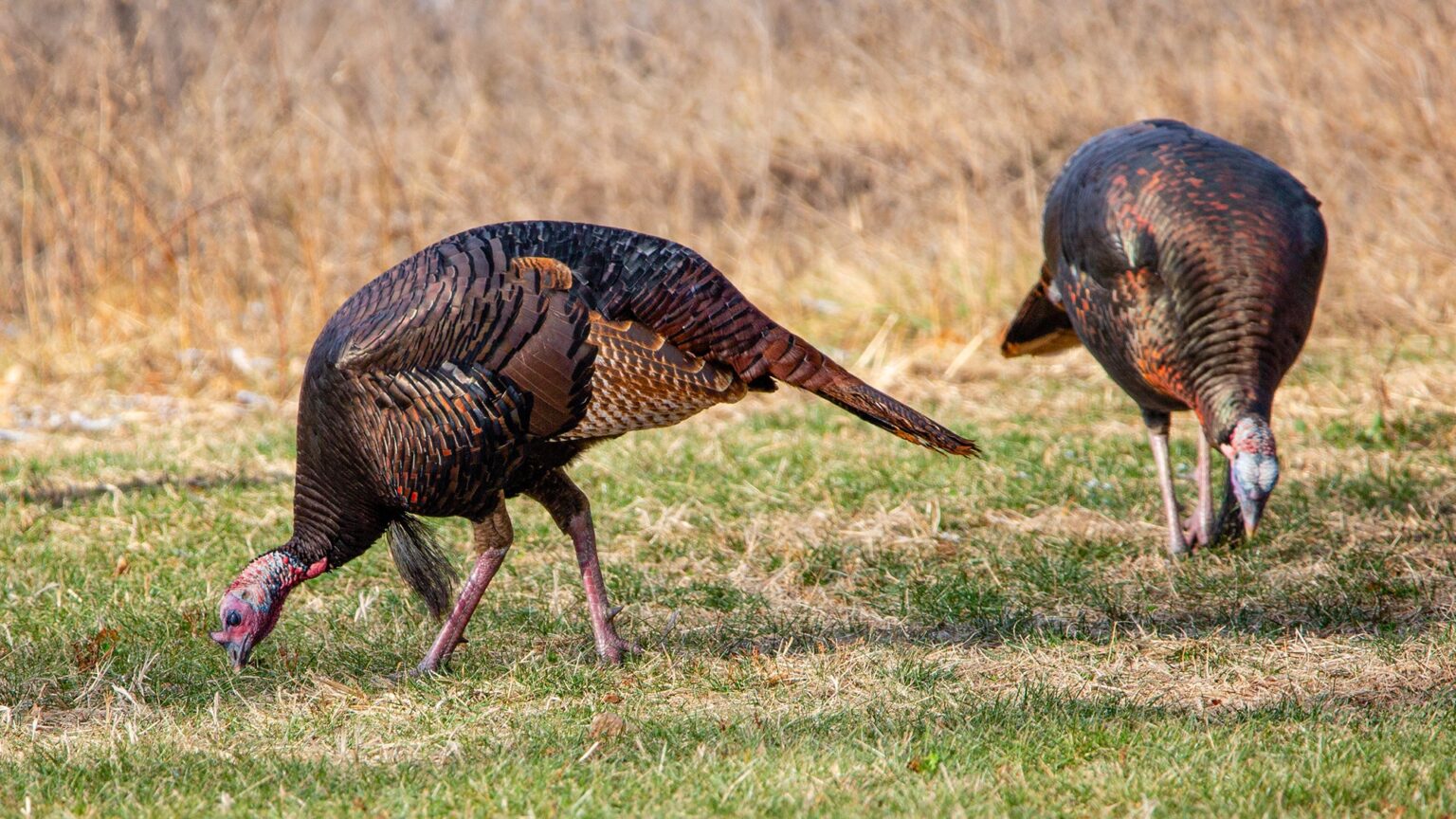
Turkeys are omnivores, meaning they’ll eat almost anything (and that the poor folks in Staten Island should count their blessings that they don’t grow to 300 pounds or they would have real problems). Being omnivores, and being adapted to live about anywhere (wild turkeys are found in every state except Alaska, as well as Mexico, Central America, and southern Canada), turkeys have a highly varied diet that changes according to the climate and the season. Generally speaking, though, wild turkeys have a handful of favorites foods that they’ll key in on no matter where they live (including Staten Island). What’s more, turkey hunters who know about these favorites, whether it’s by typing “what do turkeys eat” into Google or not, will have a leg up when it comes to find birds to hunt. So here are four key foods that turkeys eat and that turkey hunters should be on the lookout for.
1. Turkeys Eat Bugs
Turkeys will gobble up insects anytime they’re available, but they particularly target them in the late spring in summer. Hens require the protein found in grasshoppers, beetles, grubs, and the like to produce eggs. Poults feed almost exclusively on insects after hatching and for the first several weeks of life. With that in mind, ideal brood habitat is fairly open—think hayfields, food plots, and very early successional habitat—but with good escape cover nearby.
But turkeys don’t just “bug” in the spring. You’re likely to see them chasing invertebrates anytime the weather allows. During the early spring hunting season, it’s always a good idea to scout for turkeys wherever there’s early greenery. Sunny creek bottoms and south-facing slopes warm up and green up earliest, and that’s where the earliest insect activity will be concentrated, too. And you can bet turkeys will be nearby.
2. Tender Greens
In addition to the bugs found on a south-facing slope in the early spring, turkeys love to pick on the greens themselves. They feast on legumes like clover and alfalfa, which again makes many food plots and hayfields all the more attractive, in addition to the insects they provide. And speaking of food plots, few are any more attractive than the shoots of newly sprouted cereal grains, like wheat and oats. In the wild, turkeys pick and pluck at many of the same forbs preferred by whitetails. So, again, in the early spring, simple finding the areas that are greening up with tender shoots, whether that an ag field, food plot, or naturally growing forbs, is a great way to find birds.
3. Turkeys Eat Hard and Soft Mast
Many a fall turkey hunter has been frustrated by turkey flocks that seem easy to pattern in September, but then disappear in October. Deer hunters know that keeping tabs on whitetails can be maddening when the acorns are falling during a good mast year, but nomadic flocks of turkeys can be even more hit and miss in the Eastern hardwoods based on the food preferences. When mast, both hard and soft, suddenly becomes available, turkeys are going to find and key in on it.
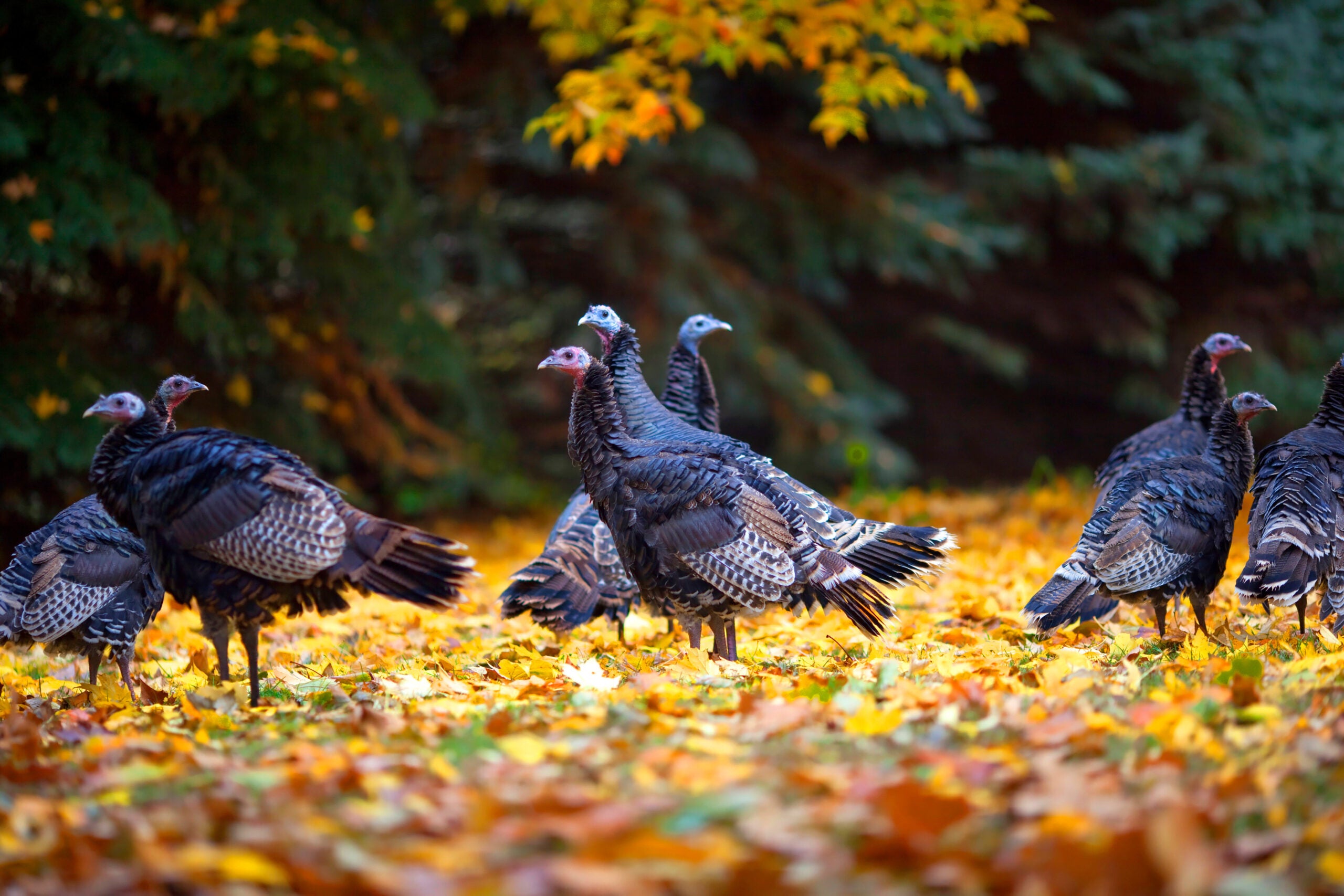
Like whitetails, turkeys seem to prefer white oak acorns over all the rest. But they relish beech nuts, too, which hit the ground in early to mid-October in eastern hill country. Mast isn’t limited to tree nuts in the fall, either; turkeys eat black berries, mulberries, and other soft mast in the spring and summer, too. I’ve often seen them gobbling up cedar berries during the spring season in the Nebraska Sandhills, and South Texas turkey hunters know that tiny chiltepin peppers draw in Rio Grande gobblers like Baptists to a buffet.
4. Seeds and Grain
Turkeys amass themselves into giant winter flocks in farm country across the Midwest and Great Plains. There, they feed in the waste grain of cut corn and sorghum fields, and can also scratch around for seeds in haybales left for livestock, and the grain left behind in cow pies. See free tip No. 1 for reference.
Land managers outside of farm country can still plant food plots with winter turkey support in mind. Corn left standing, along with soybeans, sorghum, milo, sunflowers, and chufa will all keep turkeys (and other game birds) in the area, fed, and happy throughout the cold-weather months. When the days get longer, the gobblers start strutting, and the birds seem to disappear, don’t despair. Look for the bugs and tender greens once again, and the turkeys won’t be far away. Now that you’ve searched for it and read till the end, you know exactly what turkeys eat—and how to find them based on that knowledge.
Read the full article here