



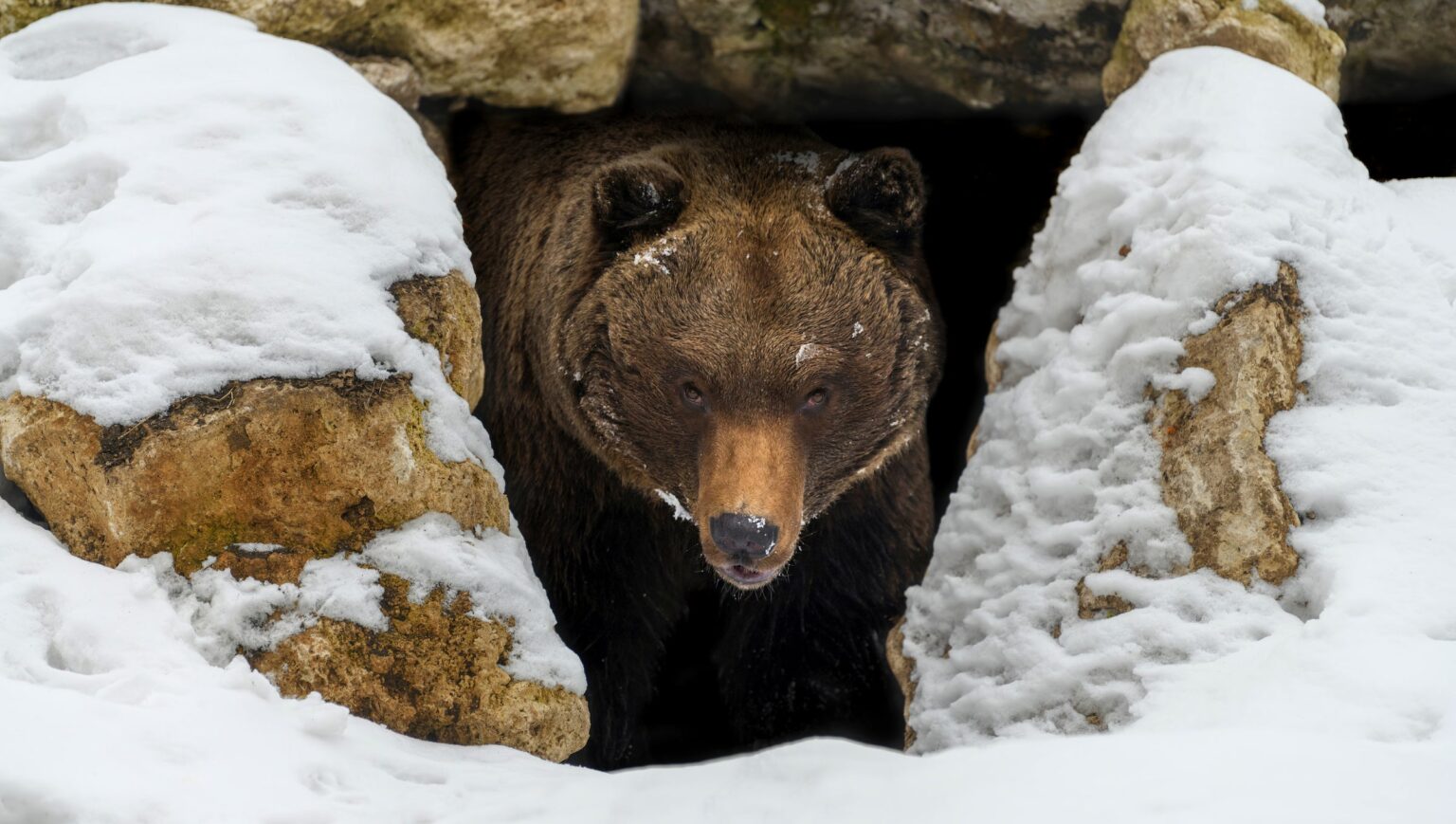

Hibernation is one of nature’s coolest adaptations, and it’s part of the survival playbook for a wide range of creatures, from primates such as lemurs to a host of reptiles, birds, and insects. The world champion hibernator is the tardigrade, a microscopic creature known as a “water bear” that can survive a dormant state without food or water for 30 years. Among the handful of mammal species that hibernate, bears are probably the most iconic, gorging themselves in spectacular fashion every fall before settling in for a long winter’s nap. How long do bears hibernate? Bear hibernation can last seven or eight months in some locales. Judging by the interest in Fat Bear Week, den cams, and “bear waking up” memes on TikTok, the annual downtime rite is a source of endless fascination.
How long do bears hibernate?
Hibernation length can vary greatly depending on the bear species, the weather conditions and food availability in a given year, and even the age and parental status among bears in the same local population. A 2017 study that tracked female black bears near Durango, Colorado, found that hibernation time varied between less than four months to more than seven, with older bears and sows with cubs tending to stay dormant longer.
Weather plays a big role in the length of hibernation, too. Black bears in warmer states like Florida den for shorter periods and sleep less deeply than bears in colder climates. And they are likely to flee their winter dens if disturbed by human activity. Temperature difference plays a role even in northern states: Brown bears in far northern Alaska hibernate seven months a year while those in the warmer coastal regions of the state hibernate two to five months. Polar bears, which rely on winter ice to hunt, don’t hibernate at all.
What is hibernation?
Hibernation is about more than sleeping: It’s an extended period of winter dormancy marked by minimal physical activity, lower body temperature, and a reduction in heart, breathing, and metabolic rates. While most hibernating animals survive the cold by dropping their body temperature to match the air temperature, bears experience only a modest temperature decline of 8 to 12 degrees, relying instead on their thick winter coats and fat reserves to stay warm.
Known as “super-hibernators” for their ability to go more than 100 days without rousing themselves, bears often don’t sleep through their entire hibernation—and in some cases even move outside of their winter hidey holes. “There is strong evolutionary pressure for bears to stay in their dens during winter, if there is little or no food available,” writes Sean Farley, research biologist and bear specialist with the Alaska Department of Fish and Game, in the department’s Ask a Wildlife Biologist feature. “But bears will leave their dens on occasion, particularly when their den gets flooded or is badly damaged.”
A bear’s body is also a model of recycling: they can turn their pee into protein by a process that breaks down urea by metabolizing body fat into nitrogen that is then used to rebuild protein. Researchers are also now studying bears for clues to treating osteoporosis and Type 2 diabetes in humans. Hibernating bears can experience an increase in levels of a hormone that promotes bone growth, and they seem to have the ability to control their own insulin resistance.
Why do bears hibernate?
Hibernation is an evolutionary strategy that helps bears make it through the winter, which is typically a time of extended food scarcity. By building up massive fat reserves in fall and reducing their metabolic rate through inactivity, bears can weather the lean season in good shape, losing very little muscle mass or bone density. Sows even have enough stored energy to birth and nurse cubs during hibernation.
Read Next: How Fast Can a Bear Run?
Bears that don’t face a lack of food—captive bears in zoos that are fed year-round, for example, or bears that have constant access to human food waste—frequently don’t hibernate, though they may slow down and sleep more than usual during the winter months. Hibernating bears don’t need to eat or drink, and they rarely urinate or defecate.
How long do bears hibernate: FAQ
How long can bears go without food during hibernation?
Alaskan brown bears eat 80 to 90 pounds of food, gaining 3 to 6 pounds of body weight daily while building up fat for winter. These ample reserves are one reason bears can go more than 100 days without eating or drinking.
Why can’t humans hibernate?
Extended inactivity has a steep cost for humans. Muscles wither, bones become less dense and our bodies can’t function for long periods without food. While one study suggested that at least one extinct human species may have been able to hibernate half a million years ago, we probably never evolved to hibernate because there was no evolutionary advantage to a prolonged torpor that leaves us unable to reproduce or defend ourselves from predators.
Are bears more aggressive after hibernation?
Bears that pile out of dens in early spring typically go through a two- to three-week “walking hibernation,” when they eat and drink less than might be expected of an animal that hasn’t had a good meal in months. As green-up progresses, hungry bears roam in search of food, which can bring them into conflict with people, and many sows have cubs, which makes them less tolerant of humans. But according to a comprehensive 2019 study of brown bear attacks on people worldwide, most attacks (48 percent) occurred in summer, when people are more likely to be engaged recreational or work activity in bear country.
Read the full article here