
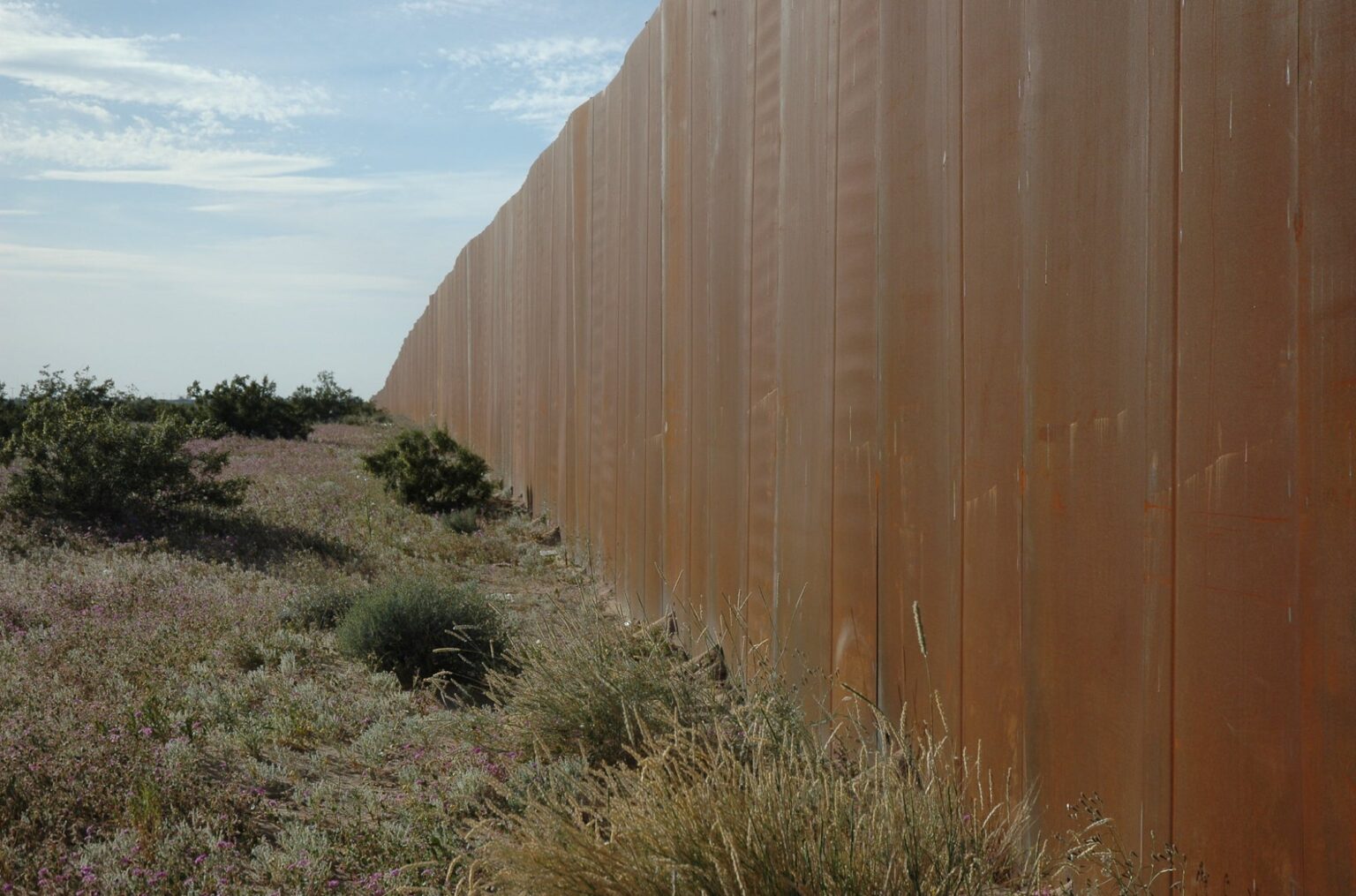

Dialogue about the U.S.-Mexico border wall usually revolves around people. This makes sense, since the wall’s core purpose is to keep humans separate from other humans. But a handful of biologists, politicians, and conservationists recognized early on that the wall would have some seriously detrimental effects on wildlife by separating distinct populations, splitting up core habitat, and interrupting migration routes. Many voiced their concerns, but the Trump administration built 458 miles of wall anyways, using already-earmarked military and defense dollars to do so.
Soon after construction began, a coalition of 18 states and two environmental organizations sued then-President Trump and his administration for diverting federal funds toward the controversial project without Congressional approval. Now, four years later, a settlement has been reached. And it contains a lot of wins for wildlife, officials say.
“President Trump’s border wall … was highly destructive, damaging private property and sensitive desert ecosystems, and blocking important wildlife corridors,” Senator Martin Heinrich (D-NM) tells Outdoor Life. “This settlement agreement is a step forward in restoring these watersheds and landscapes and protecting the future for species such as the Mexican gray wolves, jaguars, and Sonoran pronghorn.”
These measures include numerous on-the-ground mitigation projects, namely the construction of 24 wildlife passages and opening of nine stormwater gates along the wall. Such passages will benefit a variety of species in addition to the ones Heinrich mentions, including federally endangered Peninsular bighorn sheep, ocelots, and Coues, whitetail, and mule deer. The Department of Homeland Security will also put $25 million toward acquiring a 1,300-acre chunk of critical wildlife habitat east of San Diego, and millions more will go toward endangered and threatened wildlife conservation research, according to the settlement document.
Holes in the Wall
The document outlines plans for 20 small wildlife passages that can be no smaller than 8.5 by 11 inches—big enough to allow ocelots, coyotes, foxes, rodents, and other little critters through the wall to the other side. In addition, four large passages will interrupt the wall—two in Arizona and two in New Mexico. The exact locations of the four new passages, which will measure roughly seven feet by five feet, remains redacted in the document. But they will be in remote, unfrequented areas where surveillance and other security measures will be feasible, Sierra Club borderland coordinator Erick Meza told the Arizona Daily Star.
“We selected these openings in areas … where we have historically seen not so many migrants moving through these spaces,” Meza said. “[Border Patrol] will be monitoring [the areas] with the use of technology … the technology is already there in some of these cases.”
These crossings will help Mexican gray wolves, black bears, bison, Chihuahuan pronghorn, and jaguars, according to the document. But countless other wildlife species will also benefit from greater freedom of movement. In a study on border wildlife conducted by environmental organization Sky Island Alliance, 65 trail cameras scattered along 30 miles of the border recorded over 43,000 wildlife detections in three years. Photographed species varied from birds and rodents to javelina, mountain lions, and one particularly good-looking 6-by-5 whitetail still in velvet.
In addition to the new passages, nine stormwater gates will remain open full-time. As the document reads: “DHS reserves the right to close the gates if exigent circumstances or border security operations warrant temporary closure” and “place alternative forms of wildlife-friendly infrastructure near the gates and install barrier system attributes near the gates to detect unauthorized entry into the United States.”
Similarly, DHS will install gates on the four new large passages to close in emergency situations. Nearby barbed wire fencing—strung specifically to not hinder wildlife movement—will contain cattle.
Buying Dirt
Another portion of the settlement involves DHS putting $25 million toward a 1,291-acre property acquisition east of San Diego. If the deal goes through, the California Department of Fish and Wildlife would take over what is currently known as Otay Ranch Village 14 and Project Areas 16 and 19. These parcels of land, which were at one point destined for real estate development, would remain untouched and receive “conservation status,” according to the document.
The Otay Ranch Village 14 site was originally slated for the construction of over 1,100 homes. But the project hit snags during the environmental review process and the development never came to fruition. Now, it could help build the connectivity of other nearby habitat areas, namely the San Diego National Wildlife Refuge to the north, the Otay Mountain Wilderness to the south, and state lands to the east. The border sits about six miles south of the property.
DHS’ $25 million infusion would still come up short of the roughly $60 million the property is valued at. Non-profit funding would need to cover the remaining $35 million. If this money doesn’t materialize, the DHS’ $25 million will go toward other environmental remediation and mitigation efforts, the statement says.
Critters on the Border
As an additional wildlife conservation measure, DHS will put $1.1 million toward research monitoring Peninsular bighorn sheep, Sonoran desert pronghorn, Mexican gray wolves, jaguars, and ocelots in the borderlands. As the plan is currently written, $500,000 of that money will go toward a pre-existing Peninsular bighorn sheep study conducted by CDFW. These sheep are federally endangered, and the last range-wide population survey conducted in 2020 counted 884 sheep across 1,238 square miles of southern California.
Read Next: There’s Now a Jurassic Park for Vanishing Wildlife. It’s Called Texas
Research will also focus on federally-listed jaguars, which are thought to be nearly extirpated from the U.S. The elusive cats once thrived in the American Southwest before habitat loss, poaching, and human conflict decimated the population. As rumblings of reintroducing jaguars to the region radiate through wildlife conservation circles, habitat fragmentation as a result of the border wall and sprawling suburban developments like the Otay Ranch Villages remain a concern.
Getting to Work
The settlement includes countless other detailed instructions for remediation work (i.e. building materials that need cleaning up) and restrictions on future development (i.e. no wildlife-unfriendly wall or fence construction along specified stretches of the border) that DHS will need to adhere to going forward. The document also sets deadlines for the cash payments DHS must dish out for wildlife research and the Otay Ranch Village 14 acquisition.
Aside from the environmental remediation and mitigation demands of the settlement, DHS must reinvest roughly $427.3 million into the 15 military construction projects across nine states that the money was originally earmarked for.
Read the full article here