


By using this site, you agree to the Privacy Policy and Terms of Use.
Accept
Afield DailyAfield Daily
  • Home
  • Hunting
  • Fishing
  • Cooking
  • Camping
  • Gear
  • Videos
Search
More Topics
  • Outdoor
  • Conservation
  • Survival
 
  • Guns
  • Gear Review
  • ATVs
Quick Links
  • Community
  • Customize Interests
  • Bookmarks
  • Privacy
  • Terms
  • Press Release
  • Advertise
  • Contact
© 2023 Afield Daily. All Rights Reserved.
Reading: 5,000-Mile Seaweed Mat Headed for North America
Sign In
Notification Show More
Latest News
It’s OK to Keep Trophy Crappie
Fishing
GALLERY: Team Knighten Industries sweeps the board at Builders FirstSource Qualifier Match 3
Fishing
The Best Tactical Flashlights of 2024
Gear
FantasyFishing.com Insider: Everything you need to know about Kentucky Lake
Fishing
Man Fined After Illegally Stashing 1,000 Pounds of Shed Antlers
Conservation
Aa
Afield DailyAfield Daily
Aa
  • Camping
  • Hunting
  • Fishing
  • Cooking
  • Gear
  • Survival
  • Conservation
  • Videos
Search
  • Home
  • Videos
  • Sections
    • Hunting
    • Fishing
    • Cooking
    • Camping
    • Gear
    • Survival
    • Conservation
  • Quick Links
    • Community
    • Customize Interests
    • Bookmarks
Have an existing account? Sign In
Follow US
  • HUNTING
  • FISHING
  • COOKING
  • SURVIVAL
  • VIDEOSHOT
© 2023 Afield Daily. All Rights Reserved.
Conservation

5,000-Mile Seaweed Mat Headed for North America

Afield Daily
Last updated: 2023/03/21 at 2:04 PM
Afield Daily

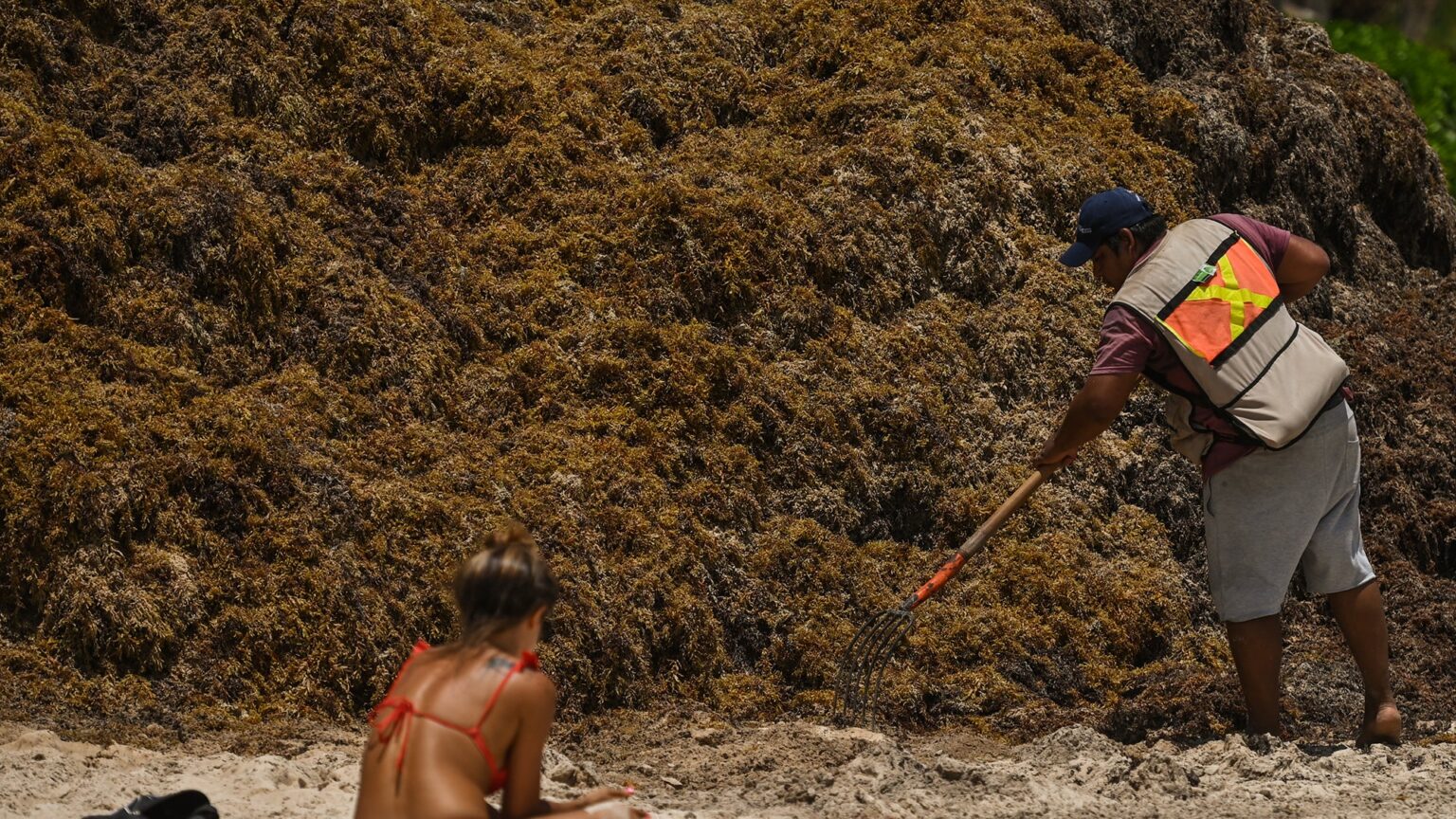
A massive floating jungle of sargassum seaweed—so large it can be seen from space—is on a collision course with the North America mainland. It’s most likely hitting land somewhere on the Gulf of Mexico shoreline, according to scientists monitoring the phenomenon.

“It’s incredible,” professor Brian LaPointe from Florida Atlantic University told NBC News. “What we’re seeing in the satellite imagery does not bode well for a clean beach year.”

Floating sargassum weeds harbor an abundance of small fish. Big mats of floating weeds occur every year along the Atlantic and Gulf coasts of the U.S. They are choice fishing areas for anglers targeting a variety of gamefish, including marlin, sailfish, tuna, dolphin, and many others. Prized gamefish feed on the smaller fish that live in and under the weed mats.

Because of its ecological importance, sargassum off the southern Atlantic states was designated as “Essential Fish Habitat” in 2003, according to NOAA, which affords these areas special federal protection. An overabundance of sargassum when it reaches shore, however, can be disastrous.

Sargassum Seaweed Mats Are Growing in Size

LaPointe is an authority on sargassum, and while large mats commonly wash ashore in south Florida, he says Key West beaches already are inundated with seaweed. The east coast of Mexico is preparing for a huge influx of weeds, which can stack up to three feet high, onto its famed Gulf Coast beaches.

While sargassum weeds on shore are more of a nuisance than a problem, in huge quantities sargassum can be trouble, says professor Brian Barnes from the University of South Florida College of Marine Science. Seaweed by the tons can cover beaches throughout South Florida, the Caribbean, and Mexico. It also covers reefs where it can choke coral, and it diminishes water and air quality as it rots on shore.

A researcher observes a mat of sargassum weed.

Last year, huge piles of sargassum on St. Croix in the U.S. Virgin Islands caused water shortages and a state of emergency. In 2018, the islands of Guadeloupe and Martinique had thousands of people with respiratory problems heading to medical clinics from fouled air resulting from rotting sargassum.

The 5,000-mile wide weed pile heading to mainland North America is one of the largest recorded, and sargassum mats seems to be an increasing problem along the Atlantic Coast.

“Historically, as far back as we have records, sargassum has been a part of the ecosystem, but the scale now is just so much bigger,” Barnes said. “What we would have thought was a major bloom five years ago is no longer even a blip.

“Before 2011, it [sargassum] was there but we couldn’t observe it with satellites because it wasn’t dense enough. Since then, it has just exploded and we now see these huge aggregations.”


Read the full article here

[ruby_static_newsletter]
Leave a comment

Leave a Reply Cancel reply

Your email address will not be published. Required fields are marked *

You Might also Like

Conservation

Man Fined After Illegally Stashing 1,000 Pounds of Shed Antlers

5 Min Read
Conservation

First Grizzly Bear in Bighorn Mountains in a Century Euthanized for Predation

4 Min Read
Conservation

Idaho Man Busted with More Than 1,000 Pounds of Poached Shed Antlers

5 Min Read
Conservation

As Wolf Management Debate Reaches a Fever Pitch, the Interior Department Hires a National Mediator

22 Min Read
Conservation

Wardens Seek Information About Elk Poaching Spree in Idaho

2 Min Read
Conservation

Florida Now Using Gambling Revenues to Fund Conservation

4 Min Read
Conservation

Wildlife Commissioner Fined For Hunting Turkeys Baited with Crickets

2 Min Read
Conservation

Louisiana Approves Black Bearing Hunting Season for 2024

3 Min Read
//

Afield Daily is your one-stop news website for the latest articles and tips about hunting, fishing and camping, follow us now to get the content you want.

Quick Link

  • PRIVACY POLICY
  • TERMS OF USE
  • PRESS RELEASE
  • ADVERTISE
  • CONTACT

Hot Topics

  • HUNTING
  • FISHING
  • COOKING
  • SURVIVAL
  • VIDEOSHOT

Sign Up for Our Newsletter

Subscribe to our newsletter to get our newest articles instantly!

[mc4wp_form]

Afield DailyAfield Daily
Follow US

© 2023 Afield Daily. All Rights Reserved.

Join Us!

Subscribe to our newsletter and never miss our latest articles, podcasts etc..

[mc4wp_form]
Zero spam, Unsubscribe at any time.

Removed from reading list

Undo
Welcome Back!

Sign in to your account

Lost your password?