




By using this site, you agree to the Privacy Policy and Terms of Use.
Accept
Afield DailyAfield Daily
  • Home
  • Hunting
  • Fishing
  • Cooking
  • Camping
  • Gear
  • Videos
Search
More Topics
  • Outdoor
  • Conservation
  • Survival
 
  • Guns
  • Gear Review
  • ATVs
Quick Links
  • Community
  • Customize Interests
  • Bookmarks
  • Privacy
  • Terms
  • Press Release
  • Advertise
  • Contact
© 2023 Afield Daily. All Rights Reserved.
Reading: Are Florida’s Invasive Pythons Adapting to Survive Colder Temperatures?
Sign In
Notification Show More
Latest News
It’s OK to Keep Trophy Crappie
Fishing
GALLERY: Team Knighten Industries sweeps the board at Builders FirstSource Qualifier Match 3
Fishing
The Best Tactical Flashlights of 2024
Gear
FantasyFishing.com Insider: Everything you need to know about Kentucky Lake
Fishing
Man Fined After Illegally Stashing 1,000 Pounds of Shed Antlers
Conservation
Aa
Afield DailyAfield Daily
Aa
  • Camping
  • Hunting
  • Fishing
  • Cooking
  • Gear
  • Survival
  • Conservation
  • Videos
Search
  • Home
  • Videos
  • Sections
    • Hunting
    • Fishing
    • Cooking
    • Camping
    • Gear
    • Survival
    • Conservation
  • Quick Links
    • Community
    • Customize Interests
    • Bookmarks
Have an existing account? Sign In
Follow US
  • HUNTING
  • FISHING
  • COOKING
  • SURVIVAL
  • VIDEOSHOT
© 2023 Afield Daily. All Rights Reserved.
Conservation

Are Florida’s Invasive Pythons Adapting to Survive Colder Temperatures?

Afield Daily
Last updated: 2023/07/17 at 8:59 PM
Afield Daily

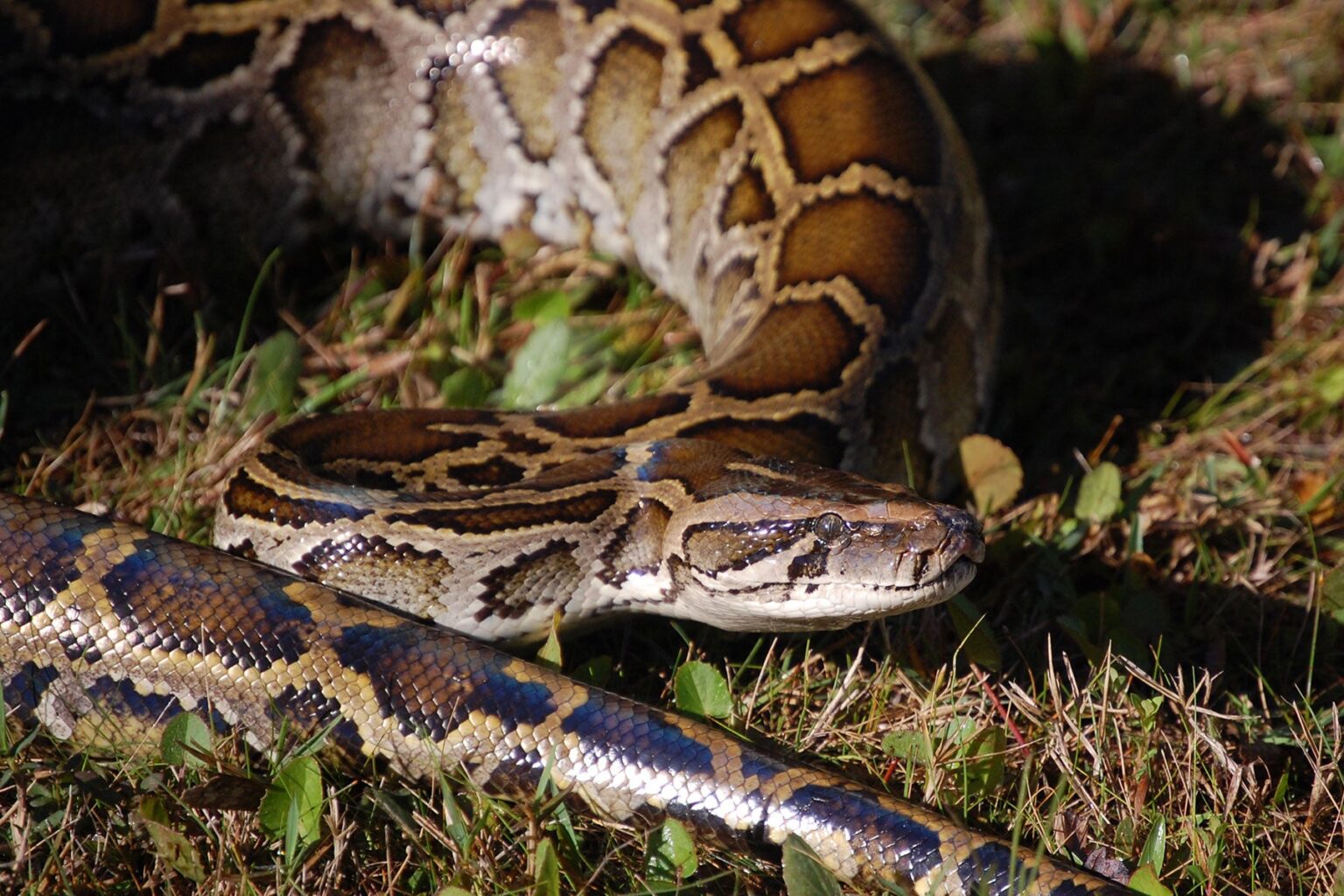
Florida’s python invasion may be even tougher to control than previously thought, according to findings outlined in a recent report from the United States Geological Survey (USGS) that rounds up everything scientists have learned about the non-native species that is overrunning the delicate Everglades ecosystem. 

Among the key points in “Burmese pythons in Florida: A synthesis of biology, impacts, and management tools” is the revelation that some Burmese pythons may be better at surviving cold temperatures than commonly thought. 

Since pythons were first discovered in Florida in the 1970s, they have multiplied and spread rapidly throughout the southern part of the state, severely reducing mammal populations in the Everglades National Park. A 2012 study found that raccoon populations dropped 99.3 percent, opossums 98.9 percent, and bobcats 87.5 percent since 1997. Rabbits and foxes were effectively wiped out. 

Lacking any natural predators in North America, the southeast Asian native’s spread has been checked only by human predation and by the snake’s intolerance of cold temperatures. Records from the pet trade, thought to be the source of the introduction, indicate that most of the pythons imported in the 1970s came from Vietnam and Thailand. But genetic sampling of pythons captured in the Everglades has found traces of Indian python DNA in a small percentage of the Florida snakes.

In parts of northern India, where temperatures are much colder than in Vietnam and Thailand, studies have shown that the snakes use underground refuges such as porcupine burrows to ride out the winter. A 2010 study found that some pythons in south Florida also used underground refuges to survive an unusually harsh cold snap that gripped the state that year. Those survivors have passed on their DNA to subsequent generations of Florida snakes.

Ian Bartoszek, a biologist and python expert at the Conservancy of Southwest Florida, recently told the Fort Myers News-Press that he is concerned that some invasive pythons may have genetic traits that make it easier for them to adapt to conditions in Florida, including a higher tolerance for cold weather that might make it possible for the snakes to spread north. 

Related: Florida Snake Hunter Bags 16-Foot Burmese Python Loaded with 60 Eggs

“Some are better at hiding and getting down in burrows and can wait out cold events, they’re adapting to South Florida’s habitats, and the burrows may afford them some level of protection,” Bartoszek said. “I think now that they’re here in the wild there are selection events that are flipping the switches in those species.”

According to the study, eradication of Florida’s notorious problem snakes is likely impossible. But the authors seem hopeful that their findings will fill in key knowledge gaps that could ultimately “improve future research and decision making for python control.”


Read the full article here

[ruby_static_newsletter]
Leave a comment

Leave a Reply Cancel reply

Your email address will not be published. Required fields are marked *

You Might also Like

Conservation

Man Fined After Illegally Stashing 1,000 Pounds of Shed Antlers

5 Min Read
Conservation

First Grizzly Bear in Bighorn Mountains in a Century Euthanized for Predation

4 Min Read
Conservation

Idaho Man Busted with More Than 1,000 Pounds of Poached Shed Antlers

5 Min Read
Conservation

As Wolf Management Debate Reaches a Fever Pitch, the Interior Department Hires a National Mediator

22 Min Read
Conservation

Wardens Seek Information About Elk Poaching Spree in Idaho

2 Min Read
Conservation

Florida Now Using Gambling Revenues to Fund Conservation

4 Min Read
Conservation

Wildlife Commissioner Fined For Hunting Turkeys Baited with Crickets

2 Min Read
Conservation

Louisiana Approves Black Bearing Hunting Season for 2024

3 Min Read
//

Afield Daily is your one-stop news website for the latest articles and tips about hunting, fishing and camping, follow us now to get the content you want.

Quick Link

  • PRIVACY POLICY
  • TERMS OF USE
  • PRESS RELEASE
  • ADVERTISE
  • CONTACT

Hot Topics

  • HUNTING
  • FISHING
  • COOKING
  • SURVIVAL
  • VIDEOSHOT

Sign Up for Our Newsletter

Subscribe to our newsletter to get our newest articles instantly!

[mc4wp_form]

Afield DailyAfield Daily
Follow US

© 2023 Afield Daily. All Rights Reserved.

Join Us!

Subscribe to our newsletter and never miss our latest articles, podcasts etc..

[mc4wp_form]
Zero spam, Unsubscribe at any time.

Removed from reading list

Undo
Welcome Back!

Sign in to your account

Lost your password?