


By using this site, you agree to the Privacy Policy and Terms of Use.
Accept
Afield DailyAfield Daily
  • Home
  • Hunting
  • Fishing
  • Cooking
  • Camping
  • Gear
  • Videos
Search
More Topics
  • Outdoor
  • Conservation
  • Survival
 
  • Guns
  • Gear Review
  • ATVs
Quick Links
  • Community
  • Customize Interests
  • Bookmarks
  • Privacy
  • Terms
  • Press Release
  • Advertise
  • Contact
© 2023 Afield Daily. All Rights Reserved.
Reading: British Columbia Has an Invasive Goldfish Problem
Sign In
Notification Show More
Latest News
It’s OK to Keep Trophy Crappie
Fishing
GALLERY: Team Knighten Industries sweeps the board at Builders FirstSource Qualifier Match 3
Fishing
The Best Tactical Flashlights of 2024
Gear
FantasyFishing.com Insider: Everything you need to know about Kentucky Lake
Fishing
Man Fined After Illegally Stashing 1,000 Pounds of Shed Antlers
Conservation
Aa
Afield DailyAfield Daily
Aa
  • Camping
  • Hunting
  • Fishing
  • Cooking
  • Gear
  • Survival
  • Conservation
  • Videos
Search
  • Home
  • Videos
  • Sections
    • Hunting
    • Fishing
    • Cooking
    • Camping
    • Gear
    • Survival
    • Conservation
  • Quick Links
    • Community
    • Customize Interests
    • Bookmarks
Have an existing account? Sign In
Follow US
  • HUNTING
  • FISHING
  • COOKING
  • SURVIVAL
  • VIDEOSHOT
© 2023 Afield Daily. All Rights Reserved.
Conservation

British Columbia Has an Invasive Goldfish Problem

Afield Daily
Last updated: 2023/03/21 at 2:04 PM
Afield Daily

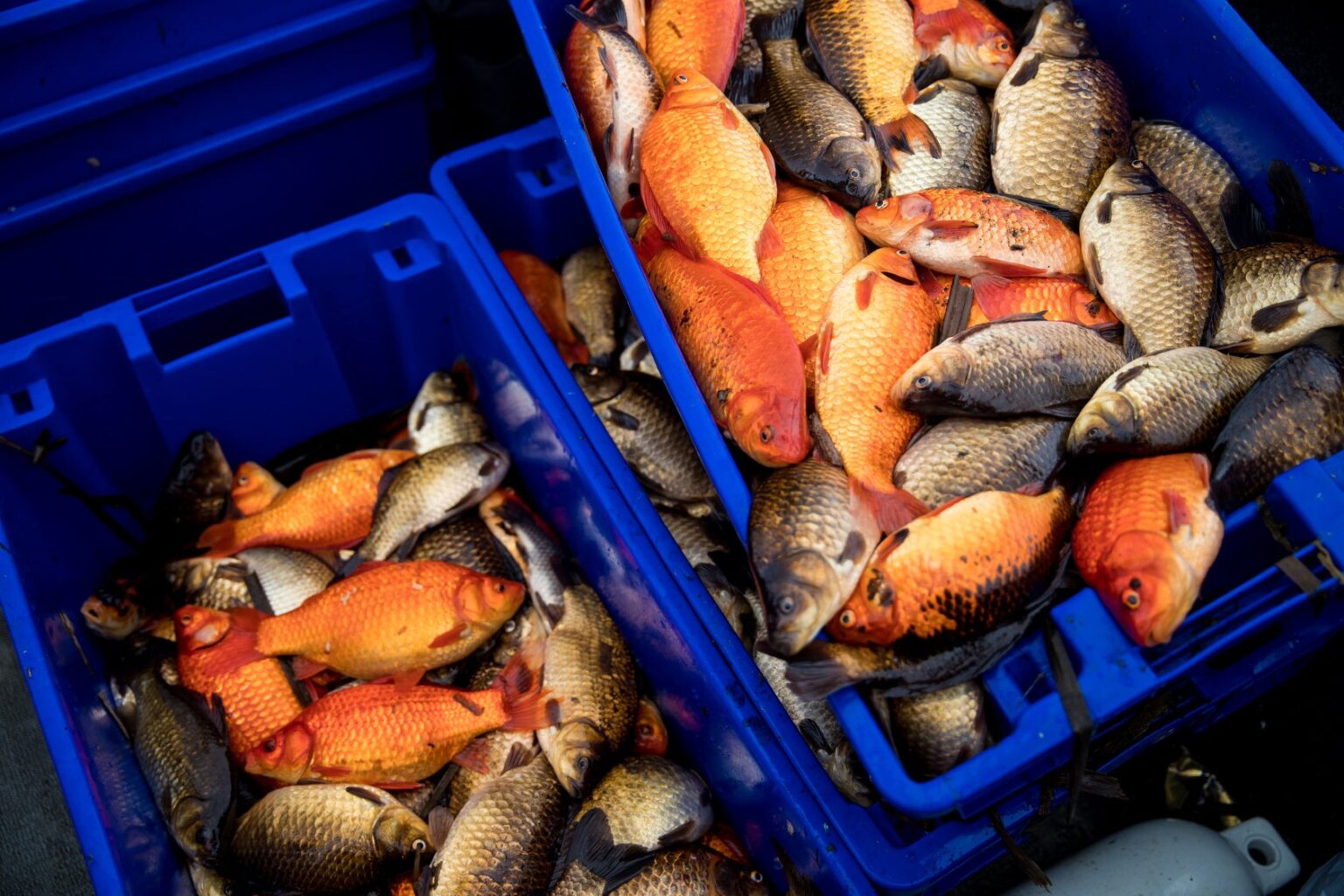
When the novelty of a pet goldfish wears off, people often dump them in water may allow goldfish to spread and overpopulate places far and wide. This is bad news for native critters and healthy waterways, say government officials in British Columbia, where released—and reproducing—goldfish are showing up in lakes across the province.

“They’re not the little fish you see in the pet store,” Brian Heise, a natural resources professor at Thompson Rivers University and former chair of the Invasive Species Council of BC, told the Canadian Press. “They actually get quite large, and they have the potential to get even larger, especially in some warmer, more productive waters.”

Read Next: Is This the Biggest Goldfish Ever Caught?

Goldfish can grow to football size and larger, and Heise says female goldfish can drop 50,000 eggs per spawn. They can spawn three times in a summer to produce as many as 150,000 eggs.

“Females don’t even need a male [to reproduce]. They have a special process called gynogenesis in which a female will get sperm from a different kind of minnow, starting egg development, even though they’re not fertilized,” Heise said. “So she produces clones of herself. They’re very good at spreading rapidly.”

Goldfish in the wild carry diseases and parasites that can impact salmon. Goldfish also eat food that native fish species require. Goldfish have spread from Vancouver to lakes in far-ranging areas of British Columbia over the last 10 years.

How Do You Get Rid of Invasive Goldfish?

Electrofishing can help remove goldfish from a waterway, but it’s an expensive process that never completely eradicates goldfish. So electrofishing must be done regularly to be effective, says Heise.

A three-year electrofishing program at Dragon Lake in Quesnel, BC produced over 6,000 goldfish. Heise believes more funding for expensive electrofishing is needed where goldfish threaten salmon and trout. He also says the aqua-pet industry needs to allow customers to return unwanted goldfish to pet stores rather than dumping them in open water.

“I think if pet stores are bringing in exotic animals, and they’re selling them to the public, it behooves them to then follow up and make sure that the public realizes that you can’t put these creatures in the wild once you finish.

“It doesn’t matter whether it’s a snake, a turtle, a bird or a fish, you just can’t put it into the wild. It’s often going to be harmful to that animal because they’re not adapted to that place, but it’s also going to harm local animals and plants.”

Read Next: The Largest Python Ever Captured in Florida Is Nearly 18 Feet Long

Goldfish have spread to many of America’s waterways following release as pets by owners. Hundreds of non-native species also have spread in other states, such as pythons in Florida, snakeheads along the Eastern Seaboard, and nutria along the Gulf Coast. Such non-natives fish, animals and plants negatively impact native species almost wherever they’re found.


Read the full article here

[ruby_static_newsletter]
Leave a comment

Leave a Reply Cancel reply

Your email address will not be published. Required fields are marked *

You Might also Like

Conservation

Man Fined After Illegally Stashing 1,000 Pounds of Shed Antlers

5 Min Read
Conservation

First Grizzly Bear in Bighorn Mountains in a Century Euthanized for Predation

4 Min Read
Conservation

Idaho Man Busted with More Than 1,000 Pounds of Poached Shed Antlers

5 Min Read
Conservation

As Wolf Management Debate Reaches a Fever Pitch, the Interior Department Hires a National Mediator

22 Min Read
Conservation

Wardens Seek Information About Elk Poaching Spree in Idaho

2 Min Read
Conservation

Florida Now Using Gambling Revenues to Fund Conservation

4 Min Read
Conservation

Wildlife Commissioner Fined For Hunting Turkeys Baited with Crickets

2 Min Read
Conservation

Louisiana Approves Black Bearing Hunting Season for 2024

3 Min Read
//

Afield Daily is your one-stop news website for the latest articles and tips about hunting, fishing and camping, follow us now to get the content you want.

Quick Link

  • PRIVACY POLICY
  • TERMS OF USE
  • PRESS RELEASE
  • ADVERTISE
  • CONTACT

Hot Topics

  • HUNTING
  • FISHING
  • COOKING
  • SURVIVAL
  • VIDEOSHOT

Sign Up for Our Newsletter

Subscribe to our newsletter to get our newest articles instantly!

[mc4wp_form]

Afield DailyAfield Daily
Follow US

© 2023 Afield Daily. All Rights Reserved.

Join Us!

Subscribe to our newsletter and never miss our latest articles, podcasts etc..

[mc4wp_form]
Zero spam, Unsubscribe at any time.

Removed from reading list

Undo
Welcome Back!

Sign in to your account

Lost your password?