

By using this site, you agree to the Privacy Policy and Terms of Use.
Accept
Afield DailyAfield Daily
  • Home
  • Hunting
  • Fishing
  • Cooking
  • Camping
  • Gear
  • Videos
Search
More Topics
  • Outdoor
  • Conservation
  • Survival
 
  • Guns
  • Gear Review
  • ATVs
Quick Links
  • Community
  • Customize Interests
  • Bookmarks
  • Privacy
  • Terms
  • Press Release
  • Advertise
  • Contact
© 2023 Afield Daily. All Rights Reserved.
Reading: Is Climate Change Really Making Fish Bigger? A New Study Says Yes
Sign In
Notification Show More
Latest News
It’s OK to Keep Trophy Crappie
Fishing
GALLERY: Team Knighten Industries sweeps the board at Builders FirstSource Qualifier Match 3
Fishing
The Best Tactical Flashlights of 2024
Gear
FantasyFishing.com Insider: Everything you need to know about Kentucky Lake
Fishing
Man Fined After Illegally Stashing 1,000 Pounds of Shed Antlers
Conservation
Aa
Afield DailyAfield Daily
Aa
  • Camping
  • Hunting
  • Fishing
  • Cooking
  • Gear
  • Survival
  • Conservation
  • Videos
Search
  • Home
  • Videos
  • Sections
    • Hunting
    • Fishing
    • Cooking
    • Camping
    • Gear
    • Survival
    • Conservation
  • Quick Links
    • Community
    • Customize Interests
    • Bookmarks
Have an existing account? Sign In
Follow US
  • HUNTING
  • FISHING
  • COOKING
  • SURVIVAL
  • VIDEOSHOT
© 2023 Afield Daily. All Rights Reserved.
Conservation

Is Climate Change Really Making Fish Bigger? A New Study Says Yes

Afield Daily
Last updated: 2023/03/21 at 4:32 PM
Afield Daily

If science’s worst predictions about the effects of climate change prove true, then it seem the apocalypse may arrive a little ahead of schedule, with melting glaciers, record drought, wildfires, and mass extinctions. But if you’re a glass-half-full kind of person, and an angler, you can take heart in knowing that some fish will be bigger, according to a new study from the University of Wisconsin-Madison.

The idea that climate change is producing monster fish—despite predictions that it would make them smaller—has been in the news lately, or at least in the headlines. When you read a little deeper into most of these stories, however, you learn that temperature changes aren’t actually making fish grow larger but rather prompting big fish to relocate in unexpected places, causing a splash.

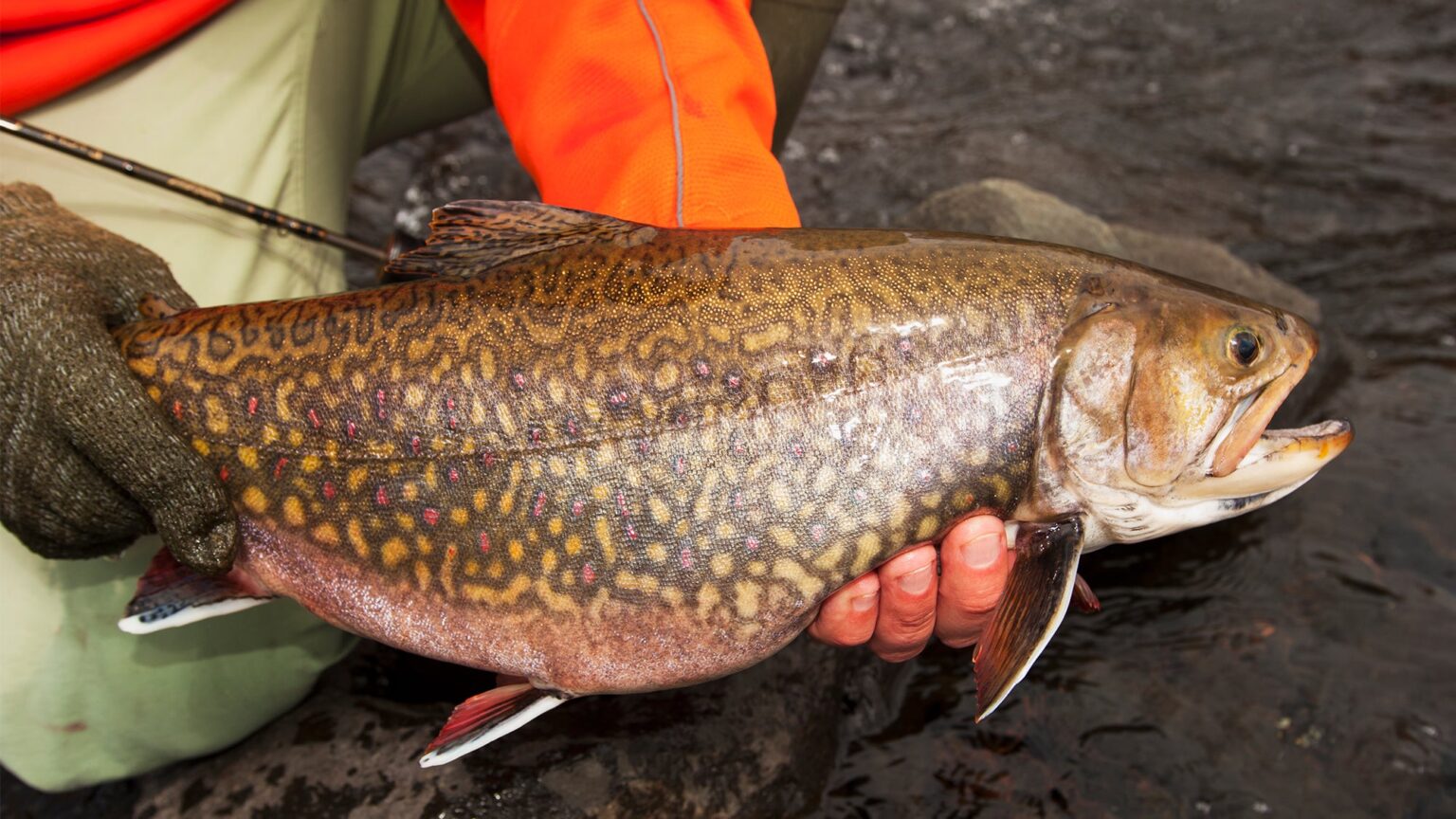
This latest study is different. According to findings published in the journal Global Change Biology, several species of salmonids, including Arctic grayling, brook trout, and lake trout, are actually growing bigger as a result of climate change—exactly the opposite of what the researchers anticipated.

“One widely expected result of global warming is that animal body size is going to go down,” said Olaf Jensen, an associate professor at the University of Wisconsin–Madison’s Center for Limnology, in a press release. The reason for this is Bergman’s Rule, something many hunters are familiar with, as it explains why whitetail deer, for example, are so small in Florida and so big in Saskatchewan. The rule states that individuals of a particular species tend to have more body mass in colder environments to better retain body heat.

So, with water temperatures warming due to climate change, researchers expected fish to get smaller. And yet, after studying decades of long-term data on 12 salmonid species in warming climates around the world, they found that eight of the dozen species not only didn’t shrink, they showed significant increases in length.

“I think the main take-home message from this study is that we cannot assume that the effects of climate change are predictable and negative,” said Mary Solokas, the paper’s lead author. In colder parts of the globe, where the study’s salmonids live and where, despite warming, water temperatures remain below the species’ optimal levels, climate change may simply be creating longer growing seasons, as well more plankton, plants, and invertebrates for these fish to feed on and grow larger.

The bad news, according to the study’s authors, is that continued warming could push water temperatures past optimal levels for these fish and ultimately lead to stunted growth rates and susceptibility to disease. In other words, if the worst predictions do come to pass, maybe move north for the bigger fish, before it’s too late.


Read the full article here

[ruby_static_newsletter]
Leave a comment

Leave a Reply Cancel reply

Your email address will not be published. Required fields are marked *

You Might also Like

Conservation

Man Fined After Illegally Stashing 1,000 Pounds of Shed Antlers

5 Min Read
Conservation

First Grizzly Bear in Bighorn Mountains in a Century Euthanized for Predation

4 Min Read
Conservation

Idaho Man Busted with More Than 1,000 Pounds of Poached Shed Antlers

5 Min Read
Conservation

As Wolf Management Debate Reaches a Fever Pitch, the Interior Department Hires a National Mediator

22 Min Read
Conservation

Wardens Seek Information About Elk Poaching Spree in Idaho

2 Min Read
Conservation

Florida Now Using Gambling Revenues to Fund Conservation

4 Min Read
Conservation

Wildlife Commissioner Fined For Hunting Turkeys Baited with Crickets

2 Min Read
Conservation

Louisiana Approves Black Bearing Hunting Season for 2024

3 Min Read
//

Afield Daily is your one-stop news website for the latest articles and tips about hunting, fishing and camping, follow us now to get the content you want.

Quick Link

  • PRIVACY POLICY
  • TERMS OF USE
  • PRESS RELEASE
  • ADVERTISE
  • CONTACT

Hot Topics

  • HUNTING
  • FISHING
  • COOKING
  • SURVIVAL
  • VIDEOSHOT

Sign Up for Our Newsletter

Subscribe to our newsletter to get our newest articles instantly!

[mc4wp_form]

Afield DailyAfield Daily
Follow US

© 2023 Afield Daily. All Rights Reserved.

Join Us!

Subscribe to our newsletter and never miss our latest articles, podcasts etc..

[mc4wp_form]
Zero spam, Unsubscribe at any time.

Removed from reading list

Undo
Welcome Back!

Sign in to your account

Lost your password?