

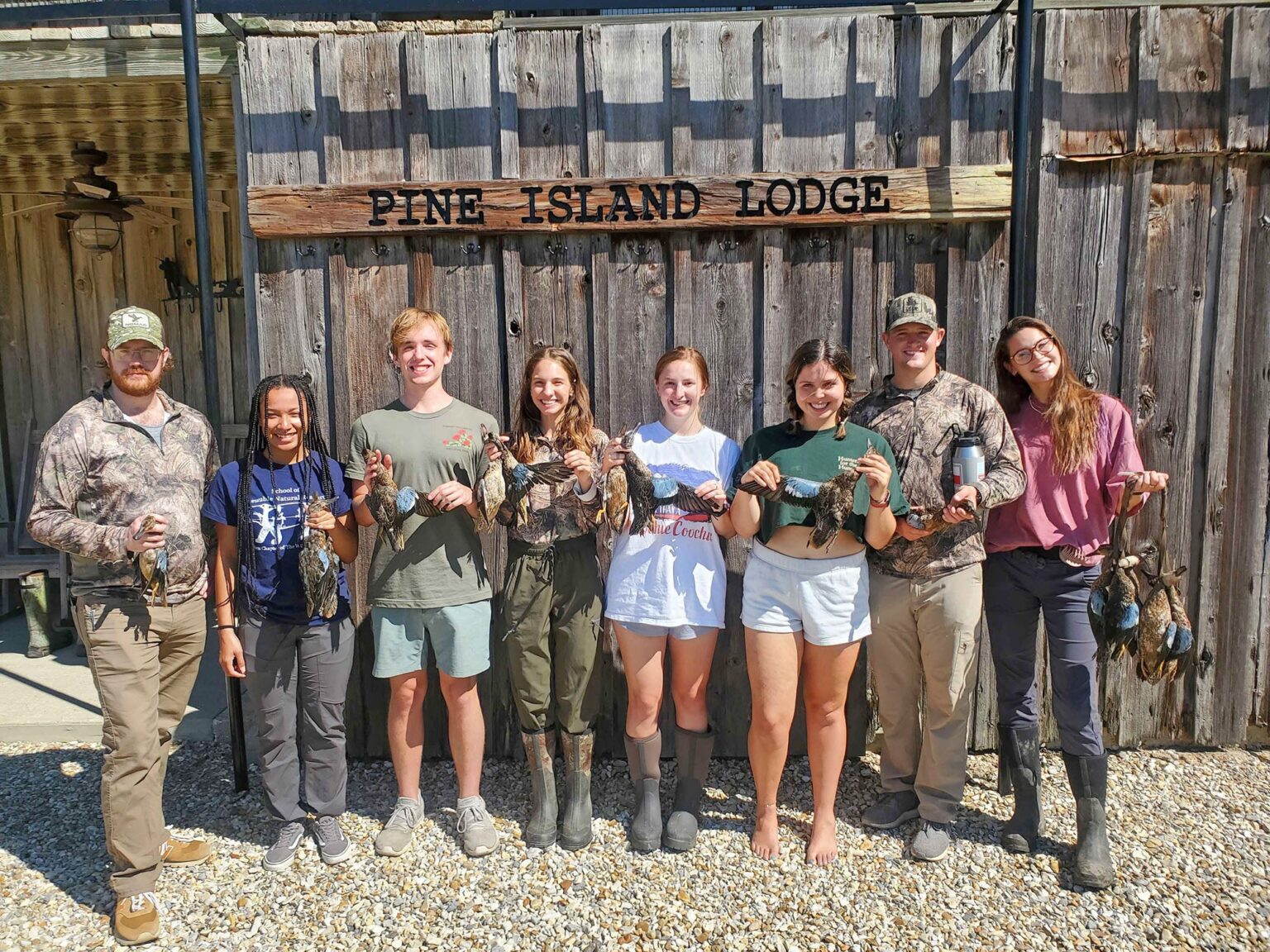

The future of hunting depends mainly on those in positions to decide it. While many advocates of hunting invest an enormous amount of time and resources trying to convince the leaders already in place of its value, one university in Louisiana pitches hunting’s value to conservation long before those leaders get hired or elected. Known as the First Hunt Program, pro-hunting professors at Louisiana State University in Baton Rouge send graduates of their program into the workforce with more than just the idea that hunting is necessary; they’re arming them with first-hand experience from the field.
Dr. Bret Collier and Dr. Kevin Ringelman have coordinated LSU’s Collegiate First Hunt program since 2014.
“We teach hunter education and shooting sports, safety, and ethics, and coordinate all the hunts out of our offices,” Collier says. The professors extend their recruiting and reach well beyond the bayou.
“We take all-comers from a wide variety of institutions, including Auburn, University of Florida, Mississippi State, Texas A&M, and Tulane, and [students] spread out all across LSU majors,” Collier says. He notes that the class demographics average 65 to 70 percent female, 10 to 20 percent people of color, and primarily urban/suburban students. These metrics are typical of most land grant universities.
Collier says the program has created more than 45 hunting opportunities despite no outside grant funding. So, where does funding come from to pay all the expenses associated with hunting? Quite a few places, including the professors’ own wallets. “Usually, Kevin and I pay for all the consumables (e.g., ammunition, food for trips, that sort of thing) out of our pocket,” Collier says.
The outdoor industry has extended some help. “Nomad Outdoors has provided clothing for the program’s new hunters free of cost for the last five years,” Collier explains. He notes that other industry partners have also helped, including Delta Waterfowl, Benelli, and the Dallas Safari Club.
But such an extensive program requires more than just equipment, ammo, and opportunity. It also requires time, a commodity that’s in short supply for most people these days, Collier says.
“Kevin and I have full-time jobs as professors; neither of us gets any professional benefit to do this, but we do it because we love it and think it is important. We have built a program here that is at the apex of what collegiate shooting sports and hunting engagement program should look like.”
Ringelman added, “This is entirely pro bono work, and it’s a lot. I haven’t hunted for myself in two years.”
More Than Hunter Ed

The LSU program goes beyond your typical hunter ed course, according to Louisiana Department of Wildlife & Fisheries’ Wildlife Protection and Conservation Management director Larry Reynolds. What sets the program apart is how it actually gets participants out to experience the very thing they’re learning about.
“LSU’s college hunt program does this very well by making them hunters, if only for one season, and putting them in the camp, on the stand, and in the blind with actual hunters,” Reynolds says. “In the camps and lodges, students hear not only from us about what hunting means to conservation but from landowners, land managers, and club members. [They hear] about why they invest so much in hunting, what it means to them and their families, and how they see the role of young biologists in maintaining the foundation of this relationship between hunting and conservation.”
LSU is creating more than just a new hunter. The program is building a sustainable supply of future decision-makers who will consider the hunting interest and the North American model of wildlife conservation when doing their jobs.
“We create 40-plus hunting ambassadors every year,” Ringelman says. “By hunting ambassador, I mean a student that fundamentally and intuitively understands the importance of hunting and hunters to wildlife management and not only internalizes that reality but spreads that messaging to their peer groups. That peer group could be others in the wildlife management field, but it could also be veterinarians, zookeepers, politicians, bankers, attorneys, elementary school teachers, or camp counselors. A hunting ambassador, seeing their coworker roll their eyes at guys in camouflage rolling by in a pickup, says, ‘well, actually…’”
The ability to acknowledge and engage in such teachable moments is one of the crucial skill sets Collier and Ringelman equip their graduates with in the First Hunt Program.
READ NEXT: Why We Suck at Recruiting New Hunters, Why It Matters, and How You Can Fix It
“Understanding the role of hunting and hunters in wildlife conservation is critical to negotiating virtually all wildlife conservation issues and people these students will grapple with in their careers,” Reynolds says.
Changing Perspectives Through Education

One hunting ambassador-turned-wildlife-professional is Ducks Unlimited’s biologist in Illinois and Indiana, Madelyn McFarland.
“I don’t come from a ‘traditional’ hunting background,” McFarland says. “No one from my immediate family hunted. We got our meat from the grocery store, and I rarely knew where it came from. I wasn’t anti-hunting or anti-hunter, but I didn’t want the emotional burden of taking an animal’s life. I’m ashamed to say it, but before LSU’s First Hunt Program, I couldn’t understand why I would ever want to hunt if someone else was willing to harvest or farm and process that protein into neat grocery store packaging for me.”
Through mentored training and duck blinds détentes, the First Hunt Program is changing the pro-hunting agnostic or apathetic hearts and minds of students like McFarland.
“I’ve become an avid waterfowl hunter since completing the program,” she says. “I’ve derived a sense of community and connection to the natural world since adopting a new sport. Participating in LSU’s First Hunt Program shifted my perspective on several things—namely, the food I consume and where it originates, how I connect with others, and the role I play in conservation.”
LSU’s program goes beyond cultivating a pro-hunting environment; for these students to become pro-hunting, their concerns—especially the uncomfortable ones—are answered and, most importantly, addressed professionally.
“My primary concern was how I would feel about taking an animal’s life,” McFarland recalls. “I had never fired a gun, let alone at a living creature. I wasn’t sure if I’d feel proud about harvesting my first duck or cruelly taking its life. My lack of experience with guns also made me uncomfortable. I wanted to avoid any accidents in the blind at all costs.”
McFarland’s metamorphosis from hunting agnostic to advocate was more than just a single decision. It was a complex process involving personal, ethical, and even technical teaching moments that Collier and Ringelman always fielded with grace, patience, and inclusion.
“From a hunter safety course to gun training at the range, waterfowl identification and history and science of hunting as a management tool, our discussions centered around navigating the emotions and experiences as a first-time hunter,” McFarland says. “LSU’s First Hunt Program was a comprehensive process that guided me through the new hunter journey from start to finish.”
A Family Affair
How effective is the program? Good enough to empower students to recruit future hunters.
“I like to think I opened the door to a new experience for my little sister, Lauren,” McFarland says. According to Lauren, her sister did just that.
“She was so excited that we could share a passion for hunting together,” Lauren says, who McFarland confessed is mostly a pescatarian but will now eat ethically-harvested wild game.
“I think there’s something poetic about that,” McFarland says. “We haven’t had a chance to hunt together yet, but I’m eagerly looking forward to it.”
That family passion was developed through a thorough, balanced mentoring approach at LSU.
“From first impressions, it was already apparent that the new hunter’s program was well thought out and organized,” Lauren says. “The program catered to people of all backgrounds and experience levels and included mentorships and help from several passionate hunters, professors, and wildlife agency officials. All my concerns were addressed on the first day of the hunting program. Specifically, the program ensured all participants were comfortable and prioritized hunter education and safety.”
Like many ambassadors, Lauren’s takeaways were more significant than just tagging out.
“This experience gave me a profound recognition of the sport,” Lauren says. “I realized it is not all about the harvest but also about respecting the wildlife and their habitat, gaining a deeper connection to the resource, and understanding your environmental impact and role.”
Like her older sister, the ambassador label fits Lauren well. It enables her to connect with people well outside the traditional demographics of hunting.
“The program has allowed me to provide a woman’s perspective on hunting and promote inclusion for underrepresented groups, both vital factors in attempting to increase hunter participation and recruitment,” Lauren explains. “By sharing how my first hunt transformed how I perceived wildlife conservation, it is my priority to influence the future generations of conservationists and hunters.”
A Decade of First Hunts
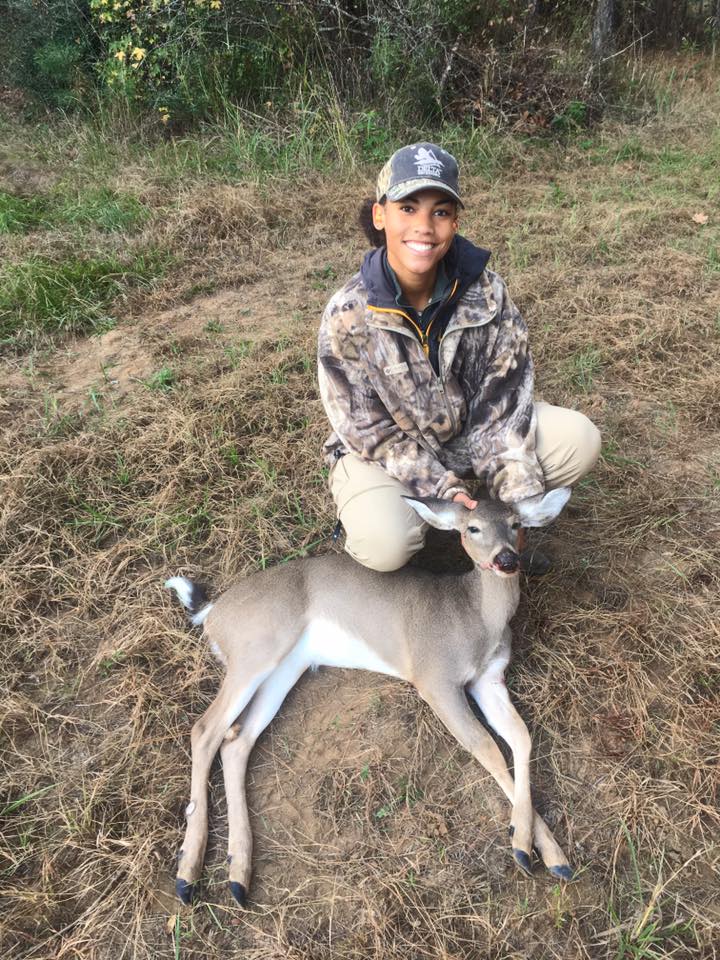
What has the First Hunt Program taught two PhDs like Collier and Ringelman?
“An unmeasurable amount,” Collier confesses.
“The program has taught me to value my own upbringing, which was rich in experiential outdoor experiences, inclusive of hunting with my mom and dad,” Ringelman adds. “It’s caused me to more consistently value each individual animal that is harvested. It’s easy to get jaded by just another hen shoveler added to the stack, but when it’s a student’s first-ever bird they harvested, it takes on a special value. That added layer of meaning is not front-and-center when you go out with a group of veteran hunters. I have also learned from students to take nothing for granted; the most common question I’m consistently asked is which direction the metal part of the shotgun shell goes.”
READ NEXT: In Washington State, Hunters May No Longer Be “Necessary to Manage Wildlife”
As the First Hunt Program moves toward its tenth year in 2024, Collier and Ringelman are quantifying its success. “We have had outstanding success,” says Collier. “We estimate a retention rate of greater than 50 to 65 percent five years out of people who go through our program.”
That forecast means the future of hunting might come down to whether there’s a Tiger at the decision-making table. Thanks to the efforts of Dr. Collier and Dr. Ringelman, the chances are there will be.
Read the full article here