
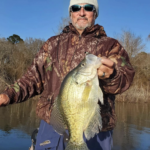

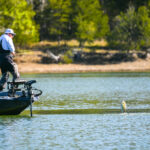


From coast to coast, anglers encounter a multitude of sunfish. Bluegills are perhaps the best known, but there are plenty of others, including the brilliantly colored pumpkinseed, the diminutive green sunfish, and the feisty red-eyed rock bass. Surprising to some, both largemouth and smallmouth bass fall into the sunfish category, as do warmouth, redbreasts, and longears. And then there’s the redear sunfish, ordinarily small but capable of growing in excess of 2 pounds. Known for being particularly tasty on the table, redears can prove a challenge, so it helps for folks to equip themselves with the best information possible before hitting the water.
Redear Sunfish Identification and Distribution
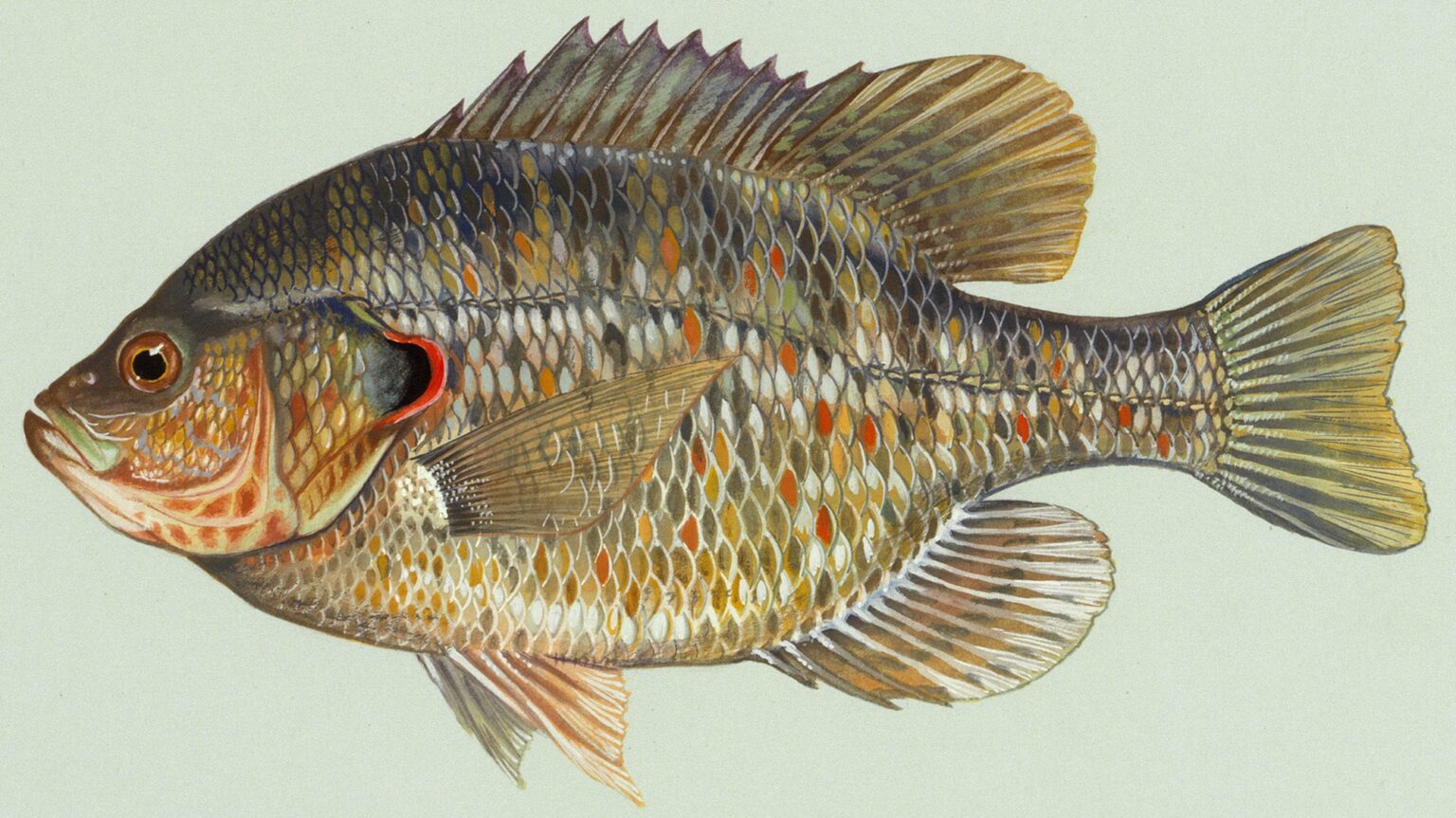
Body-wise, redears—commonly called shellcrackers, Georgia bream, or cherry gill—look round and flat, much like bluegills. They’re a pretty little fish, with a greenish-blue back giving way to a yellow belly, a small mouth, and finger-poking dorsal spines. The key identifier is the distinctive black ear flap, known scientifically as the opercle, edged in bright red or reddish-orange.
Redears are generally small sunfish, weighing a half pound or less, and measuring 6-10 inches. However, larger specimens aren’t all that rare, especially in southern waters that provide year-round feeding and growth opportunities for game fish. Thomas Farchione caught the world-record redear in 2021 on Lake Havasu in Arizona, tipping the scales at an eye-popping 6 pounds, 4 ounces.
Home for redears was originally the southeastern United States, spanning from Texas north to Illinois and then east to the Atlantic Coast. However, the species has been widely introduced throughout the eastern U.S., and has established good populations west to New Mexico and north into Michigan, Ohio, and Pennsylvania. Oregon’s Willamette Valley harbors a handful of “redear ponds,” while Arizona’s aforementioned Lake Havasu cranks out good catches of redears year-round.
Habitat and Behavior
Although occasionally found in streams and rivers, redears are predominantly a fish of clear, still waters with abundant rooted vegetation such as milfoil or coontail. Post-spawn fish will often be found oriented with mid-depth structure like sunken cypress trees.
Unlike bluegills that actively feed mid-depth and on the surface, redears prefer to grub around on the bottom, searching for worms, aquatic insects, crayfish, snails, and tiny fingernail clams. In fact, they get their nickname, “shellcracker,” from the way they crush fingernail clam shells with a set of “teeth” located in their throat and expel them before eating the morsel.
Anglers can catch redears in southern lakes at any time of the year, but it’s widely known among sunfish aficionados that nothing on the calendar beats catching a limit in the spring when redears are spawning. As with bluegills, redears are communal nesters, with anglers often finding multiple beds covering bottom structure like pea gravel, sand, or silt. Such group nests will typically be located in shallow water, and in association with some type of cover such as timber, stumps, or lily pads.
After spawning, redears will move away from the shallows and back into their deeper water haunts, favoring depths from 10-25 feet. These post-spawn redears can prove a challenge to find, but however, quality electronics can help pinpoint areas of potential, namely old creeks and channels, or better yet, stump fields adjacent to deeper-water weed lines.
Tips for Catching Redear Sunfish
Serious redear anglers will be the first to say that these feisty little sunfish are at best fickle when it comes to catching them. Even panfish favorites like Beetle Spins, Freaky Frank’s plastics, small flashy marabou jigs, No. 0 Mepps Aglia spinners, and 1/32- or 1/64-ounce leadheads with tiny twistertail grubs can struggle connecting.
Ultimately, however, redears are suckers for live bait, with small worms being some of the best baits. Tiny pieces of nightcrawler have proved effective, but it never hurts to experiment with any number of natural baits, including mealworms, waxworms, crickets, or even snippets of fingernail or horse clams (if allowed by law).
For spawning redears, an inch-long redworm on a No. 8 long-shanked, Aberdeen-style hook is often the ticket to success. The best approach is to sight-fish this presentation right in front of the bed with no weight and no float. You can do this with an old fly rod or a long, limber crappie rod with light 2- to 4-pound-test fluorocarbon line, each of which will offer accuracy from a distance without much disruption. Over deeper water, you can use the same baits rigged with a super-sensitive quill float and present them on or just barely above the bottom.
Read the full article here